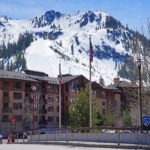
The Ore Mountains, known as the Erzgebirge in German and Krušné hory in Czech, form a long mountain range along the border between Germany and Czechia. Although their summits are modest compared with the Alps, the range is one of Central Europe’s most historically important mountain landscapes.
Dense forests, broad upland plateaus, peat bogs, mountain meadows, ski areas, centuries-old mining towns, and an extraordinary concentration of historic mines all characterize the Ore Mountains. Their mineral wealth shaped the economy and culture of Saxony and Bohemia for centuries and eventually gave the range its English name.
The highest summit is Klínovec at 1,244 meters (4,081 feet), while neighboring Fichtelberg reaches 1,214.6 meters (3,985 feet) and is the highest mountain in the German state of Saxony.
🏔️ Overview
The Ore Mountains stretch along the German-Czech border between Saxony in Germany and the Karlovy Vary and Ústí nad Labem regions of Czechia.
Depending on exactly where the geographical boundaries of the range are drawn, its length is generally described as approximately 120 to 150 kilometers (75 to 93 miles).
The landscape is noticeably asymmetrical. The northern and northwestern slopes descend more gradually toward Saxony, while the southeastern side drops much more steeply toward the basins of northern Bohemia. This distinctive form reflects the range’s geological history as a tilted fault-block mountain system.
The main ridge is generally rounded rather than sharply alpine. Broad plateaus, forests, wetlands, meadows, and subdued summits dominate much of the landscape.
⚡ Fast Facts
| Fact | Details |
|---|---|
| Continent | Europe |
| Countries | Germany and Czechia |
| State/Province | Saxony; Karlovy Vary Region; Ústí nad Labem Region |
| Mountain Range | Ore Mountains / Erzgebirge / Krušné hory |
| Major Geological Region | Bohemian Massif / Central European Uplands |
| Highest Peak | Klínovec |
| Elevation | 1,244 m / 4,081 ft |
| Prominence of Highest Peak | About 750 m / 2,461 ft |
| Isolation of Highest Peak | About 133 km / 82.7 mi |
| Nearest Higher Neighbor (NHN) | Großer Osser |
| Highest Peak in Germany | Fichtelberg — 1,214.6 m / 3,985 ft |
| Approximate Range Length | Roughly 120–150 km / 75–93 mi |
| Highest-Peak Coordinates | 50.3962° N, 12.9680° E |
| German Name | Erzgebirge |
| Czech Name | Krušné hory |
| UNESCO Status | Erzgebirge/Krušnohoří Mining Region inscribed in 2019 |
📍 Location
The Ore Mountains occupy a strategically important position in Central Europe, forming much of the historic boundary between Saxony to the north and Bohemia to the south.
The international border runs close to the mountain crest for much of the range.
On the German side, the mountains lie primarily within Saxony. Towns and communities associated with the range include Freiberg, Annaberg-Buchholz, Marienberg, Oberwiesenthal, Schneeberg, and Altenberg.
On the Czech side, the mountains extend through northwestern Czechia, with places such as Jáchymov, Boží Dar, Loučná pod Klínovcem, Horní Blatná, and Krupka closely connected to the range.
The highest elevations are concentrated in the western and southwestern portions of the mountains, particularly around Klínovec and Fichtelberg.
📏 Highest Mountains of the Ore Mountains
Klínovec
At 1,244 meters (4,081 feet), Klínovec is the highest mountain in the Ore Mountains.
It stands on the Czech side of the range close to the German border and near the communities of Jáchymov, Boží Dar, and Loučná pod Klínovcem.
Klínovec has approximately 750 meters (2,461 feet) of topographic prominence, making it substantially more prominent than its moderate absolute elevation might suggest.
Today the mountain is an important recreation center with hiking, mountain biking, downhill skiing, and other outdoor activities.
Fichtelberg
Immediately across the border in Germany is Fichtelberg, reaching approximately 1,214.6 meters (3,985 feet).
It is:
- The second-highest mountain in the Ore Mountains
- The highest mountain in Saxony
- One of eastern Germany’s most important winter-sports destinations
The resort town of Oberwiesenthal lies below Fichtelberg.
Together, Klínovec and Fichtelberg form the most elevated part of the Ore Mountains.
🪨 Geology
The Ore Mountains belong to the ancient Bohemian Massif, one of the major exposed fragments of the Variscan mountain-building belt of Central Europe.
Much of the geological foundation of the range dates to the Paleozoic Era.
During the Variscan orogeny, roughly 300–400 million years ago, continental collisions produced intense deformation and metamorphism across this part of Europe. Sedimentary and other rocks were altered under heat and pressure, producing metamorphic rocks including gneiss, schist, and phyllite.
Large bodies of magma also intruded into the crust, eventually cooling to form granites.
Later erosion greatly reduced the ancient Variscan mountains.
Much more recently in geological terms, tectonic movements associated with Central European crustal deformation uplifted and tilted the Ore Mountains. The result is the distinctive fault-block topography visible today.
The range rises particularly steeply along its southeastern edge toward Czechia, while the northwestern side generally slopes more gradually toward Saxony.
⛏️ Why Are They Called the Ore Mountains?
Few mountain ranges have a name more closely connected with their geology.
The Ore Mountains contain numerous mineral deposits, and mining became one of the defining forces in the region’s history.
Among the materials extracted at various times were:
- Silver
- Tin
- Cobalt
- Copper
- Lead
- Iron
- Tungsten
- Bismuth
- Uranium
Silver mining became particularly important during the late Middle Ages and Renaissance.
Between approximately 1460 and 1560, the region became Europe’s most important source of silver ore. Tin was another major commodity throughout much of the area’s mining history, while cobalt later became economically significant.
Uranium mining also played a major role during the nineteenth and twentieth centuries.
The mineral resources were so important that they transformed not only local economies but also settlement patterns, forestry, water management, transportation, engineering, and scientific education.
🏛️ Erzgebirge/Krušnohoří UNESCO World Heritage Site
The extraordinary mining heritage of the Ore Mountains was internationally recognized in 2019, when the Erzgebirge/Krušnohoří Mining Region was added to the UNESCO World Heritage List.
The transboundary World Heritage property consists of 22 component parts in Germany and Czechia.
Together, they represent approximately 800 years of nearly continuous mining activity, beginning in the 12th century and continuing into the 20th century.
Historic features include:
- Underground mines and shafts
- Open mining areas
- Spoil heaps
- Ore-processing sites
- Smelting facilities
- Mining towns
- Water-management systems
- Canals and drainage works
- Transportation infrastructure
- Historic mining landscapes
The Ore Mountains were also an important center of mining science and technology. Knowledge developed here spread to mining regions elsewhere in Europe and around the world.
One especially fascinating connection is Jáchymov. Silver coins known as thalers were minted there beginning in the 16th century. The word thaler eventually contributed to the origin of the English word dollar.
🌿 Flora & Fauna
Despite centuries of mining, forestry, settlement, and industry, significant natural habitats survive across the Ore Mountains.
Forests cover large portions of the range, although their composition has been altered extensively by forestry and historical pollution.
Mountain landscapes include combinations of:
- Spruce forest
- Mixed woodland
- Mountain meadows
- Heaths
- Stream valleys
- Peat bogs
- Wetlands
- Rocky outcrops
One of the range’s most important natural features is its system of raised peat bogs.
On the Czech side alone, raised bog habitats cover thousands of hectares. These wetlands developed partly because the relatively flat upland terrain, cool wet climate, and impermeable geological layers allow water to accumulate.
Wildlife
The Ore Mountains support a surprisingly diverse range of wildlife.
Notable species include black grouse, whose populations are particularly significant in the region.
Grey wolves have also returned to the mountain landscape.
Historic mine workings provide important winter roosting habitat for numerous bat species, including northern bats, Bechstein’s bats, Geoffroy’s bats, and pond bats.
On the Saxon side, efforts have also been made to restore Eurasian lynx to suitable habitat.
Much of the landscape is protected through nature reserves, Natura 2000 sites, bird-protection areas, nature parks, and other conservation designations.
🌦️ Climate
The Ore Mountains have a generally cool, humid upland climate, particularly along the higher ridges.
Prevailing westerly weather brings substantial precipitation. In some higher parts of the range, annual precipitation exceeds 1,000 millimeters.
Average annual temperatures in the uplands are considerably cooler than in the surrounding lowlands, and the highest areas around Klínovec and Fichtelberg experience long, cold winters.
Snow is common at higher elevations, supporting an established winter-sports industry.
The combination of high precipitation, cool temperatures, and relatively flat upland terrain also contributed to the formation of the region’s extensive peatlands.
🥾 Hiking & Outdoor Recreation
The Ore Mountains offer an extensive trail network covering forests, mountain ridges, historic mining landscapes, meadows, and border communities.
Unlike the Alps, most hiking here does not require technical mountaineering skills. The terrain is generally more rounded, making the region particularly suitable for walking, long-distance hiking, cycling, and family outdoor recreation.
Kammweg Erzgebirge-Vogtland
One of the best-known long-distance routes is the Kammweg Erzgebirge-Vogtland.
The complete route is approximately 285–287 kilometers (177–178 miles) long and follows the highlands of the Ore Mountains and Vogtland.
Hikers encounter:
- Forested ridges
- Mountain meadows
- Historic mining sites
- Small villages
- Rock formations
- Stream valleys
- Panoramic viewpoints
The trail can be tackled as a long-distance trek or divided into individual day hikes.
Klínovec and Fichtelberg
The Klínovec-Fichtelberg area is particularly popular because hikers can experience the two highest mountains of the range within a relatively compact area.
Numerous routes connect the summits with nearby towns and villages.
Mining Heritage Trails
Some of the most distinctive walks in the Ore Mountains combine hiking with cultural history.
Visitors can explore landscapes containing old mine entrances, water channels, spoil heaps, historic mining settlements, and industrial monuments.
This makes the Ore Mountains unusual among European hiking destinations: some trails are effectively journeys through both natural and industrial history.
🏔️ Field Guide Tip: The Ore Mountains are ideal for travelers who enjoy combining hiking with history. Rather than visiting only Klínovec or Fichtelberg, consider spending several days exploring one of the historic mining districts, where trails connect mountain scenery with UNESCO-listed mining landscapes and old mining towns.
🎿 Winter Sports
Winter sports have a long tradition in the Ore Mountains.
The higher western part of the range receives enough winter weather to support several ski centers.
The two most prominent are:
- Klínovec in Czechia
- Fichtelberg/Oberwiesenthal in Germany
Downhill skiing, snowboarding, cross-country skiing, winter hiking, and snowshoeing are all popular.
Cross-country skiing is particularly well suited to the broad ridge landscapes and forest roads found throughout the mountains.
🌤️ Best Time to Visit
The best season depends strongly on the activity.
May to June
Late spring brings greener landscapes, wildflowers, flowing streams, and generally pleasant hiking conditions.
Some higher or wetter trails may remain muddy after winter.
July to August
Summer usually offers the longest daylight hours and is an excellent period for hiking, cycling, and visiting historic mining sites.
Weather can still change quickly at higher elevations.
September to October
Early autumn is one of the best periods for walking. Forest colors, cooler temperatures, and generally quieter trails make the mountains especially attractive.
The main hiking season on the German Kammweg is typically considered to run from May through October.
December to March
Winter is the main season for skiing and snow-related recreation around Klínovec, Fichtelberg, and other higher parts of the range.
Snow conditions vary from year to year, so visitors planning winter sports should check current conditions before traveling.
🧭 Nearby Mountains & Attractions
The Ore Mountains are surrounded by several other important Central European mountain landscapes.
Sudetes
Farther east lie the Sudetes, another major Central European mountain system extending through Czechia, Poland, and Germany.
Their highest summit is Sněžka at 1,603 meters.
Bohemian Forest
Southwest of the Ore Mountains lies the Bohemian Forest/Bavarian Forest region, containing higher summits such as Großer Arber and Großer Osser.
Jáchymov
The Czech town of Jáchymov is one of the historically most important settlements in the range. It became famous for silver mining, coinage, and later uranium extraction.
Freiberg
Freiberg in Saxony became one of Europe’s most important centers for mining and metallurgy and remains closely associated with the scientific study of mineral resources.
Oberwiesenthal
Located beneath Fichtelberg, Oberwiesenthal is one of the best-known mountain resorts in eastern Germany and an important center for winter recreation.
💡 Fun Facts
- The Ore Mountains are called Erzgebirge in German and Krušné hory in Czech.
- Klínovec is the highest summit at 1,244 meters.
- Fichtelberg is the highest mountain in the German state of Saxony.
- Mining in the range continued for roughly 800 years.
- The region was Europe’s leading source of silver during part of the 15th and 16th centuries.
- Tin, cobalt, tungsten, uranium, and numerous other ores have also been extracted.
- The Erzgebirge/Krušnohoří Mining Region became a UNESCO World Heritage Site in 2019.
- Historic mine tunnels now provide important hibernation habitat for several species of bats.
- Peat bogs are among the Ore Mountains’ most distinctive natural ecosystems.
- The word dollar is historically connected to the silver thalers minted in Jáchymov.
- The range’s southern side is much steeper than its more gradual northern slope because the Ore Mountains form a tilted tectonic block.
- Mining traditions also influenced the famous wooden Christmas crafts and decorations associated with Germany’s Erzgebirge region.
❓ Frequently Asked Questions
Where are the Ore Mountains?
The Ore Mountains run along the border between Germany and Czechia, primarily between Saxony and the Czech regions of Karlovy Vary and Ústí nad Labem.
What is the highest mountain in the Ore Mountains?
Klínovec is the highest summit at 1,244 meters (4,081 feet).
What is the highest mountain on the German side?
Fichtelberg, at approximately 1,214.6 meters (3,985 feet), is the highest mountain on the German side and the highest point in Saxony.
Why are they called the Ore Mountains?
The name reflects the region’s exceptional mineral wealth. Silver, tin, cobalt, iron, tungsten, uranium, and other ores have been mined here over many centuries.
Are the Ore Mountains part of the Alps?
No. The Ore Mountains are not part of the Alps. They belong to the older geological landscapes of the Bohemian Massif and Central European Uplands.
Are the Ore Mountains good for hiking?
Yes. The range has an extensive hiking network, including the long-distance Kammweg Erzgebirge-Vogtland and numerous shorter trails around Klínovec, Fichtelberg, historic mining districts, forests, and peatlands.
Is the Ore Mountains mining region a UNESCO World Heritage Site?
Yes. The Erzgebirge/Krušnohoří Mining Region was inscribed on the UNESCO World Heritage List in 2019.
Can you ski in the Ore Mountains?
Yes. Klínovec and Fichtelberg are major regional ski destinations, and cross-country skiing is widespread along the higher ridges.
🔗 Related Articles
📚 Sources
- UNESCO World Heritage Centre — Erzgebirge/Krušnohoří Mining Region — UNESCO documentation covering the region’s 800-year mining history, silver, tin, cobalt, uranium, mining technology, and World Heritage designation.
- Nature Conservation Agency of the Czech Republic — The Krušné hory/Ore Mountains — Detailed information on geography, climate, peat bogs, wildlife, conservation, and landscape history.
- Saxony Tourism — Kammweg Erzgebirge-Vogtland — Official trail information for the long-distance Kammweg, including distance, elevation, landscapes, and hiking characteristics.
- Peakbagger — Klínovec — Topographic data for the highest mountain in the Ore Mountains, including elevation, prominence, isolation, and coordinates.
- Czech Geological Survey — Geology and Mineralization of the Krušné hory/Erzgebirge — Geological research covering granite-related mineralization and the range’s important tungsten and ore deposits.