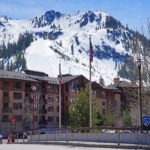
Scheichenspitze

🏔️ Overview
Scheichenspitze is a striking 2,667-meter (8,750-foot) summit in the Dachstein Mountains of Styria, Austria. Rising immediately above the high plateau of Ramsau am Dachstein, it forms one of the most distinctive peaks along the southern edge of the Dachstein massif.
Although overshadowed in elevation by the much higher Hoher Dachstein farther west, Scheichenspitze is an important summit in its own right. Its rocky ridges, steep cirques and exposed high-alpine terrain make it a rewarding objective for experienced hikers and via ferrata climbers.
The mountain also occupies an interesting geological position. While much of the central Dachstein massif is famous for Dachstein Limestone, Scheichenspitze is largely associated with Triassic Wetterstein Limestone, part of the complex carbonate geology of Austria’s Northern Limestone Alps.
From the summit, climbers can look across the Dachstein high country, the Ramsau plateau and the mountain chains surrounding the Enns Valley.
⚡ Fast Facts
| Fact | Details |
|---|---|
| Continent | Europe |
| Country | Austria |
| State/Province | Styria (Steiermark) |
| County/Region | Liezen |
| Mountain Range | Dachstein Mountains, Northern Limestone Alps |
| Parent Peak | Hoher Dachstein |
| Elevation | 2,667 m (8,750 ft) |
| Prominence | Approximately 189 m (620 ft) |
| Isolation | Approximately 2.1 km (1.3 mi) |
| Nearest Higher Neighbor (NHN) | Großer Koppenkarstein |
| Key Col | Near the Edelgrießscharte area |
| Coordinates | 47.450823° N, 13.656089° E |
| Rock Type | Wetterstein Limestone |
| Geologic Age | Triassic |
| Nearest Major Community | Ramsau am Dachstein |
| Typical Route Type | Difficult high-alpine hiking / via ferrata |
| Summit Feature | Large summit cross |
Topographic figures can vary slightly between mapping datasets. Some traditional sources give approximately 194 meters of prominence and 1.9 kilometers of dominance/isolation, while modern terrain data place the figures near 189 meters and 2.1 kilometers.
📍 Location
Scheichenspitze rises in Styria in southeastern Austria, just a few kilometers north of the main settlement of Ramsau am Dachstein.
The peak belongs to the Dachstein Mountains, a major subdivision of the Northern Limestone Alps. The range stretches across parts of Styria, Upper Austria and Salzburg and culminates at Hoher Dachstein.
Scheichenspitze occupies the southern portion of the range, where the high limestone terrain drops steeply toward the Ramsau plateau and Enns Valley.
Because the peak stands so prominently above Ramsau, it is sometimes regarded as one of the community’s local mountains. From the plateau below, its steep southern slopes and rocky summit ridge form a recognizable part of the Dachstein skyline.
Nearby features include:
- Großer Koppenkarstein to the northwest
- Hohe Rams to the east
- Hohe Gamsfeldspitze to the west
- Landfriedstein to the north
- Edelgrieß to the southwest
- Guttenberghaus east of the mountain
The summit also lies only several kilometers east of the glaciated central Dachstein massif.
📏 Elevation & Prominence
Scheichenspitze reaches an elevation of 2,667 meters (8,750 feet) above sea level.
Its topographic prominence is approximately 189 meters (620 feet) according to modern terrain-based measurements. Older calculations based on a summit height of 2,667 meters and a key saddle near 2,473 meters give approximately 194 meters.
The mountain’s nearest substantially higher terrain lies toward Großer Koppenkarstein, which reaches roughly 2,865 meters northwest of Scheichenspitze.
Modern topographic data place Scheichenspitze’s isolation at approximately 2.1 kilometers (1.3 miles), making Großer Koppenkarstein its nearest higher neighbor.
While this is modest compared with major independent Alpine summits, Scheichenspitze remains visually prominent because of its position above the open Ramsau plateau and the steep relief along the southern edge of the Dachstein Mountains.
🪨 Geology
Scheichenspitze is part of the Northern Limestone Alps, a vast belt of carbonate mountains extending through northern Austria and neighboring regions.
The summit area is primarily associated with Wetterstein Limestone, a Triassic carbonate rock deposited in warm marine environments more than 200 million years ago.
This distinction is particularly interesting because the name Dachstein is strongly associated with Dachstein Limestone, another major Triassic formation. However, geological descriptions of the Dachstein range indicate that Wetterstein limestone and dolomite form important sections of the southern massif and several of the high peaks around the Scheichenspitze group.
These ancient limestones originated when the region lay beneath tropical or subtropical seas. Marine sediments accumulated over immense periods before later tectonic forces compressed, folded and uplifted them during the formation of the Alps.
Weathering and glacial erosion subsequently created the modern landscape.
Characteristic landforms include:
- Sheer limestone walls
- Scree slopes
- Rocky ridges
- Cirques
- Karst depressions
- Fissures and underground drainage
- Broad limestone plateaus
The rugged terrain surrounding Scheichenspitze is therefore the result of both Alpine uplift and millions of years of erosion.
🌿 Flora & Fauna
Conditions change dramatically between Ramsau am Dachstein and the summit of Scheichenspitze.
Lower elevations around Ramsau support forests and alpine meadows, while vegetation becomes progressively shorter and more scattered with increasing elevation. Near the summit, exposed limestone, scree and severe weather restrict plants to hardy alpine species capable of surviving cold temperatures, strong winds and short growing seasons.
Alpine habitats in the wider Dachstein region may support plants such as:
- Gentians
- Alpine asters
- Saxifrages
- Mountain avens
- Cushion-forming plants
- Dwarf shrubs
- Alpine grasses and sedges
Wildlife adapted to the surrounding mountains can include chamois, marmots and a variety of alpine birds.
Golden eagles and other raptors may occasionally be seen above the valleys and ridges, while smaller birds use rocky slopes, alpine grasslands and cliffs for feeding and nesting.
Visitors should avoid disturbing wildlife, particularly during nesting periods and in areas where animals are sheltering from severe weather.
🥾 Hiking & Climbing Routes
Scheichenspitze is not a beginner hiking summit. Its normal approaches enter genuinely high-alpine terrain and require surefootedness, good fitness and comfort with exposure.
Normal Approach from the North
The easiest traditional approach reaches the mountain from the Landfriedtal on its northern side.
Marked alpine trails lead through rugged limestone terrain before climbing toward the summit ridge. Even though this is considered the normal route, it should not be confused with an easy hiking path.
Loose rock, steep sections, exposed terrain and lingering snow can all complicate the ascent.
Route via Guttenberghaus
Guttenberghaus, east of Scheichenspitze, is an important base for climbs in this section of the Dachstein Mountains.
From the hut, hikers can follow routes toward Gruberscharte and Landfriedtal before turning toward Scheichenspitze.
Historic descriptions estimate roughly 2 to 2½ hours from Guttenberghaus to the summit, depending on conditions and route choice.
The hut therefore makes it possible to divide a long ascent from the valley into two days.
Full Summit Tour from Ramsau
The Schladming-Dachstein tourism organization describes a demanding high-alpine traverse beginning near Ramsau Kulm or Hotel Feistererhof.
The route climbs toward Guttenberghaus, follows Trail 618 toward Gruberscharte and continues through Landfriedtal toward Scheichenspitze before descending through the Edelgrieß area toward Türlwand.
Published figures for the complete tour are approximately:
- Distance: 13.4 km (8.3 mi)
- Duration: 9 hours
- Ascent: 1,695 m (5,561 ft)
- Descent: 1,175 m (3,855 ft)
- Highest point: 2,667 m (8,750 ft)
- Difficulty: Difficult
The official description emphasizes that surefootedness, a head for heights and very good hiking equipment are necessary.
🧗 Ramsauer Klettersteig
A more adventurous way to experience Scheichenspitze is the Ramsauer Klettersteig, an extensive protected climbing route across the high ridge.
Established in the 1980s, the route forms a dramatic traverse through the Scheichenspitze group.
Depending on the exact direction and variation used, the ridge connects features including:
- Gruberscharte
- Hohe Rams
- Scheichenspitze
- Schmiedstock
- Hohe Gamsfeldspitze
- Edelgrießhöhe
This is a long and exposed high-alpine undertaking rather than a short recreational via ferrata.
Climbers need appropriate via ferrata equipment, including a helmet, harness and certified via ferrata set. Experience with exposed climbing terrain, route-finding and rapidly changing mountain weather is also important.
Anyone uncertain about their abilities should consider hiring a qualified local mountain guide.
🏔️ Field Guide Tip: Do not judge Scheichenspitze only by its elevation. The combination of steep limestone, loose scree, exposure and a long descent can make the mountain considerably more demanding than many higher but easier-accessed Alpine summits.
🌤️ Best Time to Visit
The main season for climbing Scheichenspitze is generally summer through early autumn, when the high trails are most likely to be free of persistent snow.
For most hikers, July through September provides the best chance of suitable conditions.
June can still bring significant snow at higher elevations, particularly in gullies and shaded sections. Fresh snowfall is also possible surprisingly early in autumn.
Even during midsummer, conditions can change quickly. Thunderstorms are an important hazard in the Alps, particularly during warm afternoons.
Before setting out, hikers should check:
- Mountain weather forecasts
- Trail conditions
- Snow conditions
- Via ferrata status
- Thunderstorm risk
- Hut opening dates
An early start provides more time to complete the route before afternoon weather develops.
Winter and spring ascents belong to the realm of experienced ski mountaineers and alpinists. Snow, avalanche danger and icy terrain can transform the mountain into a much more serious undertaking.
🧭 Nearby Mountains & Attractions
Großer Koppenkarstein
At approximately 2,865 meters, Großer Koppenkarstein is the nearest significantly higher mountain to Scheichenspitze and its nearest higher neighbor.
Its prominent position near the Dachstein Glacier makes it another important mountaineering destination in the area.
Hoher Dachstein
The Hoher Dachstein rises to 2,995 meters and is the highest mountain of the Dachstein Mountains.
Glaciers, enormous limestone walls and celebrated climbing routes make it one of Austria’s best-known mountains.
Guttenberghaus
Guttenberghaus is a major mountain hut east of Scheichenspitze. It provides access to several high-alpine routes and serves as an important stopping point for hikers exploring the eastern Dachstein.
Ramsau am Dachstein
Ramsau lies on a high plateau beneath the southern walls of the Dachstein massif.
The area is known for hiking, climbing, cross-country skiing and views toward some of the most dramatic limestone scenery in the Austrian Alps.
Edelgrieß
The rugged Edelgrieß area southwest of Scheichenspitze contains steep scree, snowfields and karst terrain and forms part of several high-alpine routes through the southern Dachstein.
💡 Fun Facts
- Scheichenspitze reaches 2,667 meters, making it one of the higher summits of the southern Dachstein Mountains.
- The mountain rises only a few kilometers north of Ramsau am Dachstein.
- Scheichenspitze is sometimes considered a local or “house” mountain of Ramsau because of its commanding position above the plateau.
- The large summit cross was consecrated on August 15, 1931.
- The peak belongs to a distinct southern section of the Dachstein Mountains sometimes called the Scheichenspitzmassiv.
- Unlike much of the central Dachstein massif, the summit area is associated primarily with Wetterstein Limestone.
- The nearest higher mountain is Großer Koppenkarstein, approximately 2.1 kilometers to the northwest.
- Scheichenspitze can be incorporated into the long and exposed Ramsauer Klettersteig traverse.
- Its southern setting gives the summit broad views over Ramsau and toward the Enns Valley.
- The high limestone landscape surrounding the mountain contains classic Alpine karst features.
❓ Frequently Asked Questions
How high is Scheichenspitze?
Scheichenspitze rises to 2,667 meters (8,750 feet) above sea level.
Where is Scheichenspitze?
The mountain is located in Styria, Austria, immediately north of Ramsau am Dachstein. It belongs to the Dachstein Mountains within the Northern Limestone Alps.
What is the prominence of Scheichenspitze?
Modern terrain data give Scheichenspitze approximately 189 meters (620 feet) of prominence. Other published calculations place the figure near 194 meters because of differences in elevation and saddle data.
What is the nearest higher mountain?
The nearest higher neighbor is Großer Koppenkarstein, which rises to approximately 2,865 meters northwest of Scheichenspitze.
Is Scheichenspitze easy to climb?
No. Even the normal route is a difficult high-alpine outing requiring good fitness, surefootedness and experience with steep rocky terrain.
Is there a via ferrata on Scheichenspitze?
Yes. Scheichenspitze lies along the Ramsauer Klettersteig, a long and exposed protected climbing route crossing several summits and ridges in the southern Dachstein.
What is the nearest mountain hut?
Guttenberghaus lies roughly two kilometers east of the summit and serves as an important base for ascents in the area.
When is the best time to climb Scheichenspitze?
July through September is generally the most favorable period for summer ascents, although snow, thunderstorms and rapidly changing weather remain possible throughout the season.
What type of rock forms Scheichenspitze?
The summit is primarily associated with Triassic Wetterstein Limestone, part of the extensive carbonate geology of the Northern Limestone Alps.
🔗 Related Articles
- Hoher Dachstein — Explore the highest mountain in the Dachstein range.
- Mountains in Austria — Discover Austria’s major mountain ranges, highest peaks and alpine landscapes.
- Alps — Browse more mountains throughout Europe’s great Alpine system.
- Mountains of Europe — Explore peaks and ranges across the European continent.
📚 Sources
- PeakVisor — Scheichenspitze — elevation, prominence, coordinates, isolation, nearest higher neighbor and range classification.
- Wikipedia — Scheichenspitze — elevation, location, geology, summit cross, traditional topographic figures and climbing history.
- Schladming-Dachstein — Summit Tour to Scheichenspitze — official hiking route, distance, elevation gain, difficulty and safety guidance.
- Alpenverein Aktiv — Scheichenspitze via Ramsauer Klettersteig — Ramsauer Klettersteig route and high-alpine climbing information.
- Wikipedia — Dachstein Mountains — regional geography and classification of the Dachstein Mountains.