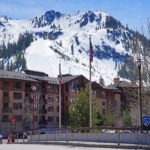
Golyam Perelik

🏔️ Overview
Golyam Perelik is the highest mountain in the Rhodope Mountains, rising above the forested highlands of southern Bulgaria near the city of Smolyan. With an official elevation commonly given as 2,191 meters (7,188 feet), the mountain crowns one of the Balkans’ oldest and most distinctive mountain landscapes.
Unlike the jagged granite summits of Bulgaria’s Rila and Pirin ranges, Golyam Perelik has the rounded, heavily forested character typical of the Western Rhodopes. Dense conifer forests cloak much of the surrounding terrain, while broad mountain meadows open across the higher ridges.
There is one important difference between Golyam Perelik and most major Bulgarian summits: the true summit is inside a restricted military area and is not open to hikers. Visitors can nevertheless approach the high ridge and explore the surrounding mountains, including the area around Perelik Hut.
Its combination of elevation, relatively gentle terrain, expansive forests, and cultural connections makes Golyam Perelik one of the most interesting high points in Bulgaria.
⚡ Fast Facts
| Fact | Details |
|---|---|
| Continent | Europe |
| Country | Bulgaria |
| State/Province | Smolyan Province |
| County/Region | Smolyan Municipality / Western Rhodopes |
| Range | Rhodope Mountains |
| Parent Peak | — — highest summit of the Rhodope Mountains |
| Elevation | 2,191 m / 7,188 ft |
| Prominence | Approximately 904 m / 2,966 ft |
| Isolation | Approximately 53.01 km / 32.94 mi |
| NHN | Falakron, southwest |
| Coordinates | Approximately 41.606° N, 24.575° E |
| Highest Point Of | Rhodope Mountains and Smolyan Province |
| Summit Access | Restricted because of a Bulgarian military installation |
🏔️ Field Guide Tip: Golyam Perelik is best treated as a high-mountain hiking destination rather than a conventional summit climb. The true highest point is restricted, but the surrounding ridges, forests, meadows, and nearby peaks provide plenty to explore.
📍 Location
Golyam Perelik rises in Smolyan Province in southern Bulgaria, approximately 19 kilometers west of the city of Smolyan. It forms part of the high Western Rhodopes, within the Perelik-Prespa section of the mountain system.
The Rhodope Mountains extend across southern Bulgaria and into northeastern Greece. They cover a broad region of rounded uplands, deep river valleys, limestone gorges, forests, caves, meadows, and traditional mountain villages.
Golyam Perelik stands in a particularly scenic portion of the range. Villages around its foothills include Gela, Shiroka Laka, Solishta, and Stikle, while the well-known mountain resort of Pamporovo lies farther east.
The mountain’s location near the Bulgarian-Greek border also places it within the wider highlands separating the interior Balkans from the northern Aegean region.
📏 Elevation & Prominence
Golyam Perelik’s widely accepted elevation is 2,191 meters (7,188 feet). Peakbagger’s topographic data gives a more precise summit elevation of approximately 2,190.2 meters (7,185.7 feet).
Peakbagger calculates the mountain’s clean topographic prominence at approximately 904 meters (2,966 feet). Its estimated isolation is about 53.01 kilometers (32.94 miles).
The nearest higher terrain in Peakbagger’s database is associated with Falakron, a mountain massif southwest of Golyam Perelik in northern Greece.
These measurements help illustrate Golyam Perelik’s importance. It is not merely a local hill on a high plateau—it rises substantially above the surrounding landscape and forms the unmistakable high point of the Rhodope Mountains.
🪨 Geology
Golyam Perelik belongs to the ancient geological landscape of the Rhodope massif, a complex region dominated by metamorphic rocks.
Much of the wider Rhodope Mountains consists of rocks such as gneiss and marble, together with granitic and other crystalline formations. These rocks preserve evidence of a long geological history involving deep burial, metamorphism, uplift, faulting, and erosion.
The landscape today is generally less sharply sculpted than the high peaks of Bulgaria’s Rila and Pirin Mountains. Instead, millions of years of weathering and erosion have created broad ridges, rounded summits, steep-sided valleys, and forest-covered slopes.
Limestone and marble elsewhere in the Rhodopes have also encouraged extensive karst development. Caves, sinkholes, cliffs, and underground drainage systems are characteristic features of several parts of the range.
One example close to Golyam Perelik is Lednitsata Cave, part of the area’s surprisingly varied underground landscape.
🌿 Flora & Fauna
The high Western Rhodopes support extensive forests and biologically rich mountain habitats.
Around Golyam Perelik, conifers dominate much of the upper landscape. Norway spruce and Scots pine are characteristic of the region, while beech and other deciduous trees become more important at lower elevations. Open meadows interrupt the forests near the high ridges, creating excellent habitat for wildflowers, grasses, insects, and mountain birds.
The broader Rhodope Mountains are among southeastern Europe’s notable wildlife regions. Their large forests provide habitat for mammals such as brown bears, gray wolves, red deer, roe deer, wild boar, and European wildcats.
The Western Rhodopes are also particularly valuable for birds. Raptors, woodpeckers, owls, and forest songbirds occupy different elevations and habitats. Research in the region has documented Tengmalm’s owl in old spruce and mixed conifer forests, including habitat within the wider Perelik area.
Above the forests, open ridges and mountain meadows create another ecological zone. Wild berries, mushrooms, herbs, and flowering plants can be abundant during the warmer months.
Visitors should avoid disturbing wildlife and remain on established routes where possible, especially in sensitive high-elevation habitats.
🥾 Hiking & Climbing Routes
Golyam Perelik is unusual because reaching the geographical summit is currently not permitted.
A Bulgarian military installation occupies the summit area, and visitors should respect all fences, signs, and access restrictions. Conditions and restricted boundaries can change, so hikers should verify local information before setting out.
Perelik Hut Approach
Perelik Hut is the main traditional base for exploring the upper mountain.
From the hut, walkers can continue toward the high ridge beneath the summit. Bulgarian travel information indicates that the base of the restricted summit area can be approached in roughly 40 minutes from Perelik Hut, depending on conditions and pace.
Although hikers cannot stand on the true summit, the upper slopes provide wide views across the rounded ridges and forests of the Rhodopes.
Exploring the Perelik Area
The broader Perelik region offers opportunities for:
- Day hiking
- Longer ridge walks
- Wildlife watching
- Mountain photography
- Caving
- Winter touring
- Exploring traditional Rhodope villages
The relatively rounded form of the mountains can make the terrain appear gentle, but weather remains a serious consideration. Fog, thunderstorms, snow, ice, and sudden temperature changes are possible at higher elevations.
Nearby Alternatives
Hikers interested in exploring additional high points can continue into the surrounding Western Rhodopes. Nearby summits include Shirokolushki Snezhnik, also associated with the name Orpheus Peak, which reaches roughly 2,188 meters.
The area also contains numerous lower ridges and forest trails that can provide a more satisfying hiking experience than simply walking toward the restricted Golyam Perelik summit.
🌤️ Best Time to Visit
For hiking, the most comfortable period is generally June through October, although conditions vary considerably from year to year.
Summer
June through August brings warmer temperatures, long daylight hours, green meadows, and abundant mountain vegetation. Summer is an excellent season for hiking and photography.
Afternoon thunderstorms can develop quickly, making an early start advisable for longer outings.
Autumn
September and early October can be especially beautiful. Cooler temperatures and changing forest colors make the Western Rhodopes particularly scenic.
Days also become shorter, and the first significant snowfalls may arrive surprisingly early at higher elevations.
Winter
The Rhodopes receive substantial snow, transforming the Perelik region into a winter landscape.
Ski touring and other winter activities are possible in the wider mountains, but deep snow, limited visibility, cold temperatures, and avalanche or navigation hazards require appropriate equipment and experience.
Spring
Snow can linger on the higher slopes during spring. Melting snow also makes some roads and trails wet or muddy.
Late spring gradually brings wildflowers and fresh growth to the mountain meadows.
🧭 Nearby Mountains & Attractions
Golyam Perelik is surrounded by several attractions that make the region worth exploring for more than a single hike.
Rhodope Mountains
The Rhodope Mountains stretch across southern Bulgaria into Greece and contain forests, gorges, caves, archaeological sites, villages, and hundreds of mountain summits.
Shirokolushki Snezhnik
At approximately 2,188 meters, Shirokolushki Snezhnik is one of the highest neighboring summits and lies close to the Perelik massif.
Smolyan
The city of Smolyan is the primary population center near Golyam Perelik and makes a useful base for exploring the surrounding Western Rhodopes.
Shiroka Laka
Shiroka Laka is one of the best-known traditional villages in the Rhodopes. Its stone houses, mountain setting, and musical traditions make it an appealing cultural stop.
Gela
The village of Gela sits beneath the high mountains and is closely associated with Rhodope folklore and traditional music.
Lednitsata Cave
The nearby Lednitsata Cave highlights the karst landscapes found in parts of the Rhodope Mountains.
Pamporovo
Pamporovo is one of Bulgaria’s major mountain resorts and provides accommodation, winter recreation, and access to numerous trails in the eastern part of the high Western Rhodopes.
💡 Fun Facts
- Golyam Perelik is the highest peak in the entire Rhodope Mountains.
- It is also the highest point in Bulgaria’s Smolyan Province.
- The mountain rises to approximately 2,191 meters, but Peakbagger’s topographic measurement gives 2,190.2 meters.
- The summit itself is closed to public access because of a military installation.
- Bulgarian sources associate the name Perelik with a Turkish-Persian expression interpreted as a gathering place of fairies.
- The mountain stands within the Perelik-Prespa section of the Western Rhodopes.
- Perelik Point on Robert Island in Antarctica’s South Shetland Islands was named after Golyam Perelik.
- Although the Rhodopes are lower than Bulgaria’s Rila and Pirin ranges, they cover an enormous area and contain some of the country’s most extensive mountain forests.
❓ FAQ
How high is Golyam Perelik?
Golyam Perelik reaches approximately 2,191 meters (7,188 feet) above sea level. Peakbagger lists a surveyed/topographic elevation of approximately 2,190.2 meters.
Is Golyam Perelik the highest mountain in Bulgaria?
No. Bulgaria’s highest mountain is Musala in the Rila Mountains at approximately 2,925 meters. Golyam Perelik is the highest summit of the Rhodope Mountains.
Can you hike to the summit of Golyam Perelik?
Visitors can hike into the upper mountain area, but the true summit is currently restricted because it contains a Bulgarian military installation. Hikers should obey posted boundaries and local regulations.
What is the prominence of Golyam Perelik?
Peakbagger currently lists a clean topographic prominence of approximately 904 meters (2,966 feet).
What is Golyam Perelik’s isolation?
Peakbagger gives an approximate topographic isolation of 53.01 kilometers (32.94 miles).
What is the nearest higher neighbor of Golyam Perelik?
Peakbagger identifies Falakron, southwest of Golyam Perelik, as the nearest higher neighbor in its database.
What mountain range is Golyam Perelik in?
Golyam Perelik is the highest summit of the Rhodope Mountains, a major mountain system extending across southern Bulgaria and northern Greece.
When is the best time to visit Golyam Perelik?
For hiking, June through September usually provides the most favorable conditions. Early October can also be beautiful, although colder weather and early snowfall become increasingly possible.
🔗 Related Articles
📚 Sources
- Peakbagger — Golyam Perelik
- Visit Smolyan — Golyam Perelik
- BDZ Passengers — Golyam Perelik
- GeoNames — Golyam Perelik
- Wild Rodopi — Rhodope Biodiversity
- Wikimedia Commons — Golyam Perelik