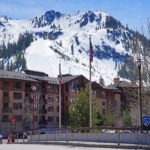
Mount Jezerce | Jezercë | Maja e Jezercës

🏔️ Overview
Mount Jezerce, more commonly written Maja e Jezercës or Maja Jezercë, is a spectacular limestone mountain in northern Albania. Rising to 2,694 meters (8,839 feet) above sea level, it is the highest peak in the Accursed Mountains (Albanian Alps) and the entire Dinaric Alps.
Although it is not Albania’s highest mountain—that distinction belongs to Mount Korab—Jezerce is one of the country’s most important summits. Its enormous topographic prominence, isolated position, rugged limestone cliffs, glacial valleys, and dramatic alpine setting make it one of the most commanding mountains of the western Balkans.
The mountain rises between the celebrated valleys of Theth and Valbonë, within the wild landscape of Alps of Albania National Park. Sharp ridges, pale limestone walls, scree slopes, high mountain basins, lingering snowfields, and small glacial lakes give the area an appearance more commonly associated with considerably higher Alpine ranges.
For experienced hikers and mountaineers, Maja e Jezercës is also one of northern Albania’s great summit objectives.
⚡ Fast Facts
| Fact | Details |
|---|---|
| Continent | Europe |
| Country | Albania |
| State/Province | Kukës County |
| County/Region | Northern Albania / Albanian Alps |
| Mountain Range | Accursed Mountains, Dinaric Alps |
| Parent Peak | Mount Korab |
| Elevation | 2,694 m / 8,839 ft |
| Prominence | 2,036 m / 6,680 ft |
| Isolation | Approximately 94 km / 58.4 mi |
| Nearest Higher Neighbor (NHN) | Korab, southeast |
| Coordinates | 42.442463° N, 19.812621° E |
| Mountain Type | Limestone and dolomite massif |
| Highest Point Of | Accursed Mountains and Dinaric Alps |
| Prominence Classification | Ultra-prominent peak |
| Protected Area | Alps of Albania National Park |
📍 Location
Mount Jezerce stands in the Albanian Alps of northern Albania, close to the country’s border with Montenegro.
The mountain occupies the heart of an exceptionally rugged collection of peaks between several famous Balkan valleys. Theth lies to the southwest, while Valbonë lies to the east. To the north, the mountains extend toward Montenegro and the settlements around Vusanje and Gusinje.
This position places Jezerce within one of southeastern Europe’s most dramatic mountain regions.
The Albanian Alps are also known as the Accursed Mountains, Prokletije, and Bjeshkët e Nemuna, depending on language and location. They form the highest and most rugged southeastern section of the much larger Dinaric mountain system.
Much of the Albanian side is now protected within Alps of Albania National Park, created in 2022 by combining several previously protected landscapes, including Theth and Valbonë Valley.
📏 Elevation & Prominence
At 2,694 meters (8,839 feet), Maja e Jezercës is the highest mountain in the entire Dinaric Alps.
It is also generally ranked as Albania’s second-highest major mountain, behind Mount Korab on the Albania–North Macedonia border.
Elevation, however, tells only part of Jezerce’s story.
The mountain has an exceptional topographic prominence of approximately 2,036 meters (6,680 feet). Any summit with at least 1,500 meters of prominence is classified as an ultra-prominent peak, placing Jezerce among a relatively small group of Europe’s most topographically independent mountains.
Peakbagger gives the mountain a true isolation of approximately 94 kilometers (58.4 miles) and identifies Korab to the southeast as its nearest higher neighbor.
That combination of elevation and enormous prominence explains why Jezerce dominates so much of the surrounding landscape.
🪨 Geology
Maja e Jezercës is primarily a mountain of limestone and dolomite, characteristic of much of the Albanian Alps and Dinaric mountain system.
Its pale, fractured rock produces the steep cliffs, towers, gullies, ridges, caves, scree fields, and karst terrain for which the region is famous.
The broader Albanian Alps contain extensive karst features, created as mildly acidic water gradually dissolves soluble carbonate rock. This process has produced caves, underground drainage systems, sinkholes, rugged rock formations, and complex mountain landscapes.
Glaciers have also played an enormous role in shaping Jezerce.
During colder periods of the Quaternary, glaciers occupied the surrounding valleys and carved large cirques and basins into the mountain. The Albanian National Agency of Protected Areas describes the Albanian Alps as having some of the most extensive relic glacial landforms in Albania.
Today, evidence of that glacial past survives in steep-walled cirques, U-shaped valleys, polished and broken rock, moraines, and numerous small alpine lakes.
One of the finest examples is Buni i Jezercës, the high basin north of the mountain, where small postglacial lakes lie beneath surrounding limestone peaks.
🌿 Flora & Fauna
The rocky upper slopes of Mount Jezerce are too high and exposed to support dense vegetation, but the surrounding Albanian Alps contain remarkably varied habitats.
At lower and middle elevations, forests include species such as European beech, silver fir, spruce, black pine, and Bosnian pine. Higher slopes transition into subalpine vegetation, alpine grasslands, rocky meadows, and eventually largely barren limestone.
The isolation and complex terrain of the Albanian Alps have also encouraged the development of numerous endemic and subendemic plants.
Wildlife inhabiting the wider national park includes some of Europe’s most impressive mountain mammals. Species recorded some of Europe’s most impressive mountain mammals. Species recorded within the Albanian Alps include:
- Brown bear
- Balkan lynx
- Chamois
- Roe deer
- European otter
- Wolves and other mountain predators
The region also supports a rich bird community that includes several species of eagles, falcons, owls, woodpeckers, and other birds associated with mountain forests and cliffs.
Most wildlife sightings are far more likely in the forested valleys and quieter slopes than on Jezerce’s exposed summit rocks.
🥾 Hiking & Climbing Routes
Reaching the summit of Maja e Jezercës is a serious mountain undertaking.
Although its normal summer approaches do not generally require sustained technical rock climbing, long distances, major elevation gain, exposed terrain, loose limestone, route-finding problems, snow, and rapidly changing weather make Jezerce considerably more demanding than an ordinary hiking summit.
Several approaches are possible.
From Valbonë
The route from Valbonë Valley, often beginning around Fusha e Gjesë and passing through the Rragam area, is one of the most popular approaches.
SummitPost lists approximately 1,750 meters of ascent and roughly 10 kilometers to the summit, with an estimated ascent time of about six to seven hours.
The route crosses increasingly rocky terrain before reaching the high summit area.
From Vusanje, Montenegro
A northern approach begins near Vusanje in Montenegro and enters the spectacular Buni i Jezercës basin.
This route passes alpine lakes and dramatic limestone scenery before approaching the mountain’s northern slopes.
SummitPost describes the route as involving approximately 1,700 meters of ascent over about 13 kilometers, with roughly seven to eight hours required for the ascent.
Because this approach crosses an international border into Albania, hikers should verify current border-crossing requirements before attempting it.
From Theth
Jezerce can also be approached from Theth.
One option crosses the area around Qafa e Pejës, while another longer approach connects with terrain toward Qafa e Valbonës.
Routes from Theth can involve exceptionally large elevation gains and more demanding navigation. Some variations are less clearly marked than the normal Valbonë route.
Summit Terrain
The final approach crosses broken limestone and exposed mountain terrain.
Snow can remain in gullies and shaded areas surprisingly late into summer. Depending on the year, an ice axe and crampons may still be useful or necessary on particular sections even when valleys below are experiencing warm summer conditions.
🏔️ Field Guide Tip: Do not underestimate Maja e Jezercës simply because its normal summer routes are sometimes described as hiking or scrambling routes. The combination of exposure, loose limestone, lingering snow, large elevation gain, and limited escape options makes mountain experience and good judgment extremely important.
🌤️ Best Time to Visit
The most favorable period for a summer ascent is generally late July through September, when high-elevation snow has usually retreated and days are relatively long.
Conditions vary considerably from year to year.
Snowfields can linger into August, particularly in gullies and on shaded northern slopes. Thunderstorms, fog, strong winds, and sudden temperature drops are also possible.
Earlier in the year, the mountain becomes a significantly more technical snow and mountaineering objective.
Anyone planning an ascent should check:
- Recent trail reports
- Local weather forecasts
- Snow conditions
- Border regulations when approaching from Montenegro
- Current advice from local guides or accommodation providers
A very early start is advisable because most summit routes involve a long day in exposed alpine terrain.
🧭 Nearby Mountains & Attractions
Maja e Jezercës lies within one of the richest mountain landscapes in the Balkans.
Theth
Theth is one of Albania’s best-known mountain villages. Surrounded by high limestone peaks, it is a major base for hiking in the western Albanian Alps.
The Theth Valley also provides access to waterfalls, traditional stone buildings, mountain passes, and numerous side valleys.
Valbonë Valley
The Valbonë Valley lies east of Jezerce and is famous for its steep mountains, clear river, forests, and hiking trails.
The popular hike between Valbonë and Theth crosses a high mountain pass south of Jezerce and provides excellent views into the surrounding peaks.
Buni i Jezercës
North of Jezerce lies the spectacular Buni i Jezercës basin.
Small glacial lakes scattered through the limestone landscape are among the mountain’s most distinctive features. The association with these lakes is also reflected in the mountain’s name.
Maja e Radohinës
Nearby Maja e Radohinës, at approximately 2,568 meters, is another major summit of the Albanian Alps.
Its rugged limestone landscape and close proximity to Theth make it a natural companion mountain for anyone exploring Jezerce and the surrounding range.
📜 History of Exploration
For a surprisingly long time, the identity of the highest mountain in the Accursed Mountains was uncertain.
Early explorers lacked reliable surveys of this remote corner of the Balkans. Hungarian geologist and explorer Franz Nopcsa investigated the region during the early 1900s and helped establish that Jezerce was higher than several other summits previously believed to dominate the range.
The climbing history of the summit became clearer in 1929.
British mountaineers C. M. Sleeman, W. T. Elmslie, and L. A. Ellwood reached the summit on July 26, 1929. However, they discovered a recently constructed cairn there, indicating that Italian surveyors had apparently reached the summit earlier while mapping the region.
Sleeman later wrote about the mountains of Albania in The Alpine Journal in 1930, providing an important early English-language record of exploration in these then little-known mountains.
💡 Fun Facts
- Maja e Jezercës is the highest peak in the Dinaric Alps.
- It rises 2,694 meters (8,839 feet) above sea level.
- Its prominence exceeds 2,000 meters, making it a European ultra-prominent summit.
- Despite being the highest mountain in the Albanian Alps, it is only the second-highest mountain in Albania.
- Peakbagger identifies Korab as the nearest higher mountain.
- The surrounding landscape contains some of Albania’s finest glacial landforms.
- Small glacial lakes occur in the Buni i Jezercës basin beneath the mountain.
- The name Jezerce is associated with the Slavic word jezero, meaning “lake.”
- The mountain can be approached from both Albania and Montenegro.
- The surrounding national park contains bears, chamois, lynx, extensive forests, and numerous endemic plant species.
❓ FAQ
How high is Mount Jezerce?
Mount Jezerce, or Maja e Jezercës, rises to 2,694 meters (8,839 feet) above sea level.
Is Mount Jezerce the highest mountain in Albania?
No. Mount Korab is higher. Jezerce is generally regarded as Albania’s second-highest major mountain.
Is Jezerce the highest mountain in the Dinaric Alps?
Yes. Maja e Jezercës is the highest summit of both the Accursed Mountains and the wider Dinaric Alps.
How prominent is Mount Jezerce?
The mountain has approximately 2,036 meters (6,680 feet) of topographic prominence, qualifying it as an ultra-prominent peak.
What is the nearest higher mountain to Jezerce?
Peakbagger identifies Korab, southeast of Jezerce, as its nearest higher neighbor.
Can you hike to the summit?
Yes, but the ascent is suitable primarily for experienced mountain hikers and mountaineers. Routes involve major elevation gain, rugged limestone, exposed sections, loose rock, difficult navigation, and potentially persistent snow.
What is the easiest route up Maja e Jezercës?
The Valbonë approach is commonly regarded as one of the normal and more popular routes during summer conditions.
What does the name Jezerce mean?
The name is associated with the Slavic word jezero, meaning “lake,” referring to the small alpine lakes found in the glacial basins around the mountain.
Is Mount Jezerce inside a national park?
Yes. The Albanian side lies within Alps of Albania National Park, a large protected area established in 2022.
🔗 Related Articles
📚 Sources
- Peakbagger — Maja e Jezercës
- Albanian National Agency of Protected Areas — Alps of Albania National Park
- SummitPost — Maja Jezercë
- PeakVisor — Maja e Jezercës
- The Alpine Journal — 1930 Contents