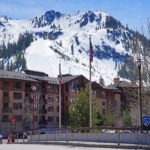
Cathedral Peak | Cathedralpiek

Cathedral Peak rises dramatically from the central Drakensberg of KwaZulu-Natal, South Africa, forming one of the most recognizable summits in the Cathedral Ridge. Known for its steep-sided profile, sweeping grasslands, rugged basalt cliffs, and demanding summit scramble, the mountain is both a striking landmark and one of the classic high-level hiking objectives of the South African Drakensberg.
The peak is also known locally as Mponjwana, often translated as “Little Horn.” Although its summit reaches only a little above 3,000 meters, Cathedral Peak stands prominently apart from much of the surrounding terrain and offers an imposing appearance from the valleys below.
🏔️ Overview
Cathedral Peak is part of the spectacular Cathedral Ridge, a spur extending outward from the main Drakensberg escarpment. The ridge contains a collection of unusually shaped summits, including the Bell, Inner Horn, Outer Horn, Chessmen, and Mitre Peak.
The mountain lies within the wider Maloti-Drakensberg landscape, an internationally important region recognized for both its extraordinary natural scenery and its cultural heritage. The UNESCO-listed Maloti-Drakensberg Park protects soaring basalt cliffs, sandstone formations, high-altitude grasslands, deep valleys, endemic plants, threatened wildlife, and an exceptional concentration of San rock art.
⚡ Fast Facts
| Fact | Details |
|---|---|
| Continent | Africa |
| Country | South Africa |
| State/Province | KwaZulu-Natal |
| County/Region | uThukela District Municipality |
| Range | Drakensberg |
| Parent Peak | Thabana Ntlenyana (island parent) |
| Elevation | About 3,004 m / 9,856 ft |
| Prominence | About 345 m / 1,132 ft |
| Isolation | About 1.7 km / 1.1 mi |
| NHN | Outer Horn |
| Coordinates | 28.9253° S, 29.1342° E |
| Alternative Names | Mponjwana; Cathedralpiek |
| Mountain Type | Basalt-dominated mountain |
| First Recorded Ascent | 1917, D.W. Basset-Smith and R.G. Kingdon |
| Protected Area | Maloti-Drakensberg Park region |
PeakVisor gives Cathedral Peak an elevation of 3,005 meters, while several other commonly used references give 3,004 meters. The one-meter difference is essentially a matter of rounding and elevation datasets rather than a meaningful disagreement about the mountain’s height. PeakVisor calculates approximately 345 meters of prominence and identifies Outer Horn, around 1.7 kilometers south-southwest, as the nearest higher neighbor.
📍 Location
Cathedral Peak is situated in KwaZulu-Natal, in the Drakensberg mountains of eastern South Africa. It rises northwest of the Cathedral Peak Hotel and Didima area, which provide access to many hiking routes in this section of the range.
The broader Drakensberg follows the mountainous borderlands between South Africa and Lesotho. Cathedral Peak itself lies on the South African side rather than directly on the international border.
Ezemvelo KZN Wildlife describes Didima–Cathedral Peak as a major hiking destination, with routes ranging from short scenic walks to demanding mountain excursions and multi-day wilderness hikes.
📏 Elevation & Prominence
At approximately 3,004 meters (9,856 feet) above sea level, Cathedral Peak is one of the numerous 3,000-meter summits of the Drakensberg.
Its 345-meter prominence is significant enough to give the mountain a distinct identity despite the presence of several similarly high summits nearby. Cathedral Peak’s steep profile and position on an outward-projecting ridge make it appear particularly dramatic when viewed from the lower valleys.
The nearest higher summit is Outer Horn, located approximately 1.7 kilometers south-southwest. Outer Horn rises slightly higher according to modern topographic datasets. Cathedral Peak’s island parent is Thabana Ntlenyana, the 3,482-meter summit in Lesotho that is the highest mountain in southern Africa.
🪨 Geology
Cathedral Peak owes much of its dramatic form to the distinctive geology of the Drakensberg.
The upper mountains are dominated by resistant basalt, while lower sections of the landscape expose older sandstone formations. Across the Maloti-Drakensberg region, erosion acting on these different rock layers has produced the cliffs, pillars, ridges, caves, overhangs, and deeply cut valleys that characterize the range.
The basalt forming the high Drakensberg is associated with enormous volcanic eruptions that took place during the Early Jurassic as Gondwana began breaking apart. Over millions of years, erosion stripped away large quantities of surrounding material while leaving resistant portions of the basalt landscape standing as prominent ridges and peaks.
Cathedral Peak is therefore not a volcano in the sense of being an individual volcanic cone. Instead, it is an erosional mountain sculpted from ancient volcanic rocks belonging to the much larger Drakensberg geological system. UNESCO highlights the region’s combination of soaring basalt buttresses and golden sandstone ramparts as one of the defining elements of its scenery.
🌿 Flora & Fauna
Cathedral Peak lies within one of southern Africa’s most important mountain ecosystems.
The enormous variation in altitude creates a sequence of habitats ranging from lower grasslands and valleys to rocky slopes and high-altitude vegetation. UNESCO notes that the Maloti-Drakensberg Park protects more than 250 endemic plant species and contains much of KwaZulu-Natal’s remaining subalpine and alpine vegetation.
The surrounding mountains are especially important for birds of prey. Both the bearded vulture and Cape vulture occur within the protected landscape, using cliffs and remote mountain terrain for nesting and foraging.
Large mammals such as eland may also be encountered within the wider Drakensberg environment, while baboons, rock hyraxes, smaller mammals, reptiles, and a wide variety of mountain birds occupy different elevations.
The combination of rugged terrain and changing elevation creates numerous ecological niches, helping explain why the Drakensberg is considered a major center of plant diversity and endemism.
🥾 Hiking & Climbing Routes
The ascent of Cathedral Peak is one of the classic challenging day hikes of the Drakensberg.
Most summit attempts begin in the Cathedral Peak–Didima area and climb steadily toward the Cathedral Ridge. The route passes through increasingly rugged terrain before reaching steeper upper sections where straightforward hiking gives way to scrambling.
Depending on the precise route and GPS measurement, a full summit outing is commonly described as roughly 19–22 kilometers round trip, with approximately 1,500–1,700 meters of elevation gain. Strong parties may complete the climb in a long day, often requiring around eight to ten hours or more.
The upper mountain is considerably more serious than an ordinary hiking trail. Exposed scrambling is required, and climbers may encounter fixed chains or points where a rope can provide additional security. Mountain Forecast classifies the standard ascent as a scramble, while experienced local climbers describe portions of the standard route as exposed enough that some guided parties use ropes.
Cathedral Peak was first recorded as being climbed in 1917 by D.W. Basset-Smith and R.G. Kingdon, who ascended via a gully.
🏔️ Field Guide Tip: Cathedral Peak should not be judged by distance alone. The substantial elevation gain, exposed scrambling, rapidly changing mountain weather, and long descent make it a serious full-day objective. Start early, carry layers and sufficient water, and consider an experienced local guide if you are unfamiliar with exposed Drakensberg scrambling.
🌤️ Best Time to Visit
The cooler and generally drier portion of the year is often preferred for major Drakensberg hikes.
Mountain Forecast identifies April through September among the better months for climbing Cathedral Peak. Autumn can offer cooler temperatures and relatively stable conditions, while winter often brings clear visibility but may also produce freezing temperatures, strong winds, snow, ice, and limited water availability on higher routes.
Summer brings greener landscapes and warmer conditions but also a greater likelihood of afternoon thunderstorms. Lightning is a particularly serious hazard on exposed ridges and summits.
Conditions in the Drakensberg can change very quickly at any time of year. A clear morning in the valleys does not guarantee safe summit weather several hours later.
🧭 Nearby Mountains & Attractions
Cathedral Peak is surrounded by an unusually dense collection of spectacular mountain scenery.
Immediately nearby are Outer Horn, Inner Horn, the Bell, the Chessmen, the Twins, and Mitre Peak. Together these summits form the dramatic Cathedral Ridge skyline. Farther afield are major Drakensberg landmarks including Champagne Castle, Mont-aux-Sources, Mafadi, and the Amphitheatre.
The Didima area also offers easier hikes for visitors who do not intend to climb Cathedral Peak itself. Shorter routes lead through forest, valleys, waterfalls, rock formations, and scenic viewpoints, making the area worthwhile even without a summit attempt.
The wider Maloti-Drakensberg Park is also internationally renowned for its San rock art. UNESCO estimates that the World Heritage property contains around 690 rock-art sites and probably more than 35,000 individual images representing a cultural tradition extending across thousands of years.
💡 Fun Facts
Cathedral Peak is also called Mponjwana, meaning “Little Horn,” by the local amaNgwane people.
Despite the name “Cathedral Peak,” the mountain does not stand alone. It belongs to the Cathedral Ridge, whose collection of towers, horns, and pinnacles creates a skyline reminiscent of elaborate Gothic architecture.
The summit exceeds the symbolic 3,000-meter mark, placing it among South Africa’s major high mountain summits.
Cathedral Peak’s first recorded ascent took place in 1917.
Its nearest higher neighbor is not Mitre Peak but Outer Horn, only about 1.7 kilometers away according to current topographic data.
❓ FAQ
How high is Cathedral Peak in South Africa?
Cathedral Peak is approximately 3,004 meters (9,856 feet) above sea level. Some modern datasets round its elevation to 3,005 meters.
Where is Cathedral Peak?
It is located in the Drakensberg mountains of KwaZulu-Natal, South Africa, within the Cathedral Peak–Didima region.
What is Cathedral Peak’s nearest higher neighbor?
The nearest higher neighbor is Outer Horn, approximately 1.7 kilometers south-southwest of Cathedral Peak.
What is Cathedral Peak’s prominence?
Its topographic prominence is approximately 345 meters (1,132 feet).
Can you hike to the top of Cathedral Peak?
Yes, but the standard summit route is a strenuous mountain ascent rather than a simple walking trail. It involves major elevation gain, steep terrain, exposed scrambling, and sections where some climbers or guides use ropes for additional security.
How long does it take to climb Cathedral Peak?
A one-day summit attempt commonly takes around 8–10 hours or longer, depending on fitness, route conditions, weather, and experience. The complete outing is roughly 19–22 kilometers in many modern route descriptions.
Is Cathedral Peak part of a UNESCO World Heritage Site?
Cathedral Peak lies within the broader protected Drakensberg landscape associated with the Maloti-Drakensberg Park World Heritage Site, recognized for outstanding natural beauty, biodiversity, and San rock art.
What is the best time to climb Cathedral Peak?
April through September is often favored for climbing because of generally cooler and drier conditions, although winter can bring snow, ice, freezing temperatures, and strong winds. Mountain weather should always be checked immediately before setting out.
🔗 Related Articles
- Drakensberg
- Outer Horn
- Mitre Peak (South Africa)
- Thabana Ntlenyana
- Mountains in Africa
- The World’s Top 100 Mountain Ranges
📚 Sources
- PeakVisor — Cathedral Peak
- UNESCO World Heritage Centre — Maloti-Drakensberg Park
- Ezemvelo KZN Wildlife — Didima (Cathedral Peak)
- Mountain Forecast — Cathedral Peak Mountain Information
- Wikipedia — Cathedral Peak (South Africa)