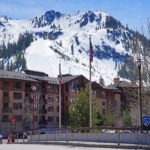
🏔️ Overview
Slovakia is a compact Central European country with an exceptionally varied mountain landscape. Sharp granite summits rise above glacial valleys in the north, long forested ridges cross the center of the country, and limestone plateaus, volcanic hills, caves, and deep gorges appear farther south.
Almost all of Slovakia’s mountains belong to the Carpathian mountain system, which curves across Central and Eastern Europe. The country’s highest and most dramatic terrain is found in the Tatra Mountains, where Gerlachovský štít reaches 2,655 meters and forms the highest point in Slovakia and the entire Carpathian chain.
Although the High Tatras receive most of the international attention, they represent only one part of Slovakia’s mountain geography. The Low Tatras offer long ridge hikes and extensive cave systems, Malá Fatra is known for limestone summits and narrow gorges, Veľká Fatra contains broad meadows and heavily forested valleys, and the Slovak Karst protects one of Central Europe’s most important cave landscapes.
Slovakia’s location also makes it a natural continuation of the mountain regions described in Mountains in Poland, Mountains in Czechia, and Mountains in Romania.
⚡ Fast Facts
| Fact | Details |
|---|---|
| Continent | Europe |
| Country | Slovakia |
| Major Mountain System | Carpathian Mountains |
| Highest Mountain Range | Tatra Mountains |
| Highest Mountain | Gerlachov Peak — 2,655 m / 8,711 ft |
| Highest Peak of the Low Tatras | Ďumbier — approximately 2,045 m / 6,709 ft |
| National Symbol Mountain | Kriváň — 2,494 m / 8,182 ft |
| Notable Border Summit | Rysy on the Slovakia–Poland border |
| Major Ranges | High Tatras, Western Tatras, Belianske Tatras, Low Tatras, Malá Fatra, Veľká Fatra, Choč Mountains, Slovak Ore Mountains and Little Carpathians |
| Number of National Parks | Nine |
| Popular Activities | Hiking, mountaineering, skiing, caving, cycling and wildlife watching |
| Best General Hiking Season | June through September, depending on trail rules and snow conditions |
| Essential Preparation | Carry the Ten Essentials for Hiking and check local mountain forecasts |
🗺️ Major Mountain Ranges in Slovakia
High Tatras
The High Tatras, or Vysoké Tatry, contain Slovakia’s highest, steepest, and most alpine terrain. They rise abruptly above the Poprad Basin in northeastern Slovakia and continue northward to the Polish border.
Despite occupying a relatively small area, the High Tatras contain jagged granite ridges, glacial cirques, waterfalls, alpine meadows, dwarf-pine slopes, and more than 100 mountain lakes known locally as plesá. Their appearance is much more alpine than the lower, predominantly forested mountains found across most of the Carpathians.
Important High Tatra summits include:
- Gerlachov Peak
- Lomnický štít
- Ľadový štít
- Pyšný štít
- Lavínový štít
- Vysoká
- Kriváň
- Rysy
Many of the highest summits do not have ordinary marked hiking trails. Some require technical mountaineering ability, membership in an approved climbing organization, or the services of an authorized mountain guide.
Western Tatras
The Western Tatras, also known as the Západné Tatry, extend westward from the High Tatras along Slovakia’s northern border. Their summits are generally rounder and more grass-covered, although the Roháče section contains dramatic rocky ridges and exposed hiking routes.
Bystrá, at 2,248 meters, is the highest mountain in the Western Tatras. Other important summits include Baníkov, Baranec, Jakubina, Plačlivé, Ostrý Roháč and Volovec.
The Western Tatras are especially popular with hikers seeking long ridge walks, open views and a slightly quieter alternative to the busiest High Tatra valleys.
Belianske Tatras
The Belianske Tatras form a distinctive limestone and dolomite range east of the High Tatras. Their pale cliffs, grassy slopes and rich plant communities differ noticeably from the darker granite landscape farther west.
Much of the range is subject to strict conservation measures, and access to several areas is limited. The Belianska Cave, however, provides visitors with an opportunity to explore the region’s underground geology.
Low Tatras
The Low Tatras stretch across central Slovakia for approximately 80 kilometers. Although lower than the High Tatras, they contain an extensive high ridge with several summits above 2,000 meters.
Ďumbier is the range’s highest peak, followed by Štiavnica and Chopok. The central crest provides one of Slovakia’s classic long-distance hiking experiences, with broad views toward the High Tatras, Veľká Fatra and surrounding valleys.
Other significant Low Tatra mountains include Dereše, Chabenec, Kráľova hoľa and Veľká Chochuľa.
The Low Tatras are also known for their limestone and cave systems. The Demänovská Valley contains some of Slovakia’s best-known caves, while the Jasná area beneath Chopok is the country’s largest ski destination.
Malá Fatra
Malá Fatra, or Little Fatra, rises in northwestern Slovakia near the city of Žilina. The Váh River divides it into two main sections.
The range combines wooded valleys, limestone cliffs, open ridges and unusual rock formations. Its best-known mountain is Veľký Rozsutec, a sharply shaped limestone summit that has become one of Slovakia’s most recognizable natural landmarks.
The main ridge includes Veľký Kriváň, the highest point in the range, as well as Malý Kriváň, Chleb, Stoh and Poludňový grúň. The gorges and waterfalls of Jánošíkove diery provide a popular lower-elevation adventure involving ladders, footbridges and narrow passages.
Veľká Fatra
Veľká Fatra lies in central Slovakia between the Malá Fatra and Low Tatras. It is characterized by extensive forests, long secluded valleys, rolling ridges and broad mountain meadows.
Ostredok is the range’s highest summit at approximately 1,596 meters. Other prominent mountains include Krížna, Rakytov, Ploská and Borišov.
Veľká Fatra is generally less rugged than the High Tatras, but its distances, changeable weather and remote valleys can still make hikes demanding. It is an excellent destination for multi-day walking, wildlife observation and quieter ridge travel.
Choč Mountains
The Choč Mountains form a relatively small but striking limestone range between the Western Tatras, Veľká Fatra and Low Tatras.
Veľký Choč, rising to 1,611 meters, is the highest and most famous mountain in the range. Because it stands apart from higher neighboring ridges, its summit offers an unusually broad panorama across northern and central Slovakia.
The range also contains deep valleys, cliffs, caves and the narrow rock passage known as the Prosiecka Valley.
Slovak Ore Mountains
The Slovak Ore Mountains, or Slovenské rudohorie, cover a broad area of central and eastern Slovakia. Rather than forming a single narrow ridge, they consist of numerous mountain groups, plateaus, basins and volcanic or mineral-rich uplands.
Important sections include the Slovak Paradise, Muránska Planina, Volovské vrchy, Stolické vrchy and Veporské vrchy. Stolica, at approximately 1,476 meters, is generally recognized as the highest mountain in the broader region.
Little Carpathians
The Little Carpathians begin near Bratislava and extend northeastward through western Slovakia. Their elevations are modest compared with the Tatras, but they are among the country’s most accessible mountains.
Záruby, at 768 meters, is the range’s highest point. Forest trails, castle ruins, limestone caves, vineyards and viewpoints make the Little Carpathians popular for day hiking and cycling.
⛰️ Ten Highest Mountains in Slovakia
The ten highest named topographic features in Slovakia are all located in the High Tatras.
| Rank | Mountain | Elevation | Range |
|---|---|---|---|
| 1 | Gerlachovský štít | 2,655 m / 8,711 ft | High Tatras |
| 2 | Gerlachovská veža | 2,642 m / 8,668 ft | High Tatras |
| 3 | Lomnický štít | 2,634 m / 8,638 ft | High Tatras |
| 4 | Ľadový štít | 2,627 m / 8,619 ft | High Tatras |
| 5 | Pyšný štít | approximately 2,623 m / 8,605 ft | High Tatras |
| 6 | Zadný Gerlach | 2,616 m / 8,583 ft | High Tatras |
| 7 | Lavínový štít | 2,606 m / 8,550 ft | High Tatras |
| 8 | Malý Ľadový štít | 2,602 m / 8,537 ft | High Tatras |
| 9 | Kotlový štít | 2,601 m / 8,533 ft | High Tatras |
| 10 | Lavínová veža | 2,600 m / 8,530 ft | High Tatras |
Elevations can vary by one or two meters among maps and databases. Gerlachovský štít, for example, is precisely measured at approximately 2,654.4 meters but is normally rounded to 2,655 meters.
Several entries in the table are subsidiary summits or rock towers with limited topographic prominence. A ranking restricted to independent mountains would therefore produce a different list.
🌟 Famous Mountains in Slovakia
Gerlachovský štít
Gerlachovský štít is the highest mountain in Slovakia, the High Tatras and the entire Carpathian system. Its massive granite summit rises approximately 2,000 meters above the surrounding valleys.
There is no ordinary marked tourist path to the summit. Standard ascents involve exposed terrain and are normally completed with an authorized mountain guide.
Kriváň
Kriváň is not Slovakia’s highest mountain, but it may be the country’s most culturally important summit. Its distinctive crooked profile has long been associated with Slovak national identity and appears on Slovak euro coins.
A marked hiking route reaches the summit, although the ascent is steep, rocky and physically demanding.
Lomnický štít
Lomnický štít is one of the highest and most recognizable mountains in Slovakia. A cable car provides access to a station near its 2,634-meter summit, where an astronomical and meteorological observatory operates.
The limited capacity and exposed setting make advance planning important, particularly during the busiest travel periods.
Rysy
Rysy stands on the Slovakia–Poland border and consists of several summits. Its middle summit, located in Slovakia, is the highest at approximately 2,503 meters, while the northwestern summit forms the highest point lying entirely within Poland.
The Slovak route is one of the most popular high-mountain hikes in the Tatras, although steep sections, chains and lingering snow can make it challenging.
Ďumbier
Ďumbier is the highest mountain in the Low Tatras. Its open summit provides views across central Slovakia and toward the distant High Tatras.
Many hikers combine Ďumbier with nearby Chopok as part of a high ridge traverse.
Veľký Kriváň
Veľký Kriváň is the highest summit in Malá Fatra. It can be reached by hiking along the range’s open ridge, while a cable car to nearby Snilovské sedlo shortens the ascent.
Veľký Rozsutec
Veľký Rozsutec is celebrated for its steep limestone profile, flower-rich slopes and views across Malá Fatra. Although lower than many Tatra summits, its sharp shape and exposed upper trail make it one of Slovakia’s most memorable mountains.
🪨 Geology and Mountain Landscapes
Slovakia’s mountains contain an unusually diverse mixture of rock types and landforms.
The central core of the High Tatras is dominated by granite and related crystalline rocks. Glaciers repeatedly shaped these mountains during the Ice Age, creating cirques, U-shaped valleys, polished rock surfaces, moraines and alpine lakes.
The Belianske Tatras, Choč Mountains, parts of Malá Fatra and many other western Slovak ranges contain extensive limestone and dolomite. Water dissolving these rocks has produced caves, sinkholes, underground rivers, narrow gorges and steep-sided karst plateaus.
Volcanic mountains are also widespread. The Štiavnické vrchy, Kremnické vrchy, Poľana, Vtáčnik and Vihorlat Mountains developed from ancient volcanic activity. Their original cones and craters have been heavily altered by erosion, but lava flows, volcanic rocks and caldera-like structures remain visible.
The result is a country where a traveler can encounter alpine granite summits, grassy ridges, volcanic uplands and elaborate cave systems within relatively short distances.
🌿 Flora and Fauna
Elevation, geology and climate create several distinct vegetation zones in Slovakia’s mountains.
Lower slopes commonly support beech, fir, maple and mixed woodland. Spruce becomes more dominant at higher elevations, followed by dwarf mountain pine near the treeline. Alpine grasslands and cold-resistant plants occupy the highest Tatra slopes.
The Tatra chamois is one of Slovakia’s most distinctive animals. This isolated Carpathian subspecies is specially adapted to steep, rocky terrain. Alpine marmots inhabit high meadows and boulder fields, while golden eagles patrol the mountain valleys.
Slovakia’s larger forested ranges also support:
- Brown bears
- Gray wolves
- Eurasian lynx
- Red deer
- Wild boar
- European otters
- Western capercaillie
European bison have also been restored to parts of northeastern Slovakia, particularly around Poloniny National Park.
Wild animals generally avoid people, but hikers should store food properly, remain alert in dense vegetation and avoid approaching or feeding wildlife.
🥾 Hiking and Climbing in Slovakia
Slovakia has a dense system of color-marked hiking trails connecting valleys, villages, ridges, mountain huts and summits. Routes range from gentle forest walks to technical mountaineering objectives.
Popular mountain experiences include:
- Hiking from Štrbské Pleso toward Popradské pleso
- Climbing Rysy from the Slovak side
- Ascending Kriváň
- Traversing the Ďumbier–Chopok ridge
- Walking the main Malá Fatra ridge
- Climbing Veľký Rozsutec
- Exploring the ladders and gorges of Slovak Paradise
- Hiking through the Dunajec Gorge in Pieniny National Park
- Completing sections of the long-distance Cesta hrdinov SNP trail
Marked trails do not necessarily mean easy terrain. Routes may include chains, ladders, exposed ledges, loose rock, steep elevation gains and snowfields.
🏔️ Field Guide Tip: High Tatra weather can change within minutes. Carry insulating and waterproof layers even when the valley forecast appears warm. Study the route before leaving and pack the Ten Essentials rather than relying entirely on signs or a phone.
Many high-elevation trails in Tatra National Park are subject to seasonal closures. Regulations, permitted routes and opening dates should always be checked with the park administration before a hike.
Technical climbing and off-trail travel are more tightly controlled than ordinary hiking. Climbers planning unmarked routes should review current park regulations and local mountaineering requirements.
🌤️ Best Time to Visit
Summer
Late June through September generally offers the best conditions for high-elevation hiking. Trails are more likely to be free of snow, mountain huts are operating and daylight hours are long.
July and August are normally the busiest months, especially around Štrbské Pleso, Tatranská Lomnica and the most popular summit routes.
Autumn
September and early October can bring cooler air, colorful forests and quieter trails. Conditions become less predictable later in the season, and early snowfall is possible at higher elevations.
Winter
Slovakia is a major winter-sports destination, with skiing centered around Jasná, Tatranská Lomnica, Štrbské Pleso and numerous smaller resorts.
Winter hiking requires appropriate experience and equipment. Avalanche danger, ice, deep snow, whiteout conditions and short daylight hours can transform familiar summer routes into serious undertakings.
Spring
Spring is often wet and unstable. Snow can remain on high trails well into June, while melting snow increases water levels in streams and gorges. Many high Tatra paths also remain seasonally closed during part of this period.
🧭 National Parks and Mountain Attractions
Slovakia has nine national parks, most of which protect mountainous or upland terrain.
Tatra National Park
Slovakia’s oldest national park protects the High, Western and Belianske Tatras. Its landscapes include the country’s highest summits, alpine lakes, waterfalls and rare high-mountain wildlife.
Low Tatras National Park
The country’s largest national park includes Ďumbier, Chopok, long ridge routes, deep forests and major cave systems.
Malá Fatra National Park
Malá Fatra protects Veľký Rozsutec, the Jánošíkove diery gorges and much of the range’s main ridge.
Veľká Fatra National Park
This park is known for its extensive forests, mountain meadows, quiet valleys and traditional pastoral landscapes.
Slovak Paradise National Park
Slovak Paradise contains limestone plateaus, waterfalls and narrow gorges equipped with ladders, chains and metal walkways.
Pieniny National Park
Slovakia’s smallest national park protects the Dunajec River Gorge and a distinctive landscape shared with Poland.
Muránska Planina National Park
Muránska Planina contains forested karst plateaus, caves, cliffs, wild meadows and the ruins of Muráň Castle.
Slovak Karst National Park
Located beside the Hungarian border, the Slovak Karst contains vast limestone plateaus and hundreds of caves and abysses. Several caves belong to a transboundary UNESCO World Heritage property.
Poloniny National Park
Poloniny protects remote forests in far northeastern Slovakia. Its old-growth beech forests form part of a multinational UNESCO World Heritage property, and the park is one of Slovakia’s most secluded mountain destinations.
💡 Fun Facts
- Gerlachovský štít is the highest mountain not only in Slovakia but in the entire Carpathian mountain system.
- The Tatra Mountains are sometimes described as the “miniature Alps” because dramatic alpine terrain is concentrated within such a small area.
- Kriváň appears on Slovakia’s one-, two- and five-cent euro coins.
- Tatra National Park contains more than 100 alpine lakes.
- All ten of Slovakia’s highest named summits are in the High Tatras.
- Slovakia’s mountains include crystalline granite massifs, limestone karst, volcanic ranges and heavily forested ridges.
- The country’s nine national parks protect landscapes ranging from alpine summits to ancient beech forests.
- Rysy includes both Slovakia’s highest border summit and Poland’s national high point.
- The Low Tatras contain one of Slovakia’s finest long-distance mountain ridges.
- Bratislava lies close to the Little Carpathians, making mountain trails accessible directly from the country’s capital region.
❓ Frequently Asked Questions
What is the highest mountain in Slovakia?
Gerlachovský štít is the highest mountain in Slovakia at approximately 2,655 meters, or 8,711 feet. It is also the highest summit in the Carpathian Mountains.
What is the most famous mountain range in Slovakia?
The High Tatras are Slovakia’s best-known mountain range. They contain the country’s highest summits, glacial lakes, alpine valleys and most dramatic mountaineering terrain.
Are the Tatra Mountains in Slovakia or Poland?
The Tatras extend across both countries, but most of their area and all of their very highest summits are in Slovakia. The range forms part of the international border.
Can ordinary hikers climb Gerlachovský štít?
There is no standard marked tourist trail to the summit. Most recreational visitors climb Gerlach with an authorized mountain guide because the routes involve exposed, technical and unmarked terrain.
What is the highest mountain that can be reached by a marked trail?
Several high summits can be reached by marked routes, including Kriváň and Rysy. Route access may be affected by seasonal closures, weather and remaining snow.
Which Slovak mountains are best for beginners?
The Little Carpathians, lower trails in Veľká Fatra, accessible Tatra lake walks and selected routes in Pieniny offer good introductory options. Difficulty varies, so distance, elevation gain and trail features should still be checked carefully.
Are there bears in Slovakia’s mountains?
Yes. Brown bears inhabit several forested mountain regions, particularly in central and northern Slovakia. Encounters are uncommon, but hikers should make their presence known, control dogs, store food responsibly and never approach a bear.
When is the best time for hiking in Slovakia?
Late June through September is generally best for high-mountain hiking. Lower ranges can often be explored during a longer season, while winter routes require specialized equipment and experience.
Does Slovakia have good skiing?
Yes. Jasná in the Low Tatras is the largest ski area, while Tatranská Lomnica and Štrbské Pleso are major High Tatra resorts. Numerous smaller ski areas operate across the country.
🔗 Related Articles
- Tatra Mountains
- Gerlachov Peak
- Rysy
- Lavínový štít
- Vysoká
- Chabenec
- Jakubina
- Veľký Kriváň
- Mountains in Poland
- Mountains in Czechia
- Mountains in Romania
- Mountains in Europe
- Mountains by Country
📚 Sources
- National Park of High Tatras — Slovakia Travel (Slovakia Travel)
- Tatras and Northern Spiš — Slovakia Travel (Slovakia Travel)
- National Parks of Slovakia — Slovakia Travel (Slovakia Travel)
- National Park of Nízke Tatry — Slovakia Travel (Slovakia Travel)
- Hiking in Slovakia — Slovakia Travel (Slovakia Travel)
- High Tatras — PeakVisor (PeakVisor App)
- Carpathian Mountains — Peakbagger (Peakbagger)
- High Tatras — Wikipedia (Wikipedia)
- Mountain Rescue Service of Slovakia (hzs.sk)