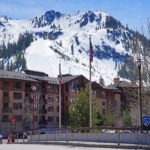
Canada’s mountains stretch from the glacier-covered summits of Yukon to the rugged coastal ranges of British Columbia, the world-famous Canadian Rockies, the remote peaks of the Arctic Archipelago, and the ancient highlands of Atlantic Canada.
Although the Canadian Rockies receive much of the attention, Canada’s highest mountains are found farther northwest in the Saint Elias Mountains. This immense, heavily glaciated range contains Mount Logan—the country’s highest summit—and nearly all of Canada’s other highest peaks.
🏔️ Overview
Canada contains more than 21,000 recognized mountains, distributed across several distinct geological regions. The greatest concentration lies within the Western Cordillera, a vast system of parallel ranges extending through Yukon, British Columbia, and western Alberta.
The Canadian landscape includes young, steep mountains produced by tectonic uplift, ancient ranges worn down by hundreds of millions of years of erosion, enormous icefields, volcanic peaks, coastal fjords, alpine meadows, and Arctic nunataks rising above glaciers.
Canada’s major mountain regions include:
- The Saint Elias Mountains of Yukon and southeastern Alaska
- The Canadian Rockies of Alberta and British Columbia
- The Coast Mountains of British Columbia
- The Columbia Mountains of southeastern British Columbia
- The Mackenzie Mountains of Yukon and the Northwest Territories
- The Arctic Cordillera of Nunavut
- The Torngat Mountains of Labrador and Quebec
- The Laurentian Mountains of Quebec
- The Appalachian ranges of eastern Canada
Understanding the difference between these individual ranges and larger systems is easier with the guide to mountain ranges, mountain systems, and massifs.
⚡ Fast Facts
| Fact | Details |
|---|---|
| Continent | North America |
| Country | Canada |
| Highest Mountain | Mount Logan |
| Highest Elevation | 5,959 meters (19,551 feet) |
| Second-Highest Mountain | Mount Saint Elias |
| Highest Mountain Range | Saint Elias Mountains |
| Highest Canadian Rockies Peak | Mount Robson—3,959 meters (12,989 feet) |
| Highest Coast Mountains Peak | Mount Waddington—4,019 meters (13,186 feet) |
| Highest Arctic Peak | Barbeau Peak—2,616 meters (8,583 feet) |
| Main Mountain Region | Western Cordillera |
| Most Famous Range | Canadian Rockies |
| Most Mountainous Provinces and Territories | British Columbia, Yukon, Alberta, Northwest Territories, and Nunavut |
| Major Activities | Hiking, climbing, skiing, mountaineering, wildlife viewing, and sightseeing |
| Mountain Measurement | Summit rankings are generally based on elevation rather than prominence |
| Highest Peak’s Prominence | Approximately 5,250 meters; learn more about mountain prominence |
⛰️ Top 10 Highest Mountains in Canada
The following table lists Canada’s ten highest named mountain summits. Published elevations sometimes differ between mapping authorities, particularly for remote, ice-covered peaks where survey methods, map datums, and changing snow or ice surfaces can affect measurements.
| Rank | Mountain | Elevation | Province or Territory | Range |
|---|---|---|---|---|
| 1 | Mount Logan | 5,959 m (19,551 ft) | Yukon | Saint Elias Mountains |
| 2 | Mount Saint Elias | 5,489 m (18,009 ft) | Yukon–Alaska border | Saint Elias Mountains |
| 3 | Mount Lucania | Approx. 5,240 m (17,192 ft) | Yukon | Saint Elias Mountains |
| 4 | King Peak | 5,173 m (16,972 ft) | Yukon | Saint Elias Mountains |
| 5 | Mount Steele | 5,073 m (16,644 ft) | Yukon | Saint Elias Mountains |
| 6 | Mount Wood | 4,840 m (15,879 ft) | Yukon | Saint Elias Mountains |
| 7 | Mount Vancouver | 4,812 m (15,787 ft) | Yukon | Saint Elias Mountains |
| 8 | Mount Slaggard | 4,742 m (15,558 ft) | Yukon | Saint Elias Mountains |
| 9 | Mount Macaulay | Approx. 4,680 m (15,354 ft) | Yukon | Saint Elias Mountains |
| 10 | Mount Fairweather | 4,671 m (15,325 ft) | British Columbia–Alaska border | Fairweather Range |
All ten summits belong to the greater Saint Elias mountain system. Mount Saint Elias and Mount Fairweather are international boundary peaks shared with Alaska.
The precise elevations reported for Mount Logan, Mount Lucania, Mount Steele, and Mount Macaulay vary among databases. The figures above primarily follow Parks Canada and the Peakbagger Principal Heights of Canada list.
🏔️ Mount Logan: The Highest Mountain in Canada
Mount Logan rises within Kluane National Park and Reserve in southwestern Yukon. At 5,959 meters, it is the second-highest mountain in North America after Denali and one of the world’s most topographically prominent summits.
Rather than forming a single narrow pyramid, Mount Logan is an enormous ice-covered massif with multiple summits, ridges, glaciers, and a broad high-altitude plateau. Its great size and northern location create exceptionally cold and demanding mountaineering conditions.
Mount Logan is surrounded by some of the largest non-polar icefields on Earth. Reaching the mountain usually requires aircraft support, glacier travel, expedition permits, advanced climbing experience, and the ability to remain self-sufficient in a remote environment.
Kluane National Park and Reserve contains 17 of Canada’s 20 tallest mountains. More than half of the park is permanently covered by snow and ice.
📍 Where Are Canada’s Mountains Located?
Western Canada
Western Canada contains the country’s tallest, steepest, and most extensive mountain landscapes. Yukon and British Columbia dominate Canada’s list of high summits, while the Continental Divide forms a mountainous boundary between British Columbia and Alberta.
The Western Cordillera includes several parallel systems rather than one continuous range. From west to east, these include coastal ranges, interior plateaus and mountains, the Columbia Mountains, and the Canadian Rockies.
Northern Canada
Mountain ranges extend across Yukon, the western Northwest Territories, and the eastern Arctic islands of Nunavut.
The Mackenzie Mountains form a remote wilderness along the Yukon–Northwest Territories boundary. Farther north and east, the Arctic Cordillera crosses Ellesmere Island, Baffin Island, and other islands of the Canadian Arctic Archipelago.
Eastern Canada
Eastern Canada has lower but geologically much older mountains. Important regions include the Laurentian Mountains, Quebec’s Chic-Choc Mountains, the Torngat Mountains, Newfoundland’s Long Range Mountains, the Cape Breton Highlands, and the Appalachian uplands of New Brunswick and Nova Scotia.
These mountains generally have more rounded profiles than the western ranges because erosion has acted on them for much longer periods.
🗺️ Major Mountain Ranges in Canada
Saint Elias Mountains
The Saint Elias Mountains contain the highest peaks in Canada. They extend across southwestern Yukon, southeastern Alaska, and a small part of northwestern British Columbia.
Mount Logan, Mount Saint Elias, Mount Lucania, King Peak, and Mount Steele all rise within this heavily glaciated system. The mountains remain tectonically active as the Pacific and North American plates interact along the continent’s northwestern margin.
Canadian Rockies
The Canadian Rockies extend through Alberta and British Columbia and form the eastern edge of the Western Cordillera. Their layered sedimentary rocks, sharp ridges, glacial valleys, waterfalls, and turquoise lakes have made them Canada’s best-known mountain region.
Mount Robson is the highest summit in the Canadian Rockies at 3,959 meters. Other famous peaks include Mount Columbia, Mount Assiniboine, Mount Temple, Mount Forbes, and Mount Edith Cavell.
Banff, Jasper, Yoho, and Kootenay national parks protect much of the range’s most spectacular scenery. Together with several provincial parks, they form the Canadian Rocky Mountain Parks UNESCO World Heritage Site.
Coast Mountains
The Coast Mountains extend along the Pacific side of British Columbia and into Yukon. They include immense granite massifs, extensive glaciers, deep valleys, coastal fjords, and some of the wettest mountain environments in North America.
Mount Waddington is the range’s highest summit at 4,019 meters. It is also the highest mountain located entirely within British Columbia.
The Coast Mountains include the Boundary Ranges, Kitimat Ranges, Pacific Ranges, and numerous smaller subranges.
Columbia Mountains
Located primarily in southeastern British Columbia, the Columbia Mountains lie west of the Canadian Rockies. They include the Selkirk, Purcell, Monashee, and Cariboo mountains.
These ranges are geologically distinct from the Rockies and receive heavy Pacific snowfall. Their steep terrain, glaciers, forests, and deep snowpack have made them internationally known for skiing and mountaineering.
Mount Sir Sandford, at approximately 3,519 meters, is the highest summit in the Columbia Mountains.
Mackenzie Mountains
The Mackenzie Mountains rise across eastern Yukon and the western Northwest Territories. They are remote, sparsely populated, and crossed by relatively few roads.
Keele Peak, approximately 2,952 meters high, is generally recognized as the highest summit in the Mackenzie Mountains. The region contains broad alpine plateaus, limestone ridges, deep river valleys, and important wildlife habitat.
Arctic Cordillera
The Arctic Cordillera is a vast mountain system extending along the northeastern edge of the Canadian Arctic Archipelago. It includes ranges on Ellesmere Island, Baffin Island, Devon Island, and surrounding islands.
Barbeau Peak on Ellesmere Island is the highest mountain in Nunavut at 2,616 meters. Other notable Arctic peaks include Mount Odin, Mount Asgard, Mount Thor, and Angilaaq Mountain.
The landscape is characterized by glaciers, ice caps, polar deserts, sheer rock walls, and long periods of winter darkness.
Torngat Mountains
The Torngat Mountains rise along the northern Labrador Peninsula, spanning Newfoundland and Labrador and Quebec. They contain some of the highest terrain in eastern mainland Canada.
Mount Caubvick, also associated with the name Mont D’Iberville on the Quebec side, reaches approximately 1,652 meters. It is the highest mountain in mainland Canada east of the Rockies.
Torngat Mountains National Park protects a dramatic landscape of fjords, tundra, rocky summits, and polar bear habitat.
Laurentian Mountains
The Laurentian Mountains extend through southern Quebec north of the St. Lawrence River. They are part of the ancient Canadian Shield and consist largely of Precambrian rocks.
Millions of years of erosion have reduced their formerly higher terrain to rounded summits, forested ridges, lakes, and river valleys. The Laurentians are popular for hiking, skiing, canoeing, and autumn sightseeing.
Appalachian Mountains
The northern Appalachian system enters Canada through Quebec, New Brunswick, Nova Scotia, and Newfoundland.
Canadian Appalachian ranges include the Chic-Choc Mountains, Notre Dame Mountains, Long Range Mountains, and the highlands of Cape Breton. Though modest in elevation compared with western Canada, they contain rugged coastal scenery and some of the country’s most distinctive long-distance hiking routes.
🪨 Geology
Canada’s mountains were created during several widely separated periods of Earth’s history. The result is a landscape containing both relatively young western ranges and extremely old eastern highlands.
The Canadian Rockies developed largely when tectonic compression pushed and folded layers of sedimentary rock eastward. Their exposed limestone, shale, and sandstone were originally deposited in ancient seas before being uplifted into mountains.
The Coast Mountains contain large quantities of granitic and metamorphic rock associated with ancient volcanic arcs, subduction, and the addition of crustal fragments to western North America.
The Saint Elias Mountains remain part of an active tectonic zone. Rapid uplift, heavy snowfall, and aggressive glacial erosion have created exceptionally high relief.
Eastern ranges such as the Appalachians formed during much older continental collisions. Their present rounded appearance reflects hundreds of millions of years of weathering and erosion.
Canada’s varied ranges provide excellent examples of the different processes described in How Are Mountains Formed?.
🌿 Flora & Fauna
Canada’s mountain ecosystems change dramatically with elevation, latitude, moisture, and distance from the ocean.
Lower western slopes may support forests of Douglas fir, western red cedar, western hemlock, lodgepole pine, spruce, and subalpine fir. Trees become smaller and more widely spaced near the treeline before giving way to alpine meadows, rocky tundra, snowfields, and glaciers.
Common mountain wildlife includes:
- Grizzly and black bears
- Moose
- Elk
- Caribou
- Mountain goats
- Bighorn and Dall sheep
- Wolves
- Wolverines
- Hoary marmots
- Pikas
- Golden eagles
- Ptarmigan
The species found in a particular range vary considerably. Mountain goats and bighorn sheep are strongly associated with western cliffs and alpine slopes, while caribou, Dall sheep, and Arctic wildlife become more prominent in northern ranges.
Visitors should observe wildlife from a safe distance, store food securely, and follow local bear-safety requirements.
🥾 Hiking & Climbing
Canada offers mountain experiences ranging from short, accessible walks to some of the most remote expeditions in the world.
Popular hiking regions include:
- Banff and Jasper national parks
- Yoho and Kootenay national parks
- Mount Robson Provincial Park
- Garibaldi Provincial Park
- Glacier National Park in British Columbia
- Kluane National Park and Reserve
- Gros Morne National Park
- Cape Breton Highlands National Park
- Gaspésie National Park
- Auyuittuq National Park
- Torngat Mountains National Park
The Canadian Rockies offer the greatest concentration of established trails, mountain towns, campgrounds, visitor services, and marked backcountry routes. In contrast, the Saint Elias, Mackenzie, Torngat, and Arctic ranges may require aircraft access, wilderness permits, guides, and expedition-level planning.
Canada also has exceptional technical climbing. The Bugaboos are famous for granite spires, Mount Waddington presents serious alpine terrain, and Mount Logan requires a prolonged high-altitude glacier expedition.
🏔️ Field Guide Tip: High-elevation trails can remain snowy well into summer. Check official trail conditions, wildfire notices, avalanche information, road access, and park regulations before leaving. Carry the Ten Essentials for Hiking, and consider a device from the guide to the best satellite communicators for hiking when entering remote terrain.
🌤️ Best Time to Visit
The best season depends on the range and the activity.
Summer
Late June through September is generally the main hiking season in southern and western mountain parks. July and August provide the most reliable access to high trails, although snow, storms, smoke, and freezing temperatures remain possible.
Autumn
September can bring clear air, fewer insects, and colorful alpine vegetation. Days become shorter quickly, however, and early snowstorms may close high passes.
Winter
Winter is ideal for downhill skiing, cross-country skiing, snowshoeing, and ice climbing. Avalanche training and appropriate rescue equipment are essential for anyone entering unmanaged winter backcountry.
Spring
Spring conditions are highly variable. Valley trails may be dry while higher slopes remain snowbound. Snowmelt can also create swollen streams, muddy trails, and unstable slopes.
Northern and Arctic ranges have much shorter practical travel seasons. Visits to these regions usually require specialized logistics and careful coordination with local operators or park authorities.
🧭 Notable Mountain Parks and Attractions
Banff National Park
Canada’s oldest national park is known for Lake Louise, Moraine Lake, the Bow Valley, the Icefields Parkway, and an extensive network of trails and scenic viewpoints.
Jasper National Park
Jasper protects a large section of the Canadian Rockies, including glacial valleys, alpine terrain, the Columbia Icefield region, and important wildlife corridors.
Kluane National Park and Reserve
Kluane contains Mount Logan, enormous icefields, surging glaciers, and most of Canada’s highest summits. Much of its mountainous interior can be reached only by aircraft or extended wilderness travel.
Yoho National Park
Yoho is known for towering waterfalls, steep valleys, the Burgess Shale fossil beds, and trails beneath high Rocky Mountain peaks.
Auyuittuq National Park
Located on Baffin Island, Auyuittuq protects Arctic peaks, glaciers, fjords, and some of Canada’s most dramatic granite walls, including Mount Thor and Mount Asgard.
Gros Morne National Park
Gros Morne in Newfoundland combines Appalachian mountain scenery with fjords, coastal cliffs, forests, and exposed rocks from Earth’s mantle.
Torngat Mountains National Park
This remote Labrador park protects an Arctic mountain landscape shaped by glaciers and deeply connected to Inuit history, knowledge, and culture.
🧑🤝🧑 Indigenous Connections
Canada’s mountain landscapes are the traditional and continuing homelands of numerous First Nations, Inuit, and Métis communities.
Mountains, glaciers, rivers, valleys, wildlife, and travel corridors are connected to distinct languages, histories, place names, harvesting practices, and systems of knowledge. These relationships differ among communities and should not be reduced to a single generalized interpretation.
Several Canadian mountain parks are managed cooperatively with Indigenous governments or communities. Visitors can deepen their understanding by learning local place names, joining Indigenous-led experiences, and following community guidance when entering culturally important areas.
💡 Fun Facts
- Mount Logan is Canada’s highest mountain and the second-highest summit in North America.
- The Saint Elias Mountains contain every summit in Canada’s top-ten list.
- Kluane National Park and Reserve contains 17 of the country’s 20 tallest mountains.
- Mount Fairweather is the highest point in British Columbia, but its summit lies on the Alaska boundary.
- Mount Waddington is the highest mountain situated entirely within British Columbia.
- Mount Robson is the highest summit in the Canadian Rockies, but it ranks far below Canada’s highest Saint Elias peaks.
- Barbeau Peak is the highest mountain in Nunavut and the Canadian Arctic.
- Mount Thor on Baffin Island is famous for its extremely steep western rock face rather than for its overall elevation.
- The Canadian Rockies contain important fossil sites, including the Burgess Shale.
- Elevation alone does not determine how impressive a mountain appears. A lower but more isolated summit may have greater topographic prominence than a taller neighboring peak.
❓ Frequently Asked Questions
What is the highest mountain in Canada?
Mount Logan is the highest mountain in Canada at 5,959 meters, or 19,551 feet. It is located in Kluane National Park and Reserve in Yukon.
Are the Canadian Rockies the highest mountains in Canada?
No. Canada’s highest mountains are in the Saint Elias Mountains of Yukon. The highest Canadian Rockies summit is Mount Robson at 3,959 meters.
What is the second-highest mountain in Canada?
Mount Saint Elias is Canada’s second-highest mountain at approximately 5,489 meters. Its summit lies on the international boundary between Yukon and Alaska.
What is the highest mountain in British Columbia?
Mount Fairweather is the highest point in British Columbia at approximately 4,671 meters, but it stands on the Alaska border. Mount Waddington is the highest summit located entirely within British Columbia.
What is the highest mountain in Alberta?
Mount Columbia is the highest mountain in Alberta at approximately 3,747 meters. It stands on the Continental Divide between Alberta and British Columbia.
What is the highest mountain in eastern Canada?
Mount Caubvick in the Torngat Mountains is the highest summit in eastern mainland Canada at approximately 1,652 meters. The mountain is associated with the name Mont D’Iberville on the Quebec side of the provincial boundary.
Does Canada have volcanoes?
Yes. Western Canada contains dormant and potentially active volcanic regions, especially in British Columbia and Yukon. Notable examples include Mount Edziza, Mount Garibaldi, and the Mount Meager volcanic complex.
Can beginners hike in the Canadian mountains?
Yes. Parks such as Banff, Jasper, Yoho, and Cape Breton Highlands offer short, maintained trails suitable for beginners. Visitors should still prepare for abrupt weather changes, wildlife encounters, and limited mobile-phone coverage.
Why are Canadian mountain lakes turquoise?
Many alpine lakes receive fine sediment called rock flour from glaciers. These tiny particles remain suspended in the water and scatter blue-green wavelengths of light, creating the vivid turquoise appearance associated with lakes such as Louise and Moraine.
Why are mountains colder than nearby valleys?
Air pressure decreases with altitude, allowing rising air to expand and cool. The guide to why mountains are colder explains this process in greater detail.
🔗 Related Articles
- Mountains by Country
- Mountain Ranges
- Highest Mountains in the World
- Famous Mountains
- How Are Mountains Formed?
- How Is Mountain Height Measured?
- Mountain Elevation vs. Prominence
- What Is Mountain Prominence?
- What Is an Ultra-Prominent Peak?
- How Mountains Affect Weather
📚 Sources
- Parks Canada — Kluane National Park and Reserve: Nature and Science
- Parks Canada — Canadian Rocky Mountain Parks
- Government of Canada — The Diversity and Importance of Canada’s Land
- The Canadian Encyclopedia — Mountain Ranges in Canada
- Peakbagger — Principal Heights of Canada
- Parks Canada — Mountain Safety
- Natural Resources Canada — Physiographic Regions