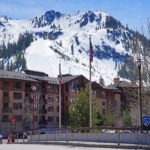
Aiguille d’Argentière

Rising high above the great glaciers of the northern Mont Blanc massif, Aiguille d’Argentière is one of the most imposing mountains on the border between France and Switzerland. Its broad glaciated summit, steep granite ridges, dramatic north face, and the narrow Glacier du Milieu give the mountain a distinctive appearance among the sharper aiguilles surrounding Chamonix.
At approximately 3,898 meters (12,789 feet), Aiguille d’Argentière stands just below the 4,000-meter threshold. Despite missing that celebrated mark, it is a major Alpine mountain in every practical sense. Its normal route involves sustained glacier and ice travel, while its ridges, couloirs, and northern face offer significantly more difficult objectives.
The mountain also has an important place in the history of alpinism. Edward Whymper and A. Adams Reilly, accompanied by guides Michel Croz, Michel Payot, and Henry Charlet, made the first ascent in 1864 during an extraordinary period of exploration in the Mont Blanc massif.
⚡ Fast Facts
| Feature | Details |
|---|---|
| Mountain | Aiguille d’Argentière |
| Countries | France and Switzerland |
| French Region | Auvergne-Rhône-Alpes |
| French Department | Haute-Savoie |
| Swiss Canton | Valais |
| Mountain Range | Mont Blanc massif, Graian Alps |
| Elevation | Approximately 12,789 feet / 3,898 meters |
| Prominence | Approximately 1,538 feet / 469 meters |
| Isolation | Approximately 2.5 miles / 4 kilometers |
| Nearest Higher Neighbor | Les Droites |
| Notable Secondary Summit | Flèche Rousse |
| Rock Type | Primarily granite |
| First Ascent | July 15, 1864 |
| First Ascenders | A. Adams Reilly, Edward Whymper, Henry Charlet, Michel Croz, and Michel Payot |
| Normal Route | Glacier du Milieu |
| Normal Route Grade | PD+ |
| French Base | Refuge d’Argentière |
| Swiss Base | Cabane de Saleina |
| Major Glaciers | Glacier du Milieu, Argentière Glacier, Glacier de Saleina |
| Best Known For | Glacier du Milieu, classic Alpine climbing, extensive glaciation, and international-border summit |
Modern topographic measurements vary slightly. The Swiss Alpine Club uses 3,898 meters, while some older maps and references list elevations around 3,901 or 3,902 meters.
🏔️ Where Is Aiguille d’Argentière?
Aiguille d’Argentière rises near the northern end of the Mont Blanc massif on the international boundary separating France from Switzerland.
On the French side, the mountain towers above the Argentière Glacier, one of the major glaciers of the Chamonix region. The village of Argentière lies farther down the valley to the northwest.
Across the crest, the Swiss slopes descend toward the Glacier de Saleina and the Val Ferret region of the canton of Valais.
The mountain occupies an important position among a remarkable cluster of summits. Aiguille du Chardonnet rises to the northwest, while Tour Noir and Mont Dolent extend along the frontier toward the southeast.
Across the Argentière basin stand Les Courtes, Les Droites, and Aiguille Verte.

✨ The Meaning of Argentière
The name Argentière is closely connected with the mountain’s icy appearance.
The Swiss Alpine Club traces the name to roots associated with silver or silver-colored brilliance, an appropriate description for a peak whose broad glacier-covered slopes can shine intensely in sunlight.
That meaning becomes especially understandable when viewing the mountain from across the Argentière Glacier. Snow and ice descend from near the summit through the Glacier du Milieu, creating a bright streak between darker granite ridges.
The same name is shared with the village of Argentière farther down the Chamonix Valley.
⛰️ The Shape of the Mountain
Unlike the extremely slender rock towers represented by peaks such as Aiguille du Dru, Aiguille d’Argentière has a comparatively broad and heavily glaciated summit structure.
Several large ridges radiate away from its upper slopes. Between these ridges lie glaciers, couloirs, snowfields, and steep faces.
One of the most conspicuous features is the Glacier du Milieu, which descends from near the summit down the west-southwest side. From a distance, it appears as a long ribbon of snow and ice enclosed by rocky ribs.
Southeast of the main summit stands Flèche Rousse, a prominent rocky subsidiary summit reaching approximately 3,878 meters.
Together, these features give Aiguille d’Argentière a complex appearance that changes considerably depending on the direction from which it is viewed.
🪨 Geology of Aiguille d’Argentière
Aiguille d’Argentière belongs to the crystalline core of the Mont Blanc massif and consists primarily of granite.
The granite originated as molten material deep below Earth’s surface. Slow cooling allowed large mineral crystals to develop before tectonic uplift associated with the formation of the Alps eventually brought these ancient rocks closer to the surface.
Erosion then removed overlying material, while repeated periods of glaciation carved deeply into the massif.
Glaciers flowing around Aiguille d’Argentière excavated valleys and steepened its faces while leaving resistant granite ridges standing between the ice streams.
The process continues today. Freeze-thaw cycles widen fractures, rockfall modifies exposed faces, and glaciers continually shift as snow accumulation and temperature change.
📜 The First Ascent
Aiguille d’Argentière was first climbed on July 15, 1864, by A. Adams Reilly and Edward Whymper, accompanied by Chamonix guides Henry Charlet, Michel Croz, and Michel Payot.
The party climbed the mountain by its western side and northwest ridge.
The ascent came during one of the most productive periods of Whymper’s mountaineering career. Only days earlier, members of the same group had made the first ascent of Mont Dolent.
Whymper and Croz were among the defining figures of the Golden Age of Alpinism. The following year, both men participated in the famous first ascent of the Matterhorn, although Croz and three other climbers died during the descent.
Their 1864 ascent of Aiguille d’Argentière remains an important chapter in the exploration of the northern Mont Blanc massif.
🧗 The Glacier du Milieu Normal Route
The most commonly used modern route climbs from Refuge d’Argentière through the Glacier du Milieu on the west-southwest side of the mountain.
The Swiss Alpine Club grades the route PD+, with approximately 1,143 meters of ascent from the refuge and a typical climbing time of around four to five hours.
The route is particularly notable because the glacier itself leads almost continuously toward the summit.
Climbers leave the refuge and approach the narrow Glacier du Milieu, which climbs between two prominent rocky ridges. The terrain gradually steepens as the route gains elevation.
Near the upper mountain, slopes may become significantly steeper and harder. Crampon technique, rope management, ice-axe skills, and glacier experience are therefore essential.
The PD+ grade reflects moderate technical difficulty by Alpine standards, not ordinary hiking difficulty.
🧊 Glacier du Milieu
The Glacier du Milieu is the defining feature of the normal route and perhaps the mountain’s most recognizable glacial feature.
It occupies a long corridor on the southwestern side of Aiguille d’Argentière, descending from near the summit toward the Argentière Glacier.
The glacier’s relatively narrow shape makes it visually striking. Granite walls rise along either side while the ice forms a natural highway toward the upper mountain.
Conditions can vary enormously.
During periods of good snow coverage, the route may offer relatively continuous snow and ice climbing. Later in the season, bergschrunds and crevasses can become increasingly problematic, while hard glacier ice may replace softer snow.
Changing conditions are one reason recent information is particularly important before attempting the route.
🧗 The Historic Northwest Ridge
The northwest ridge is closely connected with the mountain’s history because it formed part of the route taken by the first-ascent party in 1864.
Modern climbers can still follow routes through this general section of the mountain, although the Glacier du Milieu has largely become the preferred normal ascent from France.
The northwest side combines glacier travel with exposed ridge terrain and provides a more traditional mixed-Alpine experience.
From the upper ridge, the mountain’s remarkable geography becomes increasingly apparent. The Argentière Glacier spreads across the French side while the glaciers and high valleys of Switzerland appear beyond the frontier.
🧗♀️ Arête du Jardin
One of Aiguille d’Argentière’s great classic ridge climbs is the Arête du Jardin.
The route follows the mountain’s southeast ridge and provides a considerably more technical experience than the Glacier du Milieu normal route. The Swiss Alpine Club grades it around D, with rock climbing reaching approximately 5a.
Rather than relying primarily on glacier travel, the Arête du Jardin offers a long sequence of granite climbing in a spectacular high-Alpine setting.
The combination of elevation, exposure, rock climbing, route-finding, and complicated approach and descent makes it a serious undertaking even for experienced climbers.
Its setting above the Argentière basin also provides exceptional views toward the great north faces of Les Droites and Les Courtes.
🧗 Flèche Rousse
Immediately southeast of the main summit rises Flèche Rousse, one of the mountain’s most striking subsidiary features.
The rocky tower reaches approximately 3,878 meters, only around 20 meters lower than Aiguille d’Argentière itself.
Several technical climbing routes cross its ridges and faces, including the Flèche Rousse Ridge and more difficult lines on its northern and southern sides.
From suitable viewpoints, the tower appears distinctly separated from the snowy main summit, emphasizing the contrast between Aiguille d’Argentière’s glacier-covered slopes and its sharp granite formations.
🇨🇭 Routes from Switzerland
The mountain can also be approached from the Swiss side using Cabane de Saleina as a base.
The huge Glacier de Saleina spreads beneath the eastern and northeastern slopes, providing access to several mountaineering routes.
One of the classic objectives from this side is the northern route, historically an important ice climb. Other possibilities include the Couloir Barbey, which climbs the east-northeast side and is generally graded around AD.
These approaches offer an entirely different perspective from the French Glacier du Milieu route.
From Switzerland, the mountain presents extensive glaciated slopes and more serious north-facing terrain rather than the comparatively confined glacier corridor encountered from Refuge d’Argentière.

🧊 The North Face
The north face of Aiguille d’Argentière once ranked among the classic glaciated faces of the Mont Blanc massif.
Historically, the wall contained extensive snow and firn, allowing climbers to follow sustained ice routes beneath the summit.
Conditions have changed dramatically.
The Swiss Alpine Club notes that the northern side has lost so much of its former firn and glacier covering that the classic north-face route has lost much of its original character.
This transformation is a particularly vivid example of how climate and glacier retreat are altering historic routes in the Alps.
An ascent described by earlier climbers as a snow or ice climb may now involve exposed rock, unstable mixed terrain, or objective hazards that were once less significant.
🧊 Argentière Glacier
The Argentière Glacier forms the enormous glacial basin immediately west of Aiguille d’Argentière.
Its upper reaches are surrounded by one of the greatest collections of steep Alpine mountains anywhere in Europe.
Across the glacier rise Aiguille Verte, Les Droites, Les Courtes, and Aiguille de Triolet. Toward the opposite side stand Aiguille d’Argentière, Tour Noir, and the peaks extending toward Mont Dolent.
For generations, the glacier has served as an approach corridor to these mountains.
Its surface contains crevasses, seracs, moraine, and constantly changing ice features. Glacier retreat has also substantially altered traditional approaches and access routes.

🛖 Refuge d’Argentière
The Refuge d’Argentière is the principal French base for climbing Aiguille d’Argentière.
The refuge stands at approximately 2,770 meters in a spectacular position above the Argentière Glacier. It faces the enormous northern walls extending from Aiguille Verte toward Mont Dolent.
From the hut, climbers have access to a remarkable collection of objectives, including Aiguille d’Argentière itself, Tour Noir, routes on the surrounding glaciers, and numerous steep faces and couloirs.
The normal Glacier du Milieu route gains roughly 1,143 meters from the refuge to the summit.
Because of the high-mountain terrain surrounding the hut, reaching Refuge d’Argentière is part of the mountaineering experience rather than simply an ordinary walk to accommodation.
🇨🇭 Glacier de Saleina
The Glacier de Saleina spreads across the Swiss side of Aiguille d’Argentière.
It occupies a large basin surrounded by peaks of the northern Mont Blanc massif and provides access to Cabane de Saleina and several important climbing routes.
From this side, Aiguille d’Argentière appears especially heavily glaciated.
The contrast with the rocky ridges on the French side shows how dramatically the character of a mountain can change depending on aspect, elevation, and glacier distribution.
Like other glaciers throughout the Alps, the Saleina Glacier has undergone substantial changes over time, altering approaches and exposing terrain that earlier climbers encountered under ice or permanent snow.
🎿 Ski Mountaineering
Aiguille d’Argentière is also closely associated with ski mountaineering.
Under favorable conditions, the Glacier du Milieu provides a remarkable high-altitude ski objective. Climbers may ascend the glacier using ski-mountaineering equipment before skiing portions of the route on descent.
This does not make the mountain a conventional ski destination. The terrain involves crevasses, bergschrunds, steep slopes, avalanche exposure, and sections where skis may need to be carried.
Safe travel requires advanced ski-mountaineering and glacier skills as well as careful evaluation of snow and weather conditions.
The combination of skiing and mountaineering nevertheless demonstrates the unusual versatility of Aiguille d’Argentière’s glaciated western slopes.
⚠️ Hazards and Safety
Aiguille d’Argentière is a serious high-mountain objective regardless of which route is chosen.
Crevasses are one of the principal dangers on the Glacier du Milieu and other glacier approaches. Snow bridges can conceal openings and may weaken rapidly as temperatures rise.
Bergschrunds near the upper slopes can become increasingly difficult during summer.
Rockfall is a concern on ridges and mixed terrain, particularly during prolonged periods of warm weather. Changes in high-altitude snow, ice, and permafrost can expose unstable rock that was formerly frozen in place.
Other hazards include avalanches, serac collapse, hard ice, cornices, storms, lightning, altitude, freezing temperatures, and whiteout conditions.
The dramatic changes on the north face provide an important reminder that traditional Alpine routes are not permanent. Recent route information and local professional advice should always take precedence over old guidebook descriptions.
🌿 Flora and Fauna
The summit of Aiguille d’Argentière lies within the harsh nival zone, where exposed rock, snow, ice, strong winds, and low temperatures prevent nearly all vascular plants from surviving.
Plant communities become much richer at lower elevations.
Around the Chamonix and Swiss Val Ferret valleys, Alpine meadows can support gentians, saxifrages, bellflowers, alpine clovers, grasses, rhododendrons, and bilberries. Larch and spruce forests become increasingly common farther downslope.
Wildlife in the wider Mont Blanc region includes Alpine ibex, chamois, marmots, mountain hares, rock ptarmigan, Alpine choughs, golden eagles, and bearded vultures.
Most of these animals remain well below the summit. Even so, the enormous vertical difference between valley floor and summit produces a remarkable sequence of ecosystems within a relatively small geographic area.
👀 Where to See Aiguille d’Argentière
Aiguille d’Argentière can be viewed from numerous locations around the upper Chamonix Valley.
The area around Argentière and Le Tour provides good perspectives toward the northern Mont Blanc massif.
Higher viewpoints near the Argentière Glacier reveal the mountain much more dramatically. From across the basin, the Glacier du Milieu can often be distinguished descending between rocky ridges from near the summit.
The mountain can also be viewed from parts of Switzerland around the upper Val Ferret and Saleina basin, where its glaciated eastern and northern slopes become more prominent.
These differing viewpoints make Aiguille d’Argentière particularly interesting for anyone trying to understand the structure of the northern Mont Blanc massif.
🏔️ Nearby Mountains
Aiguille d’Argentière stands among an exceptional concentration of Alpine peaks.
Its nearest higher neighbor is Les Droites, rising across the Argentière Glacier toward Aiguille Verte.
Nearby Aiguille du Chardonnet lies northwest of the mountain and is famous for its Forbes Arête.
To the southeast, Tour Noir continues the high frontier toward Mont Dolent.
Across the glacier stand Les Courtes, Les Droites, and Aiguille Verte, while Aiguille de Triolet rises farther along the surrounding chain.
Farther southwest, the massif culminates in Mont Blanc.
🌄 Why Aiguille d’Argentière Is Special
Aiguille d’Argentière sits just below the arbitrary 4,000-meter threshold, yet little about the mountain feels secondary.
It combines a broad glaciated summit with narrow granite ridges, classic ice routes, technical rock climbs, ski-mountaineering possibilities, and one of the most spectacular settings in the Mont Blanc massif.
Its mountaineering history stretches back to Edward Whymper, A. Adams Reilly, Michel Croz, and their companions during the Golden Age of Alpinism. More than 160 years later, climbers still follow routes across the same mountain, although the glaciers and snowfields surrounding them have changed dramatically.
The Glacier du Milieu remains one of the mountain’s defining features, drawing a nearly continuous line of ice toward the summit. Across the mountain, the retreat of the once-famous north-face snow and firn provides an equally powerful illustration of how quickly high-Alpine landscapes can evolve.
For climbers, mountain historians, and anyone exploring the peaks around Chamonix, Aiguille d’Argentière is one of the defining summits of the northern Mont Blanc massif.
🔗 Related Articles
- Aiguille du Chardonnet
- Tour Noir
- Mont Dolent
- Aiguille de Triolet
- Les Courtes
- Les Droites
- Aiguille Verte
- Mont Blanc
📚 Sources
- Swiss Alpine Club — Aiguille d’Argentière
- Swiss Alpine Club — Glacier du Milieu Normal Route
- FFCAM — Refuge d’Argentière
- Swiss Alpine Club — Refuge d’Argentière Route Portal
- Peakbagger — Aiguille d’Argentière