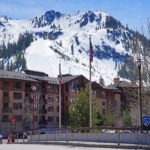
Aiguille Verte

Rising above the glaciers and granite towers of the Chamonix Valley, Aiguille Verte is one of the defining mountains of the Mont Blanc massif. Its elegant, snow-covered summit rises to approximately 4,122 meters (13,524 feet), standing dramatically above the Aiguille du Dru and the great glacial basins of Argentière and Talèfre.
The mountain’s name translates literally as “Green Needle,” although its upper slopes are anything but green. Aiguille Verte is a world of steep snow, ice, exposed ridges, and dark crystalline rock. For generations of climbers, simply reaching its summit has represented a major step in becoming a fully experienced alpinist.
Unlike several Alpine 4,000-meter peaks with relatively moderate normal routes, there is no genuinely easy way up Aiguille Verte. Every established ascent requires serious mountaineering skills. The famous Whymper Couloir, the Moine Ridge, the Couturier Couloir, and the mountain’s more technical faces have made the Verte one of the great proving grounds of Alpine climbing.
⚡ Fast Facts
| Feature | Details |
|---|---|
| Mountain | Aiguille Verte |
| Meaning of Name | Commonly translated as “Green Needle” |
| Country | France |
| Region | Auvergne-Rhône-Alpes |
| Department | Haute-Savoie |
| Mountain Range | Mont Blanc massif, Graian Alps |
| Traditional Elevation | 13,524 feet / 4,122 meters |
| Lidar Elevation | Approximately 13,517 feet / 4,120 meters |
| Prominence | Approximately 2,344 feet / 715 meters |
| Isolation | Approximately 4.57 miles / 7.35 kilometers |
| Nearest Higher Neighbor | Grandes Jorasses – Pointe Whymper |
| Rock Type | Primarily granite and associated crystalline rocks |
| First Ascent | June 29, 1865 |
| First Ascenders | Edward Whymper, Christian Almer, and Franz Biner |
| Second Major Route | Moine Ridge, July 5, 1865 |
| First Woman to Summit | Lucy Walker, 1870 |
| Classic Route | Whymper Couloir |
| Other Famous Route | Couturier Couloir |
| Principal Southern Base | Refuge du Couvercle |
| Major Glaciers | Glacier de Talèfre, Glacier d’Argentière, Glacier du Nant Blanc |
| Major Satellite Peak | Aiguille du Dru |
| Best Known For | Serious mountaineering routes, steep snow and ice, and its commanding position above Chamonix |
Peakbagger’s lidar-derived measurement places the summit at approximately 4,119.9 meters, with about 714.6 meters of prominence and 7.35 kilometers of isolation. Traditional maps and mountaineering literature continue to use the familiar elevation of 4,122 meters.
🏔️ Where Is Aiguille Verte?
Aiguille Verte rises entirely within France, northeast of Chamonix and immediately above some of the most spectacular glaciers in the Mont Blanc massif.
To the south lies the Glacier de Talèfre, part of the great glacial system extending toward the Mer de Glace. This side gives access to the historic Whymper Couloir and Moine Ridge.
To the northeast lies the vast Argentière Glacier, bordered by an extraordinary collection of steep mountains that includes Les Droites, Les Courtes, and Aiguille de Triolet.
The western side descends toward the Glacier du Nant Blanc and the Chamonix Valley. Immediately southwest of the summit rises the spectacular Aiguille du Dru, whose twin granite summits form one of the most famous mountain silhouettes in Europe.
Farther north, the massif continues toward Aiguille d’Argentière and Aiguille du Chardonnet.
🟢 Why Is It Called Aiguille Verte?
The conventional translation of Aiguille Verte is “Green Needle.”
The word aiguille, meaning “needle,” is used throughout the Mont Blanc massif for narrow, pointed peaks such as Aiguille du Dru, Aiguille du Chardonnet, and Aiguille d’Argentière.
The meaning of Verte is less certain. The straightforward interpretation is the French word for “green,” although the summit itself is dominated by snow, ice, and rock. Some interpretations suggest that the name may instead have evolved from an older Alpine or pre-Celtic root associated with height or elevated places.
Whatever its linguistic origin, climbers throughout the Alps generally refer to the mountain simply as “La Verte.”
That short name carries considerable weight in mountaineering circles.

🪨 Geology of Aiguille Verte
Aiguille Verte forms part of the crystalline core of the Mont Blanc massif, an ancient geological block dominated by granite and metamorphic rocks.
The granite originated when molten rock cooled slowly beneath Earth’s surface. Later tectonic forces associated with the development of the Alps uplifted the massif, while erosion stripped away the rocks that once covered it.
Glaciers then became enormously important sculptors of the landscape.
During repeated glacial periods, flowing ice excavated deep valleys and cirques around the Verte. Resistant crystalline ridges remained standing while enormous quantities of surrounding material were removed.
The result is the complex mountain visible today: steep granite walls divided by couloirs, sharp ridges, hanging snowfields, and glaciers.
Freeze-thaw action continues to reshape exposed terrain. Water penetrates fractures in the rock, freezes, expands, and gradually loosens blocks. Warming high-altitude conditions can accelerate this process where ice and permafrost previously helped stabilize fractured rock.
📜 The First Ascent
The first ascent of Aiguille Verte was completed on June 29, 1865, by British climber Edward Whymper with Swiss guides Christian Almer and Franz Biner.
The accomplishment came during one of the most consequential summers in mountaineering history.
Whymper was already one of the leading climbers of the Golden Age of Alpinism. He had repeatedly attempted the Matterhorn and had participated in important exploratory climbs throughout the Western Alps.
For Aiguille Verte, Whymper and his guides approached from the Talèfre side and entered the steep snow gully that would eventually become known as the Whymper Couloir.
The terrain became increasingly steep as they climbed. Snow eventually gave way to ice, forcing the party onto nearby rock before they regained the upper snow ridge.
They reached the summit at approximately 10:15 in the morning.
Only about two weeks later, Whymper would participate in the historic and tragic first ascent of the Matterhorn.
🧗 Christian Almer and Franz Biner
Whymper’s guides on the first ascent were not from Chamonix.
Christian Almer was one of the greatest Swiss guides of the 19th century. Based in Grindelwald, he participated in an extraordinary number of pioneering climbs and became known for his endurance, judgment, and ability on snow and ice.
Franz Biner, another Swiss guide, joined Whymper and Almer on the Verte expedition.
Their successful climb caused considerable resentment among some Chamonix guides, who had made numerous unsuccessful attempts on a mountain regarded as one of the great local prizes.
The tension reflects how strongly local guide communities identified with the unclimbed peaks surrounding their valleys during the Golden Age.
🧗♂️ The Second Ascent and the Moine Ridge
Chamonix climbers answered the first ascent almost immediately.
On July 5, 1865, just six days after Whymper’s success, Charles Hudson, Thomas Kennedy, and George Hodgkinson reached the summit with guides Michel Croz, Michel Ducroz, and Peter Perren.
Their route followed the Moine Ridge, opening another major line to the summit.
The achievement was particularly important because Michel Croz was one of Chamonix’s finest guides. Croz was also Whymper’s usual climbing partner during many of his most important Alpine expeditions.
Only nine days after the Moine Ridge ascent, Croz and Hudson would both die in the famous Matterhorn accident following that mountain’s first ascent.
The Moine Ridge nevertheless endured as one of the great classical routes of Aiguille Verte.
👩 Lucy Walker on Aiguille Verte
In 1870, pioneering British mountaineer Lucy Walker became the first woman known to have climbed Aiguille Verte.
Walker was one of the most accomplished female mountaineers of the 19th century and completed numerous major Alpine ascents at a time when women faced substantial social barriers in mountaineering.
The following year, she became the first woman to climb the Matterhorn.
Her ascent of the Verte belongs to a remarkable period in which women increasingly demonstrated that the great Alpine summits were not the exclusive domain of male climbers.
🧗 The Whymper Couloir
The Whymper Couloir remains the route most closely associated with Aiguille Verte.
It rises through the mountain’s southern side above the Glacier de Talèfre and extends for more than 700 vertical meters.
The couloir typically contains slopes around 45 to 50 degrees, with steeper sections possible depending on snow and ice conditions.
Historically, the Whymper was often regarded as the mountain’s normal route. That description can create the wrong impression, because it is still a serious, committing Alpine climb.
The ascent requires efficient movement on steep snow and ice, secure crampon technique, glacier travel, route-finding, rappelling, and the ability to descend steep terrain after a long summit day.
For experienced climbers, its appeal comes partly from its remarkable directness. The couloir creates an elegant line from the Talèfre basin almost all the way to the summit.

🌡️ A Route Changed by Climate
The traditional climbing season for the Whymper Couloir has changed substantially.
For many years, climbers commonly regarded it as an early-summer snow route. Increasingly warm conditions have made later-season ascents more problematic as snow disappears and rockfall hazards increase.
The Compagnie des Guides de Chamonix now describes the most favorable period as approximately mid-March through early June, depending on conditions.
Spring snow can provide better coverage and help stabilize loose rock. Later in the season, the couloir may become exposed to falling stones as snow melts away from the surrounding walls.
This shift is one of many examples across the Mont Blanc massif where climate change is altering not simply glaciers but the practical calendar of mountaineering.
🛖 Refuge du Couvercle
The Refuge du Couvercle is the traditional base for climbing the Verte from the Talèfre side.
Standing at roughly 2,687 meters, the hut occupies a magnificent position above the Mer de Glace and Glacier de Talèfre.
Its setting is extraordinary. From the surrounding terrain, climbers can see Aiguille Verte, Les Droites, Les Courtes, Aiguille de Triolet, and the Grandes Jorasses.
Parties attempting the Whymper Couloir commonly leave the hut extremely early, often around 1:00 a.m., in order to cross the glacier and climb the couloir while temperatures remain low.
A complete summit day can require roughly 10 to 12 hours hut-to-hut under favorable conditions.
🧊 Glacier de Talèfre
The Glacier de Talèfre fills the high basin south of Aiguille Verte.
It forms part of the glacial system above the Mer de Glace and is surrounded by some of the most famous mountains in the Mont Blanc massif.
Aiguille Verte rises along its northern rim, while Les Droites and Les Courtes dominate another side. Farther east, the basin extends toward Aiguille de Triolet and the high frontier near the Grandes Jorasses.
The glacier has played a central role in the history of climbing on the Verte. Whymper crossed this terrain during the first ascent, and generations of climbers have followed similar approaches toward both the Whymper Couloir and Moine Ridge.
Like other glaciers in the massif, Talèfre is continually changing. Crevasses, snow bridges, exposed moraine, and access routes can differ dramatically from historical descriptions.
🧗 The Moine Ridge
The Arête du Moine, or Moine Ridge, remains another major classical route.
Rather than following a steep snow couloir, the route approaches the summit along a long mixed ridge rising from the direction of Aiguille du Moine.
Its character is considerably more varied than the Whymper Couloir.
Climbers encounter snow, ice, rock, exposed ridge sections, and complex route-finding. The line is long, and the descent can be equally demanding.
Because it is less dependent on continuous snow filling a couloir, the Moine Ridge may sometimes remain a viable alternative when the Whymper is too dry or exposed to rockfall.
The tradeoff is length and technical complexity.
❄️ The Couturier Couloir
On the northern side of the mountain lies another legendary line: the Couturier Couloir.
The route climbs above the Argentière Glacier through a long, steep snow-and-ice gully toward the summit.
It is one of the great couloir climbs of the Mont Blanc massif and is substantially more demanding than the Whymper route.
Steep slopes, sustained exposure, ice conditions, rockfall, bergschrunds, and the sheer length of the climb all contribute to its seriousness.
The Couturier is often associated with spring conditions, when sufficient snow remains to cover unstable rock while cold overnight temperatures create firmer climbing conditions.
Parties attempting it need exceptional efficiency because spending too long in the couloir increases exposure to objective hazards as temperatures rise.
🧊 The Argentière Side
The northeast side of Aiguille Verte towers above the Argentière Glacier, one of the major glacial basins of the northern Mont Blanc massif.
From the glacier, the Verte forms the western anchor of an extraordinary wall of peaks extending through Les Droites, Les Courtes, and Aiguille de Triolet.
Across the basin rise Aiguille d’Argentière, Tour Noir, and the mountains leading toward Mont Dolent.
This concentration of steep snow, ice, and mixed routes has made the Argentière basin one of Europe’s great centers of technical alpinism.
🏔️ Grande Rocheuse
Immediately beside the summit of Aiguille Verte lies Grande Rocheuse, a prominent subsidiary summit reaching approximately 4,102 meters.
The saddle separating the two is relatively shallow, meaning Grande Rocheuse visually appears almost as an extension of the main mountain.
Despite exceeding the 4,000-meter mark, its limited prominence means it is closely tied topographically to Aiguille Verte.
Its rocky summit contributes to the complex upper profile of the mountain when seen from Chamonix and surrounding viewpoints.
Other secondary towers and ridges extend away from the Verte toward the Drus and neighboring aiguilles, creating one of the most intricate summit groups in the massif.
🏔️ Aiguille du Dru
No discussion of Aiguille Verte is complete without its famous neighbor, Aiguille du Dru.
The Drus rise immediately southwest of the Verte along its western ridge system. Their steep granite towers create an extraordinary contrast with the broader snow-and-ice summit of Aiguille Verte.
The highest Dru reaches approximately 3,752 meters, making it substantially lower than the Verte but dramatically more vertical.
Together, the mountains create one of the classic views of the Chamonix Valley.
The proximity is also important topographically: Aiguille Verte is the nearest higher neighbor of the Dru.
🎿 Skiing on Aiguille Verte
Aiguille Verte has also played a significant role in the history of extreme skiing.
Its steep couloirs and faces are far beyond conventional ski-mountaineering terrain.
The Nant Blanc face, in particular, became famous when French alpinist and extreme skier Jean-Marc Boivin completed a pioneering ski descent in 1989.
Other elite ski mountaineers have subsequently descended steep routes on the mountain, including variations associated with the Couturier and neighboring faces.
These descents should not be confused with ordinary ski touring. Slopes on the Verte can be extremely steep, exposed, icy, and threatened by avalanches and falling debris.
They belong to the most serious end of ski mountaineering.
⚠️ Hazards and Safety
Aiguille Verte has a reputation for seriousness that is fully justified.
There is no easy normal route, and every ascent involves multiple Alpine hazards.
Crevasses and bergschrunds affect glacier approaches. Steep snow and ice create serious fall potential. Rockfall becomes an increasing concern as temperatures rise, particularly in couloirs.
Avalanches, cornices, falling ice, serac collapse, thunderstorms, high winds, whiteouts, and altitude add further risk.
Descent is especially important. Climbers who have spent many hours reaching the summit must still downclimb or rappel steep terrain while fatigued.
Conditions can change dramatically from season to season and even within a few days. Routes that are excellent under cold, snowy conditions can become extremely dangerous during warm weather.
Aiguille Verte is therefore an objective for highly experienced mountaineers or climbers accompanied by qualified high-mountain guides.
🌿 Flora and Fauna
The summit of Aiguille Verte lies deep within the nival zone, where conditions are too severe for nearly all vascular plants.
Exposed granite, snow, glacier ice, strong wind, extreme ultraviolet radiation, and prolonged freezing temperatures dominate the upper mountain. Hardy lichens and microorganisms may survive on protected rock surfaces, but conventional vegetation is essentially absent.
Life becomes much richer lower down.
Alpine meadows around the Chamonix Valley contain gentians, saxifrages, bellflowers, alpine clovers, rhododendrons, grasses, and bilberries. Larch and spruce forests occupy lower slopes where deeper soils and warmer temperatures allow trees to become established.
Wildlife in the wider Mont Blanc region includes Alpine ibex, chamois, marmots, mountain hares, rock ptarmigan, Alpine choughs, golden eagles, and bearded vultures.
The difference between these productive lower ecosystems and the nearly barren summit environment illustrates the dramatic ecological changes caused by elevation in the Alps.
👀 Where to See Aiguille Verte
Aiguille Verte is one of the dominant mountains of the Chamonix Valley and can be seen from numerous viewpoints.
The village of Argentière offers particularly impressive perspectives toward the mountain and its surrounding glaciers.
The Grands Montets area provides a much closer view of the northern side, revealing the steep couloirs and glaciated terrain above the Argentière basin.
From Montenvers and the Mer de Glace, the Verte appears above the Talèfre region with the Drus nearby.
Excellent distant views are also available from the Aiguilles Rouges on the opposite side of the Chamonix Valley. From these western viewpoints, the mountain’s relationship with the Drus becomes particularly clear.
No technical climbing is required to appreciate the mountain from these locations.
🏔️ Nearby Mountains
Aiguille Verte stands within one of the greatest concentrations of high mountains in Europe.
Immediately southwest is Aiguille du Dru, whose granite walls are among the most famous in Alpine climbing.
To the northeast, the ridge and glacier systems extend toward Les Droites, Les Courtes, and Aiguille de Triolet.
Across the Argentière Glacier rise Aiguille d’Argentière and Aiguille du Chardonnet.
Farther southeast, Grandes Jorasses provides the nearest substantially higher terrain.
Beyond the surrounding aiguilles, Mont Blanc dominates the central portion of the massif.

🌄 Why Aiguille Verte Is Special
Aiguille Verte occupies a unique place among the great mountains of the Alps.
It is high enough to belong to the celebrated group of Alpine 4,000-meter summits, yet its reputation comes less from elevation than from difficulty. Unlike many higher peaks, it offers no forgiving route to the top.
The mountain demands the full range of classical Alpine skills: glacier travel, crampon technique, steep snow and ice climbing, rock movement, route-finding, rappelling, endurance, and judgment.
Its history is equally remarkable. Edward Whymper, Christian Almer, and Franz Biner made the first ascent during the extraordinary summer of 1865. Within days, Michel Croz and another party opened the Moine Ridge. Lucy Walker later added another milestone when she became the first woman to reach the summit.
Generations of climbers have since explored the Verte’s couloirs, ridges, faces, and icy walls.
At the same time, the mountain is changing. Routes once associated with summer are increasingly becoming spring objectives as warming conditions reduce snow cover and increase rockfall.
Aiguille Verte therefore represents both the enduring traditions of classical alpinism and the rapidly changing reality of modern high-mountain climbing.
Above all, it remains one of the great mountains of Chamonix—a summit whose beauty is matched by its seriousness and whose reputation has been earned through more than 160 years of Alpine history.
🔗 Related Articles
- Aiguille du Dru
- Les Droites
- Les Courtes
- Aiguille de Triolet
- Aiguille d’Argentière
- Aiguille du Chardonnet
- Grandes Jorasses
- Mont Blanc
📚 Sources
- Peakbagger — Aiguille Verte
- Compagnie des Guides de Chamonix — Aiguille Verte
- Swiss Alpine Club — Aiguille Verte: An Iconic Mountain
- Alpine Journal — Narrative of Ascents of the Aiguille Verte and Chardonnet, 1865
- Alpine Journal — Kennedy’s Account of the Aiguille Verte, 1865
- FFCAM — Refuge du Couvercle