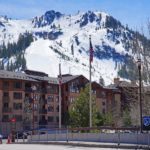
🏔️ Overview
The Alaska Range is the highest mountain range in the United States and one of the most spectacular mountain systems in North America. Sweeping in a broad arc for roughly 600 miles across southern and central Alaska, the range contains enormous glaciers, jagged granite peaks, deep wilderness valleys, and some of the continent’s most challenging mountaineering terrain.
Its centerpiece is Mount McKinley, widely known as Denali, which rises to 20,310 feet (6,190 meters) and is the highest mountain in North America. Nearby Mount Foraker reaches 17,400 feet (5,304 meters), while Mount Hunter, Mount Hayes, Mount Deborah, and dozens of lesser-known summits create one of the greatest concentrations of high mountains in the United States.
Unlike many older mountain systems, the Alaska Range is still being shaped by powerful tectonic forces. Active faulting, continuing uplift, intense glacial erosion, severe weather, and enormous seasonal snowfall all contribute to a landscape that remains remarkably dynamic.
⚡ Fast Facts
| Fact | Details |
|---|---|
| Continent | North America |
| Country | United States |
| State/Province | Alaska |
| Region | South-central and Interior Alaska |
| Mountain System | Alaska-Yukon mountain region / North American Cordillera |
| Approximate Length | About 600 miles / 965 kilometers |
| Highest Mountain | Mount McKinley (Denali) |
| Highest Elevation | 20,310 feet / 6,190 meters |
| Major Peaks | Mount McKinley (Denali), Mount Foraker, Mount Hunter, Mount Hayes, Mount Deborah |
| Major Glaciers | Kahiltna, Ruth, Muldrow, Tokositna, and numerous smaller glaciers |
| Major Protected Area | Denali National Park and Preserve |
| Landscape | Glaciated peaks, alpine tundra, boreal forest, river valleys, icefields |
| Approximate Central Coordinates | 63° N, 151° W |
📍 Location
The Alaska Range forms a great curving mountain barrier across the interior of Alaska. The National Park Service describes it as an approximately 600-mile arc extending from near the Alaska–Canada border toward the Alaska Peninsula.
Its greatest elevations occur in the central portion of the range, where Mount McKinley, Mount Foraker, Mount Hunter, and many heavily glaciated peaks rise within and around Denali National Park and Preserve.
The range separates very different climatic regions. Moist Pacific air influences the southern side, while the Interior north of the crest is generally colder and drier. This contrast helps explain why the southern slopes and central high mountains support such extensive glaciers and heavy snowfall.
The Alaska Range is not a single uninterrupted wall. It includes numerous ridges, massifs, valleys, glaciers, and regional subdivisions. In the east, the Hayes Range and Delta Mountains form important portions of the larger system.
Mountains such as Mount Hayes, Mount Deborah, Mount Hess, and Mount Hajdukovich illustrate how extensive the range becomes beyond its famous central peaks.
📏 Elevation & Prominence
The Alaska Range contains three of the best-known high mountains in the United States.
Mount McKinley (Denali)
At 20,310 feet (6,190 meters), Mount McKinley—widely known as Denali—is the highest summit in North America.
It is also one of the most topographically prominent and isolated mountains on Earth. Peakbagger lists approximately 20,146 feet (6,140 meters) of prominence and more than 4,600 miles of topographic isolation.
The mountain towers dramatically above surrounding valleys, creating a scale that is difficult to appreciate from elevation figures alone.
In 2025, the federal government restored the official federal name Mount McKinley. The name Denali, however, remains deeply established in Alaska and in general usage, while the surrounding national park continues to be named Denali National Park and Preserve.

Mount Foraker
Mount Foraker rises to 17,400 feet (5,304 meters) southwest of Denali.
Although overshadowed in fame by its taller neighbor, Foraker is itself one of the highest and most formidable mountains in North America.
Mount Hunter
Mount Hunter reaches approximately 14,573 feet (4,442 meters). Its steep faces, technical routes, and dramatic position above the Kahiltna Glacier make it particularly celebrated among experienced alpinists.
Other important Alaska Range summits include:
- Mount Hayes — approximately 13,832 feet / 4,216 meters
- Mount Silverthrone — approximately 13,220 feet / 4,029 meters
- Mount Deborah — approximately 12,339 feet / 3,761 meters
- Mount Huntington — approximately 12,240 feet / 3,731 meters
- Mount Hess — approximately 11,940 feet / 3,640 meters
🪨 Geology
The Alaska Range is geologically complex because southern Alaska has been assembled from numerous pieces of crust, commonly called terranes, that were carried toward North America through plate tectonic processes.
The ancestral Alaska Range began developing during the Cretaceous Period, although the mountains visible today owe much of their dramatic relief to younger uplift.
Rocks throughout the range include combinations of:
- Granite and other intrusive igneous rocks
- Sandstone
- Mudstone
- Argillite
- Conglomerate
- Limestone
- Metamorphic rocks
- Volcanic rocks
One of the most important geological structures in the region is the Denali Fault system, which runs through much of the Alaska Range.
Movement along faults, regional compression, and continuing crustal deformation have helped lift the mountains upward. Research has shown that the unusual height and relief around Denali result from a combination of tectonic uplift, strong rock, erosion, and climatic conditions.
Glaciers then sculpt the uplifted landscape.
Repeated periods of glaciation have excavated enormous U-shaped valleys, sharpened ridges, carved cirques, transported sediment, and created the striking horns and steep rock faces characteristic of the central Alaska Range.
The result is a landscape formed through a continual competition between mountain building and erosion.
🧊 Glaciers of the Alaska Range
Glaciers are among the defining features of the Alaska Range.
The immense accumulation of snow at high elevations feeds glaciers that flow outward through deep mountain valleys.
Kahiltna Glacier
The Kahiltna Glacier lies on the southern side of the central Alaska Range and plays an especially important role in mountaineering.
Aircraft commonly land on its upper reaches to establish the traditional base camp used by climbers attempting Mount McKinley and nearby mountains.
Ruth Glacier
The Ruth Glacier drains another spectacular section of the central range.
It passes between enormous granite walls in the Ruth Gorge, an internationally famous destination for technical alpine climbing.
Muldrow Glacier
The Muldrow Glacier drains the northern side of Mount McKinley and has played an important role in the mountain’s climbing history.
Glaciers throughout the range are constantly changing. Crevasses open and close, snow bridges disappear, meltwater increases during summer, and some glaciers periodically surge.
🌿 Flora & Fauna

The Alaska Range crosses several ecological zones.
Lower elevations support boreal forest, while higher slopes transition into shrubland, tundra, alpine vegetation, exposed rock, permanent snow, and glacier ice.
Typical lower-elevation vegetation includes:
- White and black spruce
- Willow
- Alder
- Birch
- Low shrubs
- Mosses
- Lichens
- Sedges
- Grasses
Above treeline, the short Alaska summer produces surprisingly colorful tundra. Hardy wildflowers and low-growing plants take advantage of nearly continuous summer daylight before winter returns.
Wildlife is equally impressive.
Denali National Park is particularly famous for five large mammals:
- Grizzly bear
- Moose
- Caribou
- Dall sheep
- Gray wolf
Dall sheep are especially closely associated with mountainous terrain, where steep slopes can provide refuge from predators.
Other animals found around the range include wolverines, foxes, Arctic ground squirrels, marmots, snowshoe hares, lynx, ptarmigan, golden eagles, and numerous migratory birds.
The highest peaks themselves are largely lifeless expanses of ice, snow, rock, and wind. Most biological diversity occurs in the valleys, foothills, tundra, and lower mountain slopes.
🥾 Hiking & Climbing Routes
The Alaska Range offers everything from relatively accessible day hiking to some of the most serious expedition mountaineering in the world.
Hiking in Denali National Park
Denali National Park is unusual because relatively few maintained trails extend deep into its wilderness.
Marked trails are concentrated largely around the park entrance and Savage River area. Visitors can also hike off-trail across large portions of the park, allowing experienced travelers to explore tundra valleys and mountain landscapes without following established paths.
Popular hiking areas include:
- Savage River
- Savage Alpine Trail
- Triple Lakes Trail
- Mount Healy area
- Park entrance trails
- Backcountry tundra routes
Backpacking deeper into Denali requires substantially greater wilderness skills, particularly because river crossings, wildlife encounters, navigation, cold weather, and the absence of trails can complicate travel.
Climbing Mount McKinley
The West Buttress is the most commonly attempted route on Mount McKinley.
Although considered the mountain’s least technical major route, it remains an extremely serious high-altitude expedition involving glacier travel, crevasses, steep snow and ice, severe cold, storms, altitude illness, and prolonged exposure.
The NPS also identifies the West Rib and Cassin Ridge among the mountain’s better-known climbing routes.
Mount Foraker and Mount Hunter
Mount Foraker and Mount Hunter provide considerably more technical climbing objectives.
Nearby features such as Mount Huntington, Moose’s Tooth, Ruth Gorge, the Pika Glacier, and the surrounding granite towers have made the central Alaska Range one of the great alpine climbing regions of the world.
🏔️ Field Guide Tip: Do not judge Alaska Range objectives by elevation alone. A 10,000- or 12,000-foot summit here may require glacier travel, aircraft access, crevasse rescue skills, avalanche awareness, technical climbing, and days of travel through completely roadless wilderness.

🌤️ Best Time to Visit
The best season depends heavily on what you plan to do.
General Sightseeing and Hiking
For most visitors to Denali and the central Alaska Range, late May through early September offers the broadest access.
Summer brings:
- Long daylight hours
- Warmer temperatures
- Greater road access
- Hiking opportunities
- Wildlife viewing
- Bus transportation within Denali
- Easier access to visitor facilities
Even during summer, mountain weather can change abruptly. Snow is possible at high elevations at any time of year.
Mountaineering
Mountaineering follows a different calendar.
The main climbing season on Mount McKinley generally runs from late April through mid-July, with the busiest period occurring from about mid-May through mid-June.
Spring conditions can provide more reliable snow bridges over glacier crevasses, while later summer warmth increasingly exposes cracks and complicates travel across lower glaciers.
Technical routes elsewhere in the Alaska Range have their own ideal windows depending on snow, ice, avalanche conditions, temperatures, and access.
🧭 Nearby Mountains & Attractions
Denali National Park and Preserve
Denali National Park protects more than six million acres surrounding the central Alaska Range.
Visitors come for mountain scenery, wildlife viewing, hiking, backpacking, photography, and opportunities to experience one of the largest protected wilderness landscapes in North America.
Denali State Park
Located south of the national park, Denali State Park provides outstanding views toward the Alaska Range.
The K’esugi Ridge area is especially popular with hikers and backpackers. The ridge is not itself part of the central Alaska Range, but it offers exceptional panoramas across the Susitna Valley toward Denali and surrounding peaks.
Talkeetna
The small town of Talkeetna is one of the principal gateways to the southern Alaska Range.
Many climbing and flightseeing expeditions begin here, particularly trips headed toward the Kahiltna Glacier and central mountain massif.
Denali Highway
The Denali Highway crosses a remote landscape south of the central range and provides access to broad tundra, lakes, rivers, and distant views of numerous Alaska Range summits.
Chugach Mountains
Farther south, the Chugach Mountains form another great Alaskan mountain system.
They are geographically and geologically distinct from the Alaska Range, despite sometimes appearing close together on small-scale maps.
💡 Fun Facts
- The Alaska Range stretches for approximately 600 miles across Alaska.
- It contains the highest mountain in North America, Mount McKinley, widely known as Denali.
- Denali reaches 20,310 feet, while Mount Foraker reaches 17,400 feet.
- The range acts as an important climatic barrier between wetter southern Alaska and the drier Interior.
- Some of North America’s largest and most dramatic valley glaciers flow through the range.
- The Alaska Range remains tectonically active and is still experiencing uplift.
- The Denali Fault is one of the major geological structures shaping the region.
- Ruth Gorge contains enormous granite walls famous among technical climbers.
- The Kahiltna Glacier serves as the primary approach for most climbers attempting Denali.
- Denali National Park has relatively few maintained trails, allowing extensive off-trail wilderness hiking.
- Mount Fairweather is not part of the Alaska Range. It belongs to the Fairweather–Saint Elias mountain region of southeastern Alaska.
- The national park surrounding the highest mountain continues to be called Denali National Park and Preserve, even though the summit’s federal name was changed to Mount McKinley in 2025.
❓ Frequently Asked Questions
Where is the Alaska Range?
The Alaska Range curves across south-central and Interior Alaska, extending for roughly 600 miles from near the Alaska–Canada border toward the Alaska Peninsula.
What is the highest mountain in the Alaska Range?
Mount McKinley, widely known as Denali, is the highest mountain in the Alaska Range at 20,310 feet (6,190 meters). It is also the highest summit in North America.
How long is the Alaska Range?
The National Park Service describes the Alaska Range as approximately 600 miles long.
Is the Alaska Range part of the Rocky Mountains?
No. The Alaska Range is a separate mountain system within the broader North American Cordillera. It is often grouped geographically with the Alaska-Yukon mountain systems rather than the Rocky Mountains.
What are the highest mountains in the Alaska Range?
The highest major peaks include Mount McKinley (Denali), Mount Foraker, Mount Hunter, Mount Hayes, Mount Silverthrone, Mount Deborah, and Mount Huntington.
Are there glaciers in the Alaska Range?
Yes. The Alaska Range is heavily glaciated. Major glaciers include the Kahiltna, Ruth, Muldrow, and Tokositna, along with countless smaller valley and mountain glaciers.
Can you hike in the Alaska Range?
Yes, but conditions vary enormously. Denali National Park offers marked trails and extensive off-trail hiking, while much of the range is remote wilderness requiring advanced navigation and backcountry skills.
Can beginners climb Denali?
No. Even the standard West Buttress route requires glacier travel, crevasse rescue ability, expedition experience, cold-weather skills, and the ability to function safely at high altitude.
What is the best time to visit the Alaska Range?
Late May through early September is generally best for sightseeing and ordinary hiking. High-altitude climbing usually takes place primarily from late April through early July.
Is Mount Fairweather part of the Alaska Range?
No. Mount Fairweather is in the Fairweather Range, associated with the Saint Elias mountain region of southeastern Alaska and British Columbia. It should not be included among Alaska Range peaks.
🔗 Related Articles
- Denali
- Mount Foraker
- Mount Hunter (Alaska)
- Mount Hayes
- Mount Deborah
- Mount Hajdukovich
- Chugach Mountains
- Mountains in Alaska and the United States
- Mountains in North America
- Mountain Ranges in the U.S.
- The 10 Highest Mountain Peaks in the United States
📚 Sources
- National Park Service — The Alaska Range and Mount McKinley: Geology and Orogeny
- National Park Service — Geology of Denali National Park and Preserve
- U.S. Geological Survey — Geology of Denali National Park and Preserve
- U.S. Geological Survey — Anomalously High Relief on Denali, Alaska
- National Park Service — Mammals in Denali
- National Park Service — Weather and Climate in Denali
- National Park Service — Hiking in Denali
- National Park Service — Backpacking in Denali
- National Park Service — Mountaineering Expedition Planning
- Peakbagger — Denali
- U.S. Department of the Interior — Secretary’s Order 3424: Mount McKinley
- National Park Service — Mount Fairweather