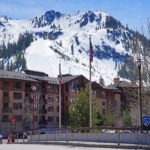
Boundary Peak

🏔️ Overview
Boundary Peak is the highest natural point in Nevada, rising along the rugged northern crest of the White Mountains near the California state line. Located in Esmeralda County within the Boundary Peak Wilderness, the mountain stands above a dramatic landscape of desert valleys, ancient bristlecone pines, exposed alpine ridges, and distant Sierra Nevada summits.
Modern Peakbagger data places the summit at approximately 13,141 feet, while the U.S. Forest Service commonly lists it at 13,140 feet. Older references frequently give an elevation of 13,147 feet. Regardless of the measurement used, Boundary Peak remains Nevada’s highest point.
The mountain’s geography is unusually interesting because its higher neighbor, Montgomery Peak, stands just across the state line in California. Boundary Peak is therefore the highest point in Nevada but has relatively modest topographic prominence and is often considered a subsidiary summit of Montgomery Peak.
For hikers, Boundary Peak offers a demanding high-altitude climb through one of the driest and most striking mountain environments in the American West. Its two principal approaches, Queen Canyon and Trail Canyon, require strong conditioning, careful navigation, adequate water, and respect for rapidly changing weather.
⚡ Fast Facts
| Fact | Details |
|---|---|
| Continent | North America |
| Country | United States |
| State/Province | Nevada |
| County/Region | Esmeralda County |
| Mountain Range | White Mountains |
| Parent Peak | Montgomery Peak |
| Elevation | Approximately 13,141 feet / 4,005 meters; traditionally listed at 13,147 feet / 4,007 meters |
| Prominence | Approximately 271 feet / 83 meters in modern Peakbagger data; traditionally reported as 253 feet / 77 meters |
| Isolation | Approximately 0.53 miles / 0.86 kilometers |
| Nearest Higher Neighbor (NHN) | Montgomery Peak |
| Coordinates | Approximately 37.8461° N, 118.3513° W |
| Protected Area | Boundary Peak Wilderness |
| Managing Agency | Inyo National Forest, U.S. Forest Service |
| State Ranking | Highest natural point in Nevada |
| Standard Routes | Queen Canyon and Trail Canyon |
| Typical Difficulty | Strenuous hiking and Class 2 scrambling |
| Best General Season | Late June through early October, depending on snow and weather |
| Wilderness Designation | 1989 |
| Wilderness Size | Approximately 10,000 acres |
📍 Location
Boundary Peak stands in southwestern Nevada near the northern end of the White Mountains. Its summit lies in Esmeralda County, less than a mile from the California state line.
The mountain rises above Fish Lake Valley to the east and belongs to the western edge of the Great Basin. Across the broader landscape to the west, the Sierra Nevada forms a separate and much more extensively glaciated mountain range.
Despite being Nevada’s highest point, Boundary Peak is managed as part of Inyo National Forest, which oversees lands in both California and Nevada. Its summit and Nevada-side slopes fall within the Boundary Peak Wilderness, while nearby California terrain is associated with the larger White Mountains Wilderness.
The small Nevada community of Dyer is one of the closest practical bases for approaching the mountain. Other regional access points include Benton, California, and communities along U.S. Highway 6 and Nevada State Route 264.
Boundary Peak and Montgomery Peak appear together as a striking pair of high summits. The state line runs between them, placing the lower summit in Nevada and the higher summit in California.
📏 Elevation & Prominence
Boundary Peak’s published elevation varies slightly because different sources use different surveys, mapping methods, and elevation datasets.
The U.S. Forest Service generally lists Boundary Peak at 13,140 feet, while modern Peakbagger listings place it at approximately 13,141 feet, or 4,005 meters. Older National Geodetic Survey-based references and numerous traditional mountain guides use 13,147 feet, or 4,007 meters.
These differences are minor and do not affect Boundary Peak’s position as Nevada’s highest natural point.
Its topographic prominence also varies depending on the dataset. Modern Peakbagger information places the prominence at approximately 271 feet, while older references commonly report 253 feet.
Either figure is relatively small for a state high point. The reason is simple: Boundary Peak stands very close to the higher summit of Montgomery Peak, and the connecting saddle between the two mountains does not descend very far.
Boundary Peak’s isolation is approximately 0.53 miles, or 0.86 kilometers. Montgomery Peak is both its parent peak and nearest higher neighbor.
This relationship explains why some mountain classifications describe Boundary Peak as a subsidiary summit rather than a fully independent mountain. Wheeler Peak, located much farther east in Great Basin National Park, is often described as Nevada’s highest independent mountain because it has substantially greater prominence.
Boundary Peak is nevertheless the state’s highest point by elevation.
For more background on these measurements, see What Is Mountain Prominence? and What Is a Parent Peak?.
🪨 Geology
Boundary Peak belongs to the White Mountains, a high desert range within the western Basin and Range Province. This enormous geological region is characterized by repeated mountain ranges and intervening valleys created as the Earth’s crust stretched, fractured, and moved along major faults.
The White Mountains expose a complicated combination of ancient sedimentary, metamorphic, and intrusive igneous rocks. Limestone, dolomite, quartzite, and related sedimentary formations occur across the broader range, while granitic rocks and other intrusive bodies form substantial portions of the mountain landscape.
Boundary Peak is commonly associated with quartz monzonite, an intrusive igneous rock that formed when magma cooled beneath the surface during the Cretaceous Period. Over millions of years, uplift and erosion exposed these once-buried rocks.
The surrounding wilderness also preserves older sedimentary formations that record ancient marine environments. Some rocks in the broader region contain fossils and represent geological history extending back hundreds of millions of years.
The steep relief between the White Mountains and neighboring valleys reflects long-term faulting, uplift, and erosion. Freeze-thaw weathering continues to break exposed rock into loose talus and scree, creating the unstable slopes encountered by hikers approaching the summit.
Boundary Peak’s proximity to the Sierra Nevada can make the two ranges appear closely related from a distance, but they are distinct mountain systems. The White Mountains belong to the Basin and Range Province and have a much drier overall character.
🌿 Flora & Fauna
The Boundary Peak Wilderness contains several distinct ecological communities despite its relatively small size. Changes in elevation create a transition from Great Basin desert vegetation to high alpine terrain.
At lower elevations, sagebrush and other drought-tolerant shrubs dominate the landscape. Pinyon-juniper woodlands occur in suitable foothill and canyon environments, providing habitat for birds, small mammals, and other wildlife.
Higher on the mountain, limber pines and Great Basin bristlecone pines grow in scattered subalpine forests. Bristlecone pines are especially significant because the species includes some of the oldest known individual trees on Earth.
These trees survive through extremely slow growth, dense wood, and an ability to tolerate cold, wind, limited moisture, and poor soils. Their twisted trunks and weathered branches are among the most distinctive features of the northern White Mountains.
Above the tree line, the landscape becomes increasingly open and windswept. Alpine grasses, low-growing wildflowers, cushion plants, and other hardy vegetation survive in sheltered pockets among rocks and shallow soils.
Wildlife in the broader wilderness includes bighorn sheep, mule deer, small mammals, and several bird species associated with high desert and mountain habitats. Golden eagles and other raptors may be seen overhead, while pinyon jays and Clark’s nutcrackers are more likely to occur around woodland and subalpine forest.
Because alpine plants grow slowly and recover poorly from disturbance, visitors should stay on established routes whenever practical and avoid trampling fragile vegetation.
🥾 Hiking & Climbing Routes
Boundary Peak is usually climbed as a strenuous day hike. The two principal approaches are Queen Canyon and Trail Canyon, both of which eventually connect near Trail Canyon Saddle before following the upper ridge toward the summit.
Although the mountain does not normally require ropes or technical climbing equipment in dry summer conditions, it should not be mistaken for an easy hike. High elevation, loose rock, limited water, exposure, route-finding challenges, and rough access roads all contribute to the difficulty.
Queen Canyon Route
The Queen Canyon approach begins near a high saddle south of Kennedy Point at approximately 9,800 feet.
According to the U.S. Forest Service, the route is approximately 9 miles round trip. It follows a use trail toward the ridgeline overlooking Trail Canyon before continuing to Trail Canyon Saddle at approximately 10,800 feet.
From the saddle, hikers follow the same upper route used by climbers approaching from Trail Canyon. The trail climbs steeply along the ridge, passing loose scree, talus, and rocky sections before reaching Boundary Peak.
The Queen Canyon route generally has less overall elevation gain than the lower Trail Canyon approach, although the exact gain depends on where hikers park and how much additional climbing occurs along the ridge.
Access begins from U.S. Highway 6 on Queen Canyon Road, also identified as Forest Road 01N14. The road becomes increasingly rough as it climbs into the mountains.
High-clearance vehicles are recommended, and the Forest Service states that the final mile to the upper Queen Canyon trailhead requires four-wheel drive. Drivers without appropriate vehicles should park lower and walk the additional distance.
There are no reliable water sources along the Queen Canyon route once seasonal snow has disappeared.
Trail Canyon Route
The Trail Canyon approach begins at approximately 9,000 feet and covers about 8.5 miles round trip, according to the U.S. Forest Service.
The first portion follows an established Forest Service trail along the south side of Trail Canyon. Approximately 1.7 miles from the trailhead, the maintained trail ends near a meadow at around 9,800 feet.
Beyond the meadow, hikers continue on informal use trails toward Trail Canyon Saddle. Route-finding becomes more important because these paths are not constructed or maintained to the same standard as the initial trail.
From the saddle, the route climbs south toward an unnamed high point and then continues along rocky terrain toward Boundary Peak. Loose talus, steep slopes, and intermittent scrambling become more common near the summit.
A small stream may be present during the first mile, but its availability can vary with season and conditions. Any natural water must be treated, and hikers should not depend on finding water higher on the route.
The Trail Canyon approach generally involves approximately 4,000 feet of elevation gain, making it a substantial climb even though the mileage is relatively moderate.
Boundary Peak and Montgomery Peak Combination
Experienced hikers sometimes continue from Boundary Peak to Montgomery Peak, which lies less than a mile away across the California state line.
The traverse descends to the connecting saddle before climbing toward Montgomery Peak’s higher summit. Although the distance is short, the ridge involves additional scrambling, loose rock, route selection, and exposure.
Combining both peaks adds meaningful effort to an already demanding high-altitude day. Climbers should attempt the traverse only when weather is stable, sufficient daylight remains, and everyone in the group is comfortable with rugged mountain terrain.
Route Safety and Preparation
Both standard approaches require preparation for prolonged exposure above 10,000 feet. Visitors arriving from lower elevations may benefit from spending time acclimating before attempting the summit.
Carry adequate water, navigation tools, sun protection, extra clothing, and enough food for a full mountain day. Cell service should not be assumed reliable, and rescue or assistance may be delayed because of the area’s remoteness.
Afternoon thunderstorms are particularly dangerous on the exposed upper ridge. Strong winds, cold temperatures, and sudden weather changes can occur even during summer.
🏔️ Field Guide Tip: Start early enough to reach the summit before afternoon thunderstorms develop, and carry all the water you expect to need. The Queen Canyon route has no dependable water once the snow melts, and its final access-road section requires four-wheel drive.
Permits and Wilderness Regulations
Current U.S. Forest Service guidance states that wilderness permits are not required for the Queen Canyon or Trail Canyon approaches.
The maximum group size is 15 people, and visitors must follow applicable food-storage requirements, fire restrictions, and wilderness regulations.
Because road conditions, closures, fire restrictions, and other rules can change, check current Inyo National Forest information before traveling.
🌤️ Best Time to Visit
The most practical hiking season for Boundary Peak generally extends from late June through early October, although conditions vary significantly with winter snowfall and early autumn storms.
Late Spring and Early Summer
Access roads may become snow-free by late May, but this does not mean the summit route is clear.
Snow can linger on upper slopes, shaded sections, and exposed ridges well into June. Depending on conditions, early-season travel may require traction equipment, snow-travel experience, and careful assessment of weather and terrain.
Midsummer
July and August generally provide the longest daylight hours and the most dependable access to the upper mountain.
However, the White Mountains remain exposed and dry. Strong sunlight, dehydration, high winds, afternoon thunderstorms, and altitude-related illness are all serious considerations.
An early start is particularly important during periods of unstable summer weather.
Early Autumn
September and early October can provide clear skies, cooler hiking temperatures, and excellent visibility across the surrounding desert valleys and Sierra Nevada.
Conditions often feel more comfortable than midsummer, but daylight becomes shorter and nights grow colder. Early snowfall can arrive unexpectedly, particularly at elevations above 12,000 feet.
Winter
Winter ascents are appropriate only for highly experienced mountaineers prepared for snow, extreme cold, difficult navigation, long approaches, and potentially hazardous mountain conditions.
Road access may also be blocked or severely limited.
🧭 Nearby Mountains & Attractions
Montgomery Peak
Montgomery Peak is Boundary Peak’s higher neighbor and parent mountain. It stands immediately across the California state line and forms the other half of the striking twin-summit landscape visible from the surrounding valleys.
Strong hikers sometimes combine the two summits, but the connecting ridge requires additional scrambling and careful attention to conditions.
Hosebag Peak
Hosebag Peak is a lower feature associated with the northern White Mountains and the broader Boundary Peak ridgeline.
Its position near the standard climbing route makes it part of the rugged terrain encountered on the approach toward Nevada’s highest summit.
The Jumpoff
The Jumpoff lies farther south along the White Mountains crest beyond Montgomery Peak.
The terrain between Montgomery Peak and The Jumpoff becomes substantially more remote and difficult, with steep elevation changes and loose rock. This area is best suited to experienced mountain travelers undertaking demanding ridge traverses.
Mount Dubois
Mount Dubois rises south of The Jumpoff and is among the highest major summits in the White Mountains.
Its broad high-country surroundings contrast with the sharper, more broken terrain around Montgomery Peak and Boundary Peak.
White Mountain Peak
White Mountain Peak is the highest summit in the White Mountains and one of California’s highest mountains.
Traditionally listed at approximately 14,252 feet, it stands much farther south and is associated with the range’s famous high-altitude research facilities and ancient bristlecone pine landscapes.
Fish Lake Valley
Fish Lake Valley lies east of the northern White Mountains and provides some of the most impressive distant views of Boundary Peak.
The small community of Dyer serves as a practical regional base for visitors exploring the Nevada side of the mountains.
Great Basin National Park
Great Basin National Park lies in eastern Nevada and contains Wheeler Peak, the state’s second-highest summit by elevation.
Because Wheeler Peak has far greater topographic prominence, it is often described as Nevada’s highest independent mountain, while Boundary Peak remains the highest natural point in the state.
💡 Fun Facts
- Boundary Peak is the highest natural point in Nevada.
- Its summit lies less than a mile from the California state line.
- The mountain received its name because of its location near the state boundary.
- Modern Peakbagger data lists Boundary Peak at approximately 13,141 feet, while older references commonly use 13,147 feet.
- Montgomery Peak, located in California, is both Boundary Peak’s parent peak and nearest higher neighbor.
- Boundary Peak has only about 0.53 miles of topographic isolation.
- Depending on the elevation dataset, its prominence is approximately 253 to 271 feet.
- Because its prominence is relatively low, Boundary Peak is often considered a subsidiary summit of Montgomery Peak.
- Wheeler Peak is commonly described as Nevada’s highest independent mountain, even though Boundary Peak reaches a higher elevation.
- The Boundary Peak Wilderness was designated in 1989 and protects approximately 10,000 acres.
- The surrounding White Mountains support ancient Great Basin bristlecone pines, among the longest-lived individual trees on Earth.
- Boundary Peak is part of the Basin and Range Province, not the Sierra Nevada.
- Queen Canyon and Trail Canyon are the two principal summit approaches.
- U.S. Forest Service guidance states that wilderness permits are not required for the standard routes.
❓ Frequently Asked Questions
What is the highest mountain in Nevada?
Boundary Peak is Nevada’s highest natural point. Modern sources place its elevation at approximately 13,140 to 13,141 feet, while older references often list it at 13,147 feet.
Where is Boundary Peak located?
Boundary Peak is in Esmeralda County, Nevada, near the California state line. It stands in the northern White Mountains within the Boundary Peak Wilderness of Inyo National Forest.
How tall is Boundary Peak?
The U.S. Forest Service lists Boundary Peak at approximately 13,140 feet, while modern Peakbagger data gives approximately 13,141 feet. Older sources commonly report 13,147 feet.
Why do sources list different elevations for Boundary Peak?
Differences result from changing survey methods, elevation datasets, mapping conventions, and vertical reference systems.
Although the published figures vary by several feet, all major sources agree that Boundary Peak is the highest natural point in Nevada.
Is Boundary Peak in California or Nevada?
Boundary Peak’s summit is in Nevada. However, it lies very close to the California state line, and its higher neighboring summit, Montgomery Peak, is in California.
Is Boundary Peak part of the Sierra Nevada?
No. Boundary Peak belongs to the White Mountains, which form part of the Basin and Range Province.
The Sierra Nevada is a separate mountain range located farther west.
What is Boundary Peak’s parent mountain?
Its parent mountain is Montgomery Peak, a higher summit located across the state line in California.
Why is Boundary Peak considered a subsidiary summit?
Boundary Peak has relatively low topographic prominence because it is connected by a high saddle to the taller Montgomery Peak.
Depending on the source, its prominence is approximately 253 to 271 feet, below the 300-foot threshold sometimes used to classify independent peaks.
Is Wheeler Peak higher than Boundary Peak?
No. Wheeler Peak is lower in elevation than Boundary Peak.
However, Wheeler Peak has much greater topographic prominence and is often described as Nevada’s highest independent mountain.
How difficult is the Boundary Peak hike?
Boundary Peak is a strenuous high-altitude hike that generally involves steep terrain, loose rock, route-finding, and Class 2 scrambling.
Although it is not normally a technical climb in dry summer conditions, it requires good physical conditioning and appropriate mountain experience.
How long is the hike to Boundary Peak?
The U.S. Forest Service describes the Queen Canyon route as approximately 9 miles round trip and the Trail Canyon route as approximately 8.5 miles round trip.
Actual distance can increase if hikers must park below the upper trailheads because of rough road conditions.
Which route is better: Queen Canyon or Trail Canyon?
Queen Canyon begins at a higher elevation and generally reduces the total climbing required, but reaching the upper trailhead involves a rough access road whose final mile requires four-wheel drive.
Trail Canyon begins lower and involves more elevation gain but provides an established trail for the first portion of the hike.
Do you need a permit to hike Boundary Peak?
Current U.S. Forest Service guidance states that wilderness permits are not required for the Queen Canyon or Trail Canyon routes.
Visitors should still check current regulations, group-size limits, fire restrictions, and access conditions before traveling.
Is there water on the trail?
There are no reliable water sources along the Queen Canyon route after seasonal snow melts.
A small stream may be present during the first mile of the Trail Canyon route, but conditions vary and all natural water must be treated. Hikers should carry enough water for the full outing.
Do you need four-wheel drive to reach Boundary Peak?
High clearance is recommended for roads accessing both major trailheads.
The U.S. Forest Service states that the final mile to the upper Queen Canyon trailhead requires four-wheel drive. Drivers without suitable vehicles may need to park lower and walk the remaining distance.
Can you climb Boundary Peak and Montgomery Peak together?
Yes. Experienced hikers sometimes continue across the connecting ridge to Montgomery Peak after reaching Boundary Peak.
The combination requires additional scrambling, route-finding, and time at high elevation, so it should only be attempted in favorable weather.
Are dogs allowed on Boundary Peak?
Dogs are generally permitted on the route, and Nevada Trail Finder identifies pets as permitted on leash.
However, sharp rock, steep terrain, limited water, high elevation, and summer heat can make the hike difficult or unsafe for some dogs.
When is the best time to climb Boundary Peak?
Late June through early October generally offers the most practical conditions, with July, August, and September often providing the most reliable access.
Snow, thunderstorms, strong winds, wildfire conditions, and early autumn storms can affect any trip.
🔗 Related Articles
- White Mountains
- Montgomery Peak
- Hosebag Peak
- The Jumpoff
- Mount Dubois
- White Mountain Peak
- Sierra Nevada
- Mountains in the United States
- What Is Mountain Prominence?
- What Is a Parent Peak?
📚 Sources
- Peakbagger — Boundary Peak
- U.S. Forest Service — Boundary Peak Wilderness
- U.S. Forest Service — Boundary Peak Trailhead
- U.S. Forest Service — Queen Canyon
- U.S. Forest Service — Trail Canyon
- Nevada Trail Finder — Boundary Peak
- Travel Nevada — Boundary Peak Wilderness
- Friends of Nevada Wilderness — Boundary Peak Wilderness
- Wilderness Connect — Boundary Peak Wilderness