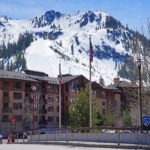
Chauncey Peak

🏔️ Overview
Chauncey Peak is a dramatic traprock summit overlooking Crescent Lake in Meriden, Connecticut. Although it reaches only 688 feet (210 meters), the mountain’s steep basalt cliffs, rocky ridgeline, and broad views give it a much more imposing appearance than its elevation suggests.
The peak forms part of the Metacomet Ridge, a long chain of volcanic ridges extending through central Connecticut and western Massachusetts. Its western slope is protected within Giuffrida Park, where the blue-blazed Mattabesett Trail—part of the New England National Scenic Trail—crosses the mountain.
From the open ledges, hikers can look across Crescent Lake toward Lamentation Mountain and the Hanging Hills. The combination of water, forest, cliffs, and exposed traprock makes Chauncey Peak one of central Connecticut’s most scenic short hikes.
⚡ Fast Facts
| Feature | Details |
|---|---|
| Continent | North America |
| Country | United States |
| State | Connecticut |
| County/Region | South Central Connecticut Planning Region; historically New Haven County |
| City | Meriden |
| Mountain Range | Metacomet Ridge |
| Parent Peak | Lamentation Mountain |
| Elevation | 688 feet / 210 meters |
| Prominence | Approximately 342 feet / 104 meters |
| Isolation | Approximately 1.08 miles / 1.74 kilometers |
| Nearest Higher Neighbor | Lamentation Mountain |
| Coordinates | 41.558674° N, 72.759945° W |
| Primary Trail | Mattabesett Trail |
| Protected Area | Giuffrida Park |
| Rock Type | Basalt traprock |
| Mountain Type | Eroded fault-block ridge |
The summit measurements are based on LiDAR-derived topographic data. Peakbagger lists a summit elevation of 686.9 feet, commonly rounded to 688 feet, with 342.3 feet of prominence. The nearest higher terrain lies on Lamentation Mountain to the north.
📍 Location
Chauncey Peak stands in northeastern Meriden, close to the boundaries of Berlin and Middletown. The mountain rises east of Crescent Lake, also widely known as Bradley Hubbard Reservoir, while Lamentation Mountain forms the higher ridge on the opposite side of the water.
The primary public approach begins at Giuffrida Park, 800 Westfield Road, Meriden, Connecticut. The park contains nearly 600 acres of forest, reservoir shoreline, wetlands, and traprock ridges.
The west side of Chauncey Peak is protected within the park. Its eastern side borders an active quarry that has removed a substantial section of the original mountain slope. Visitors should remain on marked public trails and avoid roads or paths leading toward the quarry.
📏 Elevation & Prominence
Chauncey Peak has an elevation of approximately 688 feet above sea level. While modest compared with larger mountains, it rises sharply above the surrounding lowlands and has more than 300 feet of topographic prominence.
Its prominence of approximately 342 feet means the summit is relatively independent from nearby Lamentation Mountain. The mountain’s key col—the lowest saddle connecting it to higher terrain—is approximately 345 feet above sea level.
Chauncey Peak has an isolation of about 1.08 miles, measured to the nearest point of higher ground on Lamentation Mountain. These figures help explain why Chauncey feels like a distinct summit rather than merely a minor ledge on the larger Metacomet Ridge.
🪨 Geology
Chauncey Peak is composed primarily of basalt, a dark volcanic rock commonly called traprock. The mountain’s geology dates to approximately 200 million years ago, when the supercontinent Pangaea began breaking apart and the basin that would become the Atlantic Ocean started to form.
During this period, lava repeatedly flowed across a rift valley in what is now central Connecticut. The lava cooled into thick basalt layers separated by sedimentary rock. Faulting tilted these layers, while millions of years of erosion removed the softer surrounding material.
The harder basalt resisted erosion, leaving behind the narrow ridges and abrupt cliffs characteristic of the Metacomet Ridge. Later glaciation further shaped the exposed ledges, talus slopes, ravines, and lake basin around Chauncey Peak.
The mountain’s western cliffs display the resistant edge of the ancient basalt flow. The gentler eastern backslope represents the original upper surface of the tilted lava layer, although quarrying has significantly altered that side of the mountain.
🌿 Flora & Fauna
Chauncey Peak’s steep terrain produces several small but contrasting habitats. Sunny cliff faces and exposed ledges can become unusually warm and dry, while shaded ravines remain cooler and retain moisture.
These differences create ecological niches for plants that may be uncommon in the surrounding lowlands. The forests include typical southern New England hardwoods, while rocky areas support lichens, mosses, ferns, grasses, and drought-tolerant shrubs.
Common wildlife in the wider park may include white-tailed deer, squirrels, chipmunks, rabbits, songbirds, woodpeckers, hawks, and other raptors. Snakes may also be encountered around warm rocks and sunny ledges.
Connecticut’s traprock ridges are recognized as valuable wildlife habitats and migration corridors. Their combination of cliffs, rocky summits, talus fields, forests, wetlands, and water bodies supports greater ecological variety than their relatively small area might suggest.
🥾 Hiking & Climbing Routes
Chauncey Peak Loop
The most popular route is a loop beginning at the Giuffrida Park parking area near Crescent Lake.
- Distance: Approximately 2.7–2.8 miles
- Elevation gain: Approximately 400–530 feet
- Difficulty: Moderate
- Typical time: Around 1½–2½ hours
- Trail markings: Primarily blue, with connecting park trails
The route follows the blue-blazed Mattabesett Trail onto the traprock ridge. Hikers encounter rocky footing, stone steps, exposed ledges, and several viewpoints overlooking the lake.
The trail has been rerouted in places since older park maps were produced. Modern switchbacks provide a more gradual alternative to portions of the former direct ascent, but the climb remains steep and rocky.
Chauncey Peak and Lamentation Mountain Loop
A longer loop combines both sides of Crescent Lake and visits the ridges of Chauncey Peak and Lamentation Mountain.
- Distance: Approximately 3.7 miles on the New England Trail’s featured route
- Elevation change: Approximately 970 feet
- Difficulty: Moderate to strenuous
- Trail markings: Blue and red
This route includes two significant climbs, multiple traprock overlooks, the reservoir shoreline, and a historic canal between the ridges. Some park maps show longer variations of the combined loop, so total mileage depends on the chosen connections.
Mattabesett Trail Traverse
Experienced hikers can incorporate Chauncey Peak into a longer point-to-point journey along the Mattabesett Trail. The trail continues north toward Lamentation Mountain and south toward Higby Mountain and other sections of the Metacomet Ridge.
Chauncey Peak is normally reached by hiking rather than technical climbing. The unprotected cliff edges are hazardous and should not be approached as scrambling or climbing routes.
🏔️ Field Guide Tip: Some older maps show the former steep ascent rather than the newer switchback route. Follow the current blue blazes, watch carefully at trail junctions, and turn back if the markings lead toward the quarry or an unmaintained path.
🌤️ Best Time to Visit
Spring
Spring brings cooler hiking temperatures, emerging wildflowers, and clearer views before the trees fully leaf out. Mud and wet basalt can make the trail slippery after rain.
Summer
The forest provides partial shade, but the open ledges can become hot. Humidity, ticks, insects, and afternoon thunderstorms are additional considerations.
Fall
Fall is generally the most scenic season. The overlooks provide excellent views of autumn foliage surrounding Crescent Lake and extending across the central Connecticut hills. Parking may fill quickly on pleasant weekends.
Winter
The mountain can be hiked in winter, but snow and ice make the steep traprock considerably more difficult. Traction devices may be necessary, particularly on the ledges and stone steps.
Early morning or late afternoon often provides attractive light over the lake, but hikers should allow enough time to descend before darkness. The cliffs have no protective railing, and wet leaves, ice, or strong winds can increase the danger.
🧭 Nearby Mountains & Attractions
Lamentation Mountain
Located directly across Crescent Lake, Lamentation Mountain reaches approximately 720 feet and offers additional viewpoints from the Mattabesett Trail.
Crescent Lake
The lake forms the visual centerpiece of Giuffrida Park. A comparatively gentle shoreline trail provides an alternative for visitors who do not want to climb the ridge.
Higby Mountain
Higby Mountain continues the Metacomet Ridge south of Chauncey Peak and offers another rugged section of the Mattabesett Trail.
Hanging Hills
The Hanging Hills rise west of Meriden and include West Peak, East Peak, South Mountain, and Castle Craig. They are clearly visible from several Chauncey Peak overlooks.
Hubbard Park and Castle Craig
Hubbard Park contains recreational trails, picnic areas, Mirror Lake, and the stone observation tower known as Castle Craig.
Giuffrida Park Wetlands
North of Crescent Lake, trails pass a wetland meadow, seasonal streams, a small waterfall, and remnants of a historic canal.
💡 Fun Facts
- Chauncey Peak is one of Connecticut’s summits with more than 300 feet of topographic prominence.
- The mountain’s cliffs are the exposed edge of basalt lava flows that erupted approximately 200 million years ago.
- Crescent Lake lies between Chauncey Peak and Lamentation Mountain, creating one of the most recognizable mountain-and-water landscapes in central Connecticut.
- The blue-blazed trail crossing the mountain is part of the federally designated New England National Scenic Trail.
- Although the summit is below 700 feet, its steep cliffs rise roughly 300 feet above the lake.
- Quarrying has substantially altered the eastern side of the mountain, while the western ridge remains protected within Giuffrida Park.
- The mountain’s dry ledges, shaded ravines, and rocky talus slopes create several different microclimates within a small area.
❓ Frequently Asked Questions
How high is Chauncey Peak?
Chauncey Peak is approximately 688 feet, or 210 meters, above sea level.
Where is Chauncey Peak located?
The mountain is in Meriden, Connecticut, within Giuffrida Park. The principal parking area is located at 800 Westfield Road.
How long is the Chauncey Peak hike?
The commonly used loop is approximately 2.7 to 2.8 miles, although mileage can vary because of trail connections and reroutes.
Is Chauncey Peak difficult to hike?
The route is generally considered moderate. It is relatively short but includes steep climbing, loose rocks, uneven traprock, and exposed cliffside sections.
Does Chauncey Peak have a true summit?
Yes. LiDAR measurements identify a summit elevation of approximately 686.9 feet. However, many hikers focus on the open overlooks rather than a distinct summit marker.
What can you see from Chauncey Peak?
The ledges overlook Crescent Lake, Lamentation Mountain, Meriden, the Hanging Hills, and portions of the surrounding central Connecticut landscape.
Are dogs allowed?
Meriden prohibits unleashed dogs in its parks. Dogs should therefore remain leashed and under control, especially near other hikers and the unprotected cliffs.
Is the trail safe for children?
Older children with hiking experience may enjoy the route under close adult supervision. The trail passes beside steep, unprotected drops, making it unsuitable for running or unsupervised exploration.
Is Chauncey Peak part of the New England Trail?
Yes. The Mattabesett Trail crossing the mountain forms part of the New England National Scenic Trail.
🔗 Related Articles
- Lamentation Mountain
- Ragged Mountain (Connecticut)
- Haystack Mountain (Connecticut)
- How Are Mountains Formed?
- What Is Mountain Prominence?
- Mountain Elevation vs. Prominence
Related Hiking and Safety Guides
📚 Sources
- Chauncey Peak — Peakbagger
- Chauncey Peak — Geographic Names Information System
- Chauncey Peak and Lamentation Mountain — New England Trail
- Giuffrida Park Trail Map — Meriden Land Trust
- Parks and Park Rentals — City of Meriden
- New England National Scenic Trail — National Park Service
- Official Connecticut Greenways — Connecticut DEEP
- Chauncey Peak — Wikipedia