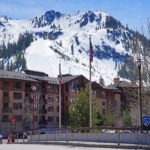
Cheaha Mountain | Mount Cheaha

Rising above the forested ridges of east-central Alabama, Cheaha Mountain is the highest natural point in the state and the dominant summit of the Talladega Mountains. Modern LiDAR places its summit at 2,407.8 feet (733.9 meters), making Cheaha modest by the standards of the Rockies or higher Appalachians but remarkably prominent within Alabama’s landscape.
Cheaha has approximately 1,448 feet (441 meters) of topographic prominence, and higher terrain does not appear for more than 106 miles. Its nearest higher neighbor is Brushy Top in northern Georgia, while its broader topographic line parent is Blood Mountain in Georgia’s Blue Ridge.
The mountain is much more than an elevation record. Cheaha is built from resistant, weakly metamorphosed sandstone and quartzite that originated hundreds of millions of years ago. Appalachian tectonic forces folded and faulted those rocks, while long-term erosion left the durable Cheaha ridge standing above the surrounding landscape.
Its summit is also unusually accessible. A paved road reaches Cheaha State Park, and the highest natural ground lies beside Bunker Tower, a stone observation tower constructed by the Civilian Conservation Corps during the 1930s. Short trails lead to Bald Rock and Pulpit Rock, while longer routes connect the mountain with the Pinhoti Trail, Talladega National Forest, and the neighboring Cheaha Wilderness.
Cheaha’s Muscogee name is fitting. The word chaha is generally translated as “high place.” Few names describe an Alabama landscape more perfectly.
⚡ Fast Facts
| Feature | Details |
|---|---|
| Mountain | Cheaha Mountain / Mount Cheaha |
| State | Alabama |
| Country | United States |
| County | Cleburne County |
| State Distinction | Highest natural point in Alabama |
| County Distinction | Highest point in Cleburne County |
| Mountain Range | Talladega Mountains |
| Greater System | Appalachian Mountains |
| Peakbagger Range | Far South Appalachian Ridges |
| LiDAR Elevation | 2,407.8 ft / 733.9 m |
| Traditional Elevation | Approx. 2,407–2,413 ft |
| Prominence | 1,448 ft / 441 m |
| Isolation | 106.71 mi / 171.74 km |
| Nearest Higher Neighbor | Brushy Top, Georgia |
| Line Parent | Blood Mountain |
| Key Col | Approx. 960 ft / 293 m |
| State High Point Rank | 35th among U.S. states by elevation |
| Main Rock | Cheaha Quartzite |
| Geological Unit | Cheaha Quartzite Member of Lay Dam Formation |
| Geological Group | Talladega Group |
| Geological Age | Early Devonian, approximately |
| Geological Character | Weakly metamorphosed sandstone/quartzite and conglomeratic rock |
| Protected Area | Cheaha State Park |
| State Park Size | Approx. 2,799 acres |
| State Park Established | 1933 |
| Surrounding Land | Talladega National Forest |
| Nearby Wilderness | Cheaha Wilderness |
| Wilderness Size | Approx. 7,400 acres |
| Summit Landmark | Bunker Observation Tower |
| Major Long-Distance Trail | Pinhoti Trail system |
| Accessible Overlook | Bald Rock |
| Famous Short Hike | Pulpit Rock Trail |
| Name Origin | Muscogee/Creek chaha — “high place” |
📍 Where Is Cheaha Mountain?
Cheaha Mountain rises in Cleburne County in east-central Alabama, near the community of Delta and southeast of the Anniston–Oxford area.
The summit lies at approximately:
33.48552° N, 85.80867° W
It forms part of the Talladega Mountains, a narrow system of northeast–southwest-trending ridges extending through eastern Alabama.
The mountain lies approximately midway between Birmingham and Atlanta and is surrounded by extensive public lands of Talladega National Forest.
Nearby summits include:
- Hernandez Peak
- Bald Rock
- Odum Point
- McDill Point
- Big Caney Head
- Rebecca Mountain
- Horn Mountain
Several neighboring ridges exceed 2,000 feet, making the Cheaha area the highest concentration of mountain terrain in Alabama.
🏆 Highest Point in Alabama
Cheaha Mountain is the undisputed highest natural point in Alabama.
Peakbagger’s modern LiDAR measurement gives:
2,407.8 feet / 733.9 meters
The U.S. Geological Survey and Forest Service traditionally use approximately 2,407 feet, while some older references round the mountain to 2,413 feet.
Those differences amount to only a few feet and primarily reflect different surveys, vertical datums, and rounding practices.
For a modern Mountain Field Guide profile, the LiDAR value of 2,407.8 feet provides the most precise current topographic figure.
🗺️ Alabama’s State High Point
Cheaha is one of the 50 U.S. state high points.
Its elevation places Alabama around 35th among the states when state high points are ranked from highest to lowest.
That sounds modest beside Denali, Mount Whitney, or Mount Elbert, but Cheaha’s topographic setting makes the summit feel considerably more mountainous than the elevation number suggests.
The surrounding valleys lie far below the summit.
From exposed overlooks, ridge after ridge stretches across Talladega National Forest.
The result is a surprisingly expansive mountain landscape for the Deep South.
📐 Topographic Prominence
Cheaha Mountain has approximately:
1,448 feet / 441 meters of clean topographic prominence
Its key col lies around:
960 feet / 293 meters
Prominence measures how independently a summit rises from surrounding terrain.
Cheaha’s prominence is substantial.
Many higher mountains along long Appalachian ridges rise only a few hundred feet above their connecting saddles.
Cheaha stands much more independently from the surrounding Alabama landscape.
🧭 Nearest Higher Neighbor
Cheaha’s nearest higher terrain lies at Brushy Top in Gilmer County, Georgia.
The distance is approximately:
106.71 miles / 171.74 kilometers
That is an unusually large isolation value for a mountain only 2,408 feet high.
For more than 100 miles in every direction, no terrain rises higher.
This makes Cheaha one of the more isolated state high points in the eastern United States.
🧭 Line Parent: Blood Mountain
Peakbagger identifies Blood Mountain in northern Georgia as Cheaha’s line parent.
This is different from the nearest higher neighbor.
The NHN is simply the nearest piece of higher terrain.
A line parent is determined through the mountain’s prominence hierarchy and the key-col network connecting it to higher summits.
Cheaha’s nearest higher terrain is Brushy Top, but its broader topographic parent is Blood Mountain.
🏔️ The Talladega Mountains
Cheaha is the highest summit of the Talladega Mountains.
These mountains form the elevated southwestern continuation of the Appalachian ridge system into Alabama.
They are narrower, lower, and warmer than the famous Blue Ridge peaks of North Carolina and Tennessee, but they contain surprisingly rugged terrain.
The Talladega high country includes:
- Narrow quartzite ridges
- Rocky outcrops
- Deep forested hollows
- Mountain streams
- Waterfalls
- Long-distance hiking trails
- Wilderness
- Extensive national forest
Cheaha occupies the highest and most developed part of this landscape.
🗺️ Is Cheaha in the Blue Ridge Mountains?
The old Mountain Field Guide page lists Cheaha as part of the Blue Ridge Mountains.
That is overly simplified.
Geologically, the Talladega belt is sometimes discussed within the broader Piedmont–Blue Ridge geological province, and USGS nomenclature connects it with deeply deformed southern Appalachian rocks.
However, Cheaha is normally identified geographically as part of the Talladega Mountains, and Peakbagger places it within the southern Appalachian ridge hierarchy rather than within the conventional Blue Ridge Mountains.
For a geographic mountain profile, Talladega Mountains → Appalachian Mountains is the clearer classification.
🪨 Geology of Cheaha Mountain
Cheaha Mountain exists largely because its rock is unusually resistant to erosion.
The summit is formed principally from the Cheaha Quartzite Member of the Lay Dam Formation within the Talladega Group.
The rock originated primarily as sandstone.
Heat, pressure, tectonic deformation, and mineral recrystallization later altered portions of it into quartzite and weakly metamorphosed sandstone.
Quartz-rich rock is exceptionally durable.
That durability helped Cheaha survive as Alabama’s highest summit while softer surrounding formations eroded much farther downward.
🪨 Cheaha Quartzite
The mountain gave its name to the Cheaha Quartzite.
USGS geological nomenclature currently recognizes it as the Cheaha Quartzite Member of the Lay Dam Formation in Alabama.
Historical descriptions used names including:
- Cheaha Sandstone Member
- Cheaha Quartzite
- Cheaha Quartzite Member
The precise stratigraphic terminology has changed as geologists refined their understanding of the Talladega Group.
What has remained consistent is the importance of resistant quartz-rich sandstone and quartzite in forming Cheaha Mountain.
🕰️ How Old Is Cheaha’s Rock?
Modern USGS nomenclature places the Cheaha Quartzite broadly in the Early Devonian, although older literature sometimes used wider Silurian-to-Devonian or general Paleozoic age estimates.
That makes the rock roughly 400 million years old, give or take many millions of years depending on the exact stratigraphic interpretation.
At that time, Alabama looked nothing like it does today.
The modern Atlantic Ocean did not exist.
The Appalachian Mountains had not yet reached their final form.
The rocks that would eventually become Cheaha were still being deposited within ancient sedimentary environments.
🌊 From Sand to Mountain
The Cheaha Quartzite began largely as sand-rich sediment.
Water transported quartz grains and other material into ancient sedimentary environments.
In some sections, coarse gravel accumulated as well.
Historical geological descriptions of the Cheaha unit identify a thick basal zone containing quartz conglomerate.
Eventually, burial compressed the sediment.
Mineral cements bound grains together into sandstone.
The future mountain still did not exist.
That required tectonic forces on a continental scale.
🪨 Sandstone Becomes Quartzite
Quartzite forms when quartz-rich sandstone is altered by metamorphism.
Heat and pressure cause quartz grains to recrystallize and interlock.
The resulting rock can become much harder than the original sandstone.
Cheaha’s rock is often described as weakly metamorphosed, meaning it did not experience the same extreme metamorphism seen in some deeper Appalachian crystalline rocks.
Nevertheless, deformation and recrystallization strengthened portions of the sandstone.
That resistance to weathering became crucial to the mountain’s survival.
⛰️ Building the Appalachians
The Appalachian Mountains formed during several great mountain-building episodes.
Eastern North America experienced repeated collisions with volcanic island arcs and other landmasses.
The final major phase culminated when ancestral Africa collided with North America during assembly of the supercontinent Pangaea.
These enormous forces:
- Folded rock
- Created faults
- Buried sedimentary formations
- Produced metamorphism
- Thickened the crust
- Raised a huge mountain belt
The Talladega rocks were caught within this tectonic system.
⚡ Folding and Thrust Faulting
The Cheaha Quartzite does not remain in its original horizontal position.
Geological studies of the Talladega belt document substantial folding and thrust faulting.
Rock packages were compressed and in some places pushed over neighboring formations.
This tectonic deformation explains why a relatively thin sequence of sedimentary layers can appear structurally repeated or dramatically thickened.
The Talladega landscape hikers see today is therefore not simply an ancient seabed lifted vertically.
It is a deformed slice of the Appalachian mountain belt.
🏔️ Ancient Appalachians
The Appalachians created during Paleozoic mountain building were probably far more rugged than today’s range.
Hundreds of millions of years of erosion followed.
Rain, rivers, landslides, chemical weathering, roots, frost, and gravity gradually stripped rock away.
Entire mountain masses disappeared.
Valleys deepened.
Only particularly resistant formations continued forming the highest ridges.
Cheaha’s quartz-rich rock became one of those survivors.
🪨 Differential Erosion
The modern summit is an excellent example of differential erosion.
Different rocks weather at different rates.
Quartzite is hard and chemically resistant.
Phyllite, slate, and other softer or more fractured rocks can break down more rapidly.
As erosion lowered the surrounding landscape, the durable Cheaha Quartzite remained comparatively high.
The mountain’s elevation is therefore not simply the result of uplift.
It also records hundreds of millions of years of selective erosion.
🪨 Quartzite Outcrops
Visitors encounter Cheaha’s geology directly at several overlooks.
Bald Rock, Pulpit Rock, and other exposed areas contain resistant rocky ledges.
Weathering has fractured the rock into:
- Slabs
- Blocks
- Boulders
- Ledges
- Shallow rocky soils
These exposed surfaces create broad views because dense forest cannot completely establish on the thinnest soils.
The same rock that preserved Alabama’s highest summit also created its best viewpoints.
🏷️ What Does Cheaha Mean?
The name Cheaha comes from the Muscogee, or Creek, language.
The word chaha is commonly translated as:
“high place.”
The name is especially appropriate because Cheaha stands above every other natural point in Alabama.
The mountain lies within the wider ancestral landscape of Muscogee peoples, whose connections with eastern and central Alabama long predate the creation of the state.
Modern visitors should be cautious about embellishing that history with unsupported stories about particular ceremonies or supposed “first ascents.”
What can be said confidently is that the mountain’s Indigenous-derived name survives today.
🧭 No Meaningful First Ascent
There is no meaningful recorded “first ascent” of Cheaha Mountain.
Indigenous peoples knew Alabama’s landscapes long before European-American surveyors or recreational hikers appeared.
The summit is also broad and accessible rather than technically difficult.
Hunters, travelers, local residents, surveyors, and others likely crossed the upper mountain long before anyone thought to document a recreational ascent.
For Cheaha, the more meaningful historical milestones involve the preservation and development of the summit as a public park.
🏞️ Cheaha State Park
Cheaha State Park surrounds the summit and protects approximately 2,799 acres.
It is Alabama’s oldest continuously operating state park.
The park dates to 1933.
This corrects the older Mountain Field Guide profile, which associates the park’s beginning with 1939.
The park combines a developed summit area with rugged forest and connections into Talladega National Forest.
Visitors can experience Alabama’s high point without a strenuous climb while still having immediate access to substantial backcountry terrain.
🛠️ Civilian Conservation Corps
The Civilian Conservation Corps transformed Cheaha during the Great Depression.
CCC companies including 465, 468, and 2420 worked on the park.
Their projects included:
- Bunker Observation Tower
- Cabins
- Bald Rock Lodge
- Pavilions
- Roads
- Cheaha Lake dam
- Bathhouse
- Reforestation
- Other park infrastructure
Much of this stonework remains a defining part of the Cheaha experience.
The CCC structures are not simply old buildings.
They represent one of America’s most ambitious public conservation and employment programs.
🗼 Bunker Observation Tower
The highest natural point in Alabama lies beside Bunker Tower.
The stone tower was constructed by the Civilian Conservation Corps from local Cheaha rock.
Today it houses a small CCC Museum as well as an observation area.
The tower adds height to an already broad summit, allowing visitors to see above portions of the surrounding forest.
For state highpointers, the important point is the natural ground near the tower rather than the top of the building.
🏆 Visiting Alabama’s Highest Point
Cheaha is one of America’s easiest state high points to reach.
A paved road enters Cheaha State Park and reaches the summit area.
Visitors can park very close to Bunker Tower.
No technical climbing is required.
That accessibility makes Cheaha popular with:
- State highpointers
- Families
- Road trippers
- Photographers
- Hikers
- Birdwatchers
- History enthusiasts
Visitors seeking a greater physical challenge can easily combine the summit with longer hikes in the surrounding national forest.
👀 Bald Rock
Bald Rock is one of Cheaha’s best-known viewpoints.
It lies just north of the main summit.
The park maintains an approximately 0.3-mile accessible boardwalk leading toward the overlook.
Natural-surface paths also provide access alongside portions of the boardwalk.
At the end, exposed quartzite opens a broad view across the Talladega landscape.
The viewpoint is particularly popular around sunrise, sunset, and autumn foliage season.
♿ Accessible Mountain Scenery
Bald Rock is significant because it makes a dramatic Appalachian overlook available to visitors who may not be able to negotiate a steep backcountry trail.
The boardwalk provides one of Alabama’s most accessible high-mountain experiences.
Visitors should remain on durable surfaces and avoid trampling vegetation around the rocky edge.
Thin-soil summit plants grow slowly and can be damaged easily.
🪨 Bald Rock Is Not Bald Rock Mountain
Bald Rock at Cheaha should not be confused with Bald Rock Mountain in St. Clair County.
They are separate geographic features.
Cheaha’s Bald Rock is a small subsidiary outcrop only a short distance from the state high point.
Peakbagger gives it only a few feet of independent prominence.
Bald Rock Mountain, by contrast, is a substantial 1,500-plus-foot summit and the highest point of St. Clair County.
👀 Pulpit Rock
Pulpit Rock provides another classic Cheaha overlook.
The official Pulpit Rock Trail is approximately:
0.3 mile
The distance is short, but the trail includes steep and rocky terrain.
The outcrop provides broad views across the Talladega National Forest.
Pulpit Rock is also used for permitted rappelling and climbing.
Alabama State Parks requires appropriate permission for those technical activities.
🌸 Mountain Laurel Trail
The Mountain Laurel Trail is approximately:
1.4 miles
It follows a stream corridor through thick mountain-laurel habitat and leads toward Rock Garden Overlook.
The route provides a more intimate forest experience than the exposed viewpoints at Bald Rock or Pulpit Rock.
Moisture around the stream creates cooler habitat and supports plants different from those found on dry upper ridges.
💦 Angel Falls and Rock Garden
Near Rock Garden Overlook, Cheaha Creek can spill across the rock as Angel Falls.
Water volume varies greatly with rainfall.
During wet periods, the stream creates an attractive cascade.
During dry weather, the waterfall can become much smaller.
This is typical of small Appalachian summit streams.
Their catchments are limited, so flow responds quickly to precipitation.
🥾 Cheaha Express Trail
The park trail map lists the Cheaha Express at approximately:
2.4 miles
It provides a longer route through the park’s wooded terrain and connects with other trail opportunities.
Other park trails include:
- Deer Run
- Upper Spring
- Lower Spring
- Cheaha Run
- Lake Trail
- Fisherman’s Trail
- Bigfoot Trail
Together these routes allow visitors to spend far more time on Cheaha than the short high-point visit requires.
🥾 Pinhoti Trail
The greater Cheaha landscape is connected to the Pinhoti Trail, one of the Southeast’s major long-distance hiking routes.
The Alabama portion crosses roughly 140 miles of Talladega National Forest before the larger route continues into Georgia.
Connections near Cheaha allow backpackers to move between:
- Cheaha State Park
- Cheaha Wilderness
- Talladega National Forest
- Long-distance ridge trails
For experienced hikers, this network provides a dramatically different Cheaha experience from simply driving to Bunker Tower.
🌲 Talladega National Forest
Cheaha State Park is almost completely surrounded by Talladega National Forest.
The forest protects hundreds of thousands of acres across eastern Alabama.
Around Cheaha, public land contains:
- Pine and hardwood forest
- Streams
- Waterfalls
- Rocky ridges
- Backcountry trails
- Wildlife habitat
- Primitive recreation
This large protected landscape gives Cheaha a sense of scale unusual for a summit reached so easily by road.
🌲 Cheaha Wilderness
Immediately south of the developed summit lies Cheaha Wilderness.
The federally designated wilderness contains approximately 7,400 acres.
Motorized and mechanized equipment is generally prohibited within designated wilderness.
The result is a much more primitive landscape than Cheaha State Park.
Hikers should expect:
- Fewer signs
- Rugged trails
- Limited facilities
- Creek crossings
- Rocky terrain
- Greater self-reliance
The wilderness provides an important counterpoint to the developed state high point only a short distance away.
🥾 Cave Creek and High Point Connections
Trails around the park boundary connect Cheaha with the surrounding Pinhoti and wilderness systems.
The park map identifies routes such as the Cave Creek Trail and a High Point Spur Trail.
These connections allow backpackers to incorporate the Alabama high point into much longer journeys.
Trail conditions can change because of storms, erosion, prescribed fire, or maintenance.
Long-distance hikers should always use current Forest Service and state park information rather than relying only on older trail descriptions.
💦 Chinnabee Silent Trail
Nearby Talladega National Forest contains the Chinnabee Silent Trail, approximately six miles long.
The trail travels through a rugged landscape of:
- Mountain streams
- Rock outcrops
- Waterfalls
- Forest
- Steep slopes
It connects Lake Chinnabee with the Pinhoti Trail near the Cheaha high country.
Cheaha Falls and Devil’s Den are among the wider area’s best-known water features.
These routes provide a much wilder experience than the short park overlook trails.
🌿 Flora and Fauna
Cheaha’s forests are characteristic of the southern Appalachian foothills but show meaningful variation with elevation, moisture, geology, and slope exposure.
Dry quartzite ridges support oak, hickory, pine, mountain laurel, and other species adapted to acidic, rocky soils.
Sheltered hollows support taller hardwood forest.
Stream valleys remain cooler and wetter.
Open rock outcrops support specialized plants able to survive with very little soil.
The resulting habitat mosaic supports mammals, birds, reptiles, amphibians, and a rich community of invertebrates.
🌳 Oaks and Hickories
Oak-hickory forest is widespread across the Cheaha landscape.
Species vary by slope and soil, but regional forests can include:
- Chestnut oak
- White oak
- Southern red oak
- Black oak
- Several hickories
- Sourwood
- Blackgum
- Red maple
Acorns and hickory nuts provide some of the most important autumn foods in the forest.
Deer, turkeys, squirrels, rodents, and numerous birds depend on these mast crops.
🌲 Pines
Pines occupy drier ridges, disturbed areas, and some thinner soils.
Loblolly pine occurs widely in Alabama, while shortleaf and Virginia pine may appear in suitable upland habitats.
The balance between pine and hardwood has changed over time because of:
- Fire suppression
- Logging
- Reforestation
- Storms
- Land management
The Civilian Conservation Corps itself participated in replanting portions of Cheaha State Park during the 1930s.
🌸 Mountain Laurel
Mountain laurel is one of Cheaha’s most conspicuous flowering shrubs.
Its dense evergreen leaves form thickets along portions of the mountain.
In spring, clusters of pale pink or white flowers brighten the forest.
The plant thrives in acidic soils and rocky Appalachian terrain.
The park’s Mountain Laurel Trail is named for these abundant shrubs.
🌺 Rhododendrons and Native Azaleas
Moister areas support rhododendrons and native azaleas.
These flowering shrubs are especially common around streams and sheltered slopes.
Bloom timing varies with elevation and seasonal temperatures.
Together with mountain laurel, they create the lush evergreen understory associated with many southern Appalachian mountains.
🌼 Spring Wildflowers
Spring brings a changing sequence of forest flowers.
Depending on moisture and location, visitors may encounter:
- Trilliums
- Violets
- Bloodroot
- Mayapple
- Phlox
- Wild geranium
- Woodland asters
- Goldenrods later in the season
The highest parts of Cheaha may leaf out slightly later than surrounding lowlands because of cooler temperatures.
🦎 The Talladega Seal Salamander
One of the most interesting recent biological discoveries associated with Cheaha is the Talladega seal salamander (Desmognathus cheaha).
The species was formally recognized in modern taxonomic research published in 2023.
Its scientific name honors Cheaha Mountain.
The type specimen was collected in Hillabee Creek on Mount Cheaha in Cleburne County.
This means Alabama’s highest mountain is now commemorated not only in geography and geology but in the scientific name of a native salamander.
🦎 Life Along Mountain Streams
The Talladega seal salamander belongs to the lungless salamander family.
These amphibians depend heavily on moist environments.
Streamside rocks, shaded creeks, forest cover, and clean water are critical habitat.
Because many salamanders exchange gases partly or entirely through their skin, changes in water quality and moisture can affect them quickly.
Healthy mountain streams therefore protect far more biodiversity than visitors may notice at first glance.
🦌 White-Tailed Deer
White-tailed deer are common in Talladega National Forest.
They use:
- Hardwood forest
- Openings
- Young forest
- Stream corridors
- Edge habitat
Acorns become especially important during autumn.
Visitors may encounter deer around dawn and dusk, including near roads.
Drivers should be alert throughout the park and national forest.
🦃 Wild Turkeys
Wild turkeys are another characteristic Cheaha-area species.
The Forest Service specifically identifies them among common wildlife of Talladega National Forest.
Turkeys forage for:
- Acorns
- Seeds
- Berries
- Insects
- Tender vegetation
Large mature trees provide nighttime roost sites.
Their calls are particularly noticeable during the spring breeding season.
🐿️ Squirrels and Small Mammals
Gray squirrels and other small mammals thrive in hardwood forest.
Squirrels depend heavily on acorns and hickory nuts.
Mice, chipmunks, shrews, and other small mammals occupy the forest floor.
These species also provide food for:
- Owls
- Hawks
- Snakes
- Foxes
- Coyotes
The food web extends from summit trees all the way to major predators.
🐻 Black Bears
American black bears are rare in Alabama but are becoming increasingly relevant around the Cheaha region.
Alabama wildlife authorities recognize a small reestablished breeding population within the Talladega National Forest region of Calhoun and Cleburne counties.
That includes the wider landscape around Cheaha.
A bear sighting remains unusual, but visitors should not assume bears are absent.
Never feed or approach a bear, and keep food secured when camping.
🐦 Mountain Birds
Cheaha’s ridges and forests support a wide variety of birds.
Visitors may encounter:
- Red-tailed hawks
- Turkey vultures
- Pileated woodpeckers
- Red-bellied woodpeckers
- Carolina chickadees
- Tufted titmice
- Carolina wrens
- Eastern towhees
- Vireos
- Migratory warblers
- Barred owls
The mountain is especially interesting during spring and autumn migration.
Its long wooded ridges provide resting and feeding habitat for birds traveling through the southeastern United States.
🦅 Raptors and Thermals
Cheaha’s prominence and exposed rock overlooks create excellent places to watch soaring birds.
Sunlight warms the landscape unevenly, creating columns of rising air called thermals.
Large birds can circle within these thermals and gain elevation without constant flapping.
Turkey vultures are especially conspicuous.
Hawks and other raptors can use the same air currents during migration and hunting.
🌡️ Climate on Cheaha
Cheaha’s elevation produces cooler conditions than the surrounding Alabama lowlands, but the summit is not an alpine environment.
Summers remain warm and humid.
Winters are generally mild compared with the northern Appalachians.
However, high elevation does increase exposure to:
- Wind
- Fog
- Freezing rain
- Ice
- Occasional snow
- Rapid temperature changes
Visitors should check mountain conditions rather than relying solely on forecasts for Birmingham, Anniston, or lower nearby communities.
❄️ Winter Weather
Cheaha is one of Alabama’s better locations for experiencing winter weather.
Snow is still irregular, but the summit may receive snow or freezing precipitation when nearby lower terrain receives rain.
Ice can be a greater practical hazard than snow.
Roads and trails may become slick, while freezing fog can coat trees and exposed rock.
The park may restrict access during severe conditions.
⛈️ Thunderstorms
Summer thunderstorms present another hazard.
Exposed overlooks such as Bald Rock and Pulpit Rock are poor places to remain when lightning approaches.
Strong storms can also bring:
- Heavy rain
- Damaging wind
- Falling branches
- Flash flooding in streams
- Rapid temperature changes
Visitors planning longer backcountry hikes should monitor forecasts and be prepared to change plans.
🍂 Autumn
Autumn is one of Cheaha’s busiest seasons.
The summit provides expansive views across hardwood forest changing from green to:
- Yellow
- Orange
- Red
- Burgundy
- Bronze
Because of the mountain’s elevation, color can progress somewhat differently from surrounding valleys.
Bald Rock and Pulpit Rock are particularly popular during peak foliage.
Crowds can be significant on clear autumn weekends.
🌸 Spring
Spring is another excellent season.
Streams and waterfalls typically carry more water than during late summer.
Mountain laurel, azaleas, dogwoods, redbuds, and woodland wildflowers add color.
Bird migration increases activity in the forest.
Temperatures are usually more comfortable for longer hikes than during midsummer.
☀️ Summer
Summer brings lush foliage and long daylight hours.
Cheaha’s elevation may offer some relief from hotter nearby lowlands, but temperatures can still become high.
Humidity makes steep hikes demanding.
Hikers should carry adequate water and avoid assuming that a 2,400-foot Alabama summit will have cool mountain weather throughout the day.
🗺️ Talladega Scenic Drive
Alabama Highway 281, also known as part of the Talladega Scenic Drive, provides road access across the high country.
The Forest Service highlights the drive for:
- Mountain scenery
- Appalachian views
- Spring greenery
- Autumn foliage
This road makes Cheaha one of the easiest places in Alabama to experience extensive ridge-top scenery without undertaking a long hike.
It also connects visitors with surrounding national forest recreation.
🏕️ Camping and Overnight Visits
Cheaha State Park provides several forms of overnight accommodation and camping.
Facilities have evolved over time and may include:
- Improved camping
- Primitive camping
- Historic cabins
- Chalets
- Group facilities
The summit’s accessibility means visitors can spend a night in a mountain environment without a backpacking expedition.
For a more primitive experience, the surrounding Talladega National Forest and wilderness trail network offers longer backcountry possibilities under separate regulations.
🏔️ Cheaha vs. Lookout Mountain
Lookout Mountain reaches approximately 2,390 feet at its Georgia high point.
That means Cheaha is only about 18 feet higher by modern LiDAR.
The mountains are nevertheless geologically quite different.
Lookout Mountain is a long Cumberland Plateau landform capped largely by Pennsylvanian sedimentary sandstone.
Cheaha is a more strongly deformed and weakly metamorphosed Talladega Mountain summit built largely from older Devonian quartzite.
Their similar elevations conceal very different geological histories.
🏔️ Cheaha vs. Sand Mountain
Sand Mountain is an enormous Cumberland Plateau district rather than one conventional summit.
Its highest major named point, Fox Mountain, reaches approximately 1,976 feet.
Cheaha rises more than 400 feet higher.
Sand Mountain consists largely of younger Pennsylvanian sedimentary rock.
Cheaha’s quartzite belongs to an older, more tectonically altered Appalachian belt.
🏔️ Cheaha vs. Oak Mountain
Oak Mountain reaches approximately 1,275 feet, while the highest part of Oak Mountain State Park is close to 1,303 feet.
Cheaha is therefore more than 1,100 feet higher.
Oak Mountain lies much closer to Birmingham and offers an enormous developed trail network.
Cheaha provides greater elevation, longer topographic isolation, extensive national forest surroundings, and direct access to wilderness.
🏔️ Cheaha vs. Bald Rock Mountain
Bald Rock Mountain in St. Clair County reaches approximately 1,587 feet.
It should not be confused with Bald Rock overlook near the summit of Cheaha.
Bald Rock Mountain is a substantial independent summit and county high point.
Cheaha’s Bald Rock is simply a minor rocky feature attached to the state’s highest mountain.
The repeated name is an easy source of confusion in Alabama geography.
🏔️ Cheaha vs. Blood Mountain
Blood Mountain in Georgia reaches approximately 4,462 feet by modern LiDAR, nearly twice Cheaha’s elevation.
It lies within the Blue Ridge Mountains and supports a cooler, wetter mountain environment.
Peakbagger identifies Blood Mountain as Cheaha’s line parent.
Higher terrain near Brushy Top occurs slightly closer, but Blood Mountain controls Cheaha’s broader topographic prominence relationship.
💡 Interesting Facts About Cheaha Mountain
- Cheaha Mountain is the highest natural point in Alabama.
- Modern LiDAR measures the summit at 2,407.8 feet.
- Older sources often use 2,407, 2,408, or 2,413 feet.
- Cheaha has approximately 1,448 feet of prominence.
- Its isolation is approximately 106.71 miles.
- Higher terrain does not appear for more than 100 miles.
- Brushy Top in Georgia is the nearest higher neighbor.
- Blood Mountain is Cheaha’s line parent.
- The key col is approximately 960 feet.
- Cheaha is the highest mountain of the Talladega Mountains.
- It is the high point of Cleburne County.
- The mountain’s name comes from Muscogee chaha, meaning “high place.”
- The main summit rock is the Cheaha Quartzite Member.
- USGS currently places the unit broadly in the Early Devonian.
- Cheaha Quartzite originated primarily as sandstone.
- Tectonic heat and pressure weakly metamorphosed portions of the rock.
- Resistant quartzite helped preserve the summit against erosion.
- Cheaha State Park dates to 1933.
- It is Alabama’s oldest continuously operating state park.
- The park protects approximately 2,799 acres.
- The Civilian Conservation Corps constructed Bunker Tower, cabins, Bald Rock Lodge, roads, and other facilities.
- The natural state high point lies beside Bunker Observation Tower.
- Bunker Tower now contains a CCC museum.
- Bald Rock is reached by an approximately 0.3-mile accessible boardwalk.
- Pulpit Rock Trail is approximately 0.3 mile.
- Mountain Laurel Trail is approximately 1.4 miles.
- Cheaha Express is approximately 2.4 miles.
- The mountain connects with the larger Pinhoti Trail network.
- The nearby Cheaha Wilderness protects approximately 7,400 acres.
- The surrounding Talladega National Forest supports deer, turkey, squirrels, numerous birds, and a small reestablished black bear population.
- A salamander species formally recognized in 2023, Desmognathus cheaha, was named for the mountain.
- The type locality of the Talladega seal salamander is Hillabee Creek on Mount Cheaha.
- Cheaha’s Bald Rock should not be confused with Bald Rock Mountain in St. Clair County.
- Cheaha is only about 18 feet higher than Lookout Mountain’s modern Georgia high point.
🌄 Why Cheaha Mountain Is Remarkable
Cheaha Mountain’s elevation is easy to dismiss if it is compared only with America’s great western mountains.
At roughly 2,408 feet, it is less than one-fifth the elevation of many Colorado summits.
Yet elevation alone misses almost everything that makes Cheaha important.
The first remarkable fact is its independence.
The mountain rises almost 1,450 feet above its key saddle, and higher terrain does not appear for more than 106 miles.
Cheaha is not simply one minor bump on a high plateau.
It is the dominant summit of a substantial Appalachian landscape.
Its rocks tell an even older story.
Around 400 million years ago, quartz-rich sand accumulated in ancient sedimentary environments. Burial transformed it into sandstone. Later Appalachian mountain building compressed, folded, faulted, and weakly metamorphosed those layers.
The sandstone became harder.
Quartz grains recrystallized.
The future Cheaha Quartzite formed.
Then erosion began working on the mountain belt.
Hundreds of millions of years passed.
Softer rocks disappeared.
Rivers cut valleys.
Entire ancient mountains were worn away.
The resistant quartz-rich ridge endured.
Eventually one remnant stood slightly higher than every other piece of Alabama.
People knew this elevated landscape long before modern surveyors measured it.
The surviving Muscogee name — chaha, “high place” — expresses the mountain’s geography with remarkable simplicity.
Modern public history arrived in another important era.
During the Great Depression, Civilian Conservation Corps workers transformed Cheaha into Alabama’s first enduring state-park mountain destination.
They built roads, cabins, a lake, pavilions, and the stone Bunker Tower standing beside the state’s highest natural ground.
Their work made the summit accessible without removing its connection to surrounding wilderness.
That balance still defines Cheaha today.
A family can drive almost to Alabama’s highest point and walk a short distance to Bunker Tower.
A visitor using a wheelchair can follow the Bald Rock boardwalk to a mountain overlook.
A hiker can descend into the forest, join the Pinhoti network, and continue into federally designated wilderness.
A naturalist can search streams for salamanders, listen for migrating birds, or look across oak and pine ridges that now support a slowly recovering black bear population.
Even science continues adding to the mountain’s story.
In 2023, researchers formally recognized a salamander species named Desmognathus cheaha. Its type locality lies on the mountain itself.
Cheaha has therefore lent its name to a geological unit, a state park, a wilderness, and now a living species.
That is an impressive legacy for a mountain only 2,408 feet high.
Cheaha Mountain is Alabama’s rooftop, but its importance runs much deeper than that distinction. It is a surviving ridge of ancient Appalachian rock, a Muscogee-named landmark, a monument to New Deal conservation, a gateway to the Talladega wilderness, and one of the most recognizable natural landscapes at the southern end of the Appalachian Mountains.
🔗 Related Articles
- Lookout Mountain
- Sand Mountain (Alabama)
- Oak Mountain (Alabama)
- Bald Rock Mountain
- Blood Mountain
- Appalachian Mountains
- Hiking Trails in Cheaha State Park
- Mountain Ranges in the U.S.
📚 Sources
- Peakbagger — Cheaha Mountain
- U.S. Geological Survey — Cheaha Geologic Unit
- U.S. Geological Survey — Cheaha Publications and Stratigraphy
- U.S. Geological Survey — Talladega Group
- U.S. Geological Survey — Cheaha Mountain Topographic Quadrangle
- Alabama State Parks — Cheaha State Park
- Alabama State Parks — Hiking at Cheaha State Park
- Alabama State Parks — Cheaha State Park Trail Map
- Alabama State Parks — Civilian Conservation Corps Museum
- Encyclopedia of Alabama — Cheaha State Park
- U.S. Forest Service — National Forests in Alabama Wilderness
- U.S. Forest Service — Talladega National Forest Great Escapes
- Outdoor Alabama — Black Bear
- American Museum of Natural History — Desmognathus cheaha
- Systematic Biology — Talladega Seal Salamander