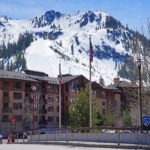
Cienaga Peak

🏔️ Overview
Cienaga Peak is a little-known 9,144-foot summit in the San Jacinto Mountains of Southern California. Located above the mountain community of Idyllwild in Riverside County, this rocky high point occupies a southern ridge of Marion Mountain within the broader San Jacinto massif.
Also known as Cienaga Point, the summit stands close to the Pacific Crest Trail and overlooks a dramatic landscape of granite outcrops, pine forests, steep canyons, and distant desert terrain. Although its limited topographic prominence means it is better described as a subsidiary ridge summit than a major independent mountain, Cienaga Peak offers rewarding scenery and a quieter alternative to the region’s more heavily visited destinations.
Its position near the boundary between federal and state-managed wilderness also makes it an interesting example of the complicated geography surrounding San Jacinto Peak. Hikers can approach the area from Idyllwild using either the Deer Springs Trail or the Devil’s Slide Trail from Humber Park.
⚡ Fast Facts
| Fact | Details |
|---|---|
| Continent | North America |
| Country | United States |
| State/Province | California |
| County/Region | Riverside County |
| Range | San Jacinto Mountains, Peninsular Ranges |
| Parent Peak | Marion Mountain ridge; part of the broader San Jacinto Peak massif |
| Elevation | 9,144 feet / 2,787 meters |
| Prominence | Approximately 24 feet / 7 meters, according to Peakbagger |
| Isolation | Approximately 0.31 miles / 0.50 kilometers |
| NHN | San Jacinto Wilderness High Point, northwest |
| Coordinates | Approximately 33.78485° N, 116.67583° W |
| Alternate Name | Cienaga Point |
| Land Management | San Bernardino National Forest |
| Protected Area | San Jacinto Wilderness |
| Nearest Community | Idyllwild, California |
| Common Access Routes | Devil’s Slide Trail and Deer Springs Trail |
| Nearby Long-Distance Trail | Pacific Crest Trail |
| Summit Character | Rocky, lightly prominent forested ridge point |
📍 Location
Cienaga Peak rises in the San Jacinto Mountains of Riverside County, east of the Inland Empire and above the mountain community of Idyllwild. The summit belongs to the Peninsular Ranges, a mountain system extending through Southern California and southward into Baja California.
The peak lies on a ridge south of Marion Mountain and southwest of the highest terrain surrounding San Jacinto Peak. Its position places it among several connected ridges, meadows, granite slopes, and trail junctions in the San Jacinto high country.
The Pacific Crest Trail passes close to Cienaga Peak as it traverses the western and southern slopes of the San Jacinto massif. Nearby landscape features include Strawberry Junction, Strawberry Cienaga, Wellman Cienaga, and routes leading toward Wellman Divide.
Although the summit itself lies within the federally managed San Jacinto Wilderness, the nearby state wilderness boundary creates a patchwork of land-management responsibilities. Hikers approaching from different directions may pass between lands administered by the U.S. Forest Service and California State Parks.
The closest practical base for most visitors is Idyllwild, a forested mountain town with lodging, restaurants, trailhead access, and ranger facilities.
📏 Elevation & Prominence
Cienaga Peak reaches approximately 9,144 feet, or 2,787 meters, above sea level.
This elevation places it well within the high montane environment of the San Jacinto Mountains. Although it stands more than 1,600 feet below San Jacinto Peak, its surroundings still experience winter snowfall, freezing temperatures, and substantial seasonal weather changes.
The summit’s prominence is more complicated.
Peakbagger currently assigns Cienaga Peak approximately 24 feet of topographic prominence and approximately 0.31 miles of isolation. Those figures indicate that the summit is only slightly separated from nearby higher terrain.
Older descriptions have estimated its prominence at roughly 90 feet, based on a different interpretation of the connecting saddle. The disagreement illustrates how small, irregular ridge summits can produce different prominence estimates depending on available elevation data, contour interpretation, and the precise location used for the saddle.
Regardless of the figure adopted, Cienaga Peak has relatively little topographic independence. It is best understood as a subsidiary summit along the Marion Mountain–San Jacinto mountain system.
Its nearest higher neighbor in Peakbagger’s database is San Jacinto Wilderness High Point, a nearby summit of approximately 9,220 feet to the northwest.
For readers interested in the distinction between elevation and summit independence, What Is Mountain Prominence? explains why a mountain can stand at a high elevation while having only modest prominence.
🪨 Geology
Cienaga Peak belongs to the northern Peninsular Ranges, a geologically complex region shaped by ancient magmatism, tectonic movement, uplift, weathering, and erosion.
Much of the surrounding mountain landscape contains granitic and other intrusive igneous rocks associated with the Peninsular Ranges batholith. These rocks formed deep underground as molten material cooled and crystallized during the Mesozoic Era, particularly during the Cretaceous.
Over millions of years, tectonic uplift and erosion gradually exposed these formerly buried rock bodies. The resulting landscape includes extensive granite outcrops, steep slopes, fractured boulders, and prominent rock walls.
The San Jacinto Mountains are also closely associated with major Southern California fault systems. Movement along the San Jacinto Fault and other regional structures has contributed to the uplift and deformation of the surrounding mountain blocks.
This geological history helps explain why the San Jacinto high country rises so abruptly above neighboring valleys and desert landscapes. From certain viewpoints, forested summits and rocky ridges stand in striking contrast to the low-elevation terrain farther east.
Cienaga Peak itself occupies a relatively minor high point within this larger uplifted mountain block, but its cliffs and exposed rock reflect the same geological processes that created the more famous summits nearby.
🌿 Flora & Fauna
At more than 9,000 feet, Cienaga Peak lies within a cool, forested mountain environment very different from the desert communities visible elsewhere around the San Jacinto Mountains.
The surrounding slopes support high-elevation conifer forests, including Jeffrey pine and other mountain trees adapted to cold winters, dry summers, rocky soils, and strong sunlight. White fir, lodgepole pine, and other conifers occur in suitable habitats elsewhere across the San Jacinto high country, with their distribution varying according to elevation, moisture, and slope exposure.
Jeffrey pine is particularly characteristic of the region. Its bark is often associated with a vanilla- or butterscotch-like scent, especially on warm days.
Around springs, seasonal drainages, and mountain meadows, greater moisture supports a different collection of grasses, flowering plants, and wetland vegetation. These wetter habitats are especially significant in a mountain range surrounded by much drier lowlands.
Wildlife in the broader San Jacinto Mountains includes mule deer, coyotes, bobcats, mountain lions, ground squirrels, chipmunks, and numerous forest birds. Visitors may encounter woodpeckers, Steller’s jays, ravens, hawks, and other species adapted to mountain forests and rocky terrain.
Animal sightings vary considerably with season, weather, time of day, and visitor activity. Even when larger mammals remain hidden, their tracks and other signs may reveal their presence along quieter sections of trail.
Because mountain meadows and spring-fed areas are sensitive to trampling, hikers should remain on established routes wherever possible and avoid disturbing fragile vegetation.
🥾 Hiking & Climbing Routes
Cienaga Peak does not have the same established summit infrastructure as major Southern California hiking destinations. The most practical approaches follow maintained wilderness trails before requiring a short off-trail or informal ridge traverse to the summit.
Distances and elevation gains should be treated as approximate because the exact route depends on the chosen trailhead and the final approach.
Devil’s Slide Trail From Humber Park
The shorter commonly described approach begins at Humber Park near Idyllwild.
From the trailhead, hikers ascend the Devil’s Slide Trail toward Saddle Junction. The route then connects with the Pacific Crest Trail and continues through the higher mountain terrain toward the vicinity of Cienaga Peak.
Near the appropriate ridge and trail junction, hikers leave the maintained trail and make the final ascent toward the summit.
Older route descriptions estimate a round-trip distance of approximately 9 miles, with around 2,600 to 2,700 feet of elevation gain. Actual mileage can vary with route choices and navigation.
The approach offers impressive granite scenery, forested switchbacks, and views toward the surrounding high country. However, Humber Park can be busy, and parking requirements or seasonal entry limitations may apply.
Deer Springs Trail
A longer alternative begins at the Deer Springs Trailhead along Highway 243, roughly one mile north of Idyllwild.
This route climbs through oak woodland and mountain forest before reaching Strawberry Junction, where it connects with the Pacific Crest Trail. Hikers then continue toward the ridge system surrounding Cienaga Peak.
Published route descriptions estimate approximately 13.5 miles round trip with roughly 3,500 feet of elevation gain.
The Deer Springs approach is longer and more demanding than the Humber Park route, but it provides a substantial tour of the mountain’s changing forest environments. It can be especially appealing to experienced hikers who prefer a longer wilderness outing.
Pacific Crest Trail Connection
The Pacific Crest Trail passes near Cienaga Peak as it winds through the San Jacinto Mountains. In places, the trail traverses below the summit and approaches the saddle connecting the peak to higher terrain.
From the nearby saddle or ridge junction, the final summit approach is relatively short, but it is not a substitute for the much longer hike required to reach that point from a public trailhead.
Anyone leaving the maintained trail should carry reliable navigation tools, stay aware of terrain conditions, and avoid damaging sensitive vegetation.
West Face
The steep western side of Cienaga Peak has also attracted interest from experienced climbers.
Descriptions characterize portions of this terrain as involving exposed scrambling or more serious climbing, with possible Class 3 or Class 4 sections depending on the line selected. Snow and ice can increase the difficulty substantially.
This route is unsuitable for casual hikers and should not be attempted without appropriate experience, equipment, route-finding ability, and current knowledge of conditions.
🏔️ Field Guide Tip: Cienaga Peak may look like a small detour on a map, but reaching it requires a substantial mountain hike. Carry offline navigation, sufficient water, extra layers, sun protection, and a headlamp, and review The Ten Essentials for Hiking before heading into the San Jacinto Wilderness.
🎫 Wilderness Permits & Regulations
A wilderness permit is required for hiking in both the federally managed San Jacinto Wilderness and Mount San Jacinto State Park wilderness.
According to the U.S. Forest Service, day-use permits are free, and federal and state agencies generally honor each other’s day-use permits for travel between their respective wilderness areas. Overnight camping requirements depend on which agency manages the location where visitors plan to camp.
Visitors should confirm current permit procedures before setting out because trailhead rules, reservation systems, seasonal quotas, and closure information can change.
Parking at Humber Park may require an Adventure Pass or qualifying interagency pass. Trailhead-specific requirements should be checked in advance.
Campfires are prohibited in the federal wilderness, and state wilderness camping is also subject to strict fire and campsite regulations. Camp stoves may be permitted under specific conditions, but hikers must follow current rules and fire restrictions.
Because the state and federal boundaries occur close to the Cienaga Peak area, backpackers should verify exactly where they intend to camp before obtaining an overnight permit.
🌤️ Best Time to Visit
The most practical seasons for hiking Cienaga Peak are generally late spring, summer, and early autumn, provided trails are open and weather conditions are favorable.
Late spring can bring flowing springs, greener mountain vegetation, and comfortable temperatures, although snow may linger on shaded slopes or higher sections of trail after wet winters.
Summer provides longer daylight and generally accessible trails, but hikers should begin early to avoid heat on lower slopes. Afternoon thunderstorms, lightning, dehydration, and wildfire-related closures are additional concerns.
Early autumn often combines cooler temperatures with relatively clear trails. However, water sources may diminish after the dry season, and elevated wildfire danger can affect access.
Winter transforms the San Jacinto high country into a much more serious mountain environment. Snow, ice, freezing temperatures, obscured trails, and shorter daylight hours can make even familiar routes challenging.
Traction devices, winter navigation skills, and additional cold-weather equipment may be necessary. More technical terrain can require equipment and experience beyond ordinary hiking preparation.
Visitors should check current trail conditions, weather forecasts, wildfire restrictions, and wilderness access information before traveling.
🧭 Nearby Mountains & Attractions
Marion Mountain
Marion Mountain rises north of Cienaga Peak and forms part of the ridge system to which the smaller summit belongs.
At more than 10,000 feet, Marion Mountain is substantially higher and contributes to the rugged character of the surrounding San Jacinto high country.
San Jacinto Peak
San Jacinto Peak is the highest mountain in the San Jacinto Mountains, reaching approximately 10,834 feet according to California State Parks.
It dominates the surrounding region and forms the centerpiece of the broader mountain massif. Its summit can be approached from several directions, including trails from Idyllwild and routes connected to the Palm Springs Aerial Tramway.
San Jacinto Wilderness High Point
This nearby summit rises to approximately 9,220 feet and is identified by Peakbagger as the nearest higher neighbor of Cienaga Peak.
Its name refers specifically to the high point associated with the federally administered San Jacinto Wilderness, not the highest point of the larger state wilderness or the entire mountain range.
Tahquitz Peak and Tahquitz Rock
The Tahquitz area contains some of the most recognizable rock formations near Idyllwild.
Tahquitz Rock, also known as Lily Rock, is a major Southern California climbing destination, while Tahquitz Peak is known for its mountain views and historic fire lookout.
Suicide Rock
Suicide Rock is another prominent granite formation near Idyllwild.
The U.S. Forest Service identifies it as one of the major rock-climbing areas within the San Jacinto Wilderness. It can also be reached by a hiking route branching from the Deer Springs Trail.
Idyllwild
Idyllwild serves as the principal gateway to many west-side San Jacinto trails.
The mountain community offers restaurants, lodging, shops, art galleries, and access to ranger facilities. Its forested setting makes it a convenient base for exploring the surrounding wilderness.
San Bernardino Mountains
North of San Gorgonio Pass, the San Bernardino Mountains form a separate mountain system belonging to the Transverse Ranges.
These mountains contain Southern California’s highest summit, San Gorgonio Mountain, along with other notable peaks such as Jepson Peak and San Bernardino Peak.
💡 Fun Facts
- Cienaga Peak reaches 9,144 feet despite having very little topographic prominence.
- The summit is also commonly called Cienaga Point.
- Its name appears to be informal rather than a widely established official mountain name.
- The name is associated with nearby features such as Strawberry Cienaga and Wellman Cienaga.
- A ciénaga generally refers to a wetland, marsh, or spring-fed area.
- The Pacific Crest Trail passes close to the summit.
- Cienaga Peak lies on a southern ridge associated with Marion Mountain.
- Its nearest higher neighbor is San Jacinto Wilderness High Point.
- Peakbagger lists the summit’s isolation at only about one-half kilometer.
- Older climbing descriptions assign the summit substantially more prominence than Peakbagger’s current estimate.
- The peak stands within the Peninsular Ranges rather than the neighboring Transverse Ranges.
- The nearby boundary between federal and state wilderness lands makes camping and permit planning particularly important.
❓ Frequently Asked Questions
Where is Cienaga Peak?
Cienaga Peak is in the San Jacinto Mountains of Riverside County, California, above the mountain community of Idyllwild.
How high is Cienaga Peak?
The summit reaches approximately 9,144 feet, or 2,787 meters, above sea level.
Is Cienaga Peak the same as Cienaga Point?
Yes. Cienaga Peak and Cienaga Point refer to the same 9,144-foot summit in the San Jacinto Mountains.
What mountain range is Cienaga Peak in?
It belongs to the San Jacinto Mountains, which form part of the larger Peninsular Ranges of Southern California and Baja California.
How much prominence does Cienaga Peak have?
Peakbagger lists approximately 24 feet, or 7 meters, of prominence. Older descriptions estimate approximately 90 feet, reflecting differences in how the connecting saddle was interpreted.
What is the nearest higher mountain to Cienaga Peak?
Peakbagger identifies San Jacinto Wilderness High Point, approximately 9,220 feet, as the nearest higher neighbor.
Is Cienaga Peak an independent mountain?
It is more accurately described as a minor subsidiary summit or ridge high point because its topographic prominence is limited.
Can you hike to Cienaga Peak?
Yes. Experienced hikers can approach the summit using the Devil’s Slide Trail from Humber Park or the Deer Springs Trail from Idyllwild, followed by connections with the Pacific Crest Trail and a short final summit approach.
How long is the hike to Cienaga Peak?
Older route descriptions estimate approximately 9 miles round trip from Humber Park or approximately 13.5 miles round trip from the Deer Springs Trailhead. Distances vary depending on the exact route.
Do you need a permit to hike Cienaga Peak?
Yes. Wilderness permits are required for travel in the San Jacinto Wilderness and Mount San Jacinto State Park wilderness. Day-use permits are generally free, while overnight requirements depend on the camping location.
Is Cienaga Peak on the Pacific Crest Trail?
The Pacific Crest Trail passes close to the summit, but reaching the actual high point generally requires leaving the main trail for a short ridge approach.
Is Cienaga Peak difficult?
The standard approaches are strenuous because of their distance, elevation gain, and high-altitude setting. The final ridge approach also requires navigation beyond the maintained trail.
Can you visit Cienaga Peak during winter?
Winter visits may be possible for experienced hikers, but snow, ice, low temperatures, poor visibility, and difficult navigation can make conditions substantially more hazardous.
🔗 Related Articles
- Mountains in North America
- Mountain Ranges in the U.S.
- Transverse Ranges
- Mount San Antonio
- San Bernardino Peak
- Jepson Peak
- What Is Mountain Prominence?
- What Is a Parent Peak?
- The Ten Essentials for Hiking: What Every Hiker Should Carry
📚 Sources
- Peakbagger: Cienaga Peak
- SummitPost: Cienaga Point
- U.S. Forest Service: San Jacinto Wilderness
- California State Parks: Mount San Jacinto State Park
- California State Parks: Mount San Jacinto Wilderness Permits
- U.S. Geological Survey: Isotopes and Ages in the Northern Peninsular Ranges Batholith
- Mount San Jacinto Natural History Association: Jeffrey Pine