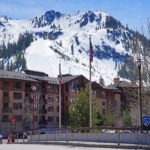
Granite Mountain

Granite Mountain is one of the most recognizable landmarks surrounding Prescott, Arizona. Rising to approximately 7,630 feet (2,326 meters) in Yavapai County, the massive granite peak forms the high point of the Sierra Prieta and dominates the landscape northwest of the city.
The mountain is protected within the Granite Mountain Wilderness, a 9,799-acre wilderness area in Prescott National Forest. Huge granite boulders, steep rock faces, chaparral-covered slopes, pinyon-juniper woodland, and patches of ponderosa pine give the mountain a distinctly rugged appearance.
Granite Mountain is also unusually prominent for a summit of its elevation. It rises approximately 1,676 feet (511 meters) above its key col and has nearly 15 miles of isolation. Its Nearest Higher Neighbor is Spruce Mountain, another prominent summit in the Prescott high country.
⚡ Fast Facts
| Feature | Details |
|---|---|
| Continent | North America |
| Country | United States |
| State | Arizona |
| County | Yavapai County |
| Mountain Range | Sierra Prieta |
| Protected Area | Granite Mountain Wilderness |
| National Forest | Prescott National Forest |
| Elevation | 7,630 ft / 2,326 m |
| Prominence | 1,676 ft / 511 m |
| Isolation | 14.74 mi / 23.72 km |
| Nearest Higher Neighbor (NHN) | Spruce Mountain |
| Key Col | Blair Pass |
| Key Col Elevation | Approx. 5,955 ft / 1,815 m |
| Coordinates | 34.63794° N, 112.55331° W |
| USGS Topographic Map | Jerome Canyon |
| Major Trail | Granite Mountain Trail #261 |
| Wilderness Size | 9,799 acres |
| Major Distinction | Highest point of the Sierra Prieta |
🏔️ Overview
Granite Mountain rises immediately northwest of Prescott and forms one of the city’s defining natural landmarks.
Unlike the heavily forested Mount Union and Spruce Mountain areas south of Prescott, Granite Mountain is characterized by enormous exposed masses of granite.
The U.S. Forest Service describes the surrounding wilderness as a landscape of rugged granite boulders, some as large as houses, piled across slopes reaching more than 7,600 feet.
Those rock formations give Granite Mountain a distinctive profile visible from much of the Prescott area.
The mountain is also the highest point in the Sierra Prieta, a relatively compact group of mountains west and southwest of Prescott. Although substantially lower than Arizona’s tallest mountains, Granite Mountain’s isolation and prominence make it one of the more geographically significant summits in central Arizona.
📍 Where Is Granite Mountain?
Granite Mountain is located in Yavapai County, immediately northwest of Prescott.
The mountain lies within Prescott National Forest and is surrounded by the federally designated Granite Mountain Wilderness.
Access to the eastern side of the wilderness is particularly convenient through Granite Basin Recreation Area, making Granite Mountain unusually accessible for a designated wilderness landscape.
The Forest Service identifies the Metate Trailhead in Granite Basin as the primary gateway to the wilderness.
Nearby mountains include Spruce Mountain, Mount Union, and Mingus Mountain.
Together, these peaks help define the mountainous country surrounding Prescott and the Verde Valley.

📏 Elevation & Prominence
Modern LiDAR data place Granite Mountain’s summit at approximately 7,630.2 feet (2,325.7 meters).
Older maps and references frequently list the mountain at approximately 7,628 feet, so both figures remain common.
The difference reflects improved elevation measurement rather than any physical change to the mountain.
Prominence
Granite Mountain has approximately 1,675.6 feet (510.7 meters) of clean topographic prominence.
Its key col is Blair Pass, at approximately 5,955 feet above sea level.
That relatively large prominence allows Granite Mountain to stand out dramatically from the surrounding landscape.
Isolation
The mountain has approximately 14.74 miles (23.72 kilometers) of topographic isolation.
This means a person traveling away from Granite Mountain would need to cover nearly 15 miles before reaching terrain that rises higher than its summit.
Its Nearest Higher Neighbor is Spruce Mountain, southeast of Granite Mountain near Groom Creek.
🧭 Nearest Higher Neighbor: Spruce Mountain
Spruce Mountain is Granite Mountain’s Nearest Higher Neighbor.
Spruce Mountain reaches approximately 7,699 feet and lies in the Bradshaw Mountains south of Prescott.
Although the two mountains belong to different local mountain groups, their elevations are surprisingly close. Spruce Mountain is only about 69 feet higher than Granite Mountain.
The topographic relationship creates an interesting chain among several Prescott-area mountains:
Granite Mountain → Spruce Mountain → Mount Davis → Mount Union
Mount Union eventually rises to 7,982 feet and forms the highest point in the Bradshaw Mountains and Yavapai County.
🏔️ Highest Point of the Sierra Prieta
Peakbagger classifies Granite Mountain as the highest point of the Sierra Prieta.
The Sierra Prieta occupy the mountainous country west and southwest of Prescott and form part of the complex collection of ranges that characterize central Arizona.
Granite Mountain stands at the northern end of this mountain group, where its enormous exposed granite formations create a very different appearance from the more forested terrain farther south.
The mountain’s prominence and distinctive form have made it one of the easiest natural landmarks to identify from the Prescott area.
🪨 Geology
Granite Mountain’s appearance leaves little mystery about the origin of its name.
The mountain consists largely of ancient granitic rock exposed in enormous domes, cliffs, slabs, and boulder fields.
Central Arizona contains an exceptionally complex collection of Precambrian rocks, many representing events that occurred more than a billion years ago.
Geological mapping of the Prescott region has identified multiple generations of granite, granodiorite, metamorphic rock, volcanic rock, and younger deposits.
Rather than consisting of one simple uniform geological unit, the broader region records repeated episodes of intrusion, deformation, uplift, weathering, and erosion.
Over immense spans of time, erosion stripped away overlying material and exposed the resistant crystalline rocks visible today.

🪨 Why Are There So Many Huge Boulders?
One of Granite Mountain’s defining features is the extraordinary abundance of rounded and blocky granite boulders.
Granite commonly develops fractures called joints as rock is uplifted and pressure is released.
Water enters these fractures and gradually attacks the minerals along edges and corners. Weathering can progressively round large blocks while erosion removes the loose material surrounding them.
The result can be enormous freestanding boulders, stacked formations, slabs, and exposed granite domes.
At Granite Mountain, this process has produced some boulders large enough to resemble small buildings.
These formations are one reason the mountain is so visually distinctive from many other peaks surrounding Prescott.
🌲 Plant Life
Granite Mountain covers enough elevation and varied terrain to support several plant communities.
Lower and more exposed slopes contain extensive interior chaparral, while other areas support pinyon-juniper woodland.
At higher or more sheltered elevations, visitors encounter ponderosa pine and other plants associated with Arizona’s central mountain country.
The transition is readily visible along Granite Mountain Trail #261.
The Forest Service describes the route as beginning among open chaparral and granite boulders before climbing into pinyon-juniper and ponderosa pine forest.
Because aspect, soil depth, elevation, moisture, and wildfire history vary across the wilderness, vegetation can change considerably over relatively short distances.
🦅 Peregrine Falcons
The cliffs of Granite Mountain provide important nesting habitat for peregrine falcons.
The birds use steep rock faces where nesting sites offer protection and broad views across the surrounding landscape.
The Forest Service specifically asks hikers to remain on designated trails during the nesting season and to obey any posted closures.
Trail information lists the sensitive nesting period as February 1 through July 31.
Climbers in particular should check current Forest Service notices before visiting because access to individual cliffs or climbing areas can be restricted to protect nesting birds.

🦌 Wildlife
The Granite Mountain Wilderness supports wildlife characteristic of both Arizona’s mountain forests and its drier interior uplands.
Animals occurring in the broader Prescott National Forest region include:
- Mule deer
- Elk
- Black bears
- Mountain lions
- Bobcats
- Coyotes
- Rabbits
- Squirrels
- Hawks
- Owls
- Peregrine falcons
- Numerous songbirds and reptiles
The mosaic of chaparral, woodland, forest, cliffs, and rocky terrain creates a variety of habitat within a relatively compact wilderness.
Visitors should observe wildlife from a distance and never intentionally feed animals.
🌲 Granite Mountain Wilderness
Granite Mountain is protected within the Granite Mountain Wilderness, created by Congress in 1984.
The Forest Service currently lists the wilderness at 9,799 acres.
Despite lying immediately outside Prescott, the wilderness preserves a surprisingly rugged landscape filled with huge granite formations.
The Forest Service describes it as the most heavily used wilderness area in Prescott National Forest, reflecting both its scenery and convenient access.
Wilderness regulations are designed to preserve the area’s undeveloped character.
Among the current rules:
- Hiking groups are limited to 15 people.
- Equestrian groups are limited to 10 animals.
- Dogs must be kept on a leash.
- Campfires are prohibited.
- Camping is prohibited within 200 feet of Granite Mountain Trail #261.
- Motorized and mechanized equipment is prohibited within the wilderness.
- Existing fixed climbing anchors may be maintained, but new fixed anchors may not be installed.
Visitors should always check current Forest Service regulations before entering the wilderness because closures and restrictions can change.
🥾 Granite Mountain Trail #261
Granite Mountain Trail #261 is the principal hiking route into the mountain.
The trail begins at the Metate Parking Area in Granite Basin Recreation Area.
According to the Forest Service, the trail is approximately:
| Trail Fact | Details |
|---|---|
| Length | Approx. 4.1 miles one way |
| Round trip | Approx. 8.2 miles |
| Difficulty | Difficult |
| Typical hiking time | Approx. 2 hours one way |
| Trail use | Hiking and horseback riding |
| Starting area | Metate Trailhead |
| Major landmark | Blair Pass |
| Destination | Granite Mountain overlook |
The trail begins relatively gently before passing among chaparral and granite boulders.
It eventually climbs much more steeply, entering pinyon-juniper woodland and areas containing ponderosa pine.
Switchbacks carry hikers higher toward Blair Pass and Granite Mountain.
🥾 Does Trail #261 Reach the Summit?
This is an important distinction.
Granite Mountain Trail #261 does not simply end at the mountain’s true 7,630-foot summit.
The maintained trail instead leads hikers to a spectacular high overlook below the actual summit, at roughly 7,100 feet.
For most visitors, this overlook is the practical destination of a Granite Mountain hike.
It provides expansive views while avoiding the more difficult terrain associated with reaching the mountain’s highest rocks.
Hikers should therefore be cautious when an online description calls Trail #261 a straightforward “summit trail.” The popular maintained hiking route and the mountain’s actual high point are not the same destination.
🧗 Rock Climbing
Granite Mountain is also a well-established climbing destination.
Its steep granite walls, cracks, slabs, and faces provide routes quite different from the hiking experience on Trail #261.
Climbing within designated wilderness is subject to additional restrictions.
The Forest Service allows maintenance of existing fixed anchors but prohibits the creation of new fixed-anchor routes within Granite Mountain Wilderness.
Climbers must also respect wildlife closures associated with peregrine falcon nesting.
Anyone planning a technical route should obtain current climbing information and Forest Service closure notices before visiting.
🥾 Other Trails in Granite Mountain Wilderness
Granite Mountain Trail #261 is not the only hiking option.
Tin Trough Springs Trail #308
Tin Trough Springs Trail #308 approaches the wilderness from the Williamson Valley side.
It provides another way to experience Granite Mountain’s grasslands, chaparral, rocky slopes, and open views.
Baby Granite Loop
The Baby Granite Loop explores the lower terrain around Baby Granite Mountain and connects several trails on the northern and eastern sides of the wilderness.
Little Granite Mountain Routes
Trail #261 can also be combined with nearby routes to create longer loop hikes around Little Granite Mountain.
The Forest Service describes Trail #261 as the first portion of a roughly six-mile loop using Little Granite Mountain Trail #37 and Clark Spring Trail #40.
These alternatives allow hikers to explore the wilderness without necessarily climbing toward the Granite Mountain overlook.
🌤️ Best Time to Hike Granite Mountain
Granite Mountain can be visited throughout much of the year, but every season brings different conditions.
Spring
Spring is one of the most appealing hiking seasons.
Temperatures are generally comfortable, and winter moisture can produce wildflowers and greener vegetation.
Peregrine nesting restrictions may be in effect, particularly around cliff areas.
Summer
Granite Mountain’s elevation makes temperatures cooler than those in Arizona’s lower deserts, but exposed granite and chaparral can still become very warm.
Summer also brings the Arizona monsoon.
Thunderstorms can develop quickly during the afternoon, creating dangerous lightning conditions on exposed rock.
Early starts are strongly recommended when thunderstorms are forecast.
Fall
Autumn often offers excellent hiking weather with cooler temperatures and generally pleasant conditions.
It can be one of the best seasons for longer hikes.
Winter
Snow occasionally covers Granite Mountain.
Ice, snow, and freezing temperatures can make steep sections considerably more difficult, while wet weather may create muddy or slippery conditions.
Always check the forecast for the mountain itself rather than relying only on conditions in Prescott.
☀️ Hiking Safety
Granite Mountain is close to a major Arizona city, but much of the surrounding wilderness is rugged and undeveloped.
Carry enough water for the entire hike. Water sources along the route should never be considered reliable.
Sun protection is also important because extensive portions of the trail cross exposed chaparral and rock.
During summer, watch carefully for thunderstorms. Granite overlooks and exposed ridges provide little protection from lightning.
Hikers should also remember that the maintained trail does not provide a simple walk-up route to the actual summit.
Attempting to continue beyond established trails can involve route-finding, scrambling, cliffs, and difficult granite terrain.
🏔️ Field Guide Tip: Treat the Granite Mountain overlook as the normal hiking destination unless you specifically have the experience and route information required for off-trail summit terrain.

🔥 Fire in the Granite Mountain Landscape
Fire is an important ecological force throughout the Prescott region.
Chaparral, pinyon-juniper woodland, and ponderosa pine forest have all developed under different natural fire regimes.
Modern wildfire, drought, vegetation changes, and more than a century of fire suppression have complicated that relationship.
The Granite Mountain landscape has experienced significant wildfires in recent decades, leaving visible changes in vegetation along portions of the trail system.
Hikers may therefore pass through a mosaic of mature vegetation, regenerating forest, shrubs, open slopes, and previously burned areas.
Fire restrictions are common during particularly dry periods, and campfires are prohibited year-round within Granite Mountain Wilderness.
🧭 Nearby Mountains
Spruce Mountain
Spruce Mountain is Granite Mountain’s Nearest Higher Neighbor.
It rises to approximately 7,699 feet south of Prescott and contains a historic fire lookout.
Mount Union
Mount Union reaches approximately 7,982 feet and forms the highest point in the Bradshaw Mountains, Yavapai County, and Prescott National Forest.
Mingus Mountain
Mingus Mountain rises northeast of Prescott above the Verde Valley.
Its forested summit region contains trails, campgrounds, and expansive views toward the red-rock country around Sedona.
Woodchute Mountain
Woodchute Mountain lies beside Mingus Mountain and anchors the Woodchute Wilderness.
These neighboring peaks demonstrate how quickly central Arizona transitions among exposed granite mountains, forested highlands, desert basins, and plateau country.
💡 Fun Facts
Granite Mountain Is the Sierra Prieta High Point
At approximately 7,630 feet, Granite Mountain is the highest point in the Sierra Prieta.
Its Boulders Can Be Enormous
The Forest Service specifically describes granite boulders within the wilderness as reaching the size of houses.
The Wilderness Was Created in 1984
Granite Mountain Wilderness was one of numerous Arizona wilderness areas protected through legislation in the 1980s.
The Mountain Is More Prominent Than Spruce Mountain
Although Spruce Mountain is slightly higher, Granite Mountain has much greater topographic prominence.
Granite Mountain has around 1,676 feet of prominence compared with roughly 700 feet for Spruce Mountain.
The Popular Trail Doesn’t Reach the Highest Point
Most hikers finish their Granite Mountain experience at the established overlook rather than the mountain’s true summit.
That makes Granite Mountain a good example of why a hiking destination called a “summit hike” does not always correspond exactly with a mountain’s surveyed high point.

❓ Frequently Asked Questions
How high is Granite Mountain in Arizona?
Modern LiDAR measurements place Granite Mountain at approximately 7,630 feet (2,326 meters) above sea level.
Where is Granite Mountain?
Granite Mountain is northwest of Prescott in Yavapai County, Arizona. It lies within Prescott National Forest and Granite Mountain Wilderness.
What mountain range is Granite Mountain in?
Granite Mountain is the highest point of the Sierra Prieta.
What is Granite Mountain’s Nearest Higher Neighbor?
The Nearest Higher Neighbor is Spruce Mountain, which rises to approximately 7,699 feet south of Prescott.
How prominent is Granite Mountain?
Granite Mountain has approximately 1,676 feet (511 meters) of topographic prominence.
How long is the Granite Mountain Trail?
Granite Mountain Trail #261 is approximately 4.1 miles one way, making the standard out-and-back hike roughly 8.2 miles.
Does Granite Mountain Trail #261 reach the true summit?
No. The maintained trail leads to a high overlook rather than directly to the mountain’s surveyed 7,630-foot summit.
Are dogs allowed?
Yes, but the Forest Service requires dogs to remain on a leash within Granite Mountain Wilderness.
Can you camp near Granite Mountain?
Backcountry camping is permitted in portions of the wilderness, but camping is prohibited within 200 feet of Granite Mountain Trail #261. Campfires are prohibited throughout the wilderness.
Are there climbing restrictions?
Yes. New fixed climbing anchors are prohibited within Granite Mountain Wilderness, and wildlife-related closures may affect climbing areas during peregrine falcon nesting season.
🌄 A Prescott Landmark
Granite Mountain combines many of the qualities that make Arizona’s central highlands so distinctive.
It is high enough to support mountain woodland and patches of ponderosa pine, yet exposed enough to reveal immense granite faces and boulder fields. It sits only a short distance from Prescott while remaining protected as wilderness. And although its summit is lower than nearby Mount Union, its considerable prominence makes Granite Mountain one of the most visually dominant peaks in the region.
For hikers, Granite Mountain Trail #261 provides a challenging journey into the heart of the wilderness and a spectacular high overlook.
For climbers, its granite walls offer an entirely different kind of mountain experience.
And from a geographic perspective, Granite Mountain forms an important link in the Prescott-area mountain chain, with Spruce Mountain standing as its Nearest Higher Neighbor and the Bradshaw Mountains rising farther to the southeast.
🔗 Related Articles
📚 Sources
- Peakbagger — Granite Mountain, Arizona
- U.S. Forest Service — Granite Mountain Wilderness
- U.S. Forest Service — Granite Mountain Trail #261
- Arizona Geological Survey — Geologic Map of the Jerome Canyon Quadrangle
- U.S. Geological Survey — Older Precambrian Structure in Arizona