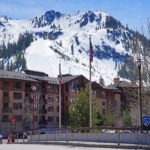
Grohmannspitze (Sasso Levante)

Rising above Sella Pass as one of the great stone towers of the western Dolomites, Grohmannspitze is a striking climbing mountain in the Sassolungo Group of northern Italy. Known in Italian as Punta Grohmann and in Ladin as Sas da duman, the summit reaches about 3,114 meters (10,217 feet) on modern Italian mapping, although many climbing histories and older references continue to quote 3,126 meters (10,256 feet).
Grohmannspitze is the second-highest mountain of the Sassolungo/Langkofel Group, surpassed only by 3,181-meter Langkofel itself. From Sella Pass, it forms part of the celebrated skyline of pale towers that also includes Fünffingerspitze and the neighboring rock pinnacles of the massif. Unlike nearby Plattkofel, which has a marked hiking route to its summit area, Grohmannspitze is a genuine technical climbing mountain. Even its easiest established routes involve exposed Alpine rock climbing, route-finding, and a complicated descent.
The mountain is named after Paul Grohmann, one of the most influential pioneers of nineteenth-century Dolomite mountaineering. Curiously, Grohmann never climbed the summit that carries his name. The mountain was renamed in his honor in 1875, while it was still unclimbed. Five years later, the great South Tyrolean guide Michel Innerkofler reached the summit in a solo ascent, establishing one of the important early milestones in the exploration of the Sassolungo Group.
Grohmannspitze later became famous for the immense southern wall facing the Sella Pass area. After an unsuccessful attempt involving pioneering climber Jeanne Immink in 1891, the wall was finally climbed in 1908 by Antonio Dimai, Johann Summermatter, and sisters Ilona and Rolanda von Eötvös. Their route, now known simply as the Dimai, remains one of the mountain’s classic climbs.
⚡ Fast Facts
| Fact | Details |
|---|---|
| Mountain | Grohmannspitze |
| Italian Name | Punta Grohmann |
| Ladin Name | Sas da duman |
| Historical Italian Name | Sasso Levante |
| Country | Italy |
| Regions | South Tyrol and Trentino |
| Mountain Group | Sassolungo / Langkofel Group |
| Larger Range | Dolomites / Eastern Alps |
| Modern Mapped Elevation | 3,114 m / 10,217 ft |
| Common Historical Elevation | 3,126 m / 10,256 ft |
| Prominence | Approximately 433 m / 1,421 ft |
| Key Col | Langkofelscharte / Forcella del Sassolungo |
| Key Col Elevation | Approximately 2,681 m |
| Isolation | Approximately 1.55 km / 0.96 mi |
| Nearest Higher Neighbor | Langkofel / Sassolungo |
| Coordinates | Approximately 46.5103° N, 11.7336° E |
| Group Ranking | Second-highest summit of the Sassolungo Group |
| Principal Rock | Schlern Dolomite |
| Summit Geology | Includes Raibler/Raibl Beds |
| Geological Age | Triassic |
| First Ascent | August 1880 |
| First Ascender | Michel Innerkofler |
| Style of First Ascent | Solo |
| Famous South-Face Route | Dimai |
| Dimai First Ascent | August 11, 1908 |
| Dimai Grade | Approximately UIAA IV |
| Dimai Length | Roughly 550 m / 13 pitches |
| Harrer Route | Approximately UIAA V |
| Hiking Summit? | No — technical climbing required |
📍 Where Is Grohmannspitze?
Grohmannspitze rises in the Sassolungo Group of the western Dolomites, along the mountainous boundary between South Tyrol and Trentino. Val Gardena lies to the north and northwest, while Val di Fassa extends to the south. Sella Pass provides the most familiar view of the mountain and is an important starting area for climbs on its southern walls.
The summit sits within a remarkably compact collection of major rock peaks. Fünffingerspitze rises immediately to the northeast, while Innerkoflerturm and Zahnkofel occupy the broken ridge toward the west. Langkofel, the 3,181-meter high point of the entire group, dominates the massif farther north.
From Sella Pass, these summits overlap into one of the classic silhouettes of the Dolomites. Grohmannspitze appears as a broad pyramidal tower, considerably more massive than the slender fingers of Fünffingerspitze but less imposing overall than Langkofel.
🏔️ Second-Highest Mountain in the Sassolungo Group
Grohmannspitze is generally regarded as the second-highest mountain in the Sassolungo Group. Langkofel reaches 3,181 meters and stands clearly higher, while the other major summits fall below Grohmannspitze.
This position can sometimes be obscured by differing published elevations. Older climbing literature commonly gives Grohmannspitze as 3,126 meters, while modern Italian mapping and Peakbagger use 3,114 meters. Either figure still places it securely below Langkofel and above the other major named summits of the group.
The mountain’s topographic independence is also substantial for such a tightly packed Dolomite massif. Its approximately 433 meters of prominence gives Grohmannspitze considerably greater independence than Fünffingerspitze or many of the smaller towers nearby.

📏 How High Is Grohmannspitze?
The best modern topographic figure is approximately:
3,114 meters / 10,217 feet
Peakbagger uses 3,114 meters based on Italian IGN mapping, and regional Val Gardena references also use 3,114 meters.
Many mountaineering sources, including Club Alpino Italiano material, continue to quote:
3,126 meters / 10,256 feet
Other references have used 3,112 meters.
These discrepancies reflect differences among historical surveys, maps, and summit definitions rather than any meaningful modern change in the mountain. For a contemporary geographical profile, 3,114 meters is the most defensible headline elevation, while the older 3,126-meter figure remains important because it appears throughout Dolomite climbing literature.
📐 Topographic Prominence
Peakbagger gives Grohmannspitze approximately:
433 meters / 1,421 feet
of topographic prominence.
The summit’s key col lies around the Langkofelscharte, the deep saddle between the central Sassolungo towers, at roughly 2,681 meters.
A prominence of more than 400 meters is impressive in such a compact massif. Many Dolomite climbing towers appear visually enormous but possess relatively little prominence because high saddles connect them closely with neighboring summits. Grohmannspitze is more independent than its position within the crowded Sassolungo skyline might suggest.
🌍 Topographic Isolation
Grohmannspitze has approximately:
1.55 kilometers / 0.96 mile
of true topographic isolation.
Higher ground first appears on Langkofel, the dominant mountain of the group.
The small isolation figure reflects the extreme concentration of high rock summits around the Sassolungo basin. Grohmannspitze is a major mountain in its own right, but it stands only a short distance from terrain exceeding its elevation.
🧭 Nearest Higher Neighbor: Langkofel
Grohmannspitze’s Nearest Higher Neighbor (NHN) is Langkofel, known in Italian as Sassolungo and in Ladin as Saslonch.
Langkofel reaches:
3,181 meters / 10,436 feet
and is the highest mountain of the group.
The two peaks are part of the same ancient carbonate reef complex and share much of the same geological history, yet their shapes differ considerably. Langkofel is an enormous fortress-like mass, while Grohmannspitze forms a more compact pyramidal tower with major climbing walls on its southern side.
🏷️ Why Is It Called Grohmannspitze?
The mountain is named after Austrian mountaineer Paul Grohmann, one of the great pioneers of Dolomite exploration.
Before 1875, the peak was generally known as Sasso di Levante, meaning roughly “Eastern Rock.” Geologist Rudolf Hoernes proposed renaming the still-unclimbed summit after Grohmann in recognition of his extraordinary contribution to the exploration and mapping of the Dolomites.
The new name was therefore established before anyone had successfully climbed the mountain.
That unusual sequence has led to a common misunderstanding: Paul Grohmann was not the first ascender of Grohmannspitze. In fact, there is no record that he ever reached its summit.
🧗 Paul Grohmann
Paul Grohmann was born in Vienna in 1838 and became one of the most important mountaineers of the 1860s and 1870s. He was also a co-founder of the Austrian Alpine Club.
Grohmann developed a particular fascination with the Dolomites at a time when many of their major summits were still unexplored by recreational mountaineers. He participated in first ascents of numerous important peaks and carried a barometer to measure mountain elevations, producing remarkably good altitude estimates for the technology available at the time.
His most important achievements included the first ascent of nearby Langkofel in 1869, together with Franz Innerkofler and Peter Salcher. He also helped draw international attention to mountains that had previously received far less mountaineering interest than the high glaciated summits of the central Alps.
Grohmannspitze was named for him while he was still alive, an unusually direct acknowledgment of his role in opening the Dolomites to modern mountaineering.
🪨 Geology of Grohmannspitze
Grohmannspitze consists mainly of Schlern Dolomite, with younger Raibler Beds forming part of the summit cap.
These rocks date from the Triassic Period, when the region that would eventually become the Dolomites lay beneath the warm waters of the Tethys Ocean. The entire Sassolungo massif originated as an enormous carbonate reef structure rather than as a terrestrial mountain range.
Approximately 240 million years ago, calcareous algae, sponges, corals, microbes, and other marine organisms contributed carbonate material to reefs and shallow platforms. Over long periods, these deposits accumulated into enormous structures rising hundreds of meters above the surrounding seabed.
The Sassolungo Group preserves the eroded remains of one of these ancient reefs.
🌊 An Ancient Tropical Reef
The Sassolungo reef developed at a time when the future Alps lay much closer to the equator.
Val Gardena geological interpretation describes the reef as a roughly ring-shaped structure that may have risen as much as 800 meters above the surrounding seafloor. Storms continually broke fragments from its margins, while debris accumulated on inclined slopes around the reef.
Today, neighboring Plattkofel preserves one of those ancient inclined reef flanks exceptionally well. Grohmannspitze formed within the same carbonate system, although erosion has carved it into a much steeper and more isolated tower.
Standing on the summit today therefore means standing on rock that began forming in a tropical sea hundreds of millions of years before the Alps existed.
🧪 What Is Schlern Dolomite?
Schlern Dolomite is a Triassic carbonate rock found extensively in the western Dolomites.
The original material began largely as marine limestone. Later chemical alteration introduced magnesium, transforming much of the limestone into dolomite, a calcium-magnesium carbonate rock.
Dolomite can form extremely strong cliffs, but it is also heavily fractured. Water enters joints and cracks, and repeated freezing gradually widens them. Gravity then removes weakened blocks.
This combination of resistance and fracture is one reason the Dolomites contain such spectacular towers. The rock can remain standing in enormous vertical faces while weathering along structural weaknesses carves deep chimneys, gullies, ridges, and isolated pinnacles.
🪨 Raibler Beds at the Summit
Grohmannspitze is particularly interesting because its summit area contains Raibler or Raibl Beds above the main mass of Schlern Dolomite.
These younger Triassic deposits include sedimentary rocks formed after the major reef-building phase. Across the Dolomites, Raibler strata can contain combinations of carbonate rock, marl, shale, and related deposits.
They are generally less massive than the great reef dolomites beneath them.
The presence of these younger layers helps demonstrate that the mountain is not one single uniform block. Instead, it preserves several chapters of the Triassic marine history of the region.
🌋 Is Grohmannspitze a Volcano?
No.
Grohmannspitze is not an extinct volcano.
Volcanic activity occurred extensively in parts of the Dolomites during the Triassic, sometimes while carbonate reefs were growing nearby. Volcanic rocks can therefore be found throughout the broader region.
Grohmannspitze itself, however, is fundamentally a sedimentary carbonate mountain. Its cliffs are built principally from dolomite formed from marine deposits, not solidified lava from a volcanic cone.
Its current shape developed through tectonic uplift followed by millions of years of erosion.
⛰️ Alpine Uplift
The Sassolungo reef was eventually buried beneath younger marine sediments.
Much later, convergence between the African and European tectonic plates compressed and uplifted the region during the formation of the Alps. Rocks that had formed beneath the sea were raised thousands of meters above their original environment.
Erosion then removed much of the softer material surrounding the resistant dolomite reef.
As valleys became deeper and the surrounding landscape was stripped away, individual towers such as Grohmannspitze emerged from the ancient carbonate mass.
The modern summit is therefore much younger as a landform than the Triassic rock from which it is carved.
🧊 Glaciation
Ice Age glaciers profoundly modified the Sassolungo Group.
Glacial ice once filled the high basin north of Grohmannspitze as well as the surrounding valleys. Nineteenth-century climbing descriptions refer to considerably more permanent ice and snow among the towers than exists today.
A small ice body known historically as the Grohmann Glacier occupied the north side of the mountain. Old climbing routes crossed snow and ice in gullies that are now largely filled with loose rock.
The disappearance of much of this ice has not necessarily made the mountain safer. Where permanent snow once held debris in place, exposed gullies may now contain unstable rubble and increased rockfall hazards.
🪨 Rockfall
Rockfall is one of the persistent dangers of climbing Grohmannspitze.
Frost works continuously on fractures in the dolomite, while rain, snowmelt, temperature changes, and gravity loosen additional material. Climbers themselves can also dislodge stones onto parties below.
Historic routes may therefore change character over time. A gully described as snowy or icy in a nineteenth-century guidebook may now consist largely of loose scree.
Helmets are essential, and climbers should remain especially alert when several parties occupy the same route.

🏆 First Ascent — Michel Innerkofler in 1880
The first ascent of Grohmannspitze is generally credited to Michel Innerkofler, who reached the summit alone in August 1880.
Innerkofler was one of the greatest Dolomite guides of the nineteenth century. His achievements included first ascents throughout the Sesto Dolomites, and he became renowned for an extraordinary ability to find routes through apparently impossible rock terrain.
Grohmannspitze had resisted repeated attempts before his success. Local guide Giorgio Bernard was reportedly unsuccessful in as many as 15 attempts to reach the summit.
Innerkofler finally solved the mountain from the western side, apparently using terrain around the Grohmannscharte.
🧗 A Small Historical Mystery
The details of the first ascent are not perfectly preserved.
Later Alpine Club histories state that Innerkofler reached Grohmannspitze solo in August 1880 and subsequently guided Otto Fischer to the summit by the same general route.
A contemporary Alpine report published shortly afterward, however, described Fischer and Innerkofler together as making the first ascent from the western side.
Modern mountain histories overwhelmingly credit the first summit to Innerkofler alone, but the discrepancy illustrates how difficult it can be to reconstruct nineteenth-century climbing history when reports were written after the events and information circulated slowly between Alpine clubs.
The safest conclusion is that Michel Innerkofler was the pioneering first ascender in August 1880, with Fischer following soon afterward.
🧗 Michel Innerkofler
Michel—or Michael—Innerkofler was born in the Sesto region and became one of the finest rock climbers of his era.
He played a major role in opening the steep Dolomite towers during a period when climbing standards were advancing rapidly. Among his other achievements were important first ascents in the Tre Cime di Lavaredo group.
Innerkofler also climbed the neighboring tower now known as Innerkoflerturm, which was named in his honor.
His reputation rested not simply on physical ability but on remarkable route-finding. With little fixed protection, crude equipment by modern standards, and no detailed route descriptions, he repeatedly found weaknesses through enormously complicated mountain walls.
🧗 The Normal Route
The modern normal route approaches Grohmannspitze through the east-northeast ridge system and is itself a serious Alpine climb.
It is not a hiking route, scrambling trail, or via ferrata. Climbing difficulties reach approximately UIAA IV, depending on the precise line and conditions.
Even the route commonly used for descent requires technical climbing and downclimbing. That fact distinguishes Grohmannspitze from mountains where the normal route provides a comparatively straightforward escape after a difficult wall climb.
On Grohmannspitze, reaching the summit means only half of the technical journey has been completed.
🚫 Can You Hike Grohmannspitze?
No.
There is no nontechnical hiking route to the summit.
The mountain’s walls, ridges, gullies, and notches require genuine rock-climbing skills. Even apparently easier lines involve exposed terrain, route-finding, and the use of rope.
Hikers can approach the base of the mountain from Sella Pass and enjoy excellent views from surrounding trails, but continuing to the summit belongs firmly within Alpine climbing.
Anyone without the necessary experience should climb with a qualified mountain guide.
🧗 The South Face
Grohmannspitze’s great south wall became one of the major unsolved climbing problems of the Sassolungo Group during the late nineteenth century.
The wall rises for roughly 500–550 meters above the Sella Pass side and contains a mixture of slabs, cracks, chimneys, ledges, and steep steps.
Early climbers were particularly intimidated by a sloping section that became known as the:
Menschenfalle — “Human Trap.”
The name reflected just how serious the passage appeared with nineteenth-century equipment and footwear.
🧗 Jeanne Immink’s 1891 Attempt
In 1891, pioneering Dutch climber Jeanne Immink attempted the south wall with Antonio Dimai and Giuseppe Zecchini.
Immink was one of the outstanding female climbers of the nineteenth century and took part in several important Dolomite ascents. Her willingness to attempt the Grohmannspitze south wall demonstrates the high technical standard at which she was already climbing.
The party did not complete the wall.
The Menschenfalle proved too difficult to overcome under the conditions and techniques available to them.
Their attempt nevertheless helped identify the line that later climbers would successfully develop.
👭 Ilona and Rolanda von Eötvös
The south wall was finally climbed on:
August 11, 1908
by:
Ilona von Eötvös
Rolanda von Eötvös
Antonio Dimai
Johann Summermatter
The Eötvös sisters were daughters of the Hungarian physicist Loránd Eötvös and became highly accomplished climbers during the early twentieth century.
Their Grohmannspitze ascent was particularly significant because the south wall had resisted serious attempts for years.
The route they established with Dimai and Summermatter became the classic Dimai Route.
🧗 The Dimai Route
The Dimai remains the most famous climb on Grohmannspitze.
It ascends roughly:
550 meters
over approximately:
13 pitches
with difficulties generally around:
UIAA IV
although individual descriptions vary slightly depending on the exact line and grading convention.
The route begins near the southeast side before moving across the southern wall. Its most famous passage remains the Menschenfalle, where the route traverses an exposed sloping feature.
Modern protection makes this section considerably less intimidating than it appeared in 1908, but the route remains a substantial Alpine undertaking.
🧗 Why the Dimai Is Still Serious
A UIAA IV grade can sound modest to modern rock climbers accustomed to sport climbing.
On Grohmannspitze, the number does not describe the full challenge.
The Dimai is long, exposed, and remote compared with a roadside climbing crag. Protection can be sparse, route-finding matters, loose rock occurs, and the descent itself reaches around UIAA IV.
Climbers also need enough speed to complete the wall and descend before afternoon storms arrive.
The route is therefore best regarded as a complete Alpine journey rather than a collection of moderately graded pitches.
🧗 The Harrer Route
Another classic route was established on July 6, 1936 by Heinrich Harrer and Kurt Wallenfels.
The Harrer route climbs approximately:
600 meters
and is generally graded around:
UIAA V
over roughly 16 pitches.
The route is known for long, exposed climbing, much of it on good rock. A strong party may spend five to six hours climbing before beginning the demanding descent.
Harrer later became internationally famous for expeditions and exploration beyond the Alps, but climbs such as this demonstrate the high technical level he had already achieved in the Dolomites.
🧭 The Descent
The descent from Grohmannspitze deserves as much attention as the ascent.
Parties commonly descend via the northeast or east-northeast ridge, following a combination of downclimbing, traverses, and rappels.
Difficulty may reach approximately UIAA IV.
The route is complex enough that climbers should understand it before beginning the ascent. Waiting until sunset on the summit to work out the descent can create a serious situation.
Cloud or fog adds another layer of difficulty because the correct sequence of gullies and ridges may become hard to identify.
🥾 Approaching from Sella Pass
Passo Sella/Sella Pass is the principal starting area for many climbs on the southern side of Grohmannspitze.
From the pass and nearby huts, climbers cross alpine meadow and scree toward the foot of the mountain. The relatively short approach can create the impression that the peak is easily accessible, but the actual climbing is substantial.
The Sella Pass setting is nevertheless one of the advantages of the mountain. Climbers can begin at high elevation, while hikers and photographers can enjoy outstanding views of the walls without entering technical terrain.
🌦️ Weather
Weather in the Dolomites can change rapidly, particularly during summer.
Clear mornings frequently give way to afternoon cloud and thunderstorms. At more than 3,000 meters, hail, heavy rain, strong wind, and sudden temperature drops can occur even when the valleys remain warm.
This is especially important on Grohmannspitze because most routes are long and the descent is technical.
A party caught high on the south wall may require many hours to reach nontechnical terrain.
Early starts and conservative weather decisions are essential.
⚡ Thunderstorms
Lightning is among the most dangerous warm-season hazards.
Exposed ridges and summit rock offer little protection, while rain can turn ledges and polished climbing holds slippery within minutes.
A thunderstorm can also trigger additional rockfall by washing loose stones from gullies.
Climbers should monitor the forecast before starting and continue watching cloud development throughout the day rather than assuming a clear morning guarantees stable weather.
❄️ Snow and Ice
Snow can remain in shaded gullies well into the climbing season.
This is particularly relevant on the northern side and along historical approach lines that once crossed more substantial permanent ice.
A route that is dry in August may hold hard snow or ice in June.
Early-season parties may therefore encounter conditions requiring equipment and skills beyond those needed for dry rock climbing.
Late autumn can bring the same problem as new snow begins accumulating on ledges and in chimneys.
🌿 Flora and Fauna
The summit of Grohmannspitze is dominated almost entirely by bare rock, but the lower slopes surrounding the Sassolungo Group support a much richer Alpine ecosystem.
Forests of spruce, larch, and Swiss stone pine occupy suitable lower elevations around Val Gardena. Above them, alpine meadows become particularly colorful from late spring into summer, when crocuses, violets, snowbells, rhododendrons, orchids, gentians, bellflowers, Alpine poppies, lilies, dryads, and cinquefoils flower beneath the pale Dolomite cliffs.
The ecological transition happens quickly. Within a relatively short climb, continuous meadow gives way to scattered plants among scree and eventually to almost vegetation-free rock.
🌸 Alpine Plants
Plants growing high beneath Grohmannspitze must survive a difficult combination of thin soil, intense sunlight, strong wind, freezing nights, and unstable scree.
Low growth is one of the most useful adaptations. Small cushion-like plants remain close to the warmer ground and present less surface area to the wind.
Other species develop roots capable of reaching deeply into fractures where moisture remains longer than on exposed rock.
These high-elevation plant communities can be surprisingly fragile despite appearing to grow in extremely harsh conditions.
🐿️ Alpine Marmots
Alpine marmots are common in suitable grassy and rocky areas around the wider Sassolungo Group.
Their loud warning whistles are often heard from trails below the cliffs. Marmots spend the short Alpine summer feeding heavily before retreating to burrows for a long winter hibernation.
They are most closely associated with alpine meadow rather than vertical mountain walls, making the lower slopes around the massif much better wildlife habitat than the summit itself.
🐐 Chamois
Chamois inhabit the mountains around Val Gardena and are exceptionally well adapted to steep rocky terrain.
Their flexible hooves provide secure grip on slopes that would be difficult for people to cross. Chamois move between high meadow, broken rock, and forest depending on season and weather.
Seeing one moving effortlessly beneath Grohmannspitze offers a striking contrast with the rope systems and technical equipment required by human climbers on the same mountain landscape.
🦅 Golden Eagles
Golden eagles also range through the wider Dolomites.
The combination of vertical cliffs and open alpine hunting terrain provides excellent habitat. Their broad wings allow them to use thermal and slope-generated air currents to travel long distances with surprisingly little effort.
Other wildlife in Val Gardena includes red deer, roe deer, foxes, hares, squirrels, black grouse, rock partridge, ravens, owls, and many smaller species.
🌄 Enrosadira
Grohmannspitze participates in one of the Dolomites’ most famous natural spectacles.
Around sunrise and sunset, the pale rock may glow pink, orange, gold, or red in the phenomenon known as enrosadira.
Low-angle sunlight travels through a greater thickness of atmosphere, leaving warmer wavelengths to illuminate the carbonate cliffs.
The Sella Pass side is particularly impressive because Grohmannspitze, Fünffingerspitze, and Langkofel can catch the changing light together.
Within minutes, walls that appeared pale gray during the day may become intensely orange or rose-colored before fading into shadow.
🏞️ The Sassolungo Group
Grohmannspitze belongs to one of the most recognizable mountain groups in the western Dolomites.
The Sassolungo massif forms an incomplete ring surrounding a rocky interior basin. Major summits include Langkofel, Grohmannspitze, Innerkoflerturm, Zahnkofel, Fünffingerspitze, and Plattkofel.
Each reveals a different aspect of the same ancient reef.
Plattkofel preserves a broad inclined reef flank and offers a hiking route. Fünffingerspitze has been carved into slender rock fingers. Langkofel forms the enormous dominant fortress of the group. Grohmannspitze sits between these extremes as a compact 3,000-meter climbing peak with some of the finest classic walls in the massif.
🌍 UNESCO and the Sassolungo Group
The Dolomites UNESCO World Heritage Site was established in 2009 as a serial property consisting of nine designated mountain systems.
The Sassolungo Group is part of the wider Dolomite geological and scenic landscape but is not itself included within the nine UNESCO core component systems.
That distinction does not reduce its geological importance. The massif preserves an exceptionally clear ancient carbonate reef structure and remains one of the classic landscapes used to explain how Triassic marine environments became the modern Dolomites.
Nearby UNESCO-designated systems preserve closely related chapters of the same geological story.
📸 Best Views of Grohmannspitze
Sella Pass provides the classic close view.
From here, Grohmannspitze rises with Fünffingerspitze and Langkofel to form one of the most recognizable skylines in the western Dolomites. Morning or evening light reveals the layered and fractured structure of the south wall particularly well.
The Alpe di Siusi provides a much broader perspective. From the plateau, Grohmannspitze becomes part of the complete Sassolungo skyline, with green meadow in the foreground and the pale reef mountains rising behind.
Trails around the Sassolungo Group provide additional angles that reveal how deeply the mountain is divided from neighboring towers by high saddles and steep gullies.
🌍 Why Grohmannspitze Matters
Grohmannspitze combines geology and mountaineering history in a way that few mountains of its size can match.
Its rock began as part of a tropical Triassic reef roughly 240 million years ago. The reef was buried, altered into dolomite, uplifted during the formation of the Alps, and carved by glaciers, frost, water, and gravity into the steep tower visible today.
Its human history is equally compelling. The mountain was named for Paul Grohmann before anyone had climbed it. Michel Innerkofler finally reached the summit alone in 1880 after repeated attempts by other climbers had failed. The great south wall then became an objective for some of the strongest climbers of the next generation.
Jeanne Immink tested it in 1891. Ilona and Rolanda von Eötvös, Antonio Dimai, and Johann Summermatter finally climbed it in 1908. Heinrich Harrer added another major route in 1936.
Today, Grohmannspitze remains essentially what it has always been: a mountain for climbers. There is no easy summit trail and no simple descent. Its relatively moderate numerical grades conceal a serious Alpine environment where experience, route-finding, weather judgment, and efficient rope work matter as much as pure climbing ability.
Above all, it forms an essential part of the extraordinary Sassolungo skyline—a 3,000-meter tower named for one pioneer and first climbed by another during the formative years of Dolomite mountaineering.
💡 Grohmannspitze Fun Facts
- Grohmannspitze is also known as Punta Grohmann.
- Its Ladin name is Sas da duman.
- The older name Sasso di Levante predates its dedication to Paul Grohmann.
- Modern mapping gives an elevation of approximately 3,114 meters.
- Many climbing sources still use 3,126 meters.
- It is the second-highest mountain in the Sassolungo Group.
- Langkofel is its Nearest Higher Neighbor.
- Peakbagger gives approximately 433 meters of prominence.
- Its true isolation is approximately 1.55 kilometers.
- The mountain consists mainly of Triassic Schlern Dolomite.
- Younger Raibler Beds occur around its summit.
- The Sassolungo massif began as an ancient tropical carbonate reef.
- Grohmannspitze is not volcanic.
- It was named for Paul Grohmann in 1875.
- Paul Grohmann never made its first ascent.
- Michel Innerkofler reached the summit in August 1880.
- Innerkofler is generally credited with completing the first ascent alone.
- Giorgio Bernard reportedly attempted the mountain around 15 times before its first ascent.
- Jeanne Immink attempted the south wall in 1891.
- The south wall was first climbed in 1908.
- Ilona and Rolanda von Eötvös were members of the successful 1908 party.
- Antonio Dimai and Johann Summermatter completed the same ascent.
- The Dimai route climbs approximately 550 meters.
- Its principal difficulty is around UIAA IV.
- The famous Menschenfalle forms part of the south-wall route.
- Heinrich Harrer and Kurt Wallenfels established the Harrer route in 1936.
- Even the normal descent involves technical climbing.
- There is no hiking route to the summit.
- Sella Pass provides one of the finest views of the mountain.
- Marmots, chamois, golden eagles, deer, and numerous other animals inhabit the surrounding Val Gardena landscape.
❓ Grohmannspitze FAQ

How high is Grohmannspitze?
Modern Italian mapping and Peakbagger give approximately 3,114 meters (10,217 feet). Older climbing literature frequently uses 3,126 meters, and some sources use 3,112 meters.
Where is Grohmannspitze?
The mountain lies in the Sassolungo Group of the western Dolomites on the boundary between South Tyrol and Trentino in northern Italy.
What is Grohmannspitze called in Italian?
The modern Italian name is Punta Grohmann. The historical name Sasso Levante also appears in older references.
What is the Ladin name?
The Ladin name is Sas da duman.
Is Grohmannspitze the highest mountain in the Sassolungo Group?
No. Langkofel/Sassolungo is higher at 3,181 meters. Grohmannspitze is generally regarded as the second-highest summit of the group.
How prominent is Grohmannspitze?
Peakbagger gives approximately 433 meters (1,421 feet) of topographic prominence.
How isolated is Grohmannspitze?
Its true isolation is approximately 1.55 kilometers (0.96 mile).
What is its Nearest Higher Neighbor?
The Nearest Higher Neighbor is Langkofel/Sassolungo.
What type of rock is Grohmannspitze made of?
The mountain consists principally of Schlern Dolomite, with younger Raibler strata around the summit.
How old is the rock?
The principal carbonate rocks formed during the Triassic Period more than 200 million years ago.
Was Grohmannspitze once underwater?
Yes. Its rocks originated in a tropical marine environment within the ancient Tethys Ocean.
Is Grohmannspitze a volcano?
No. It is a carbonate mountain derived from ancient marine sediment and reef material.
Who was the mountain named after?
Grohmannspitze was named in honor of Austrian mountaineer and Alpine Club pioneer Paul Grohmann.
Did Paul Grohmann first climb Grohmannspitze?
No. The summit was named for him in 1875 while it was still unclimbed.
Who first climbed Grohmannspitze?
The first ascent is generally credited to Michel Innerkofler, who reached the summit alone in August 1880.
Is the exact first-ascent history certain?
Modern histories credit Innerkofler’s solo ascent, although one early Alpine report described a subsequent climb by Innerkofler and Otto Fischer as the first. Later detailed histories support Innerkofler as the pioneering first ascender.
Can you hike Grohmannspitze?
No. There is no ordinary hiking route to the summit. Technical rock climbing is required.
How hard is the normal route?
The easiest established route still involves Alpine climbing with difficulties reaching approximately UIAA IV.
What is the Dimai route?
The Dimai is the classic route on the south wall. It climbs roughly 550 meters in about 13 pitches at approximately UIAA IV.
Who first climbed the Dimai route?
Antonio Dimai, Johann Summermatter, Ilona von Eötvös, and Rolanda von Eötvös completed the first ascent on August 11, 1908.
What is the Menschenfalle?
The Menschenfalle, or “Human Trap,” is an exposed section of the south wall that presented a major obstacle to early climbers.
Did Jeanne Immink climb Grohmannspitze?
Jeanne Immink participated in an important attempt on the south wall with Antonio Dimai and Giuseppe Zecchini in 1891 but did not complete that wall.
What is the Harrer route?
The Harrer is a roughly 600-meter route graded around UIAA V, first climbed by Heinrich Harrer and Kurt Wallenfels in 1936.
Where do climbs normally start?
Many southern routes are approached from the Sella Pass area.
What are the main hazards?
The principal hazards include rockfall, route-finding difficulties, exposed climbing, technical descent, thunderstorms, rain, fog, lingering snow, and rapidly changing Alpine weather.
What is the best climbing season?
Summer is the principal season, usually when rock routes are dry and largely free of snow. Exact conditions vary considerably from year to year.
What wildlife lives around Grohmannspitze?
The surrounding Val Gardena mountains support marmots, chamois, golden eagles, red and roe deer, foxes, hares, grouse, ravens, and many other Alpine species.
🔗 Related Articles
- Langkofel
- Fünffingerspitze
- Plattkofel
- Tre Cime di Lavaredo
- Marmolada
- The Dolomites
- Mountains in Italy
- The Alps
- Mountain Navigation: Maps, Compass, GPS & Route-Finding Guide
- The Ten Essentials for Hiking: What Every Hiker Should Carry
📚 Sources
- Peakbagger — Sasso Levante / Grohmannspitze — modern mapped elevation, prominence, isolation and coordinates.
- Val Gardena Gröden — Punta Grohmann — regional elevation, naming, first-ascent history and Dimai route.
- Club Alpino Italiano — Punta Grohmann — historic 3,126-meter elevation, Michel Innerkofler’s first ascent, and major climbing routes.
- Austrian Alpine Club — Die Langkofelgruppe — nineteenth-century exploration of Grohmannspitze and the Sassolungo Group.
- Austrian Alpine Club — Michel Innerkofler und sein Turm — Innerkofler, the naming of Grohmannspitze, and early ascent attempts.
- AlpinWiki — Grohmannspitze South Wall / Dimai — August 11, 1908 south-wall ascent by the Eötvös sisters, Dimai and Summermatter.
- Scuola Guido Della Torre — Punta Grohmann, Via Dimai — route length, grade, pitches and first-ascent party.
- SummitPost — Piza Grohmann / Grohmannspitze / Punta Grohmann — Alpine access, normal-route difficulty, glacial change and climbing conditions.
- Val Gardena — Paul Grohmann Monument and Sassolungo Reef Geology — Paul Grohmann and the Middle Triassic Sassolungo reef.
- Val Gardena — Beautiful Nature — alpine flora of Val Gardena.
- Val Gardena — Animals in the Woods — chamois, marmots, golden eagles, deer and other regional wildlife.