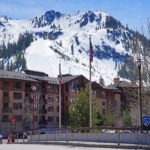
Rising like weathered sentinels across the rugged landscapes of northwestern California and southwestern Oregon, the Klamath Mountains stand as one of North America’s most geologically complex and biologically diverse mountain ranges. This 25,595-square-kilometer wilderness harbors secrets that span half a billion years—from ancient ocean floors thrust skyward to endemic species found nowhere else on Earth.
Far from the well-traveled paths of the Sierra Nevada or Cascades, the Klamaths remain a hidden treasure where visitors can witness the raw power of geological forces while walking among some of the world’s most concentrated coniferous forests. Here, Native American tribes have maintained sacred connections to the land for millennia, their stories interwoven with the very rocks and rivers that define this extraordinary region.
Ancient Oceans Frozen in Stone

The story of the Klamath Mountains begins not on land, but in the depths of ancient oceans. Five hundred million years ago, these peaks existed as scattered island arcs drifting across the Pacific, carrying fragments of primordial continents on their backs. What makes the Klamaths truly remarkable is how they preserve this incredible journey in stone.
Between 260 and 130 million years ago, eight distinct terranes—geological puzzle pieces—collided with the North American continent in a series of dramatic accretions. Each collision left its signature in the rock record, creating a geological library that scientists are still learning to read. The Farallon Plate, now largely vanished beneath the continent, delivered these oceanic treasures like gifts from a lost world.
Mount Eddy, the range’s highest peak at 9,025 feet, stands as a testament to these ancient collisions. Its slopes contain serpentinite—metamorphosed oceanic rock that gleams with an otherworldly green sheen—alongside intrusive granite plutons that formed when subduction zones melted the overlying crust. Walking these ridges means literally treading on the ocean floor of a vanished sea.
The geological complexity creates dramatic contrasts: marble outcrops that once lay beneath tropical seas now crown windswept peaks, while gabbroic intrusions form the backbone of ridges that stretch toward the Pacific. This varied geology doesn’t just create scenic beauty—it generates the unique soil conditions that support the region’s extraordinary biodiversity.
A Living Laboratory of Evolution

The Klamath Mountains harbor what botanists call the “Miracle Mile”—a single square mile near Little Duck Lake where 18 different conifer species coexist, creating the richest assemblage of conifers per unit area in any temperate region on Earth. This botanical treasure trove exists because the range’s complex geology creates countless ecological niches, each supporting specialized plant communities.
Endemic species tell the story of isolation and adaptation. The ghostly Brewer’s spruce (Picea breweriana) drapes its distinctive weeping branches only across these peaks, while the aromatic Port Orford cedar (Chamaecyparis lawsoniana) has survived here since before the last ice age. These living fossils represent evolutionary lineages that found refuge in the Klamaths’ varied microclimates when climate change eliminated them elsewhere.
The region’s serpentine soils—toxic to most plants due to high concentrations of heavy metals—have created island ecosystems where specialized flora evolved in isolation. The delicate pink flowers of Kalmiopsis leachiana, found only in Oregon’s Siskiyou Mountains, bloom on these challenging substrates, demonstrating nature’s remarkable ability to adapt to extreme conditions.
Wildlife thrives in this botanical paradise. Black bears lumber through old-growth forests where Douglas fir trees tower 300 feet overhead, while mountain lions patrol territories that span multiple wilderness areas. The skies host golden eagles and the endangered northern spotted owl, whose presence indicates the health of these ancient forest ecosystems.
Recent elk reintroduction programs have restored Roosevelt elk to the Marble Mountains and Trinity Alps, where their bugling calls now echo through valleys that hadn’t heard these sounds for over a century. The success of these programs demonstrates the Klamaths’ capacity to support large mammal populations when given protection from human interference.
[Find guided wildlife viewing opportunities and citizen science projects to contribute to ongoing research]
Sacred Landscapes and Cultural Continuity

Long before European explorers mapped these peaks, Native American tribes recognized the Klamath Mountains as sacred landscapes where the physical and spiritual worlds intersected. The Yurok, Hoopa, Karuk, and Shasta peoples developed sophisticated relationships with these mountains, understanding seasonal patterns, plant medicines, and wildlife behaviors through generations of careful observation.
Traditional ecological knowledge from these tribes reveals the mountains’ deeper rhythms. Native peoples managed forests through controlled burning, creating the mosaic of habitats that supported both wildlife and human communities. Their acorn processing sites along oak-studded slopes demonstrate sustainable harvesting practices that maintained forest health for thousands of years.
The Klamath River, flowing through the heart of the range, served as both highway and larder for indigenous communities. Salmon runs that once numbered in the millions supported complex trading networks that connected coastal and inland peoples. Traditional fishing platforms, some still visible today, mark locations where families returned annually to harvest these silver treasures.
Sacred sites throughout the mountains—from high-elevation vision quest locations to riverside ceremonial grounds—reflect spiritual practices intimately connected to the landscape. Many tribes consider specific peaks, springs, and groves as dwelling places of ancestral spirits, making land protection not just an environmental issue but a matter of cultural survival.
The Bigfoot legends that persist in these remote valleys often trace back to Native American traditions about forest beings who served as guardians of the wilderness. Whether viewed as folklore or mystery, these stories reflect the deep respect indigenous peoples maintained for the mountains’ wild character and the recognition that some places should remain untouched by human development.
[Learn about tribal cultural centers and respectful ways to engage with indigenous perspectives on land stewardship]
Preserving Tomorrow’s Wilderness

Today, the Klamath Mountains face pressures that test their resilience. Climate change threatens endemic species adapted to specific elevation zones, while habitat fragmentation challenges wildlife populations that require large territories. Yet the range’s geological complexity and elevation diversity may provide crucial climate refugia for species displaced from other regions.
Eleven designated wilderness areas protect the mountains’ most pristine landscapes, ensuring that future generations can experience the same sense of discovery that draws adventurers to these peaks today. From the Trinity Alps to the Marble Mountain Wilderness, these protected areas maintain ecological processes that have operated for millennia.
The Klamath Mountains remind us that true wilderness isn’t just about scenic beauty—it’s about preserving the complex relationships between geology, biology, and culture that create landscapes of extraordinary richness. In an age of rapid environmental change, these ancient peaks offer both refuge for threatened species and lessons in resilience that may prove invaluable for conservation efforts worldwide.
Discover volunteer opportunities with forest service programs and wilderness preservation organizations to help protect these irreplaceable landscapes
Ready to explore the Klamath Mountains yourself? Plan your visit during late spring through early fall for the best hiking conditions, and remember that this wilderness demands respect—come prepared for rapidly changing weather and leave no trace of your passage through these ancient lands.