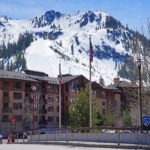
Kleines Fiescherhorn | Ochs

🏔️ Overview
Kleines Fiescherhorn is a 3,895-meter (12,779-foot) mountain in the Bernese Alps of Switzerland. Also known as Ochs, meaning “ox” in German, the peak stands on the border between the cantons of Bern and Valais.
The mountain forms part of the Fiescherhörner, a compact group that also includes the 4,049-meter Grosses Fiescherhorn and the 4,025-meter Hinteres Fiescherhorn. Although Kleines Fiescherhorn is the lowest of the three, its steep northern side forms a striking section of the enormous Fiescherwand above the glacial basin east of Grindelwald.
Unlike its two neighboring 4,000-meter summits, Kleines Fiescherhorn is climbed relatively infrequently. Its normal route remains a serious glacial mountaineering expedition, while its north ridge and northwest face rank among the more demanding and committing objectives in this part of the Alps.
⚡ Fast Facts
| Fact | Details |
|---|---|
| Continent | Europe |
| Country | Switzerland |
| State/Province | Cantons of Bern and Valais |
| County/Region | Interlaken-Oberhasli and Goms |
| Mountain Range | Bernese Alps |
| Mountain Group | Fiescherhörner |
| Alternate Name | Ochs |
| Parent Peak | Grosses Fiescherhorn |
| Elevation | 3,895 m (12,779 ft) |
| Prominence | Approximately 76 m (249 ft) |
| Isolation | Approximately 1.2 km (0.75 mi) |
| Nearest Higher Neighbor | Hinteres Fiescherhorn, approximately 1.2 km southwest |
| Coordinates | 46.55556° N, 8.07579° E |
| First Recorded Ascent | 1864 |
| Normal Route | Southern glacier and snow route |
| Typical Difficulty | Alpine mountaineering; approximately PD/WS under favorable conditions |
The prominence figure is derived from the commonly cited 3,819-meter connecting saddle. Some digital elevation models calculate a prominence closer to 90 meters, illustrating how glaciated saddles can produce slightly different measurements.
📍 Location
Kleines Fiescherhorn stands on the main crest of the Bernese Alps, where the boundary between the cantons of Bern and Valais follows the high mountain ridge. The summit also lies between the municipalities of Grindelwald to the north and Fieschertal to the south.
Its northern slopes descend toward the Ischmeer, a surviving glacial area associated with the former Lower Grindelwald Glacier. To the south, the mountain overlooks the Walliser Fiescherfirn, which feeds into the Fiescher Glacier.
Kleines Fiescherhorn occupies the eastern end of the high Fiescher Plateau. The Grosses Fiescherhorn rises roughly 1.2 kilometers to the west, while the Hinteres Fiescherhorn stands a similar distance to the southwest.
The mountain forms part of the wider Swiss Alps Jungfrau-Aletsch region, an exceptional landscape of high peaks, extensive glaciers, deep valleys, and long mountain ridges.

📏 Elevation & Prominence
Kleines Fiescherhorn reaches an elevation of 3,895 meters, or 12,779 feet, placing it just below the traditional 4,000-meter threshold used to classify the highest summits of the Alps.
Its commonly reported prominence is approximately 76 meters, based on a connecting saddle of about 3,819 meters between Kleines Fiescherhorn and the higher Fiescherhorn ridge. Because the summit is closely connected to surrounding mountains, it has relatively modest topographic independence.
Digital terrain models do not agree completely on the prominence. PeakVisor calculates approximately 90 meters, while sources based on Swiss topographic mapping generally use 76 meters.
The mountain’s isolation is also limited. The nearest higher terrain lies approximately 1.2 kilometers away, with the 4,025-meter Hinteres Fiescherhorn generally identified as its nearest higher neighbor. Grosses Fiescherhorn is almost equally close and serves as the peak’s topographic parent.
Despite these modest measurements, Kleines Fiescherhorn appears much more substantial from the north. Its steep rock and ice faces rise dramatically above the Ischmeer and contribute to the imposing profile of the Fiescherwand.
🪨 Geology
Kleines Fiescherhorn is a glaciated Alpine summit shaped by tectonic uplift, frost weathering, and repeated periods of glacial erosion.
The collision between the African and Eurasian tectonic plates compressed, folded, and uplifted the rocks that now form the Alps. Continued erosion then exposed the resistant crystalline rocks of the central Bernese Alps.
Glaciers played a major role in creating the mountain’s modern appearance. Moving ice carved deep valleys around the massif, widened existing fractures, and steepened the northern faces. Freeze-thaw action continues to loosen rock from the exposed ridges and cliffs.
The mountain has two contrasting sides. Its southern and eastern slopes are largely covered by snowfields and glacial ice, while the north and northwest sides fall away in a complex mixture of steep rock, ice gullies, hanging glaciers, and broken ridges.
🌿 Flora & Fauna
Conditions near the summit of Kleines Fiescherhorn are too severe for significant plant life. The upper mountain is dominated by permanent or seasonal snow, glacial ice, exposed rock, strong winds, and prolonged freezing temperatures.
Only highly specialized organisms, including lichens, algae, and microscopic life, can survive on some exposed surfaces. Vegetation becomes more varied farther down the approaches, where alpine grasses and low flowering plants grow during the short summer season.
The surrounding valleys and lower mountain slopes support wildlife such as:
- Alpine ibex
- Chamois
- Marmots
- Golden eagles
- Bearded vultures
- Alpine choughs
Animals are unlikely to remain on the exposed summit ridges for long, but birds may occasionally pass above the mountain or use nearby cliffs and valleys.

🥾 Hiking & Climbing Routes
Kleines Fiescherhorn is not a hiking mountain. Every established approach involves glacier travel, route-finding, avalanche exposure, crevasses, and potentially steep snow, ice, or rock.
Southern Normal Route
The normal route approaches the mountain from the south, usually in connection with the Finsteraarhorn Hut and the Walliser Fiescherfirn.
Climbers cross glaciated terrain before ascending snow slopes toward the summit. Under favorable conditions, the Swiss Alpine Club grades the route WS, broadly comparable to PD on the International French Adjectival System.
Although technically easier than the mountain’s northern routes, the normal ascent still requires:
- Roped glacier travel
- Crevasse-rescue skills
- Crampon and ice-axe experience
- Avalanche assessment
- Careful navigation
- The ability to descend safely if weather deteriorates
Approaches from the West
Kleines Fiescherhorn may also be approached from the Mönchsjoch Hut or Konkordia Hut through the glaciated plateau surrounding the larger Fiescherhörner.
These itineraries can be combined with traverses of the neighboring peaks, but distances, glacier conditions, and navigation make them substantial high-mountain undertakings.
North Ridge
The north ridge is a far more serious route. The Swiss Alpine Club classifies it as SS, or very difficult, and lists an estimated climbing time of seven to eight hours for the principal ascent.
The route involves steep, exposed terrain above the Ischmeer and should only be considered by highly experienced alpinists in stable conditions.
Northwest Face
The northwest face is approximately 1,100 meters high and forms one of the wildest sections of the Fiescherwand. Its combination of steep ice, loose rock, hanging snow, and limited escape options makes it a major technical objective.
A historical route was established by Mäusy Lüthy and Hermann Steuri during the 1930s. In March 2026, climbers Olivier Kolly, Filippo Sala, and Silvan Schüpbach completed a new mixed route named Zébu, graded M8+, 70°, and approximately 1,100 meters long.
🏔️ Field Guide Tip: Even the normal route is a genuine glacier climb rather than a walk-up summit. Climbers unfamiliar with Bernese Alps glacier conditions should travel with a qualified mountain guide.
🌤️ Best Time to Visit
The main summer mountaineering season generally runs from June through September, although the best period varies considerably from year to year.
Early summer may offer more continuous snow cover and better-supported glacier bridges, but it can also bring lingering avalanche danger. Later in the summer, snow ridges may become icy and crevasses can open significantly.
Important considerations include:
- Recent snowfall
- Overnight freezing temperatures
- Glacier conditions
- Rockfall activity
- Cornice development
- Wind speeds
- Visibility and cloud cover
Ski mountaineering ascents are sometimes attempted in spring, when snow coverage is more continuous. These trips require additional avalanche knowledge and strong ski-mountaineering skills.
🧭 Nearby Mountains & Attractions
Grosses Fiescherhorn
The 4,049-meter Grosses Fiescherhorn is the highest member of the Fiescherhörner. It is separated from Kleines Fiescherhorn by the narrow Fieschergrat.
Hinteres Fiescherhorn
The 4,025-meter Hinteres Fiescherhorn rises southwest of Kleines Fiescherhorn. It is the mountain’s nearest higher neighbor according to several digital terrain datasets.
Agassizhorn
The 3,946-meter Agassizhorn stands east of the Fiescherhörner along the high ridge leading toward the Finsteraarhorn.
Finsteraarhorn
At 4,274 meters, the Finsteraarhorn is the highest mountain entirely within Switzerland and the highest summit of the Bernese Alps.
Grindelwald
The resort village of Grindelwald lies north of the mountain. Although Kleines Fiescherhorn is partly hidden behind intervening terrain, its steep northern wall can be seen from several viewpoints around the valley.
Jungfrau-Aletsch Region
The surrounding landscape includes the Aletsch Glacier, Fiescher Glacier, Ewigschneefäld, Jungfraujoch, and numerous high Alpine huts. Much of this area forms part of the Swiss Alps Jungfrau-Aletsch UNESCO World Heritage Site.

💡 Fun Facts
- Ochs means “ox.” The mountain’s traditional alternate name distinguishes it from the other Fiescherhörner.
- Kleines Fiescherhorn falls only 105 meters short of the 4,000-meter mark.
- Despite its low prominence, the mountain presents a dramatic profile when viewed from Grindelwald.
- It forms the easternmost of the three main Fiescherhörner summits.
- The mountain lies on both a cantonal boundary and the major watershed separating drainage toward the Rhine and Rhône river systems.
- Its northwest face remained remarkably undeveloped compared with many other major Alpine walls.
- The 2026 route Zébu was named partly in reference to the mountain’s alternate name, Ochs.
❓ Frequently Asked Questions
How high is Kleines Fiescherhorn?
Kleines Fiescherhorn is 3,895 meters, or 12,779 feet, above sea level.
Where is Kleines Fiescherhorn?
It is in the Bernese Alps of Switzerland, on the boundary between the cantons of Bern and Valais.
What does Ochs mean?
Ochs is the German word for “ox.” It is the mountain’s widely used alternate name.
Is Kleines Fiescherhorn a 4,000-meter peak?
No. Its summit is 105 meters below 4,000 meters, so it is not included among the official Alpine 4,000-meter peaks.
Can Kleines Fiescherhorn be hiked?
No ordinary hiking trail reaches the summit. Even the easiest route requires glacier travel and technical mountaineering skills.
What is the normal route?
The normal route approaches from the south across glaciated terrain, commonly in connection with the Finsteraarhorn Hut. It is graded approximately WS or PD under favorable conditions.
What is the nearest higher mountain?
The nearest higher neighbor is generally identified as the 4,025-meter Hinteres Fiescherhorn, roughly 1.2 kilometers southwest of the summit.
Why is Kleines Fiescherhorn climbed less often?
It is overshadowed by the neighboring Grosses and Hinteres Fiescherhorn, both of which exceed 4,000 meters. The routes on Kleines Fiescherhorn also involve substantial glacier travel despite the summit’s relatively low prominence.
🔗 Related Articles
- Grosses Fiescherhorn
- Hinteres Fiescherhorn
- Agassizhorn
- Finsteraarhorn
- Aletschhorn
- The Alps
- Bernese Alps
- Mountains in Switzerland
📚 Sources
- Peakbagger – Kleines Fiescherhorn Ochs
- Swiss Alpine Club – Kleines Fiescherhorn / Ochs
- Federal Office of Topography swisstopo – Maps
- PeakVisor – Kleines Fiescherhorn Ochs
- The Alpine Journal – The North-East Face of the Klein Fiescherhorn
- Planetmountain – Zébu on the Northwest Face of Klein Fiescherhorn