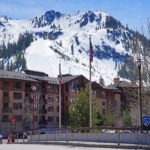
Langkofel (Saslonch, Sassolungo)

Rising to 3,181 meters (10,436 feet) above Val Gardena, Langkofel is one of the great landmark mountains of the Dolomites. Known in Italian as Sassolungo and in Ladin as Saslonch, the immense pale-rock summit dominates the western Dolomites with sheer walls, deep gullies, narrow ledges, rock towers, and an unmistakably elongated profile.
Langkofel is the highest mountain in the Langkofel/Sassolungo Group, a compact ring of spectacular Dolomite peaks between Val Gardena and Val di Fassa. Nearby summits include Fünffingerspitze, Punta Grohmann, Innerkofler Tower, Sassopiatto, and a collection of smaller pinnacles and buttresses that surround the rocky basin at the center of the massif.
The mountain is topographically important as well as visually dramatic. Langkofel has approximately 1,125 meters (3,691 feet) of prominence, with its key col at Passo Fedaia. Its true topographic isolation is approximately 11.83 kilometers (7.35 miles), and its Nearest Higher Neighbor is Gran Vernel in the Marmolada massif. Those figures make Langkofel one of the more independent major summits of the Dolomites.
Its story began long before the Alps existed. Around 240 million years ago, the Sassolungo area lay near the equator beneath the tropical Tethys Ocean. Organisms including calcareous algae, sponges, corals, and microbes built an enormous carbonate reef that eventually rose hundreds of meters above the surrounding seafloor. Burial and chemical alteration transformed much of that ancient limestone into dolomite, while Alpine uplift and millions of years of erosion exposed the fossil reef as the mountain group seen today.
Langkofel also holds an important place in Dolomite mountaineering history. On August 13, 1869, Austrian climber Paul Grohmann, accompanied by guides Franz Innerkofler and Peter Salcher, reached the summit for the first time. Their long climb through the southwest side established a route that remains the basis of the normal ascent more than 150 years later.
Despite the presence of cable cars, huts, and popular hiking trails around its base, the summit itself is not a hiking destination. The normal route is a long and complicated Alpine climb involving route-finding, exposed ledges, loose rock, scrambling and climbing up to approximately UIAA III+. For hikers, the superb Sassolungo Circuit offers a far more accessible way to experience the mountain from every side without attempting the technical summit.
⚡ Fast Facts
| Fact | Details |
|---|---|
| Mountain | Langkofel |
| Italian Name | Sassolungo |
| Ladin Name | Saslonch |
| Country | Italy |
| Province | South Tyrol / Bolzano |
| Mountain Group | Langkofel / Sassolungo Group |
| Larger Range | Dolomites / Eastern Alps |
| Elevation | 3,181 m / 10,436 ft |
| Prominence | Approximately 1,125 m / 3,691 ft |
| Key Col | Passo Fedaia |
| Key Col Elevation | Approximately 2,056 m / 6,745 ft |
| Isolation | Approximately 11.83 km / 7.35 mi |
| Nearest Higher Neighbor | Gran Vernel |
| Coordinates | Approximately 46.5250° N, 11.7353° E |
| Highest in Sassolungo Group | Yes |
| Principal Rock | Dolomite |
| Geological Origin | Middle Triassic carbonate reef |
| Reef Age | Approximately 240 million years |
| First Ascent | August 13, 1869 |
| First Ascenders | Paul Grohmann, Franz Innerkofler, Peter Salcher |
| Normal Route | Southwest side / southwest wall |
| Normal Route Difficulty | Up to approximately UIAA III+ |
| Major Historic Route | North Face — Dibona/Rizzi/Mayer party, 1911 |
| Classic Route | Pichl Route / North Ridge, 1918 |
| Main Hiking Circuit | Sassolungo Circuit |
| Famous High Pass | Forcella del Sassolungo / Langkofelscharte |
| Nearby Hut | Rifugio Toni Demetz |
| Summit Hiking Trail? | No — Alpine climbing required |
📍 Where Is Langkofel?
Langkofel rises above Val Gardena in South Tyrol, close to the boundary with Trentino and Val di Fassa. The massif stands west of the Sella Group and east of the broad Alpe di Siusi, with the Catinaccio/Rosengarten mountains farther west.
Several well-known mountain communities surround it. Selva di Val Gardena lies beneath its northern and eastern sides, while Santa Cristina and Ortisei extend farther down Val Gardena. Canazei and Campitello di Fassa provide access from the southern side, and Passo Sella offers one of the most convenient high-level starting points for hiking and climbing around the group.
Langkofel can be seen from an enormous portion of the western Dolomites. Its bulk is particularly impressive from Alpe di Siusi, where pale vertical rock rises abruptly above rolling green meadows. From Sella Pass, the mountain appears much closer and more complicated, revealing the gullies, buttresses, scree slopes, and neighboring towers hidden within its broader silhouette.

🏔️ Highest Mountain in the Sassolungo Group
At 3,181 meters, Langkofel is the highest summit of the group bearing its name. The surrounding massif contains several other major peaks, including Punta Grohmann at about 3,126 meters, Fünffingerspitze at 2,996 meters, and Sassopiatto at about 2,956 meters.
The individual peaks form a broken arc surrounding an inner rocky basin. This unusual shape reflects the geological origin of the massif as an ancient ring-like carbonate reef. Although erosion has removed much of the original structure, enough survives for the overall reef architecture to remain recognizable in the modern mountains.
Langkofel itself forms a tremendous portion of the eastern and northern side of this natural amphitheater. Its huge walls make it appear almost fortress-like, especially when compared with the narrower towers of Fünffingerspitze immediately to the south.
📏 How High Is Langkofel?
Langkofel reaches:
3,181 meters / 10,436 feet
Some older references give 3,179 meters, reflecting differences in historical mapping and surveying. The 3,181-meter figure is now widely used by Val Gardena tourism, Alpine references, and modern mountain databases.
Its height places it among the major 3,000-meter mountains of the Dolomites. It is lower than Marmolada, Antelao, Tofana di Mezzo, Monte Civetta, and several other major Dolomite summits, but its combination of prominence, wall height, and distinctive architecture gives it a visual importance that elevation rankings alone cannot capture.
📐 Topographic Prominence
Langkofel has approximately:
1,125 meters / 3,691 feet
of topographic prominence.
Its key col is Passo Fedaia, at approximately 2,056 meters. This is the high pass beneath the Marmolada massif that forms the critical topographic connection between Langkofel and higher Alpine terrain.
A prominence exceeding 1,100 meters is substantial within the Dolomites, where many dramatic towers are closely connected to neighboring peaks by high saddles. Langkofel therefore possesses much greater topographic independence than its subsidiary towers suggest.
🌍 Topographic Isolation
Langkofel has approximately:
11.83 kilometers / 7.35 miles
of true topographic isolation.
No terrain rises above Langkofel’s 3,181-meter summit within that radius. The nearest higher ground occurs in the Marmolada massif, where Gran Vernel rises above Langkofel’s elevation.
This isolation helps explain why the mountain dominates views from so many parts of Val Gardena, Alpe di Siusi, and the surrounding Dolomites. Although other mountains crowd the horizon, there is a substantial gap before any terrain surpasses its summit.
🧭 Nearest Higher Neighbor: Gran Vernel
The Nearest Higher Neighbor is Gran Vernel, part of the Marmolada massif to the southeast.
Gran Vernel rises above 3,200 meters and stands beside Marmolada, the highest mountain of the Dolomites. The isolation relationship therefore links Langkofel topographically with the highest mountain group in the range.
Closer mountains such as Piz Boè and Punta Grohmann do not qualify because they remain lower than Langkofel.
🏷️ Langkofel, Sassolungo or Saslonch?
All three names refer to the same mountain.
Langkofel is German.
Sassolungo is Italian.
Saslonch is Ladin.
The three names share essentially the same meaning: long rock or long peak. The name reflects the mountain’s extended, elongated form, particularly its long southern and western walls.
This multilingual naming is characteristic of the Dolomites. Val Gardena is a historically Ladin-speaking valley where Ladin, German, and Italian remain important parts of the cultural landscape, so mountain signs and maps frequently display several names for the same feature.

🪨 Geology of Langkofel
Langkofel is the surviving remnant of an enormous Triassic carbonate reef.
Around 240 million years ago, during the Middle Triassic, the future Dolomites lay much closer to the equator beneath the warm waters of the Tethys Ocean. Instead of mountain peaks, the landscape contained tropical marine basins, reefs, carbonate platforms, volcanic islands, and broad areas of shallow sea.
Within this environment, calcareous algae, sponges, corals, bacteria, and other carbonate-producing organisms created reef structures. Their skeletal material accumulated over immense periods of time, eventually producing carbonate buildups hundreds of meters thick.
The Sassolungo reef developed a roughly ring-shaped form comparable in broad geometry to a modern atoll. Val Gardena geological interpretation describes the structure as having reached heights of up to approximately 800 meters above the surrounding seafloor.
🌊 A Tropical Reef in the Dolomites
The modern mountain is therefore the remnant of a tropical marine ecosystem.
Reef-building organisms flourished along the margins of the ancient carbonate platform. Storms repeatedly broke fragments from the reef edge, sending limestone debris sliding toward deeper water. These deposits accumulated in inclined layers along the reef flanks.
One of the clearest surviving examples is Sassopiatto, whose sloping architecture preserves part of the original reef margin remarkably well. The steeply inclined layers provide a geological snapshot of what was once the side of a Triassic reef descending into deeper sea.
Langkofel preserves a more heavily eroded part of the same ancient structure.
🧪 From Limestone to Dolomite
The original reef material was largely calcium-carbonate limestone. During burial and later chemical alteration, magnesium-rich fluids changed much of the rock into dolomite, a calcium-magnesium carbonate mineral.
The resulting rock is hard and resistant, although it contains abundant joints, cracks, bedding surfaces, and zones of weaker material.
Those characteristics help produce the dramatic vertical scenery of the Dolomites. Large blocks of relatively resistant rock remain standing as walls and towers while fractures allow frost, water, and gravity to gradually break the mountain apart.
🌋 Was Langkofel a Volcano?
No. Langkofel itself is not an extinct volcano.
Volcanic activity was widespread in parts of the Dolomites during the Triassic, and volcanic rocks occur in the surrounding region. Nearby landscapes preserve evidence of ancient submarine volcanism that existed alongside carbonate reefs.
Langkofel, however, is fundamentally a carbonate reef mountain. Its main mass formed from marine limestone that was later altered into dolomite.
The distinction matters because the mountain’s towering cliffs are sometimes mistakenly interpreted as the remains of a volcanic plug or crater. Their actual origin lies in marine sedimentation, reef growth, tectonic uplift, and erosion.
⛰️ Alpine Uplift
The ancient Sassolungo reef eventually became buried beneath younger marine sediments. It remained hidden for millions of years before tectonic forces associated with the formation of the Alps began raising the region.
As Africa converged with Europe, the crust was compressed, faulted, folded, and uplifted. Former seabed rocks gradually rose thousands of meters above the level at which they had originally formed.
Erosion then removed the softer sediments that had buried the reef. More resistant dolomite emerged again at the surface, leaving the ancient carbonate structure exposed as a group of mountains.
The modern Langkofel is therefore a relatively young landform carved from much older rock.
🧊 Ice Age Glaciers
Repeated Pleistocene glaciations further transformed the Sassolungo Group.
Glaciers occupied the surrounding valleys and high basins, eroding weakened rock and carrying enormous quantities of debris away from the massif. Ice helped steepen the walls, deepen valleys, and enlarge the saddles separating the individual towers.
When the glaciers retreated, they left behind rock basins, moraines, polished surfaces, and enormous accumulations of scree. Seasonal snow still collects in protected gullies and shaded parts of the massif, but no large modern glacier survives on Langkofel.
Today, frost and gravity continue the erosional work once dominated by ice.
🪨 Rockfall and the Changing Mountain
Rockfall is a fundamental process in the Dolomites.
Water penetrates cracks in the dolomite. When it freezes, it expands, placing pressure on the surrounding rock. Repeated cycles gradually widen fractures until individual pieces—or sometimes enormous blocks—detach.
The results are visible everywhere around Langkofel. Huge scree slopes cover the foot of the walls, while the Città dei Sassi, or City of Stones, near Sella Pass consists of giant boulders that fell from the Sassolungo massif.
For climbers, this geology creates one of the mountain’s most serious hazards. Moderate climbing grades do not necessarily mean safe rock, and loose blocks may occur even on established routes.
🏆 First Ascent — August 13, 1869
The first successful ascent of Langkofel took place on:
August 13, 1869
The summit party consisted of Austrian mountaineer:
Paul Grohmann
and guides:
Franz Innerkofler
Peter Salcher
At the time, Langkofel had a reputation for being almost impossible to climb. Its complex walls offered no obvious line, falling rock posed a constant danger, and a summit attempt required a far longer day than many contemporary Alpine climbs.
Grohmann had already become one of the leading explorers of the Dolomites, but Langkofel remained one of his greatest objectives.
🧗 The 1869 Ascent
Grohmann arrived in Ortisei on August 11 and joined Innerkofler and Salcher for the summit attempt. The group spent the night in a mountain pasture before setting out early on August 13.
Their route climbed through the southwest side, using gullies, narrow ledges, chimneys, and broken rock to gradually solve the mountain’s complicated architecture. Ice on the rocks and falling stones added to the seriousness of the climb.
Eventually, all three men reached the summit.
Grohmann planted a flag on top, marking one of the defining achievements of the early exploration of the Dolomites.
The route they discovered remains essentially the mountain’s normal line today.
🧗 Paul Grohmann
Paul Grohmann (1838–1908) was one of the most important figures in the Golden Age of Dolomite mountaineering.
Born in Vienna, he helped found the Austrian Alpine Club and became fascinated by the relatively unexplored limestone mountains south of the main Alpine chain. During the 1860s he participated in numerous first ascents and helped introduce the Dolomites to a broader European mountaineering audience.
His achievements included first ascents of important peaks such as Tofana di Mezzo, Cristallo, Sassolungo, and others.
Grohmann later published maps and descriptions of the Dolomites that helped establish the region as an international mountaineering destination.
🧗 Franz Innerkofler and Peter Salcher
Grohmann’s success depended heavily on his local guides.
Franz Innerkofler belonged to a South Tyrolean climbing tradition that would produce several generations of important Dolomite guides. His knowledge of the terrain and ability on steep rock were essential during the first ascent.
Peter Salcher also accompanied Grohmann on several important climbs during this period. The three men had successfully climbed Sassolungo only days after undertaking other significant Dolomite objectives together.
Early mountaineering accounts often placed most attention on visiting climbers, but local guides were central to the exploration and opening of the Dolomites.
🧗 The Normal Route
The modern normal route follows the mountain’s southwest side, broadly retracing the line pioneered in 1869.
The route is not a via ferrata and should not be confused with the hiking trails around the Sassolungo Group. Current Alpine Club descriptions give technical climbing up to approximately UIAA III+, but the numerical grade captures only a small part of the difficulty.
The ascent is long, complicated, and serious. Climbers must navigate an intricate system of ledges, gullies, chimneys, ribs, and short walls. Some sections are difficult to protect, and loose rock can be a problem.
A climber capable of comfortable III-grade rock at a local crag may still find Langkofel overwhelming without broad Alpine experience.
🧭 Route-Finding
Route-finding is one of the defining challenges of the normal ascent.
From a distance, Langkofel looks like a relatively simple massive block. Up close, however, the mountain becomes a maze of rock architecture. Gullies divide walls into buttresses, ledges vanish around corners, and several apparently promising lines may lead into substantially harder terrain.
Older routes in the Dolomites often have relatively modest technical grades because their pioneers searched for natural weaknesses. Following those weaknesses correctly is part of the climb.
Fog or cloud can make the problem much more serious.
🧗 The North Face
After the summit had been reached by the southwest side, later climbers turned toward Langkofel’s enormous northern walls.
In 1911, celebrated Dolomite guide Angelo Dibona, together with Luigi Rizzi and the Mayer brothers, opened a major route on the north face. Dibona was among the greatest climbers of his generation and became famous for establishing elegant routes on daunting walls throughout the Alps.
The north face represented a different kind of challenge from the first ascent. Rather than searching mainly for the easiest possible way to the summit, climbers were increasingly interested in solving the great walls themselves.
🧗 The Pichl Route
Another milestone came in 1918, when Eduard Pichl and Rolf Waizer climbed the northern edge.
The resulting Pichl Route became one of the great classics of the Sassolungo.
Its lasting popularity reflects the development of twentieth-century climbing, when particular ridges, pillars, and walls became objectives in their own right rather than merely alternate ways of reaching the summit.
The Sassolungo Group subsequently became a major laboratory for technical climbing, with increasingly difficult routes established on Langkofel and neighboring towers.
🧗 Giovanni Demetz
Few people became as closely associated with Langkofel as local mountain guide Giovanni Demetz.
Val Gardena records that Demetz climbed the mountain more than 500 times without artificial aids, an extraordinary demonstration of both climbing skill and familiarity with the massif.
His family name remains deeply connected with the mountain. The Toni Demetz Hut in the Langkofel Saddle commemorates his son Toni, who died during a thunderstorm while climbing with guests.
The hut now occupies one of the most dramatic locations in the entire Sassolungo Group.
🚫 Can You Hike to the Summit?
No ordinary hiking trail reaches the summit of Langkofel.
The normal route is a genuine Alpine climb requiring competence with:
- Roped rock climbing
- Belaying
- Rappelling
- Route-finding
- Exposed scrambling
- Loose-rock assessment
- Alpine weather decisions
Hikers without technical climbing experience can still enjoy outstanding views of the mountain from trails around its base and through the interior of the Sassolungo Group.
The ability to reach high terrain by cable car should never be interpreted as making the summit climb easy.
🥾 Sassolungo Circuit
The Sassolungo Circuit is one of the finest ways to experience the mountain without technical climbing.
One official Val Gardena version begins at Monte Pana and uses the Mont de Sëura lift before traversing beneath the walls toward Sella Pass. From there, hikers can reach the Langkofel Saddle before descending through the interior of the massif and returning by trails on the western side.
The published itinerary covers approximately 10.9 kilometers, with around 350 meters of ascent and 840 meters of descent when lifts are used. Typical walking time is about 3½ hours.
Another full circuit from the Sella Pass area covers approximately 15–17 kilometers, depending on the precise route, and requires a substantially longer day.
🏔️ Forcella del Sassolungo
The Forcella del Sassolungo, or Langkofelscharte, reaches approximately 2,680–2,685 meters between Langkofel and Fünffingerspitze.
The narrow saddle provides one of the most dramatic viewpoints in Val Gardena. Steep walls rise directly on both sides, while the view opens toward Sella Pass and the surrounding Dolomites.
Visitors can reach the saddle on foot by a steep path from Sella Pass or seasonally by the distinctive small gondola serving the Toni Demetz Hut.
Even though the saddle is accessible to hikers, the terrain remains high Alpine. Snow can linger into summer, and the descent on the opposite side crosses steep scree.
🛖 Toni Demetz Hut
Rifugio Toni Demetz stands at approximately 2,685 meters directly in the Sassolungo Saddle.
The hut occupies an extraordinary position between the vertical walls of Langkofel and Fünffingerspitze. It serves hikers crossing the saddle as well as climbers heading for technical routes.
The hut is also an important reminder of the risks associated with Dolomite weather. It commemorates Toni Demetz, a young mountain guide who died during a thunderstorm while climbing.
The story reinforces a fundamental rule of travel in these mountains: easy access does not eliminate Alpine hazards.
🥾 Città dei Sassi
Near Sella Pass, visitors can explore the Città dei Sassi, or City of Stones.
The landscape contains enormous rockfall blocks scattered across alpine meadows and forest beneath Langkofel. An easy interpretive route passes among the boulders and provides close views of the mountain’s northern walls.
The stones offer a direct geological lesson. Langkofel is slowly eroding, and some of the blocks now resting peacefully in the grass once formed part of the cliffs high above.
The area also supports varied plant and animal life and is one of the easiest ways for families and casual walkers to experience the mountain landscape.
🌦️ Weather
Langkofel rises above 3,000 meters in an Alpine region where conditions can change quickly.
A warm summer morning can develop into an afternoon of cloud, hail, heavy rain, lightning, and strong wind. These changes matter greatly on the normal route because retreat may require rappelling through complex terrain.
Climbers commonly favor July through September for the normal ascent, depending on snow conditions and weather. Even in midsummer, shaded gullies may remain wet or icy.
Early starts are especially valuable because summer thunderstorms often develop later in the day.

⚡ Thunderstorms
Lightning is one of the most dangerous warm-season hazards.
Langkofel’s summit ridges, exposed ledges, and large rock walls offer little protection during an electrical storm. Rain can simultaneously make the dolomite more slippery and increase the difficulty of descending.
A climber caught high on the mountain may require hours to return to safer terrain.
Forecasting, observation of cloud development, and conservative decision-making are therefore as important as climbing ability.
🪨 Rockfall
Rockfall has been associated with Langkofel since the earliest attempts.
Paul Grohmann’s first-ascent account described falling stones as a significant hazard, and the same geological processes continue today.
Natural rockfall may result from freeze-thaw cycles, heavy rain, melting snow, thermal expansion, or gradual weakening of fractures. Climbers can also dislodge loose stones onto parties below.
A helmet is essential on technical routes, while careful spacing between climbing parties can reduce—but never eliminate—the risk.
❄️ Winter
Winter transforms the Sassolungo Group into a much more severe environment.
Snow fills gullies and covers scree, while ice can form on shaded walls. Avalanche danger develops on surrounding slopes and approaches.
Specialist climbers have established winter, mixed, and ice routes on Langkofel. These objectives bear little resemblance to the popular summer hiking circuit and require advanced winter mountaineering skills.
One modern example is LeGrima, a difficult ice and mixed line first climbed on the north side in 2013 by local guides Hubert Moroder and Adam Holzknecht.

🌿 Flora and Fauna
The ecological landscape around Langkofel changes dramatically from the meadows of Val Gardena to the nearly barren summit walls.
Lower slopes support spruce, larch, and other Alpine woodland. Above the forest, open meadows contain a remarkable display of flowers during spring and summer. Val Gardena records crocuses, violets, snowbells, alpine roses, Alpine poppies, orchids, gentians, bellflowers, lilies, dryads, and cinquefoils among the wider valley flora.
Higher still, vegetation becomes increasingly sparse. Plants growing among dolomite scree and rock fissures must survive intense sunlight, strong wind, cold nights, limited water, and almost nonexistent soil.
The summit walls themselves support very little continuous vegetation, but even apparently barren rock can contain lichens and small specialized plants in protected crevices.
🐿️ Alpine Marmots
Marmots are particularly characteristic of the grassy slopes around the wider Sassolungo Group.
Val Gardena even maintains a dedicated Marmot Walk beneath Sassopiatto, where a substantial marmot population occupies the alpine meadows.
These large ground squirrels spend the short mountain summer feeding intensively before entering months of winter hibernation. Their piercing warning whistles are among the most recognizable sounds of high Alpine grasslands.
Marmots remain primarily animals of the meadows and rocky pasture rather than Langkofel’s vertical summit walls.
🐐 Chamois
Alpine chamois inhabit the wider Val Gardena mountains and are exceptionally well adapted to steep terrain.
Their flexible hooves and powerful legs allow them to move quickly across broken slopes, high meadows, and rocky ground. They may descend toward forest during periods of severe weather and move higher when conditions allow.
Seeing chamois beneath Langkofel provides a striking reminder that terrain challenging to human mountaineers forms ordinary habitat for specialized Alpine wildlife.
🦅 Golden Eagles
Golden eagles occur throughout the Val Gardena mountain landscape.
Their broad wings allow them to use rising thermal and slope-generated air currents to cover enormous territories with little effort. Open alpine meadows provide hunting habitat, while high cliffs offer remote perches and nesting opportunities.
From a climbing route or high saddle, an eagle may occasionally appear below eye level, emphasizing the enormous vertical scale of the Sassolungo walls.
🦌 Forest Wildlife
The lower mountain environment supports a broader range of animals, including red deer, roe deer, foxes, hares, squirrels, black grouse, rock partridge, owls, and other woodland and mountain species.
The contrast with the summit is dramatic. Within only a few vertical kilometers, the landscape changes from forest and flower-filled meadow to almost completely barren dolomite rock.
This vertical ecological sequence is one of the pleasures of hiking around the massif rather than viewing Langkofel only as a technical climbing objective.
🌄 Enrosadira
At sunrise and sunset, Langkofel can glow pink, orange, red, and gold.
This famous Dolomite lighting effect is known as enrosadira.
The phenomenon is caused primarily by the warm spectrum of low-angle sunlight illuminating pale carbonate rock. As the sun approaches the horizon, shorter wavelengths are scattered more strongly through the atmosphere, allowing warmer reds and oranges to dominate the light reaching the mountain.
Langkofel is particularly impressive during enrosadira when viewed from Alpe di Siusi. Its enormous pale walls can catch the final sunlight while the surrounding valleys and meadows have already fallen into shadow.
🗿 The Legend of the Giant Sassolungo
Local folklore gives the mountain a life very different from its geological history.
One traditional Val Gardena story tells of a giant named Sassolungo who stole chickens from local farmers but repeatedly denied his guilt. When the Council of Giants finally judged him, the earth swallowed him as punishment.
Only one of his hands remained visible above the ground.
According to the tale, that hand became the five towers of Fünffingerspitze, while the giant’s enormous body became Sassolungo itself.
The legend provides a memorable imaginative explanation for the unusual rock formations and belongs to the rich Ladin storytelling traditions of the Dolomites.
📸 Best Views of Langkofel
Langkofel looks remarkably different depending on direction.
From Alpe di Siusi, the massif rises above rolling meadows in one of the classic compositions of the Dolomites. From Sella Pass, the walls loom close overhead and the details of individual towers become much easier to distinguish.
Monte Pana provides another excellent perspective from Val Gardena, while Col Rodella reveals the massif from the Val di Fassa side. Seceda and surrounding high viewpoints offer a broader panorama that places Langkofel alongside the Sella Group and other major Dolomite mountains.
Walking around the massif provides the most complete appreciation of its shape because there is no single viewpoint from which all of its complicated architecture can be understood.

🌍 Langkofel and the Dolomites
Langkofel is one of the defining mountains of the western Dolomites, but the Sassolungo Group is not itself one of the nine core component systems of the Dolomites UNESCO World Heritage Site.
Nearby protected UNESCO landscapes nevertheless preserve closely related examples of the same extraordinary Triassic geology.
From high viewpoints in the Puez-Odle system, the geological relationship becomes especially clear: Sassolungo and Sella stand today as enormous rock massifs where Triassic carbonate islands and reefs once rose above ancient stretches of tropical sea.
The modern mountains preserve that ancient geography in a form transformed by Alpine uplift and erosion.
🌍 Why Langkofel Matters
Langkofel combines almost every quality that makes the Dolomites extraordinary.
It is a major 3,000-meter summit with more than 1,100 meters of prominence, but its importance cannot be reduced to numbers. The mountain preserves an ancient tropical reef, elevated from the Tethys Ocean and carved into one of Europe’s most recognizable rock formations.
Its climbing history reaches back to the pioneering era of the Dolomites. Paul Grohmann, Franz Innerkofler, and Peter Salcher solved the mountain in 1869 when it was still considered nearly unclimbable. Later generations—including Angelo Dibona, Eduard Pichl, Giovanni Demetz, and modern climbers—continued exploring its immense walls.
Below them lies an entirely different mountain world of trails, huts, alpine meadows, marmots, chamois, forests, flowers, and Ladin villages.
A technical climber may see Langkofel as a complex maze of ledges and walls. A geologist can read it as a fossil Triassic reef. A hiker encounters it as the centerpiece of one of the finest circuits in the Dolomites. From Val Gardena, it is simply the great mountain that dominates the horizon.

💡 Langkofel Fun Facts
- Langkofel reaches 3,181 meters / 10,436 feet.
- Its Italian name is Sassolungo.
- Its Ladin name is Saslonch.
- All three names essentially mean “long rock.”
- It is the highest mountain in the Sassolungo Group.
- Langkofel has approximately 1,125 meters of prominence.
- Its key col is Passo Fedaia at about 2,056 meters.
- Its true isolation is approximately 11.83 kilometers.
- Gran Vernel is its Nearest Higher Neighbor.
- The mountain originated as a Middle Triassic carbonate reef roughly 240 million years ago.
- The ancient reef may have risen hundreds of meters above the surrounding seafloor.
- Sassopiatto preserves part of the original inclined reef flank.
- Langkofel is not a volcano.
- Alpine uplift eventually raised its marine rocks thousands of meters above sea level.
- Ice Age glaciers helped carve the modern massif.
- Paul Grohmann, Franz Innerkofler, and Peter Salcher made the first ascent on August 13, 1869.
- The original route climbed the southwest side.
- The modern normal route still follows broadly similar terrain.
- The normal route reaches approximately UIAA III+.
- Angelo Dibona participated in a major north-face ascent in 1911.
- Eduard Pichl and Rolf Waizer climbed the north ridge in 1918.
- Local guide Giovanni Demetz climbed Langkofel more than 500 times.
- The Sassolungo Circuit allows hikers to explore the massif without technical climbing.
- Forcella del Sassolungo reaches approximately 2,685 meters.
- Rifugio Toni Demetz stands directly in the saddle.
- The Città dei Sassi contains enormous rockfall blocks from the massif.
- Marmots are common in the meadows beneath Sassopiatto.
- Chamois and golden eagles inhabit the wider Val Gardena mountains.
- The giant Sassolungo appears in traditional Ladin folklore.
- The mountain is one of the great locations for the Dolomite enrosadira at sunrise and sunset.
❓ Langkofel FAQ
How high is Langkofel?
Langkofel reaches 3,181 meters (10,436 feet) above sea level.
What is Langkofel called in Italian?
Its Italian name is Sassolungo.
What is the Ladin name?
The Ladin name is Saslonch.
What does Langkofel mean?
Langkofel, Sassolungo, and Saslonch all refer to the mountain’s elongated form and essentially mean long rock.
Where is Langkofel?
The mountain rises above Val Gardena in South Tyrol, northern Italy, close to Sella Pass and the border with Trentino.
What mountain range is Langkofel in?
It is the highest summit of the Langkofel/Sassolungo Group, part of the Dolomites and Eastern Alps.
Is Langkofel the highest mountain in the Dolomites?
No.
Marmolada is the highest mountain in the Dolomites.
Is Langkofel the highest mountain in its group?
Yes.
At 3,181 meters, it is the highest summit of the Sassolungo Group.
How prominent is Langkofel?
Peakbagger gives approximately 1,125 meters (3,691 feet) of topographic prominence.
What is Langkofel’s key col?
Its key col is Passo Fedaia, at approximately 2,056 meters.
How isolated is Langkofel?
Its topographic isolation is approximately 11.83 kilometers (7.35 miles).
What is Langkofel’s Nearest Higher Neighbor?
The Nearest Higher Neighbor is Gran Vernel in the Marmolada massif.
What is Langkofel made of?
The mountain consists primarily of dolomite derived from an ancient Triassic carbonate reef.
How old is Langkofel’s rock?
The Sassolungo reef developed during the Middle Triassic approximately 240 million years ago.
Was Langkofel once underwater?
Yes.
Its rocks formed beneath the tropical Tethys Ocean when the region lay much closer to the equator.
Was Langkofel a coral reef?
The Sassolungo massif formed as a large carbonate reef structure built by organisms including calcareous algae, sponges, corals, and microbes.
Is Langkofel a volcano?
No.
It is an ancient carbonate reef mountain rather than a volcanic peak.
Was Langkofel glaciated?
Yes.
Ice Age glaciers helped carve the surrounding valleys, saddles, walls, and high basins.
Does Langkofel have a glacier today?
No large modern glacier survives on the mountain, although snow and ice may persist seasonally in sheltered gullies.
Who first climbed Langkofel?
Paul Grohmann, Franz Innerkofler, and Peter Salcher made the first ascent.
When was Langkofel first climbed?
The first ascent occurred on August 13, 1869.
What route did the first ascenders use?
They climbed through the southwest side of the mountain. The modern normal route broadly follows the same general line.
Can you hike to the summit?
No ordinary hiking trail reaches the summit.
The normal route is a technical Alpine climb.
How hard is the normal route?
Modern Alpine Club descriptions place the climbing at up to approximately UIAA III+. The route is serious because of its length, exposure, route-finding, loose rock, and difficult protection.
Do you need a guide?
Experienced Alpine climbers may climb independently. Visitors without the necessary technical and route-finding skills should use a qualified mountain guide.
Can hikers walk around Langkofel?
Yes.
Several excellent trails circle the Sassolungo Group and pass beneath its major walls.
How long is the Sassolungo Circuit?
One official lift-assisted Val Gardena version covers approximately 10.9 kilometers and takes around 3½ hours. Longer complete circuits of roughly 15–17 kilometers are also possible.
What is Forcella del Sassolungo?
It is the high saddle between Langkofel and Fünffingerspitze, at roughly 2,685 meters.
Can you reach the Sassolungo Saddle by cable car?
Seasonally, a small gondola operates from the Sella Pass area toward Rifugio Toni Demetz at the saddle. Operating arrangements should be checked before visiting.
What is Città dei Sassi?
The City of Stones is an area near Sella Pass filled with huge boulders that detached from the Sassolungo massif during rockfalls.
What wildlife lives near Langkofel?
The wider Val Gardena landscape supports marmots, chamois, red deer, roe deer, foxes, hares, golden eagles, black grouse, rock partridge, and many other Alpine animals.
What is the best time to climb Langkofel?
The principal summer climbing season is generally July through September, depending on snow, rock conditions, and weather.
Is Langkofel part of the Dolomites UNESCO World Heritage Site?
The mountain is part of the broader Dolomites landscape, but the Sassolungo Group itself lies outside the nine core component systems of the UNESCO serial World Heritage property.
🔗 Related Articles
- Fünffingerspitze
- Tre Cime di Lavaredo
- Marmolada
- The Dolomites
- Mountains in Italy
- The Alps
- Mountain Navigation: Maps, Compass, GPS & Route-Finding Guide
- The Ten Essentials for Hiking: What Every Hiker Should Carry
📚 Sources
- Peakbagger — Langkofel
- Dolomites Val Gardena — The Valley’s Symbol: Sassolungo
- Dolomites Val Gardena — First Ascent of Sassolungo, August 13, 1869
- Dolomites Val Gardena — Paul Grohmann Monument & Geology: The Sassolungo Reef
- Dolomites Val Gardena — The Heroes of Sassolungo
- German Alpine Club — Langkofel Normal Route
- German Alpine Club — Langkofel History and Topography
- Dolomites Val Gardena — Sassolungo Circuit
- Dolomites Val Gardena — Excursion to Forcella Sassolungo
- Dolomites Val Gardena — Città dei Sassi
- Dolomites Val Gardena — Marmot Walk Beneath the Sassolungo Group
- Dolomites Val Gardena — Wildlife of Val Gardena
- Dolomites Val Gardena — Beautiful Nature