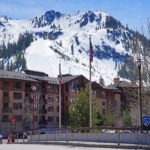
Mount Arkansas rises to approximately 13,802 feet (4,207 meters) in central Colorado’s Mosquito Range, forming an imposing thirteener immediately south of Fremont Pass. The mountain towers above the headwaters of the Arkansas River northeast of Leadville and is particularly prominent from Colorado Highway 91, where its steep western slopes rise dramatically above the valley.
Although it stands close to some of Colorado’s busiest mountain corridors, Mount Arkansas receives far fewer hikers than nearby fourteeners such as Mount Democrat and Mount Lincoln. Its quieter trails, rocky ridges, expansive views, and convenient access make it an appealing destination for hikers exploring the high thirteeners of the Mosquito Range.
Several routes reach the summit. The North Ridge from near Fremont Pass provides a relatively compact Class 2 outing, while a southern approach allows hikers to combine Mount Arkansas with neighboring Mount Tweto for a longer day across the rocky crest of the range.
⚡ Fast Facts
| Fact | Details |
|---|---|
| Mountain | Mount Arkansas |
| Country | United States |
| State | Colorado |
| County | Lake County |
| Mountain Range | Mosquito Range |
| Parent Range | Rocky Mountains |
| Modern Elevation | Approximately 13,802 ft / 4,207 m |
| Other Modern Listings | Approximately 13,804 ft |
| Older Elevation | Approximately 13,795 ft |
| Prominence | Approximately 564 ft / 172 m |
| Isolation | Approximately 1.9 mi / 3.0 km |
| Nearest Higher Neighbor (NHN) | Mount Buckskin |
| Colorado 13er | Yes |
| Modern Colorado Rank | About #107 among ranked summits |
| National Forest | San Isabel National Forest |
| USGS Quadrangle | Climax |
| Standard Route | North Ridge |
| Standard Difficulty | Class 2 |
| North Ridge Distance | About 5.25 miles round trip |
| North Ridge Elevation Gain | About 2,750 ft |
| Popular Combination | Mount Tweto and Mount Arkansas |
| Nearby Pass | Fremont Pass |
| Nearby Community | Leadville |
Mount Arkansas’s nearest higher neighbor is Mount Buckskin, located to the southeast. Modern LiDAR datasets place Mount Arkansas at roughly 13,802 feet, although some current Colorado climbing resources round or calculate the summit at approximately 13,804 feet.
📍 Where Is Mount Arkansas?
Mount Arkansas is located in Lake County in central Colorado, roughly eight miles northeast of Leadville.
The summit lies just south of Fremont Pass, where Colorado Highway 91 crosses high terrain between Leadville and Copper Mountain. The massive Climax mining complex occupies the pass area immediately north of the mountain.
Mount Arkansas belongs to the Mosquito Range, which runs north-south through central Colorado and separates portions of the upper Arkansas River Valley from South Park.
Nearby mountains include Mount Tweto, Treasurevault Mountain, Mount Buckskin, and Mount Democrat.
The mountain is also intimately connected with the Arkansas River. Drainage from its slopes contributes to the East Fork Arkansas River, one of the principal headwater streams of the Arkansas.
🏔️ Mount Arkansas and the Mosquito Range
The Mosquito Range contains several of Colorado’s famous fourteeners as well as a remarkable collection of high thirteeners.
Major peaks include:
- Mount Lincoln
- Mount Cameron
- Mount Bross
- Mount Democrat
- Mount Buckskin
- Mount Arkansas
- Mount Tweto
- Mosquito Peak
Mount Arkansas sits toward the northern portion of this high mountain chain.
Its summit is lower than the nearby Kite Lake fourteeners, but the mountain remains an independently ranked peak because it possesses more than 300 feet of prominence.
Its approximately 564 feet of prominence distinguishes it from high subsidiary summits such as Mount Cameron, which rises above 14,000 feet but does not meet Colorado’s traditional 300-foot ranking rule.
📏 How High Is Mount Arkansas?
Older USGS-based references commonly list Mount Arkansas at approximately 13,795 feet.
Modern high-resolution measurements have revised that figure upward.
Peakbagger’s current LiDAR-based dataset places the summit at approximately 13,801.6 feet, generally rounded to 13,802 feet.
Climb13ers uses approximately 13,804 feet.
The small difference results from the elevation dataset, datum, summit interpretation, and rounding method rather than any meaningful disagreement about the physical mountain.
For an updated Mountain Field Guide profile, approximately 13,802 feet provides a useful modern figure while acknowledging that hikers will also encounter 13,804 feet in current Colorado climbing resources.
📈 Prominence and Isolation
Mount Arkansas has approximately 564 feet of topographic prominence and about 1.9 miles of isolation.
Its line parent and nearest higher mountain is Mount Buckskin.
Although 564 feet of prominence is modest compared with highly independent Colorado mountains such as Mount Silverheels, it is more than sufficient to establish Mount Arkansas as an independently ranked summit.
The mountain also rises dramatically above the East Fork Arkansas River drainage.
From the valley below, the summit gains thousands of vertical feet over a relatively short horizontal distance, giving Mount Arkansas a much more imposing appearance than its prominence statistic alone might suggest.
🥾 Hiking Mount Arkansas
The North Ridge provides one of the most direct routes to the summit.
The route begins south of Fremont Pass near Colorado Highway 91.
Approximate statistics are:
| Route Detail | Approximate Measurement |
|---|---|
| Route | North Ridge |
| Starting Elevation | About 11,150 ft |
| Summit Elevation | About 13,802 ft |
| Round-trip Distance | About 5.25 miles |
| Elevation Gain | About 2,750 ft |
| Difficulty | Class 2 |
| Terrain | Old roads, tundra, rubble and rocky ridge |
| Route Finding | Moderate |
The relatively short mileage makes Mount Arkansas accessible as a day climb, but nearly 2,800 feet of gain at high altitude creates a substantial workout.
Much of the route is exposed above treeline, making weather awareness especially important.
🥾 North Ridge Route
The North Ridge approach begins from a dirt-road area less than a mile south of Fremont Pass.
Hikers initially follow old road and railroad-grade terrain before turning toward Mount Arkansas.
The lower portion crosses open slopes and drainage terrain before reaching the mountain’s broad northern ridge.
As elevation increases, vegetation gives way to increasingly rocky ground.
The ridge contains:
- Alpine tundra
- Embedded rocks
- Talus
- Loose rubble
- Occasional rocky towers
The easiest route remains Class 2.
Some optional ridge features can provide more difficult scrambling, but these can generally be bypassed by hikers interested in keeping the ascent nontechnical.
The final ridge climbs steadily toward Mount Arkansas’s summit, where wide views open across the northern Mosquito Range and upper Arkansas Valley.
🧗 Optional Scrambling on the North Ridge
Although the standard North Ridge is generally rated Class 2, climbers seeking more scrambling can stay closer to some of the rocky ridge towers.
These features can introduce Class 3 movement.
There is no need to tackle the harder terrain to reach the summit.
Most obstacles can be bypassed using easier lines.
This makes Mount Arkansas particularly interesting for groups with different comfort levels: experienced scramblers can seek out optional rocky challenges while other hikers remain on Class 2 terrain.
As always, bypass conditions can change when snow or ice covers the ridge.
🥾 Mount Tweto and Mount Arkansas
One of the most popular combinations links Mount Tweto with Mount Arkansas from the eastern Mosquito Pass side.
Climb13ers lists the combination at approximately:
| Route Detail | Approximate Measurement |
|---|---|
| Starting Area | East side of Mosquito Pass road |
| Round-trip Distance | About 7.8 miles |
| Total Elevation Gain | About 2,705 ft |
| Difficulty | Class 2+ |
| First Major Summit | Mount Tweto |
| Second Summit | Mount Arkansas |
The approach climbs through the basin south of Mount Tweto before reaching its ridge.
From Tweto, hikers descend toward the saddle connecting the mountain with Mount Arkansas.
Approximately one mile separates the two summits.
🪨 Tweto-Arkansas Ridge
The ridge between Mount Tweto and Mount Arkansas is not technically difficult under dry summer conditions, but it is extremely rocky.
Climbers encounter extensive rubble, talus, and uneven blocks.
Several bumps interrupt the ridge, making progress slower than the short map distance might imply.
Most terrain remains Class 2 to Class 2+, and significant exposure can generally be avoided.
Strong hikers can also extend the trip toward Treasurevault Mountain and other Mosquito Range summits, creating a much longer ridge traverse.
For most visitors, Tweto and Arkansas provide more than enough climbing for one day.
🚗 Fremont Pass Access
Fremont Pass reaches approximately 11,300 feet on Colorado Highway 91 between Leadville and Copper Mountain.
The North Ridge trailhead lies a short distance south of the pass.
From Interstate 70, drivers can take the Copper Mountain exit and follow Highway 91 south toward Fremont Pass.
After crossing the pass and beginning the descent toward Leadville, the access road for Mount Arkansas lies near a large highway curve.
The dirt road provides access toward the traditional North Ridge starting area.
Road conditions can change because of snow, runoff, construction, or mining activity, so hikers should confirm current access before leaving.
🚙 Mosquito Pass Approach
The Mount Tweto combination normally approaches from the east side of the Mosquito Range.
From Fairplay or Alma, hikers use county roads leading into Mosquito Gulch.
Passenger vehicles can reach the lower portions of the approach under normal dry conditions, while the higher Forest Service road becomes considerably rougher.
Climb13ers specifically cautions that the upper 4WD road is rocky, primitive, and rough.
Drivers should not push vehicles beyond their capabilities merely to reduce hiking mileage.
Parking lower and hiking the additional distance is often the safer choice.
🪨 Geology of Mount Arkansas
Mount Arkansas lies within the Climax quadrangle, an exceptionally important geological area.
The central portion of the Mosquito Range consists largely of ancient Precambrian crystalline rocks.
These include rocks formed more than a billion years ago deep within Earth’s crust.
Later geological periods added additional layers and structures.
The broader region contains:
- Precambrian crystalline rocks
- Paleozoic sedimentary formations
- Igneous dikes and sills
- Intrusive bodies
- Mineralized zones
- Faults
- Glacial deposits
Colorado Geological Survey mapping shows that the modern landscape reflects an extraordinarily long sequence of mountain building, intrusion, faulting, erosion, mineralization, and glaciation.
🌎 Building the Mosquito Range
The Mosquito Range experienced several major episodes of uplift.
Evidence indicates that the range already existed as a topographic high during the Laramide Orogeny, beginning during Late Cretaceous time.
The modern range, however, owes much of its present relief to later faulting.
During the Neogene, crustal extension associated with the Rio Grande Rift affected central Colorado.
Movement along the Mosquito and Weston faults helped uplift the Mosquito Range relative to the upper Arkansas River Valley.
The displacement is enormous.
Colorado Geological Survey mapping indicates approximately 9,000 feet of uplift along the Mosquito fault in portions of the region.
Erosion then stripped away huge quantities of overlying rock, exposing the ancient crystalline core seen today.
⛏️ Mineralization and the Climax District
Mount Arkansas rises immediately south of one of the most famous mining districts in Colorado.
The Climax Mine at Fremont Pass became internationally important for molybdenum.
The mineralization reflects younger igneous activity superimposed on much older rocks.
Early Tertiary dikes, sills, and stocks intruded portions of the Mosquito Range and contributed to mineral systems throughout the broader Leadville, Climax, and Alma districts.
Mining dramatically altered some landscapes around Fremont Pass.
Roads, waste-rock piles, industrial facilities, and historic workings remain visible near the mountain.
Visitors should respect all active mine boundaries and never enter restricted industrial property.
⛏️ Leadville Mining History
Mount Arkansas also overlooks the broader Leadville region, one of the great mining landscapes of the American West.
Gold discoveries in the upper Arkansas Valley during the 1860s attracted early prospectors.
Later discoveries of rich silver deposits transformed Leadville into a major mining boomtown.
The surrounding mountains ultimately produced:
- Gold
- Silver
- Lead
- Zinc
- Molybdenum
Mining influenced transportation, settlement, road development, mountain names, water systems, and land ownership throughout Lake County.
Although Mount Arkansas today provides a relatively wild high-country hiking experience, the valleys around it remain closely connected with this industrial history.
🌊 Headwaters of the Arkansas River
Mount Arkansas’s name reflects its close relationship with the Arkansas River.
The East Fork Arkansas River begins in the high country around Mount Arkansas and Fremont Pass.
Water flowing from the mountain travels down the upper Arkansas Valley through the Leadville area.
Farther downstream, the Arkansas River flows through central and southeastern Colorado before entering Kansas.
It eventually crosses several states before joining the Mississippi River.
A small patch of melting snow near Mount Arkansas can therefore become part of a river system stretching across a vast portion of the central United States.
🪶 Indigenous Connections
The Arkansas River and its headwaters were known to Indigenous peoples long before modern Colorado place names were established.
A University of Colorado project documenting Indigenous place names records several traditional names for the Arkansas River from Native nations with historical connections to the region.
A Lakota name is translated as “Flint River.”
Related Lakota geographical information also associates Mount Arkansas with a name translated as “Flint Mountain,” identifying it with the source region of the Arkansas River.
These traditions provide an important reminder that the mountain landscape had names, routes, stories, and cultural significance long before nineteenth-century American surveys placed modern English names on maps.
🌲 Flora and Fauna
Mount Arkansas crosses the upper edge of Colorado’s subalpine ecosystem before entering extensive alpine terrain.
The North Ridge route begins around 11,150 feet, near the upper limits of continuous forest.
Lower sheltered areas may contain:
- Engelmann spruce
- Subalpine fir
- Lodgepole pine
- Willow communities in moist drainage areas
Trees quickly become sparse with increasing elevation.
Near treeline, extreme wind and cold create twisted krummholz before trees disappear completely.
Most of the upper mountain consists of alpine tundra, talus, rubble, and exposed rock.
🌼 Alpine Plants
Above treeline, plants must survive one of Colorado’s most severe environments.
Challenges include:
- Strong winds
- Intense ultraviolet radiation
- Freezing nighttime temperatures
- Heavy winter snow
- Shallow soils
- A very short growing season
Vegetation tends to remain close to the ground.
Common plant communities may contain alpine grasses, sedges, mosses, lichens, cushion plants, and small flowering species.
Wetter depressions and snowmelt-fed areas can support richer vegetation.
These alpine communities recover slowly from disturbance, so hikers should travel on durable surfaces and existing routes whenever practical.
🐾 Wildlife
Wildlife found in the broader Mount Arkansas and Mosquito Range environment may include:
- American pikas
- Yellow-bellied marmots
- Bighorn sheep
- Mountain goats
- Elk
- Mule deer
- Coyotes
- White-tailed ptarmigan
- Brown-capped rosy-finches
- Ravens
- Golden eagles
Pikas are especially characteristic of the talus slopes.
They remain active throughout winter rather than hibernating, surviving partly on vegetation collected and stored during summer.
Marmots use a different strategy, spending much of winter hibernating underground.
🐐 Mountain Goats and Bighorn Sheep
Both mountain goats and bighorn sheep may be encountered in Colorado’s central high country.
Bighorn sheep are native to Colorado.
Mountain goats, despite being strongly associated with the state’s alpine scenery today, were introduced during the twentieth century.
Both animals should be observed from a respectful distance.
Never feed wildlife or encourage animals to approach.
Habituation can change normal behavior and create dangerous interactions between animals and people.
🌦️ Best Time to Hike
For most hikers, the most straightforward Mount Arkansas conditions occur between late June and September.
Snow frequently lingers into early summer.
By July, the standard ridges are often mostly dry, although snow conditions vary greatly between years.
Summer also brings Colorado’s afternoon thunderstorm season.
The mountain’s broad ridges provide virtually no protection from lightning.
Climbers should begin early and plan to descend before storms develop.
🌩️ Lightning Danger
Lightning is one of the most significant warm-season hazards on Mount Arkansas.
The summit and connecting ridges are completely exposed.
Warning signs include:
- Rapidly growing clouds
- Darkening skies
- Distant thunder
- Increasing winds
- Sudden cooling
- Hail
A climber on the Arkansas-Tweto ridge may remain a considerable distance from safe lower terrain.
Weather decisions should therefore be made conservatively.
Turning around early is always preferable to being caught above treeline during an electrical storm.
❄️ Winter Conditions
Mount Arkansas is also climbed during winter and spring, when it becomes a substantially more serious mountain.
Hazards may include:
- Avalanches
- Wind slabs
- Cornices
- Deep snow
- Ice
- Extreme wind chill
- Whiteout navigation
The Mosquito Range is notorious for strong winds.
Snow may be completely stripped from one slope and deposited deeply on another.
Anyone traveling during snowy conditions should check the latest Colorado Avalanche Information Center forecast and possess the equipment and training appropriate for avalanche terrain.
⚠️ Hiking Safety
Mount Arkansas should not be underestimated simply because the standard route is Class 2.
Important precautions include:
- Start early.
- Check the mountain forecast.
- Verify current trailhead and road conditions.
- Carry offline navigation.
- Bring waterproof and insulating layers.
- Carry adequate food and water.
- Use strong sun protection.
- Watch for symptoms of altitude sickness.
- Use care on loose rubble and talus.
- Respect active mining boundaries.
- Protect fragile tundra.
- Check avalanche conditions when snow is present.
- Turn around when conditions deteriorate.
Altitude is a particular concern.
The standard route begins above 11,000 feet and quickly climbs toward nearly 13,800 feet.
Hikers arriving directly from low elevations may experience headache, nausea, dizziness, or unusual fatigue.
Worsening altitude illness requires descent.
🌄 Views from the Summit
Mount Arkansas provides an outstanding perspective on the northern Mosquito Range.
Immediately south and southeast lie Mount Tweto and Mount Buckskin.
Farther east and southeast, hikers can see the high summits around Mount Democrat, Mount Cameron, and Mount Lincoln.
To the west, the upper Arkansas River Valley separates the Mosquito Range from the immense Sawatch Range.
Leadville sits far below.
Northward views extend toward Fremont Pass, Copper Mountain, and the high country around the Tenmile and Gore ranges.
The industrial landscape of the Climax Mine provides a striking contrast with the surrounding alpine wilderness.
🏔️ Mount Arkansas vs. Mount Buckskin
Mount Buckskin is Mount Arkansas’s nearest higher neighbor.
| Feature | Mount Arkansas | Mount Buckskin |
|---|---|---|
| Elevation | ~13,802 ft | ~13,871 ft |
| Prominence | ~564 ft | ~700+ ft |
| Peak Type | Ranked 13er | Ranked 13er |
| Range | Mosquito Range | Mosquito Range |
| Typical Trailhead | Fremont Pass South | Kite Lake |
| Standard Difficulty | Class 2 | Class 2 |
Buckskin is roughly 70 feet higher, but both mountains provide relatively approachable opportunities to explore the Mosquito Range away from its most heavily visited fourteeners.
🌄 Why Mount Arkansas Is Special
Mount Arkansas occupies a fascinating position in Colorado’s high country.
It is a substantial ranked thirteener rising almost directly above one of the state’s major mountain highways, yet it receives comparatively little recreational traffic.
Its summit overlooks both natural and industrial landscapes.
To one side lie high tundra ridges, glacial basins, pikas, marmots, and distant mountain ranges. To another lies Fremont Pass and the Climax mining district, representing more than a century of resource extraction from the Colorado Rockies.
The mountain’s connection with the Arkansas River adds another layer of significance. Water beginning on these slopes eventually travels across a large portion of the United States before entering the Mississippi River system.
For hikers, Mount Arkansas offers unusual flexibility. The North Ridge provides a short Class 2 ascent, optional towers allow stronger climbers to seek out more scrambling, and the Mount Tweto combination creates a longer ridge adventure.
For anyone exploring the Mosquito Range beyond Colorado’s fourteeners, Mount Arkansas deserves far more attention than it usually receives.
❓ Frequently Asked Questions
How high is Mount Arkansas?
Modern LiDAR-based measurements place Mount Arkansas at approximately 13,802 feet (4,207 meters). Climb13ers lists the summit at approximately 13,804 feet, while older maps commonly show about 13,795 feet.
Is Mount Arkansas a Colorado fourteener?
No. Mount Arkansas is a ranked Colorado thirteener.
What is Mount Arkansas’s nearest higher neighbor?
The nearest higher neighbor is Mount Buckskin.
How prominent is Mount Arkansas?
Modern Peakbagger data gives Mount Arkansas approximately 564 feet of topographic prominence.
How isolated is Mount Arkansas?
Its isolation is approximately 1.9 miles.
What mountain range is Mount Arkansas in?
Mount Arkansas belongs to Colorado’s Mosquito Range, part of the larger Rocky Mountains.
Where is Mount Arkansas?
The mountain is in Lake County, Colorado, northeast of Leadville and immediately south of Fremont Pass.
How difficult is Mount Arkansas?
The standard North Ridge is generally rated Class 2. Optional ridge towers can provide Class 3 scrambling but can normally be bypassed.
How long is the Mount Arkansas hike?
The North Ridge route is approximately 5.25 miles round trip with about 2,750 feet of elevation gain.
Can Mount Arkansas and Mount Tweto be climbed together?
Yes. Mount Tweto and Mount Arkansas are commonly combined. Climb13ers lists the route at approximately 7.8 miles round trip with 2,705 feet of total gain and Class 2+ difficulty.
Is Mount Arkansas near Fremont Pass?
Yes. The standard North Ridge approach begins just south of Fremont Pass along Highway 91.
Is Mount Arkansas related to the Arkansas River?
Yes. The East Fork Arkansas River begins in the high country around Mount Arkansas, and the mountain’s modern name is associated with the Arkansas River headwaters.
Is Mount Arkansas near the Climax Mine?
Yes. The Climax molybdenum mining district occupies Fremont Pass immediately north of the mountain.
Is Mount Arkansas crowded?
Generally not. It receives considerably less summit traffic than nearby Colorado fourteeners, making it an appealing choice for hikers looking for a quieter high-altitude climb.
🔗 Related Articles
- Mount Buckskin
- Mount Democrat
- Mount Cameron (Colorado)
- Mount Lincoln
- Mount Silverheels
- Mosquito Range
- The Rocky Mountains
📚 Sources
- Peakbagger — Mount Arkansas
- 14ers.com — Mount Arkansas North Ridge
- Climb13ers — Mount Arkansas
- Colorado Mountain Club — Mount Arkansas
- Colorado Geological Survey — Geologic Map of the Climax Quadrangle
- U.S. Geological Survey — Geologic Map of the Upper Arkansas River Valley Region
- University of Colorado Boulder — Colorado Places: Their Native American Names