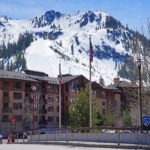
Mount Blue Sky | Mount Evans

Mount Blue Sky rises to approximately 14,267 feet (4,349 meters) in Colorado’s Front Range, forming one of the most recognizable fourteeners near Denver. Formerly known as Mount Evans, the mountain received its present official name in 2023, replacing a name associated with territorial governor John Evans and honoring connections between the mountain and the Cheyenne and Arapaho peoples.
The mountain is unusual among Colorado fourteeners because a paved road climbs almost all the way to its summit. Visitors can drive the Mount Blue Sky Scenic Byway to approximately 14,130 feet and complete the final short walk to the top, while hikers can choose much longer routes from Summit Lake, Echo Lake, Guanella Pass, or neighboring Mount Bierstadt.
That accessibility should not obscure Mount Blue Sky’s genuine mountain character. The summit has approximately 2,751 feet of topographic prominence, rises well above treeline, experiences severe alpine weather, and overlooks a wilderness landscape filled with mountain goats, bighorn sheep, marmots, bristlecone pines, alpine lakes, and fragile tundra.
⚡ Fast Facts
| Fact | Details |
|---|---|
| Mountain | Mount Blue Sky |
| Former Name | Mount Evans |
| Country | United States |
| State | Colorado |
| County | Clear Creek County |
| Mountain Range | Front Range |
| Parent Range | Rocky Mountains |
| Elevation | Approximately 14,267 ft / 4,349 m |
| Common Rounded Elevation | 14,268 ft |
| Older Published Elevation | 14,264–14,271 ft |
| Prominence | Approximately 2,751 ft / 839 m |
| Isolation | Approximately 9.77 mi / 15.73 km |
| Nearest Higher Neighbor (NHN) | Grays Peak |
| Line Parent | Grays Peak |
| Key Col | East of Guanella Pass |
| Key Col Elevation | Approximately 11,516 ft |
| Colorado Fourteener | Yes |
| Front Range Rank | Among the range’s highest summits |
| Standard Hiking Route | West Ridge from Summit Lake |
| Difficulty | Class 2 |
| Summit Lake Route Distance | About 5.5 miles round trip |
| Summit Lake Elevation Gain | About 2,000 ft |
| Longer Route | West Ridge from Echo Lake |
| Guanella Pass Route | About 9.25 miles / 3,100 ft gain |
| Nearby 14er | Mount Bierstadt |
| Scenic Road | Mount Blue Sky Scenic Byway |
| First Recorded Ascent | 1863, Albert Bierstadt and Fitz Hugh Ludlow |
| Official Renaming | September 15, 2023 |
Mount Blue Sky’s nearest higher neighbor is Grays Peak, located roughly ten miles to the west-northwest. Grays is also Mount Blue Sky’s line parent.

📍 Where Is Mount Blue Sky?
Mount Blue Sky is located in Clear Creek County in central Colorado, roughly 30 miles west of Denver.
The mountain rises south of Idaho Springs and north of Guanella Pass.
Its position near the eastern edge of Colorado’s high mountains makes it highly visible from portions of the Denver metropolitan area and surrounding Front Range foothills.
Nearby mountains include:
- Mount Bierstadt
- Mount Spalding
- Mount Warren
- Mount Goliath
- Grays Peak
- Torreys Peak
Mount Blue Sky stands along the boundary between the Arapaho and Roosevelt National Forests and the Pike and San Isabel National Forests.
Much of the surrounding high country lies within the federally designated Mount Evans Wilderness, whose legislated name has historically remained separate from the mountain’s renamed summit.

🏔️ Mount Blue Sky and the Front Range
Mount Blue Sky is one of the major fourteeners of Colorado’s Front Range.
The Front Range forms the easternmost major mountain chain of the Colorado Rockies and contains several of the state’s best-known summits, including:
- Grays Peak
- Torreys Peak
- Longs Peak
- Mount Blue Sky
- Mount Bierstadt
- Pikes Peak
Grays Peak is the highest summit of the Front Range.
Mount Blue Sky is slightly lower but has substantial prominence and forms the high point of its own local mountain group.
Its proximity to Denver and the existence of a summit road have made it one of the most visited high mountains in Colorado.
📏 How High Is Mount Blue Sky?
Modern LiDAR measurements place Mount Blue Sky at approximately 14,267 feet.
14ers.com rounds the summit to approximately 14,268 feet.
Older maps and articles may list several different elevations, including:
- 14,264 feet
- 14,265 feet
- 14,271 feet
These differences reflect changes in surveying techniques, vertical datums, and elevation models.
Modern airborne LiDAR provides a more detailed measurement of the natural summit than many older topographic surveys.
For an updated mountain profile, approximately 14,267 feet is a good current figure.

📈 Prominence and Isolation
Mount Blue Sky has approximately 2,751 feet of topographic prominence.
Its key saddle lies east of Guanella Pass at approximately 11,516 feet.
This means the mountain rises nearly 2,800 vertical feet above the lowest terrain connecting it to higher Grays Peak.
Its topographic isolation is approximately 9.77 miles.
These statistics establish Mount Blue Sky as a substantial independent summit rather than simply a high point on a ridge.
The mountain is also one of Colorado’s summits exceeding 2,000 feet of prominence.
🥾 Hiking Mount Blue Sky
Mount Blue Sky can be climbed by several routes.
The standard hike begins at Summit Lake and follows the West Ridge by way of Mount Spalding.
Approximate route statistics are:
| Route | Distance | Elevation Gain | Difficulty |
|---|---|---|---|
| West Ridge from Summit Lake | ~5.5 mi | ~2,000 ft | Class 2 |
| West Ridge from Echo Lake | Longer full-day outing | ~5,600 ft | Class 2 |
| West Ridge from Guanella Pass | ~9.25 mi | ~3,100 ft | Class 2 |
| Bierstadt–Sawtooth–Blue Sky | Long combination | Significant | Class 3 |
The Summit Lake route is relatively short by fourteener standards, but much of it lies above 13,000 feet.
Altitude, loose rock, storms, wind, and rapid weather changes remain serious concerns.
🥾 West Ridge from Summit Lake
The standard West Ridge begins at Summit Lake, approximately 12,850 feet above sea level.
Hikers initially climb toward Mount Spalding, a high thirteener immediately northwest of Mount Blue Sky.
The route gains Mount Spalding’s east ridge before reaching its approximately 13,842-foot summit.
From Spalding, hikers descend to the saddle connecting the two mountains.
The route then follows cairns and trail segments toward Mount Blue Sky’s broad West Ridge.
Much of the remaining terrain consists of:
- Tundra
- Talus
- Broken rock
- Boulder fields
- Short trail segments
The route generally remains Class 2.
Near the summit, hikers intersect the short tourist trail coming from the summit parking area.
🏔️ Mount Spalding
Mount Spalding is closely connected with the normal Mount Blue Sky climb.
Although many hikers treat it simply as a waypoint, Spalding reaches roughly 13,840 feet and provides excellent views across Summit Lake and the surrounding wilderness.
The normal route crosses its summit before dropping toward Mount Blue Sky.
Because Mount Spalding does not possess enough independent prominence to rank as a major Colorado thirteener, it receives far less attention than nearby fourteeners.
Its location nevertheless makes it one of the most frequently crossed high thirteeners in Colorado.
🥾 Echo Lake Route

Hikers seeking a more traditional mountain ascent can begin at Echo Lake rather than driving to Summit Lake.
The West Ridge route from Echo Lake gains approximately 5,600 feet before reaching Mount Blue Sky.
This approach passes through a much broader range of ecological zones.
The route begins near 10,650 feet in forest, then climbs toward higher lakes and treeline before eventually reaching Summit Lake.
From there, hikers continue across Mount Spalding and the West Ridge.
This version transforms Mount Blue Sky from a short high-altitude hike into a substantial full-day mountain outing.
🥾 Guanella Pass Route
Another option begins at Guanella Pass, one of Colorado’s best-known high mountain passes.
The route is approximately:
- 9.25 miles round trip
- 3,100 feet of elevation gain
- Class 2
Hikers initially use portions of the Mount Bierstadt trail before leaving it and climbing toward Mount Blue Sky.
Some sections cross wet or muddy terrain, particularly earlier in summer.
The upper mountain contains loose rock and cairned route sections.
This approach can be appealing for hikers who want a substantial summit day without driving the Mount Blue Sky road.
🧗 Mount Bierstadt and the Sawtooth
One of Colorado’s classic alpine combinations links Mount Bierstadt with Mount Blue Sky across the Sawtooth.
The Sawtooth is a dramatic connecting ridge between the two fourteeners.
Unlike the standard routes on either mountain, the traverse reaches Class 3 terrain.
Climbers encounter:
- Exposed scrambling
- Route-finding decisions
- Loose rock
- Narrow ledges
- Significant commitment
The route is therefore appropriate only for experienced hikers comfortable with scrambling and exposure.
After reaching Mount Blue Sky, climbers descend toward Guanella Pass using a steep gully and tundra route to reconnect with the Bierstadt trail.
The result is a memorable but considerably more serious outing than simply climbing either mountain independently.
🚗 Mount Blue Sky Scenic Byway
Mount Blue Sky is perhaps best known for the paved road reaching almost to its summit.
The Mount Blue Sky Scenic Byway begins near Idaho Springs and climbs more than 7,000 vertical feet over approximately 28 miles.
The upper road reaches roughly 14,130 feet, placing visitors only a short walk below the natural summit.
The drive passes through several ecological zones:
- Montane forest
- Subalpine forest
- Bristlecone pine woodland
- Treeline
- Alpine tundra
- Summit environment
Few roads in North America allow visitors to experience such an enormous vertical ecological transition in a single drive.
🎟️ Current 2026 Reservations
Vehicle access to the Mount Blue Sky Recreation Area uses a timed-entry reservation system during the operating season.
Reservations cover access to developed areas including:
- Mount Goliath
- Summit Lake
- Summit Interpretive Area
Visitors arriving by private vehicle or motorcycle must obtain the appropriate reservation before entering.
Hikers and bicyclists entering the recreation area from below the welcome station do not pay the vehicle reservation fee.
There is little reliable cell service along the upper road, so reservations should be downloaded or printed before leaving Idaho Springs or other areas with service.
Weather can close the road even during summer.
Snow, hail, freezing temperatures, strong winds, and low visibility can all occur above treeline.
🚧 Road Closures and Seasonal Access
The Mount Blue Sky road is generally a seasonal high-elevation road.
Heavy snow prevents ordinary summit vehicle access during much of the year.
Even after the road opens for summer, severe weather can force temporary closures.
The upper road contains:
- Narrow sections
- Steep grades
- Sharp curves
- Limited guardrails
- Heavy bicycle traffic
Vehicles longer than approximately 30 feet are restricted, and motorhomes are generally discouraged.
Drivers should use low gears while descending rather than relying continuously on brakes.
🅿️ Summit Lake
Summit Lake sits at approximately 12,840–12,850 feet below Mount Blue Sky and Mount Spalding.
It is one of the highest major developed visitor areas in Colorado.
The lake lies in a remarkable alpine basin surrounded by tundra and broken rock.
A short accessible route leads toward viewpoints overlooking the Chicago Lakes basin.
Summit Lake also serves as the trailhead for the standard Mount Blue Sky climbing route.
Because of its elevation, visitors arriving directly by car may immediately notice the effects of thin air.
🌲 Mount Goliath
Lower on the Mount Blue Sky Scenic Byway lies the Mount Goliath Research Natural Area.
The area protects an important stand of Rocky Mountain bristlecone pine.
Some bristlecone pines can survive for well over 1,000 years.
Their ability to tolerate cold, drought, wind, poor soil, and short growing seasons makes them among the most extraordinary trees in North America.
The Mount Goliath area includes interpretive opportunities explaining how tree communities change as elevation approaches treeline.
🌎 Geology of Mount Blue Sky
Mount Blue Sky is built largely from extraordinarily old crystalline rocks.
A major geological feature of the area is the Mount Blue Sky batholith, historically known in geological literature as the Mount Evans batholith.
Modern dating indicates that the batholith was emplaced approximately 1.442 billion years ago.
The rock body consists mainly of:
- Monzogranite
- Granodiorite
- Granite
- Aplite
- Pegmatite
Some even older Paleoproterozoic metamorphic rocks occur within the broader quadrangle.
The rocks therefore formed more than a billion years before the modern Rocky Mountains rose.
🪨 What Is a Batholith?
A batholith is a very large body of igneous rock that cooled deep underground.
Magma invaded the crust around 1.44 billion years ago and crystallized slowly beneath the surface.
Later uplift and erosion removed the overlying material.
Today, hikers stand directly on rocks that originally formed far below an ancient landscape.
Mount Blue Sky is therefore not a volcano.
Its igneous rocks originated from magma, but they cooled underground rather than erupting from a volcanic cone.
🌎 Building the Modern Front Range
The ancient rocks of Mount Blue Sky existed long before the present Front Range.
Major uplift associated with the Laramide Orogeny began tens of millions of years ago and helped raise large blocks of Colorado’s ancient crust.
Subsequent faulting and erosion continued modifying the mountains.
Streams cut valleys.
Weathering broke apart exposed rock.
Gravity moved debris downslope.
Glaciers later reshaped many of the highest basins.
The modern summit is therefore a relatively young landform carved into extraordinarily old rock.
❄️ Ice Age Glaciation
Glaciers profoundly altered Mount Blue Sky during the Pleistocene.
Modern geological mapping identifies deposits associated with both the:
- Bull Lake glaciation
- Pinedale glaciation
Glacial ice occupied valleys and high basins surrounding the mountain.
Moving ice carved cirques and deepened valleys while transporting enormous amounts of broken rock.
Features around Summit Lake and the Chicago Lakes basin preserve clear evidence of this Ice Age history.
The last major glaciers disappeared thousands of years ago, but seasonal snow, frost, and freeze-thaw weathering continue shaping the mountain.
🌲 Flora and Fauna
Mount Blue Sky contains one of the most accessible examples of high-elevation ecology in Colorado.
Traveling from Idaho Springs toward the summit passes through an enormous ecological gradient.
Major environments include:
- Montane forest
- Subalpine forest
- Bristlecone pine woodland
- Krummholz
- Alpine tundra
- Talus and summit rock
This diversity supports an impressive collection of plants and wildlife.
🌲 Subalpine Forest
Lower sections of the mountain support forests that may include:
- Engelmann spruce
- Subalpine fir
- Lodgepole pine
- Limber pine
- Aspen
As elevation rises, temperatures decline and the growing season becomes shorter.
Trees become increasingly wind-shaped.
Near treeline, upright forests break apart into scattered islands and twisted krummholz.
Beyond approximately 11,500 feet, trees largely disappear.
🌳 Bristlecone Pines
The bristlecone pine forests around Mount Goliath are among Mount Blue Sky’s botanical highlights.
Rocky Mountain bristlecone pines survive conditions that kill many other tree species.
Their adaptations include:
- Slow growth
- Dense wood
- High resistance to decay
- Ability to survive on poor soils
- Tolerance for extreme wind and cold
Some individuals live for many centuries.
The trees also provide a remarkable visual transition between conventional forest and open alpine tundra.
Visitors should remain on designated trails around sensitive research and interpretive areas.
🌼 Alpine Tundra
Most of the upper mountain lies within the alpine zone.
Plants growing here face:
- Strong winds
- Freezing nights
- Heavy snow
- Intense ultraviolet radiation
- Thin soils
- A growing season lasting only weeks
Alpine vegetation remains low to the ground.
Plants may include:
- Alpine avens
- Moss campion
- Alpine forget-me-not
- Sky pilot
- Sedges
- Grasses
- Mosses
- Lichens
These plants may be tiny but extraordinarily old.
Tundra damaged by footsteps or vehicle traffic can require decades to recover.
🐐 Mountain Goats

Mountain goats are among the most recognizable animals around Mount Blue Sky.
They are frequently seen near:
- Summit Lake
- Summit parking areas
- High ridges
- Roadside pullouts
Despite their close association with Colorado today, mountain goats are not native to the state.
They were introduced to Colorado during the twentieth century.
Their powerful shoulders, specialized hooves, thick white coats, and exceptional balance allow them to thrive in rocky alpine terrain.
Visitors should never feed or approach mountain goats.
Habituated animals may become aggressive while seeking food or salt.

🐏 Bighorn Sheep
Rocky Mountain bighorn sheep also inhabit the Mount Blue Sky area.
Unlike mountain goats, bighorn sheep are native to Colorado.
Their curved horns, brown coats, and muscular bodies distinguish them from white mountain goats.
Bighorns use steep rocky terrain as protection from predators.
They may be seen along the scenic road or on surrounding slopes.
Drivers should slow down around wildlife and never stop in unsafe locations simply to obtain photographs.
🐿️ Marmots and Pikas

Yellow-bellied marmots are particularly visible around developed high-elevation areas.
These large ground squirrels spend summer feeding heavily before entering long winter hibernation.
American pikas occupy talus fields and rocky slopes.
Pikas do not hibernate.
Instead, they collect grasses and wildflowers throughout summer and store them beneath rocks as winter food.
Their sharp calls frequently reveal their presence before hikers see them.

🐦 Alpine Birds
Birds of the Mount Blue Sky high country may include:
- White-tailed ptarmigan
- Brown-capped rosy-finches
- Ravens
- Clark’s nutcrackers
- Golden eagles
White-tailed ptarmigan are especially well adapted to the alpine environment.
Their plumage changes seasonally, helping camouflage them against tundra during summer and snow during winter.
They remain above or near treeline throughout the year.
🏞️ Mount Blue Sky Wilderness
The surrounding wilderness was designated by Congress in 1980 and encompasses more than 74,000 acres.
It protects:
- Alpine tundra
- Bristlecone pine
- Lakes
- Streams
- High mountain ridges
- Bighorn sheep habitat
- Mountain goat habitat
More than 100 miles of trails provide access to portions of the wilderness.
The official legislated wilderness name has historically remained Mount Evans Wilderness, even after the mountain itself became Mount Blue Sky.
Changing a congressionally designated wilderness name requires congressional action rather than a decision solely by the U.S. Board on Geographic Names.

🪶 Why Was Mount Evans Renamed?
For more than a century, the mountain was officially known as Mount Evans.
The name honored John Evans, Colorado’s territorial governor from 1862 to 1865.
Evans became closely associated with policies and actions that contributed to the environment leading to the Sand Creek Massacre of 1864, in which U.S. troops attacked a Cheyenne and Arapaho village.
Most of those killed were women, children, and elderly people.
Over time, growing public discussion focused on whether such a prominent Colorado landmark should continue honoring Evans.
Several replacement names were proposed.
After years of local, state, federal, and Tribal consideration, the U.S. Board on Geographic Names voted in September 2023 to officially adopt Mount Blue Sky.
💙 Why Is It Called Mount Blue Sky?
The Mount Blue Sky proposal was connected with the Cheyenne and Arapaho peoples.
The name recognizes the Arapaho people, sometimes described as the Blue Sky People, and references a Cheyenne tradition associated with Blue Sky.
The proposal gained support from numerous organizations, local governments, individuals, and Tribal representatives during the federal naming process.
The U.S. Board on Geographic Names approved Mount Blue Sky for federal use on September 15, 2023.
The change replaced Mount Evans on official federal geographic records.
🎨 Mount Rosalie and Albert Bierstadt
Before becoming Mount Evans, the mountain was also associated with another name: Mount Rosalie.
Landscape painter Albert Bierstadt traveled into the Colorado Rockies during the nineteenth century and climbed the mountain in 1863 with writer Fitz Hugh Ludlow.
Bierstadt called the mountain Mount Rosalie, honoring Rosalie Osborne, who later became his wife.
His enormous painting A Storm in the Rocky Mountains, Mt. Rosalie helped make the mountain landscape known to eastern audiences.
The Rosalie name did not ultimately become permanent.
Later naming practices established Mount Evans, which remained official until the 2023 Mount Blue Sky change.
🥾 First Recorded Ascent
Peakbagger records the first known ascent in 1863 by Albert Bierstadt and Fitz Hugh Ludlow.
As with many mountains in the American West, describing this as the first person ever to reach the summit would be inappropriate.
Indigenous peoples had lived, hunted, traveled, and maintained cultural relationships with Colorado’s Front Range for generations before nineteenth-century recreational climbing records began.
“First recorded ascent” therefore refers to the documented mountaineering record rather than the entire human history of the mountain.
🌩️ Weather on Mount Blue Sky
The upper mountain experiences a severe alpine climate.
Possible summer weather includes:
- Lightning
- Hail
- Snow
- Heavy rain
- Strong wind
- Fog
- Freezing temperatures
Conditions can change extremely quickly.
A warm sunny morning near Idaho Springs does not guarantee pleasant weather at 14,000 feet.
Thunderstorms become particularly common during summer afternoons.
Hikers should begin early and descend exposed terrain before electrical storms develop.
⚡ Lightning Safety
Lightning is one of the greatest warm-season dangers.
Mount Blue Sky’s summit, Mount Spalding ridge, Summit Lake basin, and Sawtooth traverse all contain highly exposed terrain.
Warning signs include:
- Growing thunderheads
- Darkening skies
- Distant thunder
- Rapid cooling
- Stronger winds
- Hail
Visitors arriving by car can retreat more quickly than hikers several miles from the road, but even motorists can face road closures or hazardous driving during severe weather.
Hikers should never depend on summit buildings or vehicles as justification for remaining on exposed terrain during a storm.
🌡️ Altitude
Driving to more than 14,000 feet creates an unusually rapid change in elevation.
Visitors who may never consider altitude sickness on a normal sightseeing trip can experience symptoms including:
- Headache
- Nausea
- Dizziness
- Shortness of breath
- Unusual fatigue
The body has very little time to acclimatize when traveling from Denver or Idaho Springs directly to the summit.
Visitors should move slowly, drink water, avoid excessive exertion, and descend if symptoms become severe or continue worsening.
❄️ Winter Conditions
During winter, Mount Blue Sky becomes a much more serious mountaineering environment.
The upper scenic road is closed to normal vehicle traffic, and snow can transform summer hiking routes.
Hazards include:
- Avalanche terrain
- Wind slabs
- Cornices
- Ice
- Whiteouts
- Severe wind chill
- Deep snow
Snow routes on the North Face and West Gully are advanced mountaineering and ski objectives rather than ordinary hiking routes.
Anyone entering avalanche terrain should consult the current Colorado Avalanche Information Center forecast and possess appropriate education and rescue equipment.
⚠️ Hiking Safety
Mount Blue Sky’s road access makes the summit unusually approachable, but hikers should still treat it as a genuine 14,000-foot mountain.
Important precautions include:
- Begin early.
- Check the weather forecast.
- Verify road conditions and reservation requirements.
- Carry waterproof and insulating layers.
- Bring adequate food and water.
- Carry offline navigation.
- Use strong sun protection.
- Watch for altitude sickness.
- Give wildlife substantial space.
- Stay on durable surfaces.
- Avoid thunderstorms above treeline.
- Check avalanche forecasts when snow is present.
- Turn around when conditions become unsafe.
The short Summit Lake route can still become dangerous when lightning, hail, snow, or fog arrive.
🌄 Views from the Summit
Mount Blue Sky provides an enormous panorama across central Colorado.
Westward views extend toward the Continental Divide and nearby Grays Peak.
Mount Bierstadt rises immediately southwest.
Beyond it lie the Sawatch, Tenmile, Mosquito, and other high ranges.
Eastward, the Front Range drops dramatically toward Denver and the Great Plains.
On clear days, the urban landscape may be visible far below.
Southward views extend toward Pikes Peak, while northward vistas reach across the Front Range toward the mountains surrounding Rocky Mountain National Park.
🏔️ Mount Blue Sky vs. Mount Bierstadt
Mount Blue Sky and Mount Bierstadt are close neighbors but offer very different mountain experiences.
| Feature | Mount Blue Sky | Mount Bierstadt |
|---|---|---|
| Elevation | ~14,267 ft | ~14,065 ft |
| Prominence | ~2,751 ft | ~720 ft |
| Standard Difficulty | Class 2 | Class 2 |
| Summit Road | Yes | No |
| Typical Trailhead | Summit Lake | Guanella Pass |
| Connecting Route | Sawtooth | Sawtooth |
Mount Blue Sky is roughly 200 feet higher and dramatically more prominent.
Bierstadt offers the more traditional hiking-only fourteener experience, while Blue Sky can be reached by road as well as trail.
Experienced climbers can link the mountains across the Sawtooth.
🏔️ Mount Blue Sky vs. Grays Peak
Grays Peak is both Mount Blue Sky’s nearest higher neighbor and its line parent.
| Feature | Mount Blue Sky | Grays Peak |
|---|---|---|
| Elevation | ~14,267 ft | ~14,276 ft |
| Prominence | ~2,751 ft | ~2,780 ft |
| Isolation | ~9.77 mi | ~25 mi |
| Range | Front Range | Front Range |
| Relationship | Child peak | Line parent / NHN |
Only a few feet separate their elevations.
Grays Peak nevertheless stands higher and occupies a more dominant position on the Continental Divide.
The comparison demonstrates how small elevation differences can determine the parent relationships among very high mountains.
🌄 Why Mount Blue Sky Is Special
Mount Blue Sky combines accessibility, natural history, cultural history, and alpine scenery in a way few other Colorado mountains can match.
Its summit reaches more than 14,000 feet, yet visitors can drive within a few minutes’ walk of the top.
The road passes from forests through ancient bristlecone pine stands and eventually into true alpine tundra.
Mountain goats, bighorn sheep, marmots, pikas, and ptarmigan inhabit the surrounding landscape.
The rocks themselves tell an even older story.
Much of the mountain contains granite and granodiorite associated with a batholith emplaced roughly 1.44 billion years ago—more than a billion years before the modern Rockies existed.
Glaciers later carved valleys and cirques into those ancient rocks.
The mountain’s human story has also changed considerably.
It was associated with Indigenous landscapes long before European-American settlement, became Mount Rosalie in Albert Bierstadt’s writings, spent more than a century officially named for John Evans, and in 2023 became Mount Blue Sky following a long process involving Tribal, local, state, and federal voices.
Today, the summit offers several ways to experience one of Colorado’s highest environments.
Visitors can drive the scenic byway, hike from Summit Lake, climb from Echo Lake or Guanella Pass, or tackle the Sawtooth from Mount Bierstadt.
Whichever route is chosen, Mount Blue Sky remains much more than a convenient drive-up fourteener. It is a major Front Range summit with substantial prominence, ancient geology, a fragile alpine ecosystem, and a complex cultural history that continues to evolve.
❓ Frequently Asked Questions
How high is Mount Blue Sky?
Modern LiDAR data places Mount Blue Sky at approximately 14,267 feet (4,349 meters). Some climbing resources round the elevation to 14,268 feet.
What was Mount Blue Sky formerly called?
The mountain was officially known as Mount Evans until September 2023. Earlier historical names also included Mount Rosalie.
Why was Mount Evans renamed?
The old name honored territorial governor John Evans, who was closely associated with policies and events leading to the 1864 Sand Creek Massacre. After a multi-year naming process involving Tribal, local, state, and federal input, the U.S. Board on Geographic Names adopted Mount Blue Sky.
Why is it called Mount Blue Sky?
The name honors connections with the Cheyenne and Arapaho peoples, including the Arapaho association with “Blue Sky People” and Cheyenne Blue Sky tradition.
Is Mount Blue Sky a Colorado fourteener?
Yes. Mount Blue Sky is one of Colorado’s recognized fourteeners.
What is Mount Blue Sky’s nearest higher neighbor?
The nearest higher neighbor is Grays Peak, approximately 9.77 miles away.
What is Mount Blue Sky’s line parent?
Its line parent is also Grays Peak.
How prominent is Mount Blue Sky?
The mountain has approximately 2,751 feet of topographic prominence.
What mountain range is Mount Blue Sky in?
Mount Blue Sky belongs to Colorado’s Front Range, part of the Rocky Mountains.
What is the standard hiking route?
The standard West Ridge route begins at Summit Lake and crosses Mount Spalding before reaching Mount Blue Sky.
How long is the Summit Lake hike?
The West Ridge from Summit Lake is approximately 5.5 miles round trip with about 2,000 feet of elevation gain.
How difficult is Mount Blue Sky?
The standard West Ridge is rated Class 2.
Can you drive to the summit?
You can drive the Mount Blue Sky Scenic Byway to approximately 14,130 feet, then walk a short distance to the natural summit.
Do you need a reservation in 2026?
Vehicle access to the Mount Blue Sky Recreation Area uses timed reservations during the operating season. Hikers and bicyclists entering from below the welcome station do not require the vehicle reservation.
Is Mount Blue Sky road open year-round?
No. The upper road is seasonal and can also close temporarily during summer because of snow, hail, high winds, or other hazardous weather.
Can Mount Bierstadt and Mount Blue Sky be climbed together?
Yes. Experienced climbers can connect Mount Bierstadt and Mount Blue Sky across the Sawtooth, a Class 3 alpine scramble.
Are mountain goats native to Mount Blue Sky?
Mountain goats occur commonly around Mount Blue Sky but were introduced to Colorado. Bighorn sheep are native.
How old are Mount Blue Sky’s rocks?
The Mount Blue Sky batholith was emplaced approximately 1.442 billion years ago, while some surrounding metamorphic rocks are even older.
Is Mount Blue Sky a volcano?
No. Its igneous rocks formed as magma cooled deep underground. The mountain is not a volcanic cone.
Who made the first recorded ascent?
Peakbagger records Albert Bierstadt and Fitz Hugh Ludlow in 1863 as the first documented ascent party.
🔗 Related Articles
📚 Sources
- Peakbagger — Mount Blue Sky
- 14ers.com — Mount Blue Sky West Ridge from Summit Lake
- 14ers.com — Mount Blue Sky West Ridge from Echo Lake
- 14ers.com — Mount Blue Sky West Ridge from Guanella Pass
- Recreation.gov — Mount Blue Sky Recreation Area Timed Tickets
- U.S. Forest Service — Mount Evans Wilderness
- U.S. Department of the Interior — Board on Geographic Names Completes Renaming of Mount Evans
- U.S. Geological Survey — Geologic Map of the Mount Blue Sky Quadrangle
- U.S. Geological Survey — The Mount Evans Batholith in the Colorado Front Range
- U.S. Geological Survey — Mount Evans Batholith Geologic Unit