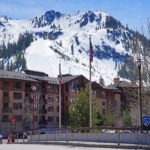
Mount Kosciuszko

🏔️ Overview
Mount Kosciuszko is the highest mountain on the Australian mainland, rising to 2,228 meters (7,310 feet) in southern New South Wales. It stands within Kosciuszko National Park, where the rolling uplands of the Snowy Mountains form the loftiest section of Australia’s Great Dividing Range.
Unlike the sharply pointed summits associated with younger mountain systems, Mount Kosciuszko has a broad, rounded profile shaped by long periods of uplift, weathering, erosion, and past glacial activity. Its relatively gentle terrain makes it one of the world’s most accessible continental high points.
Several established walking tracks lead to the summit. The shortest popular option begins above Thredbo after a chairlift ride, while longer routes depart from Charlotte Pass and cross some of mainland Australia’s finest alpine scenery.
Mount Kosciuszko is also included in one version of the Seven Summits challenge, although climbers using the wider Oceania definition generally substitute Indonesia’s much higher and more technical Puncak Jaya.

⚡ Fast Facts
| Fact | Details |
|---|---|
| Continent | Australia, commonly grouped within Oceania |
| Country | Australia |
| State/Province | New South Wales |
| County/Region | Snowy Monaro region |
| Mountain Range | Main Range, Snowy Mountains, Great Dividing Range |
| Parent Peak | None—Mount Kosciuszko is the highest point on the Australian mainland |
| Elevation | 2,228 meters / 7,310 feet |
| Prominence | 2,228 meters / 7,310 feet |
| Isolation | 1,894.26 kilometers / 1,177.04 miles |
| Nearest Higher Neighbor (NHN) | Mount Tutoko, New Zealand |
| Coordinates | 36.4558° S, 148.2635° E |
| Protected Area | Kosciuszko National Park |
| Easiest Route | Kosciuszko Walk from the top of the Thredbo chairlift |
| First Recorded European Ascent | Paul Edmund Strzelecki, 1840 |

📍 Location
Mount Kosciuszko lies in the southern part of New South Wales, close to the border with Victoria. The mountain is part of the Main Range, the highest group of summits in the Snowy Mountains and the loftiest section of the Great Dividing Range.
The nearest major gateway town is Jindabyne, which provides accommodation, shops, visitor information, and road access toward Thredbo, Perisher, and Charlotte Pass. Canberra lies to the northeast, while the Victorian High Country extends south of the summit.
Mount Kosciuszko is surrounded by many of mainland Australia’s highest mountains, including Mount Townsend, Mount Twynam, Rams Head, Carruthers Peak, and Etheridge Ridge. Although these peaks are modest by Himalayan or Alpine standards, their exposed terrain, severe weather, and fragile ecosystems create a distinctly alpine environment.
The Naming of Mount Kosciuszko
Polish explorer and scientist Paul Edmund Strzelecki named the mountain in 1840 after Tadeusz Kościuszko, a Polish military leader who fought in both the Polish struggle for independence and the American Revolutionary War.
Strzelecki reportedly believed that the mountain’s form resembled the Kościuszko Mound in Kraków, Poland. The spelling was later Anglicized as “Kosciusko,” but the official spelling Kosciuszko, including the second “z,” was restored in New South Wales in 1997.
The mountain and surrounding high country are part of the traditional Country of the Ngarigo people. Aboriginal communities traveled through and gathered in the Australian Alps long before European exploration, particularly during seasonal Bogong moth migrations.

📏 Elevation & Prominence
Mount Kosciuszko reaches an elevation of 2,228 meters, making it the highest point in mainland Australia and the highest summit in the Great Dividing Range. It ranks first on the list of the highest peaks of the Great Dividing Range, narrowly exceeding nearby Mount Townsend, which rises to approximately 2,209 meters.
Because Australia is a separate landmass surrounded by sea, Mount Kosciuszko has a topographic prominence equal to its elevation: 2,228 meters. This qualifies it as an ultra-prominent peak, meaning it has at least 1,500 meters of prominence.
Its topographic isolation is approximately 1,894 kilometers. The nearest higher mountain is Mount Tutoko in New Zealand’s Southern Alps, across the Tasman Sea. This exceptional isolation places Mount Kosciuszko among the world’s most geographically independent summits.
Readers unfamiliar with these measurements can learn more in What Is Mountain Prominence? and Mountain Elevation vs. Prominence.
Is Mount Kosciuszko the Highest Mountain in Australia?
Mount Kosciuszko is the highest mountain on the Australian mainland, but the answer becomes more complicated when Australia’s external territories are included.
Mawson Peak on Heard Island rises to approximately 2,745 meters and is therefore the highest mountain in territory administered by Australia. However, Heard Island lies far out in the southern Indian Ocean and is not part of the Australian mainland.
In geographic definitions that treat New Guinea as part of the Australian continent or Oceania, Puncak Jaya in Indonesia is considerably higher at 4,884 meters. This difference explains why both Mount Kosciuszko and Puncak Jaya appear on different versions of the Seven Summits list.
🪨 Geology
Mount Kosciuszko forms part of an ancient landscape rather than a young, rapidly rising mountain chain. The Australian Alps developed through broad crustal uplift and prolonged erosion along the eastern edge of the continent.
Granite is prominent around the summit and appears in weathered boulders, outcrops, and rounded tors. These rocks originated as molten material that cooled beneath Earth’s surface before later uplift and erosion exposed them.
Although Australia has no modern glaciers, the highest parts of the Snowy Mountains preserve evidence of colder periods during the Pleistocene. Small glaciers and persistent snowfields once occupied parts of the Main Range, leaving cirques, moraines, glacial lakes, and other erosional features.
Nearby Lake Cootapatamba occupies a glacial basin below Mount Kosciuszko, while Blue Lake is one of the clearest examples of a glacial lake on mainland Australia. The Main Range Walk provides some of the best opportunities to observe these features.
Mount Kosciuszko was not formed by recent volcanic activity. Its rounded summit is the product of ancient rock formation, regional uplift, frost action, glaciation, and millions of years of erosion. The broader process is explained in How Are Mountains Formed?.
🌿 Flora & Fauna

Mount Kosciuszko rises above the natural treeline into mainland Australia’s limited alpine zone. The summit landscape supports low-growing plants adapted to cold temperatures, persistent winds, intense sunlight, shallow soils, and a short growing season.
Common vegetation communities around the mountain include alpine herbfields, heathlands, feldmark, bogs, and fens. During early summer, the high country can produce colorful displays of silver snow daisies, marsh marigolds, mountain buttercups, billy buttons, and other alpine wildflowers.
Snow gums grow at lower elevations but disappear as conditions become too exposed near the summit. Above the treeline, plants remain close to the ground, where they receive some protection from wind and conserve heat.
The wider Kosciuszko National Park provides habitat for several rare or threatened animals, including:
- Mountain pygmy-possums
- Broad-toothed rats
- Southern corroboree frogs
- Alpine she-oak skinks
- Migratory Bogong moths
- Wedge-tailed eagles
- Eastern grey kangaroos and wallabies at lower elevations
Some of these species occupy specialized habitats away from the busy summit trail and are unlikely to be seen during an ordinary day hike.
The alpine environment is extremely fragile. Walkers should remain on constructed tracks and metal walkways, avoid stepping into wetland vegetation, and never pick wildflowers. Damage caused by a single footprint can take years to disappear in the short alpine growing season.
🥾 Hiking & Climbing Routes
Mount Kosciuszko does not require technical climbing during normal summer conditions. Its established tracks make it approachable for hikers, although the distances, exposure, and rapidly changing weather should not be underestimated.
| Route | Distance | Typical Time | Grade | Starting Point |
|---|---|---|---|---|
| Kosciuszko Walk from Thredbo | 13 km return | 4–5 hours | Grade 3 | Top of Kosciuszko Express chairlift |
| Mount Kosciuszko Summit Walk | 18.6 km return | 6–8 hours | Grade 3 | Charlotte Pass |
| Main Range Walk | 22 km loop | 7–9 hours | Grade 4 | Charlotte Pass |
| Snowies Alpine Walk | 56 km | Several days | Grades 3–4 | Guthega to Bullocks Flat |
Kosciuszko Walk from Thredbo
The Thredbo route is the shortest and most popular way to reach the summit. Hikers take the Kosciuszko Express chairlift from Thredbo Village and begin walking from its upper station.
The formed track crosses exposed alpine terrain, passing granite outcrops, the headwaters of the Snowy River, Lake Cootapatamba viewpoints, and Rawson Pass. From Rawson Pass, the final 1.4 kilometers follow a gradual climb to the summit.
The route is approximately 13 kilometers return and usually takes four to five hours, excluding chairlift waiting times and extended stops.
Mount Kosciuszko Summit Walk from Charlotte Pass
The Charlotte Pass route follows the old summit road for approximately 18.6 kilometers return. It passes the Snowy River, historic Seamans Hut, and Rawson Pass before reaching the summit.
Walking normally takes six to eight hours. Bicycles are permitted between Charlotte Pass and Rawson Pass, but riders must leave their bicycles at the provided stands and complete the final summit section on foot.
The broad track and gradual gradients make this a straightforward route in stable summer weather, although its length requires adequate food, water, sun protection, and spare clothing.
Main Range Walk
The Main Range Walk is the most scenic and demanding standard approach. This 22-kilometer loop begins at Charlotte Pass and travels through the heart of the alpine landscape.
Highlights include the Snowy River crossing, Blue Lake, Carruthers Peak, views across the Western Fall, Lake Albina, and the exposed Main Range ridge. The route eventually joins the summit trail near Rawson Pass and includes an ascent of Mount Kosciuszko.
The walk is graded more difficult than the two standard summit routes and usually requires seven to nine hours. Snow, strong winds, high water at the Snowy River crossing, and poor visibility can make it significantly harder.
Snowies Alpine Walk
The Snowies Alpine Walk is a multi-day route through Kosciuszko National Park. The approximately 56-kilometer journey links Guthega, Charlotte Pass, the Main Range, Perisher, and Bullocks Flat.
It includes Mount Kosciuszko while providing a broader experience of alpine wetlands, glacial landforms, wildflower meadows, snow gum forests, historic sites, and the park’s other high peaks.
🏔️ Field Guide Tip: Even on a warm morning, carry rain protection, an insulating layer, sun protection, water, navigation tools, and the other Ten Essentials for Hiking. Temperatures can fall quickly when wind, cloud, or precipitation reaches the exposed Main Range.

🌤️ Best Time to Visit
The best period for ordinary hiking is generally December through March, when the main tracks are most likely to be free of deep snow and road access is more dependable.
December to February
Summer provides the warmest temperatures, longest daylight hours, operating chairlifts, and the greatest likelihood of snow-free walking tracks. Alpine wildflowers commonly bloom during the early part of the season.
Summer is also the busiest period. Starting early helps hikers avoid crowds and reduces exposure to afternoon weather changes.
March to April
Early autumn can offer cooler temperatures, fewer visitors, and clear conditions. However, daylight becomes shorter and snow or ice may arrive with little warning.
May to November
Winter conditions can persist well beyond the official ski season. The mountain is commonly snowbound between June and October, and the walking tracks may be difficult or impossible to follow.
Winter travel requires appropriate experience with snow, navigation, cold-weather clothing, and emergency planning. Cross-country skis or snowshoes may be necessary, and the routes are not continuously marked with snow poles.
Weather on Mount Kosciuszko can change during any month. Visitors should check national park alerts, road closures, chairlift operations, fire conditions, and forecasts before setting out.

🧭 Nearby Mountains & Attractions
Mount Townsend
Mount Townsend is Australia’s second-highest mainland mountain at approximately 2,209 meters. Its rocky summit and steeper slopes give it a more dramatic appearance than Mount Kosciuszko, although reaching it generally involves rougher and less-developed terrain.
Mount Twynam
Mount Twynam rises to approximately 2,195 meters and is the third-highest mountain on the Australian mainland. It stands near Blue Lake and the northern section of the Main Range.
Rams Head
Rams Head is one of Australia’s highest mountains and forms part of the rugged Ramshead Range southwest of the main Kosciuszko summit route.
Blue Lake
Blue Lake occupies a glacial cirque beneath the Main Range. It is protected as an internationally significant Ramsar wetland and is one of mainland Australia’s best-preserved glacial lakes.
Lake Cootapatamba
Located below Mount Kosciuszko’s southern slopes, Lake Cootapatamba is often described as the highest lake on the Australian mainland. It occupies a small glacial basin visible from sections of the Thredbo summit route.
Seamans Hut
Seamans Hut is a stone emergency shelter beside the Charlotte Pass summit route. It was built in 1929 following the deaths of two skiers, William Laurie Seaman and Evan Hayes.
The hut is intended primarily for emergency use and should not be treated as guaranteed overnight accommodation.
Thredbo and Charlotte Pass
Thredbo is a major alpine resort offering chairlift access, accommodation, restaurants, and numerous walking and mountain-biking routes. Charlotte Pass provides access to the Summit Walk and Main Range Walk and is Australia’s highest permanent settlement.
Jindabyne
Jindabyne is the principal gateway town for the southern section of Kosciuszko National Park. It offers visitor services, equipment shops, accommodation, and access to Lake Jindabyne.

💡 Fun Facts
- Mount Kosciuszko is the highest summit in New South Wales, the Snowy Mountains, the Great Dividing Range, and mainland Australia.
- Its prominence equals its elevation because the mountain’s prominence key col is effectively at sea level.
- The nearest higher mountain is across the Tasman Sea in New Zealand rather than elsewhere in Australia.
- Mount Kosciuszko is an ultra-prominent peak despite its rounded and relatively gentle appearance.
- It is included on the Bass version of the Seven Summits, which uses mainland Australia as the continent’s geographic unit.
- The Messner version of the Seven Summits uses Puncak Jaya, the highest mountain of the wider Australia–Oceania region.
- The mountain’s official spelling regained the letter “z” in 1997, changing “Kosciusko” to “Kosciuszko.”
- Several of mainland Australia’s highest mountains stand within only a few kilometers of the summit.
- The summit can occasionally receive snow even during the warmer months.
- Metal walkways protect sensitive alpine vegetation along parts of the Thredbo route.

❓ Frequently Asked Questions
How high is Mount Kosciuszko?
Mount Kosciuszko is 2,228 meters, or approximately 7,310 feet, above sea level.
Is Mount Kosciuszko the highest mountain in Australia?
It is the highest mountain on the Australian mainland. Mawson Peak on Heard Island is higher when Australia’s external territories are included.
Is Mount Kosciuszko one of the Seven Summits?
Yes, under the Bass list, which uses mainland Australia. The Messner list uses Puncak Jaya as the highest mountain of the wider Oceania region.
How difficult is the Mount Kosciuszko hike?
The standard summer routes are nontechnical formed walks. The Thredbo route is approximately 13 kilometers return, while the Charlotte Pass route is 18.6 kilometers return. Distance, exposure, wind, cold, and rapid weather changes remain important considerations.
How long does it take to climb Mount Kosciuszko?
The Thredbo route generally takes four to five hours. The Charlotte Pass Summit Walk normally takes six to eight hours, while the Main Range loop can require seven to nine hours.
Can beginners climb Mount Kosciuszko?
Beginners with suitable fitness can often complete the Thredbo route in favorable summer conditions. They should still carry adequate equipment, monitor the weather, and understand that the summit is exposed.
Can children hike Mount Kosciuszko?
Many active families complete the Thredbo route, but suitability depends on the child’s fitness, experience, the weather, and the group’s ability to manage a 13-kilometer walk.
Does Mount Kosciuszko have snow?
Yes. Snow commonly covers the mountain during winter and may persist into spring. Snow, ice, and freezing weather are possible outside the main winter period as well.
Do you need a permit to climb Mount Kosciuszko?
A special climbing permit is not normally required for an ordinary day hike, but Kosciuszko National Park entry fees may apply. The Thredbo chairlift requires a separate ticket.
Can you drive to the summit?
No. The summit can only be reached on foot. Cyclists using the Charlotte Pass route must leave their bicycles at Rawson Pass and walk the final 1.4 kilometers.
Are dogs allowed on Mount Kosciuszko?
Domestic pets are generally prohibited in Kosciuszko National Park, with limited exceptions such as approved assistance animals.
Why is Mount Kosciuszko not pointed?
The mountain is part of an ancient, heavily eroded landscape. Long-term weathering, frost action, uplift, and erosion created a broad summit rather than a sharp young peak.
🔗 Related Articles
- The Great Dividing Range
- Highest Peaks of the Great Dividing Range
- Snowy Mountains
- Rams Head
- Seven Summits: Climbing the Highest Peak on Every Continent
- Puncak Jaya
- Highest Mountains by Continent
- What Is Mountain Prominence?
- Mountain Elevation vs. Prominence
- The Ten Essentials for Hiking
📚 Sources
- Peakbagger — Mount Kosciuszko
- NSW National Parks — Kosciuszko Walk: Thredbo to Mount Kosciuszko
- NSW National Parks — Mount Kosciuszko Summit Walk
- NSW National Parks — Main Range Walk
- Australian Government — Australian Alps National Parks and Reserves
- Australian Dictionary of Biography — Sir Paul Edmund de Strzelecki