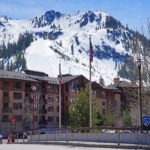
South Africa has one of the most varied mountain landscapes on the African continent. Towering basalt cliffs rise along the border with Lesotho, folded sandstone ranges cross the Western Cape, and ancient ridges overlook the densely populated regions around Johannesburg and Pretoria.
The country’s mountains range from the high, rugged Drakensberg to the unmistakable flat summit of Table Mountain. They protect exceptional plant and animal communities, supply water to major river systems, preserve thousands of years of rock art, and provide some of southern Africa’s finest hiking and climbing destinations.
🏔️ Overview
Most of South Africa’s highest mountains are concentrated in the Drakensberg, where the Great Escarpment reaches its greatest elevations. The range forms much of the boundary between South Africa and the mountain kingdom of Lesotho.
South Africa’s national high point is Mafadi, a 3,451-meter summit on the KwaZulu-Natal–Lesotho border. Although Mafadi is lower than several summits entirely within Lesotho, it is the highest point reached by South African territory.
Away from the Drakensberg, the country contains several other important mountain systems. The Cape Fold Mountains dominate the southwest, while the Magaliesberg, Waterberg, Soutpansberg, Cederberg, Sneeuberg, and Swartberg ranges add considerable geological and ecological diversity.
⚡ Fast Facts
| Fact | Details |
|---|---|
| Continent | Africa |
| Country | South Africa |
| Highest point | Mafadi |
| Highest-point elevation | 3,451 m (11,322 ft) |
| Highest-point province | KwaZulu-Natal |
| Border status | Mafadi stands on the South Africa–Lesotho border |
| Dominant high range | Drakensberg |
| Other major systems | Cape Fold Mountains, Great Escarpment, Magaliesberg, Waterberg and Soutpansberg |
| Most famous mountain | Table Mountain |
| Major mountain World Heritage sites | Maloti-Drakensberg Park and Cape Floral Region Protected Areas |
| Popular activities | Hiking, climbing, trail running, birdwatching and rock-art viewing |
Mafadi has relatively modest topographic prominence compared with some lower South African mountains. As a result, lists based on independent summits may differ from rankings based only on elevation.
📍 Where Are South Africa’s Mountains?
South Africa’s mountains are distributed across several broad regions:
- Eastern and southeastern South Africa: The Drakensberg and other sections of the Great Escarpment cross KwaZulu-Natal, the Eastern Cape, Mpumalanga and Limpopo.
- Western and southern Cape: The Cape Fold Mountains include the Cederberg, Hex River Mountains, Swartberg, Langeberg, Outeniqua Mountains and several smaller ranges.
- Northern interior: The Magaliesberg, Waterberg and Soutpansberg rise across Gauteng, North West and Limpopo.
- Central interior: Isolated massifs and highlands include the Sneeuberg, Nuweveld Mountains and Roggeveld escarpment.
The Drakensberg continues into neighboring Eswatini and is closely connected with the Maloti Mountains of Lesotho.
📏 Ten Highest Mountains and Named High Points in South Africa
The following table ranks ten of the highest named elevations associated with South African territory. Most are located in the High Drakensberg of KwaZulu-Natal.
Some entries are border summits or subsidiary high points rather than highly prominent independent mountains. Elevations and spellings can also differ slightly among maps and databases.
| Rank | Mountain or high point | Elevation | Range | Province or area |
|---|---|---|---|---|
| 1 | Mafadi | 3,451 m (11,322 ft) | Drakensberg | KwaZulu-Natal–Lesotho border |
| 2 | Njesuthi, or Injasuti Dome | 3,410 m (11,188 ft) | Drakensberg | KwaZulu-Natal–Lesotho border |
| 3 | Champagne Castle | 3,377 m (11,079 ft) | Drakensberg | KwaZulu-Natal |
| 4 | Lithobolong | 3,375 m (11,073 ft) | Drakensberg | High Drakensberg |
| 5 | kaNtuba Peak | 3,366 m (11,043 ft) | Drakensberg | High Drakensberg |
| 6 | Trojan Wall | 3,354 m (11,004 ft) | Drakensberg | High Drakensberg |
| 7 | kaNtuba Buttress | 3,344 m (10,971 ft) | Drakensberg | High Drakensberg |
| 8 | Yodler’s Peak I | 3,338 m (10,951 ft) | Drakensberg | KwaZulu-Natal |
| 9 | Yodler’s Peak II | 3,338 m (10,951 ft) | Drakensberg | KwaZulu-Natal |
| 10 | Pampiring | 3,337 m (10,948 ft) | Drakensberg | KwaZulu-Natal |
Is Mafadi the Highest Mountain in South Africa?
Mafadi is unquestionably the highest point in South Africa, but it is not a sharply separated mountain. Its summit rises only modestly above the high plateau connecting it with higher terrain in Lesotho.
This distinction explains why some sources describe Champagne Castle as one of South Africa’s highest independently defined mountains. For general geographic purposes, however, Mafadi remains the recognized national high point.
⛰️ Major Mountain Ranges in South Africa
Drakensberg
The Drakensberg is South Africa’s highest and most dramatic mountain range. Its name means “Dragon Mountains” in Afrikaans, while the Zulu name uKhahlamba is commonly translated as “Barrier of Spears.”
High basalt walls, deep valleys, pinnacles and broad summit plateaus characterize the KwaZulu-Natal Drakensberg. Notable landmarks include:
- Mafadi
- Champagne Castle
- Giant’s Castle
- Cathedral Peak
- Mont-aux-Sources
- The Amphitheatre
- Sentinel Peak
- Monk’s Cowl
- Rhino Peak
The Maloti-Drakensberg Park protects a large section of the range. The transboundary World Heritage property combines South Africa’s uKhahlamba Drakensberg Park with Sehlabathebe National Park in Lesotho.
Cape Fold Mountains
The Cape Fold Mountains form a series of parallel ranges across the Western and Eastern Cape. Their hard sandstone ridges were folded and uplifted by ancient tectonic forces before being sculpted by prolonged erosion.
Major Cape Fold ranges include:
- Cederberg
- Hex River Mountains
- Du Toits Mountains
- Hottentots Holland Mountains
- Langeberg
- Riviersonderend Mountains
- Swartberg
- Outeniqua Mountains
- Tsitsikamma Mountains
These ranges contain steep passes, narrow ravines, exposed ridges and extensive fynbos vegetation. Their development is a useful regional example of the processes described in How Are Mountains Formed?
Cederberg Mountains
The Cederberg lies north of Cape Town and is known for reddish sandstone, unusual rock formations and San rock-art sites. Wolfberg Arch, the Wolfberg Cracks and the Maltese Cross are among its best-known natural landmarks.
The region is also internationally recognized for rock climbing and bouldering. Many routes cross remote wilderness with limited water, minimal infrastructure and little cellphone reception.
Swartberg
The Swartberg rises between the Great Karoo and Little Karoo. Its folded rock layers are especially visible along the Swartberg Pass, where tilted sandstone formations create one of South Africa’s most striking mountain roads.
The range’s highest summit, Seweweekspoortpiek, reaches approximately 2,325 meters. It is also one of the country’s most topographically prominent mountains.
Table Mountain and the Cape Peninsula
Table Mountain rises to 1,085 meters above Cape Town. It is far lower than the Drakensberg peaks, but its steep sides, broad summit and coastal setting make it South Africa’s most recognizable mountain.
The highest point is marked by Maclear’s Beacon. Table Mountain has approximately 1,068 meters of prominence, making it a much more independently defined landform than many of the country’s higher plateau summits.
The surrounding Table Mountain National Park extends along the Cape Peninsula and includes Lion’s Head, Signal Hill, Devil’s Peak and the mountainous landscapes approaching Cape Point.
Magaliesberg
The Magaliesberg is an ancient quartzite range between Pretoria, Johannesburg and Rustenburg. Although its elevations are moderate, it rises sharply above the surrounding plains.
The Magaliesberg Biosphere Reserve occupies a transitional zone between grassland and savanna. Its cliffs, kloofs and ridges support hundreds of bird species as well as mammals such as klipspringer, sable antelope, brown hyena and leopard.
Waterberg and Soutpansberg
The Waterberg is a broad plateau and mountain region in Limpopo known for sandstone cliffs, savanna and wildlife reserves. Farther north, the Soutpansberg forms a distinctive east–west range containing forests, grasslands, rocky summits and exceptionally diverse plant communities.
These northern ranges are lower than the Drakensberg but contain some of South Africa’s most ecologically varied mountain habitats.
Sneeuberg and Compassberg
The Sneeuberg rises in the Eastern Cape and includes Compassberg, one of the most prominent mountains in South Africa’s central interior. Reaching about 2,502 meters, Compassberg stands above the surrounding Karoo landscape and is visible from a considerable distance.
🪨 Geology
South Africa’s mountains were not created by a single geological event.
The Drakensberg’s upper cliffs consist largely of basalt produced by enormous volcanic eruptions associated with the breakup of Gondwana. Beneath the basalt are layers of sedimentary rock, including prominent sandstone formations. Erosion later carved the escarpment into buttresses, pinnacles and deep river valleys.
The Cape Fold Mountains are considerably older. Their resistant sandstone layers were compressed, folded and uplifted during the formation of the Cape Fold Belt. Weathering and erosion exposed the tilted strata seen in the Swartberg, Cederberg and other Cape ranges.
Northern ranges such as the Magaliesberg contain extremely old quartzite formations. Their hard rocks have resisted erosion more effectively than the surrounding landscape, leaving long, narrow ridges.
🌿 Flora and Fauna
South Africa’s mountain habitats support extraordinary biodiversity.
The Cape mountains lie within the Cape Floristic Region, one of the world’s richest areas for plant diversity and endemism. Fynbos communities contain proteas, ericas, restios and thousands of other plant species adapted to nutrient-poor soils and periodic fire.
The Drakensberg protects high-altitude grasslands, wetlands, alpine vegetation and isolated forest patches. More than 250 endemic plant species have been recorded within the Maloti-Drakensberg World Heritage property.
Mountain wildlife may include:
- Eland
- Klipspringer
- Mountain reedbuck
- Grey rhebok
- Baboons
- Caracals
- Leopards
- Cape vultures
- Bearded vultures
- Verreaux’s eagles
- Drakensberg rockjumpers
The Magaliesberg and northern mountain regions support savanna animals alongside species associated with rocky slopes, forests and sheltered ravines.
🥾 Hiking and Climbing
South Africa offers everything from short urban hikes to demanding multi-day mountain expeditions.
Popular Mountain Hikes
Platteklip Gorge: A steep but direct route to the top of Table Mountain. The trail is straightforward but exposed to sun, wind and rapidly changing weather.
Lion’s Head: A popular Cape Town hike with panoramic views of Table Mountain, the city and the Atlantic coast. Upper sections include steep rock and fixed climbing aids.
Amphitheatre and Tugela area: Routes in the northern Drakensberg lead toward the escarpment above the Amphitheatre and the Tugela Falls area. Some approaches include steep terrain and chain ladders.
Cathedral Peak: A strenuous Drakensberg summit route involving exposed scrambling and significant elevation gain.
Giant’s Castle: This protected region offers shorter walks, multi-day routes and access toward the high escarpment.
Mafadi: Reaching South Africa’s highest point normally requires a demanding multi-day expedition. Routes may use passes such as Leslie’s Pass or Corner Pass and cross remote, poorly marked high terrain.
Wolfberg Arch and Cracks: These Cederberg routes lead through dramatic sandstone formations. Permits and route-specific access rules may apply.
Swartberg trails: Routes range from short nature walks to exposed mountain traverses through dry and rugged terrain.
🏔️ Field Guide Tip: Mountain conditions in South Africa can change surprisingly quickly. Carry the Ten Essentials for Hiking, leave a route plan with a reliable contact and avoid assuming that warm conditions at the trailhead will continue at higher elevations.
🌤️ Best Time to Visit
The best season depends on the region.
Drakensberg
April through May and September through October often provide comfortable hiking temperatures. Summer brings greener scenery and fuller waterfalls but also heat, cloud, heavy rain and afternoon thunderstorms.
Winter can produce clear days, freezing nights, ice and occasional heavy snow on the escarpment. High routes should be attempted only with suitable experience and equipment.
Western Cape Mountains
Spring and autumn are generally comfortable for hiking. Western Cape winters are cooler and wetter, while summer conditions can become extremely hot and dry.
Wildflower displays are often impressive during late winter and spring, although timing varies by location and rainfall.
Northern Ranges
The cooler, drier winter months are often preferable in the Magaliesberg, Waterberg and Soutpansberg. Summer can be hot, humid and stormy.
🎨 Cultural and Historical Importance
South Africa’s mountains preserve an exceptional record of human history.
The Maloti-Drakensberg Park contains hundreds of rock-art sites and tens of thousands of individual images. Many were created by San communities over thousands of years and portray people, animals, hunting scenes and spiritual traditions.
The Cederberg and other Cape ranges also contain important San and Khoekhoe archaeological sites.
Several lower mountains and hills are associated with major historical events. Isandlwana and Spion Kop, for example, are remembered primarily for battles rather than for their elevation.
💡 Interesting Facts
- South Africa’s ten highest named elevations are all associated with the Drakensberg.
- Mafadi is lower than Thabana Ntlenyana, the highest mountain in neighboring Lesotho and southern Africa.
- Table Mountain is only 1,085 meters high but has more than 1,000 meters of topographic prominence.
- The Drakensberg forms an important watershed between rivers flowing toward the Indian and Atlantic oceans.
- Snow can fall in the Drakensberg and other high ranges during the Southern Hemisphere winter.
- The Cape mountains contain one of the richest concentrations of plant species found anywhere on Earth.
- The Magaliesberg lies close to major urban areas but retains significant areas of natural habitat.
- Some South African peaks above 3,000 meters are known locally as Khulus, although specific spacing and qualification rules are used.
❓ Frequently Asked Questions
What is the highest mountain in South Africa?
Mafadi is South Africa’s highest point at 3,451 meters. It stands on the border between KwaZulu-Natal and Lesotho.
Is Table Mountain the highest mountain in South Africa?
No. Table Mountain reaches 1,085 meters, less than one-third of Mafadi’s elevation. It is famous because of its flat summit, prominent form and location above Cape Town.
What is the largest mountain range in South Africa?
The Drakensberg is the country’s most extensive major highland system and the highest section of the Great Escarpment.
Are the Drakensberg Mountains in Lesotho or South Africa?
They extend through South Africa and along its borders with Lesotho. The highest peak of the broader Drakensberg–Maloti system, Thabana Ntlenyana, lies entirely within Lesotho.
Does it snow in South Africa’s mountains?
Yes. Snow falls most frequently in the Drakensberg, Maloti highlands and other elevated parts of the Eastern and Western Cape. Snowfall is irregular and can disappear quickly at lower elevations.
Can beginners hike in South Africa’s mountains?
Yes. Table Mountain National Park, Golden Gate Highlands National Park and several Drakensberg reserves have shorter trails suitable for less experienced hikers. Routes should still be selected carefully, as weather, heat and navigation can create serious hazards.
Is it safe to hike alone?
Official park guidance generally recommends hiking in groups, sharing an itinerary and checking local safety information. Anyone separated from a route should follow the principles in What to Do If You Get Lost Hiking.
🔗 Related Articles
- Mountains in Lesotho
- Mountains in Eswatini
- Mountains in Namibia
- Mountains in Mozambique
- What Is Mountain Prominence?
- How Are Mountains Formed?
📚 Sources
- Mafadi — Peakbagger
- Southern Africa 3,300-Meter Peaks — Peakbagger
- List of Mountains in South Africa
- Maloti-Drakensberg Park — UNESCO World Heritage Centre
- Cape Floral Region Protected Areas — UNESCO World Heritage Centre
- Magaliesberg Biosphere Reserve — UNESCO
- Table Mountain National Park — South African National Parks
- Cederberg Wilderness Area — CapeNature