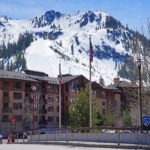
Rees Peak

Rees Peak is an 11,476-foot (3,498-meter) summit in the San Francisco Peaks of northern Arizona. Rising north of Flagstaff within the Kachina Peaks Wilderness and Coconino National Forest, it is part of the high volcanic ridge that also includes Humphreys Peak, Agassiz Peak, Fremont Peak, and Aubineau Peak.
Although Rees Peak has relatively little topographic prominence, its elevation places it among Arizona’s very highest summits. It is especially appealing to peakbaggers exploring the lesser-known high points of the San Francisco Peaks, where forests, volcanic ridges, alpine weather, and sweeping views create a landscape unlike the deserts commonly associated with Arizona.
⚡ Fast Facts
| Feature | Details |
|---|---|
| Country | United States |
| State | Arizona |
| County | Coconino County |
| Mountain Range | San Francisco Peaks |
| Elevation | 11,476 ft / 3,498 m |
| Prominence | 188 ft / 57 m |
| Isolation | 0.32 mi / 0.51 km |
| Parent Peak | Aubineau Peak |
| Nearest Higher Neighbor (NHN) | Aubineau Peak |
| Protected Area | Kachina Peaks Wilderness |
| National Forest | Coconino National Forest |
| Coordinates | 35.35605° N, 111.65191° W |
Peakbagger’s LiDAR-based measurements place the summit at 11,476.3 feet, with 188.2 feet of prominence and only about 0.32 mile of isolation. Aubineau Peak, immediately to the west, is its nearest higher neighbor.
🏔️ One of Arizona’s Highest Summits
Rees Peak may not have the prominence of Arizona giants such as Humphreys Peak, but its summit is remarkably high. By elevation, it sits just below Humphreys, Agassiz, Fremont, and Aubineau and slightly above nearby Doyle Peak.
Its 188 feet of prominence means Rees is generally treated as an unranked summit rather than an independent ranked mountain on lists that require roughly 280 feet of prominence. That distinction does little to diminish its interest for hikers exploring the complete collection of high summits around the San Francisco Peaks.
🌋 Volcanic Origins
Rees Peak is part of the remains of the enormous San Francisco Mountain composite volcano. The modern San Francisco Peaks are fragments of what was once a substantially larger volcanic mountain.
Volcanic activity at San Francisco Mountain began roughly 1.3 million years ago and continued until about 100,000 years ago. The volcano developed through repeated eruptions that deposited alternating layers of lava and volcanic material. At some point late in its history, a major collapse dramatically altered the mountain, producing the broad Inner Basin and leaving behind the collection of high summits visible today.
The larger San Francisco Volcanic Field extends across northern Arizona and contains more than 600 volcanic vents. Rees Peak therefore occupies one small part of one of the most extensive and geologically fascinating volcanic landscapes in the American Southwest.
🌲 Forests and High-Elevation Habitat
Rees Peak rises through the cool, forested environment of the northern San Francisco Peaks. Mixed-conifer forest and extensive stands of aspen cover much of the lower terrain, with vegetation becoming increasingly sparse and wind-exposed toward the upper ridges.
One of the most striking times to explore this side of the range is autumn, when the aspen groves turn brilliant shades of yellow and gold. The contrast between the changing leaves, dark conifers, and volcanic slopes makes the northern San Francisco Peaks one of Arizona’s most distinctive mountain landscapes.
Because Rees Peak lies within the Kachina Peaks Wilderness, visitors should treat the area as sensitive backcountry. The wilderness protects most of the upper San Francisco Peaks and their forests, meadows, volcanic terrain, and high-elevation ecosystems.
🥾 Hiking Rees Peak
There is no straightforward maintained trail leading directly to the summit of Rees Peak. Reaching it is therefore considerably more involved than hiking a developed summit trail such as the route to Humphreys Peak.
One possible approach uses the trail system on the north side of the San Francisco Peaks. The Abineau and Bear Jaw trails climb steeply through mixed-conifer and aspen forest and reach Waterline Road high on the mountain. The official Abineau–Bear Jaw Loop itself provides an impressive backcountry hike without requiring an off-trail summit attempt.
Peakbaggers attempting Rees typically continue beyond maintained trail routes and negotiate steep forest, talus, and ridgeline terrain. A combined outing involving Aubineau Peak and Rees Peak is possible because the two summits occupy the same northeastern ridge system, but such an excursion requires considerably more navigation and backcountry experience than the established loop below.
Anyone considering the summit should carry a detailed topographic map or reliable GPS navigation, prepare for off-trail travel, and check current Coconino National Forest restrictions before setting out.
🌄 Views From Rees Peak
Rees Peak’s position gives it an unusually intimate perspective on the higher San Francisco Peaks. Aubineau Peak rises immediately to the west, while the larger massif containing Humphreys Peak dominates the skyline beyond.
Other nearby summits include Fremont Peak, Agassiz Peak, and Doyle Peak. On clear days, the broad Colorado Plateau stretches away from the mountains, emphasizing just how abruptly the San Francisco Peaks rise above the surrounding country.
The nearby Abineau and Bear Jaw trails can even provide distant views toward the Grand Canyon, approximately 70 miles away.
🍂 Best Time to Visit
For most hikers, late summer through early fall offers the most practical conditions around Rees Peak. Snow can persist at high elevations well into spring, while winter transforms the upper mountain into a much more serious backcountry environment.
Summer brings warmer temperatures but also Arizona’s monsoon season. Thunderstorms can develop quickly over the high country, making early starts important when traveling on exposed ridges.
September and early October can be especially beautiful. Cooler temperatures, generally diminishing thunderstorm activity, and changing aspens combine to make autumn one of the most rewarding seasons on the north side of the San Francisco Peaks.
Regardless of season, conditions above 11,000 feet can be dramatically colder and windier than in Flagstaff. Extra layers, sufficient water, sun protection, and weather awareness are essential.
🏞️ Kachina Peaks Wilderness
Rees Peak lies within the Kachina Peaks Wilderness, a protected high-country landscape surrounding much of the upper San Francisco Peaks. The region contains some of Arizona’s highest terrain and encompasses forests, alpine environments, volcanic formations, and the great Inner Basin.
The San Francisco Peaks are also culturally and spiritually significant to numerous Indigenous peoples of the Southwest. Visitors should approach the mountains with particular respect, remain on established routes where possible, minimize disturbance, and follow Leave No Trace practices.
📸 What Makes Rees Peak Special?
Rees Peak is easy to overlook beside the much more famous Humphreys Peak, but that is part of its appeal. It offers a quieter perspective on Arizona’s highest mountain range and helps reveal that the San Francisco Peaks are not a single summit but a complex volcanic massif composed of numerous ridges and high points.
Its close relationship with Aubineau Peak, limited prominence, remote summit, and elevation above 11,000 feet make Rees particularly interesting to dedicated Arizona peakbaggers. For everyone else, the surrounding trails provide an opportunity to experience the same remarkable landscape without necessarily reaching the summit itself.
Rees Peak is a reminder that some of the most fascinating mountains are not necessarily the biggest or most prominent. Sometimes they are the quieter summits tucked along the ridge between better-known neighbors.
🔗 Related Articles
- Aubineau Peak
- San Francisco Peaks
- Humphreys Peak
- Agassiz Peak
- Fremont Peak (Arizona)
- Doyle Peak
- Kendrick Peak (Arizona)
📚 Sources
- Peakbagger — Rees Peak
- U.S. Geological Survey — Geology and History of the San Francisco Volcanic Field
- Arizona Geological Survey — San Francisco Peaks, Flagstaff, Arizona
- Arizona Geological Survey — San Francisco Peaks Inner Basin
- Recreation.gov — Kachina Peaks Wilderness
- Recreation.gov — Abineau-Bear Jaw Loop