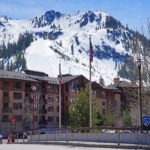
Sella Towers (Sellatürme)

The Sella Towers, known in Italian as the Torri del Sella and in German as the Sellatürme, are a spectacular group of five rock towers rising above Passo Sella in the Italian Dolomites. Their steep pale walls stand along the western edge of the Sella Group, directly across the pass from the jagged peaks of the Sassolungo massif.
The five towers are numbered consecutively rather than having individual descriptive names. The Third Sella Tower is the highest at 2,696 meters (8,845 feet), while the First, Second, and Third Towers are especially famous for their historic multi-pitch climbing routes. Easy access from Passo Sella, dramatic scenery, and more than a century of mountaineering history have made the Torri del Sella one of the classic climbing areas of the Dolomites.
🏔️ Overview
The Sella Towers form a compact chain of rocky summits on the southwestern side of the immense Sella massif. Although the five towers stand close together, each is a distinct formation separated from its neighbors by saddles, gullies, or breaks in the ridge.
The towers range from about 2,500 meters to 2,696 meters in elevation. The First Sella Tower reaches 2,533 meters, the Second 2,598 meters, the Third 2,696 meters, the Fourth 2,605 meters, and the Fifth approximately 2,500 meters.
Their setting is particularly impressive. Passo Sella lies immediately below at 2,218 meters, while the Sassolungo Group rises dramatically on the opposite side of the pass. The combination creates one of the most recognizable mountain landscapes in the central Dolomites.
Unlike many remote alpine summits, the Sella Towers can be approached relatively quickly from a paved mountain road. That accessibility has helped make them extraordinarily popular with climbers, but their steep walls remain serious alpine terrain requiring appropriate skills and preparation.
⚡ Fast Facts
| Fact | Details |
|---|---|
| Continent | Europe |
| Country | Italy |
| State/Province | South Tyrol and Trentino |
| County/Region | Passo Sella area, Val Gardena–Val di Fassa |
| Mountain Range | Dolomites, Southern Limestone Alps |
| Parent Peak | Sella Group |
| Elevation | 8,845 ft / 2,696 m at Third Sella Tower |
| Prominence | Not commonly reported for the tower group |
| Isolation | Not commonly reported for the tower group |
| Nearest Higher Neighbor (NHN) | Piz Ciavazes |
| Key Col | Not commonly reported for the tower group |
| Coordinates | Approximately 46.510° N, 11.777° E |
| Protected Area | Dolomites UNESCO World Heritage Site |
| Managing Agency | Regional and local authorities in South Tyrol and Trentino |
📍 Location
The Sella Towers rise beside Passo Sella, one of the best-known mountain passes in the Dolomites. The pass connects Val Gardena to the north and west with Val di Fassa to the south and east and sits close to the boundary between the autonomous provinces of South Tyrol and Trentino.
The towers occupy the southwestern edge of the Sella Group. Immediately east is Piz Ciavazes, while the much larger Sella plateau rises behind the towers. Across the pass to the west stands the Sassolungo Group, including Langkofel, Plattkofel, Grohmannspitze, and Fünffingerspitze.
Passo Sella provides unusually convenient access. Roads climb to more than 2,200 meters, leaving only a relatively short approach to the bases of many climbing routes. Selva di Val Gardena and Canazei are two of the principal nearby communities.

📏 Elevation & Prominence
The Third Sella Tower, or Terza Torre di Sella, is the highest of the five towers at 2,696 meters (8,845 feet).
The individual towers are:
- First Sella Tower: 2,533 m / 8,310 ft
- Second Sella Tower: 2,598 m / 8,524 ft
- Third Sella Tower: 2,696 m / 8,845 ft
- Fourth Sella Tower: 2,605 m / 8,547 ft
- Fifth Sella Tower: approximately 2,500 m / 8,202 ft
Because Sella Towers is the collective name for several closely connected rock formations rather than a single isolated mountain, standard prominence and isolation measurements are not generally published for the group as a whole.
The nearby Piz Ciavazes rises higher than the towers and forms part of the same western section of the Sella massif. The Third Tower is separated from the surrounding higher terrain by complex rocky saddles rather than the broad valleys that isolate many conventional mountain summits.
🪨 Geology
The Sella Towers are part of the famous carbonate landscape of the Dolomites. Their rock originated in ancient tropical seas during the Triassic Period, more than 200 million years ago.
Marine organisms, reefs, and carbonate sediments accumulated over immense spans of time and eventually formed thick deposits of limestone and dolomite. Later tectonic forces associated with the formation of the Alps raised these ancient marine formations thousands of meters above sea level.
Erosion then began carving the uplifted rock. Glaciers, flowing water, frost, and the repeated expansion of freezing water inside cracks helped shape the steep cliffs, narrow towers, gullies, ledges, and scree fields that define the modern landscape.
The towers demonstrate the characteristic architecture for which the Dolomites are internationally renowned. Massive vertical walls can rise abruptly above relatively gentle alpine meadows, creating an extraordinary contrast between green pasture and pale rock.
The broader Dolomites were designated a UNESCO World Heritage Site in recognition of both their exceptional natural beauty and geological importance.
🌿 Flora & Fauna
Although the upper walls of the Sella Towers appear almost completely barren, the lower slopes around Passo Sella support a rich alpine environment during the short summer growing season.
Alpine grasses and wildflowers cover meadows where enough soil has accumulated. Plants such as gentians and saxifrages are adapted to thin soils, cool temperatures, strong winds, intense sunlight, and a growing season shortened by lingering winter snow.
Higher on the mountains, vegetation becomes progressively sparse. Small plants may survive in cracks and sheltered ledges where moisture and fine sediment collect, but exposed rock and scree dominate the upper terrain.
Alpine marmots are among the characteristic mammals of the surrounding Dolomites and can inhabit grassy slopes and boulder-strewn terrain. Chamois may also be encountered in quieter rocky areas, particularly away from heavily traveled roads and trails.
Numerous alpine birds use the cliffs, meadows, and scree slopes for feeding or nesting. Larger birds can sometimes be seen taking advantage of rising air currents around the mountain walls, while smaller species forage among the grasslands and rocky slopes.
The alpine ecosystem is vulnerable to disturbance, especially at higher elevations where vegetation grows very slowly. Visitors should stay on established paths whenever practical and avoid disturbing wildlife.
🥾 Hiking & Climbing Routes
The Sella Towers are primarily technical climbing objectives rather than hiking summits. Reaching the tops generally requires rock-climbing or mountaineering skills, even though trails allow hikers to approach the bases and enjoy excellent views.
The First Sella Tower is one of the most popular climbing formations because of its very short approach from Passo Sella. Classic lines include the Steger, Trenker, Via dei Camini, and other traditional multi-pitch routes.
The Second Sella Tower offers a larger and more complex climbing environment. Among its well-known routes are the Kasnapoff, Kostner, and Glück lines. Climbers moving from the First Tower to the Second can also incorporate the two formations into longer outings.
The Third Sella Tower provides some of the group’s most substantial climbing. One celebrated route is the Vinatzer-Peristi, first climbed in 1935. The Jahn Route is another classic and forms part of one version of the famous Sella Towers traverse.
The Fourth and Fifth Towers receive less climbing traffic, although established routes exist on both. The Fourth Tower includes the historic Glück route, while the smaller Fifth Tower remains a much less common objective.
One of the great climbing challenges of the area is the Sella Towers Traverse. A classic itinerary links the First, Second, and Third Towers, combining climbing routes and transitions between summits into a long alpine day.
For hikers, trails from Passo Sella provide superb close-range views without requiring technical climbing. Walking beneath the towers also allows visitors to appreciate their enormous scale, which can be difficult to judge from the road.

🎫 Permits and Wilderness Regulations
No general climbing permit is normally required simply to hike near or climb established routes on the Sella Towers, but access rules, parking regulations, transportation arrangements, and temporary restrictions can change.
The Dolomites experience extremely heavy visitation during the summer, and authorities have increasingly used traffic-management measures around popular mountain passes. Visitors should check current regulations for Passo Sella before traveling, particularly when arriving by private vehicle.
Climbers should practice low-impact mountain ethics. Existing paths and established climbing lines should be used wherever possible, and all waste should be carried out.
Bolts and other fixed equipment vary greatly between routes. Many historic Dolomite climbs retain a traditional alpine character and should not be approached as though they were fully equipped sport climbs.
🌤️ Best Time to Visit
The main climbing and hiking season around the Sella Towers generally extends from late spring or early summer through early autumn, depending on snow conditions and weather.
July and August usually provide the warmest conditions but are also the busiest months. Passo Sella can attract large numbers of hikers, cyclists, sightseers, motorcyclists, and climbers during periods of good summer weather.
Early autumn can provide cooler temperatures, clearer air, and fewer visitors, but shorter days and the possibility of early snowfall must be considered.
Mountain weather can change remarkably quickly. Afternoon thunderstorms are a particular concern during summer. Lightning, heavy rain, strong winds, and rapidly falling temperatures can become dangerous when climbers are several pitches above the ground.
Early starts are generally advisable for longer climbing routes.

🧭 Nearby Mountains & Attractions
Piz Ciavazes rises immediately beside the Sella Towers and contains another exceptional collection of classic Dolomite rock-climbing routes. Its broad south-facing wall is one of the most recognizable cliffs above the Passo Sella road.
Across the pass is the Sassolungo Group, dominated by Langkofel, one of the most distinctive mountains in the Dolomites. Nearby peaks include Plattkofel, Grohmannspitze, and Fünffingerspitze.
Another fascinating nearby destination is the Città dei Sassi, or City of Stones. Huge boulders are scattered through alpine meadows beneath the Sassolungo Group, creating an unusual landscape that can be explored on relatively easy walking routes.
Farther into the Sella Group, visitors can explore Sass Pordoi, which is accessible by cable car from Passo Pordoi. From its high plateau, extensive views stretch across much of the central Dolomites.
The Sella massif itself is surrounded by several famous passes, including Passo Sella, Passo Pordoi, Passo Gardena, and Passo Campolongo. Together they form the celebrated Sellaronda circuit used by skiers in winter and cyclists during the warmer months.
💡 Fun Facts
The Sella Towers consist of five towers, even though some photographs make only three or four prominent formations immediately obvious.
The Third Tower is the highest, while the Fourth Tower is actually higher than both the First and Second despite receiving much less attention.
The First and Second Towers were first climbed in 1899. The remaining three were climbed between 1900 and 1911, meaning the group has been part of Dolomite mountaineering history for well over a century.
Passo Sella reaches approximately 2,218 meters, allowing climbers to begin their approaches from an elevation already higher than many major mountain summits elsewhere in Europe.
The towers are connected on their western side with a distinctive rock formation known as the Lokomotive, or Locomotive, named for its unusual shape.
The short approaches are one of the reasons the Sella Towers became such an important climbing area. Serious multi-pitch rock routes can be reached remarkably quickly from the road.
❓ Frequently Asked Questions
How many Sella Towers are there?
There are five Sella Towers: the First, Second, Third, Fourth, and Fifth Sella Towers.
Which Sella Tower is the highest?
The Third Sella Tower is the highest at 2,696 meters (8,845 feet).
Where are the Sella Towers?
The towers are located in the Sella Group of the Italian Dolomites, immediately above Passo Sella between Val Gardena and Val di Fassa.
Can you hike to the top of the Sella Towers?
The summits are primarily technical mountaineering and rock-climbing destinations rather than conventional hiking summits. Hikers can, however, follow trails beneath the towers and obtain outstanding close-up views.
Are the Sella Towers good for rock climbing?
Yes. They are among the classic rock-climbing destinations of the Dolomites and contain numerous historic multi-pitch routes.
What is the Sella Towers Traverse?
The Sella Towers Traverse is a long climbing outing linking several of the towers, most commonly the First, Second, and Third. It combines technical climbing, exposed transitions, route-finding, and descents.
What is the nearest mountain pass?
Passo Sella lies directly beneath the towers at approximately 2,218 meters (7,277 feet).
When is the best time to visit?
Summer through early autumn generally offers the best conditions for hiking and climbing, although weather and lingering snow should always be checked before setting out.

🔗 Related Articles
📚 Sources
- Val Gardena — Torri del Sella Towers
- UNESCO World Heritage Centre — The Dolomites
- PeakVisor — Sella Group
- TheCrag — Torri del Sella
- Scuola di Alpinismo Guido Della Torre — Terza Torre di Sella