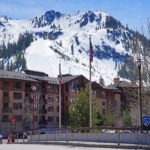
Specimen Mountain

Specimen Mountain rises to approximately 12,489 feet (3,807 meters) on the Continental Divide in northern Colorado, occupying a distinctive position in the western portion of Rocky Mountain National Park. Although substantially lower than famous park summits such as Longs Peak, Specimen Mountain possesses more than 1,700 feet of topographic prominence and an unusual geological character that separates it from much of the surrounding Front Range.
Its reddish and brownish slopes contain volcanic rocks, jasper, agate, opal, and other minerals that helped inspire the mountain’s modern name. Specimen was once widely described as an extinct volcano, but modern National Park Service geological interpretation is more nuanced: the mountain is largely a mass of volcanic material deposited during eruptions in the region roughly 27 million years ago rather than simply the remains of one classic volcanic cone.
The mountain is also extremely important habitat for Rocky Mountain bighorn sheep. Today, conservation takes priority over recreational summit access. The Crater and surrounding open tundra slopes on Specimen and neighboring Shipler Mountain are closed year-round to public travel, and portions of the broader mountain are managed as the Specimen Mountain Research Natural Area.
For visitors, Specimen Mountain is therefore best appreciated from legal trails, Trail Ridge Road, Milner Pass, and surrounding viewpoints rather than approached like an ordinary Colorado peak-bagging objective.
⚡ Fast Facts
| Fact | Details |
|---|---|
| Mountain | Specimen Mountain |
| Country | United States |
| State | Colorado |
| Counties | Grand and Larimer |
| Mountain Range | Front Range |
| Parent Range | Rocky Mountains |
| Elevation | Approximately 12,489 ft / 3,807 m |
| Rounded LiDAR Elevation | Approximately 12,490 ft |
| Prominence | Approximately 1,742 ft / 531 m |
| Isolation | Approximately 4.71 mi / 7.58 km |
| Nearest Higher Neighbor (NHN) | Lead Mountain |
| Line Parent | Mount Ida |
| Key Col | Milner Pass |
| Key Col Elevation | Approximately 10,747 ft |
| Mountain Type | Eroded mass of Oligocene volcanic rocks |
| Approximate Volcanic Age | About 27 million years |
| Protected Area | Rocky Mountain National Park |
| Special Designation | Specimen Mountain Research Natural Area |
| Continental Divide | Yes |
| Historic Route Difficulty | Generally Class 2 |
| Current Access | Significant year-round wildlife closure; verify all legal boundaries before travel |
| Notable Wildlife | Rocky Mountain bighorn sheep |
Specimen Mountain’s nearest higher neighbor is Lead Mountain, located to the west. Its line parent is Mount Ida. With roughly 1,742 feet of prominence, Specimen is considerably more topographically independent than many higher summits in Rocky Mountain National Park.
📍 Where Is Specimen Mountain?
Specimen Mountain rises in the northwestern portion of Rocky Mountain National Park near Milner Pass and Trail Ridge Road.
The mountain straddles the Continental Divide between Grand County and Larimer County. Water falling on opposite sides of the ridge ultimately follows dramatically different paths toward different oceans.
East of the divide, water enters the Cache la Poudre and ultimately the Mississippi River system before reaching the Gulf of Mexico.
West of the divide, streams eventually feed the Colorado River system and flow toward the Pacific watershed.
Milner Pass lies immediately south of the mountain and provides one of the easiest places in Rocky Mountain National Park to stand directly on the Continental Divide.
The summit itself rises north of the pass, while Shipler Mountain occupies nearby terrain to the northeast.
Trail Ridge Road passes close enough that Specimen Mountain can be appreciated without a long wilderness approach, making it one of the more visually accessible significant mountains in this portion of the park.
🏔️ Specimen Mountain and the Front Range
Specimen Mountain belongs to Colorado’s Front Range, the easternmost great mountain chain of the Colorado Rockies.
Most of the famous Front Range summits around Rocky Mountain National Park are built primarily from extremely ancient Precambrian crystalline rocks.
Specimen Mountain is different.
Although ancient basement rocks occur throughout the broader landscape, the upper mountain contains much younger volcanic deposits associated with an episode of volcanism approximately 27 million years ago.
That difference gives Specimen unusual colors, textures, and minerals compared with many nearby mountains.
The mountain also occupies a somewhat transitional geographic position. The heavily glaciated high summits around Longs Peak dominate the central and eastern portions of the park, while volcanic rocks become increasingly important toward the western side and the nearby Never Summer Mountains.
Specimen Mountain provides one of the clearest examples of that younger volcanic history.
📏 How High Is Specimen Mountain?
Modern LiDAR measurements place the natural summit of Specimen Mountain at approximately 12,489.1 feet using the NAVD88 vertical datum.
ListsOfJohn rounds the modern elevation to approximately 12,490 feet.
Older maps and references sometimes give slightly different figures, including elevations around 12,480 to 12,494 feet.
Such differences are common among Colorado mountains because older topographic maps relied on survey methods and vertical datums that were less precise than modern LiDAR.
For practical purposes, approximately 12,489 feet is a good modern elevation for the summit.
Despite not reaching 13,000 feet, Specimen Mountain’s relatively large prominence makes it a significant summit within the park.
📈 Prominence and Isolation
Specimen Mountain has approximately 1,742 feet of topographic prominence.
Its key saddle is near Milner Pass, at approximately 10,747 feet.
Prominence measures how far a mountain rises independently above the saddle connecting it with higher terrain.
This is an important distinction because absolute elevation does not always indicate how dominant a mountain appears.
Some Colorado thirteeners and fourteeners rise only a few hundred feet above connecting ridges. Specimen Mountain, by contrast, rises more than 1,700 feet above its key col.
Its isolation is approximately 4.71 miles, with Lead Mountain serving as the nearest higher summit.
These measurements help explain why Specimen appears surprisingly substantial when viewed from surrounding parts of Trail Ridge Road.
🌋 Is Specimen Mountain an Extinct Volcano?
Specimen Mountain has often been described as an extinct volcano, and older geological and popular references sometimes still use that description.
Modern National Park Service geological interpretation adds an important qualification.
Rather than representing a simple preserved volcanic cone, Specimen Mountain is described as a pile of volcanic rocks accumulated during the same broad episode of eruptions that produced volcanic deposits around the Lava Cliffs area.
That volcanic activity occurred during the Oligocene, roughly 27 million years ago.
At the time, western Rocky Mountain National Park was experiencing considerable volcanic and intrusive activity.
Volcanic ash, lava, breccia, and other materials accumulated across portions of the landscape.
Subsequent erosion removed enormous volumes of those deposits.
Specimen Mountain represents one of the surviving remnants.
So while calling it an extinct volcano communicates the basic volcanic nature of the mountain, describing it as an eroded mountain composed largely of ancient volcanic deposits is geologically more precise.
🌋 Volcanic History
The volcanic activity responsible for Specimen Mountain occurred long after the ancient crystalline rocks of the Front Range had formed.
Much of the underlying Rocky Mountain crust dates back more than a billion years.
The volcanic material around Specimen is comparatively young.
During the late Oligocene, roughly 29 to 23 million years ago, volcanic activity affected large areas of northern Colorado.
Magma moved upward through the crust, producing:
- Lava flows
- Volcanic ash
- Tuff
- Breccia
- Intrusive igneous bodies
Specimen Mountain contains remnants of this episode.
Nearby road cuts around Trail Ridge Road and Poudre Lake expose additional volcanic material, allowing visitors to see evidence of eruptions that occurred millions of years before Ice Age glaciers carved the modern park.
🪨 Volcanic Breccia
Some of the rock around Specimen Mountain is volcanic breccia.
Breccia consists of angular pieces of broken rock cemented together within a finer matrix.
When created during explosive volcanic events, fragments of lava and other volcanic material can become embedded in ash and debris.
Unlike rounded river gravel, the sharp-edged fragments in breccia indicate that pieces were not transported long distances by flowing water before being deposited.
These volcanic materials contribute to the mountain’s unusual appearance and distinguish Specimen from the granitic summits that dominate other portions of Rocky Mountain National Park.
Weathering of the volcanic rocks has also produced some of the reddish, yellowish, and brown colors visible across the mountain.
💎 Why Is It Called Specimen Mountain?
Specimen Mountain’s name reflects its unusual mineralogy.
The mountain became known for mineral specimens attractive to collectors, including jasper containing cavities and geodes.
National Park Service geological material describes local jasper containing geodes partially or completely filled with minerals such as:
- Agate
- Onyx
- Opal
- Calcite
- Allophane
- Chloropal
Historical accounts indicate that some samples were considered suitable for cutting and polishing.
The concentration of interesting minerals eventually helped inspire the name Specimen Mountain.
An earlier historical name was Geode Mountain, a direct reference to the mineral-filled cavities found within some of its rocks.
The Specimen Mountain name became officially established during the twentieth century.
Today, of course, collecting rocks, minerals, plants, archaeological material, or other natural objects from a national park is prohibited. The specimens that gave the mountain its name should remain where they occur.
🪶 “Mountain Smokes”
Specimen Mountain also has an intriguing Indigenous connection.
Historical accounts from Rocky Mountain National Park record that Arapaho people referred to the mountain in a way translated into English as “Mountain Smokes.”
An account associated with Arapaho elder Sherman Sage described an older tradition that the mountain had once been seen producing smoke.
Whether that memory reflected volcanic activity, geothermal phenomena, smoke from natural fires, cloud formations, oral tradition, or some other observation cannot be determined with certainty.
The story is nevertheless especially interesting because Specimen Mountain genuinely consists of volcanic material.
It also serves as an important reminder that Indigenous people knew, traveled through, named, and interpreted the landscapes of Rocky Mountain National Park long before the modern park or its current English place names existed.
❄️ Glacial History
Specimen Mountain’s volcanic rocks may have formed tens of millions of years ago, but glaciers played a major role in shaping the modern landscape.
During the Pleistocene, large glaciers repeatedly occupied Rocky Mountain National Park.
Ice flowed through high valleys and across portions of the western park, excavating basins and transporting huge quantities of rock.
Glacial erosion helped produce:
- Broad valleys
- Cirques
- Moraines
- Steepened slopes
- Alpine basins
- Lakes and wetlands
The terrain around Milner Pass and the upper Colorado River watershed still displays abundant evidence of these Ice Age glaciers.
After the climate warmed, glaciers retreated and left behind the alpine and subalpine landscape visible today.
Freeze-thaw weathering continues to break apart exposed rock on Specimen Mountain each year.
🐏 Why Access to Specimen Mountain Is Restricted
Wildlife conservation is one of the most important considerations for anyone interested in Specimen Mountain.
Rocky Mountain National Park currently maintains a year-round closure around The Crater and surrounding open tundra slopes on Specimen and Shipler Mountains.
The closure exists primarily to protect Rocky Mountain bighorn sheep.
These animals depend on particular portions of the mountain for habitat and movement corridors. Repeated disturbance from hikers can alter their behavior, disrupt access to important areas, and place additional stress on vulnerable groups.
Consequently, visitors should never assume that an old route description, GPS track, guidebook, or online trip report represents a currently legal route.
The park’s current closure map and posted signs take precedence over historic hiking information.
🚫 Can You Hike to the Summit of Specimen Mountain?
Specimen Mountain requires more caution than a typical peak description because traditional climbing routes intersect or approach areas now managed for wildlife protection and research.
Older hiking and climbing references describe Class 2 approaches from areas near Milner Pass, Shipler Mountain, or The Crater.
Those descriptions are useful historically, but they should not be treated as authorization for a present-day summit climb.
As of 2026:
- The Crater is closed year-round.
- Surrounding open tundra slopes on Specimen and Shipler Mountains are closed year-round.
- A separate revegetation closure affects former trail terrain.
- Portions of Specimen Mountain are part of a Research Natural Area.
- Visitors must obey current NPS maps, signs, and closure boundaries.
Because these boundaries can affect potential summit approaches, anyone considering off-trail travel around Specimen Mountain should consult Rocky Mountain National Park directly before setting out.
For most visitors, the better choice is to enjoy Specimen Mountain from surrounding legal trails and viewpoints.
🧪 Specimen Mountain Research Natural Area
Much of the broader mountain landscape is designated as the Specimen Mountain Research Natural Area.
Research Natural Areas are intended to preserve representative ecosystems and natural processes with minimal human disturbance.
Scientists can then use such places as reference areas for understanding how relatively undisturbed landscapes change over time.
The Specimen Mountain Research Natural Area includes thousands of acres encompassing portions of Specimen Mountain, Shipler Mountain, and surrounding drainages.
The National Park Service states that foot travel within portions of the Research Natural Area may be allowed where not separately closed, but it is not encouraged.
Only day use is authorized in the Research Natural Area, and overnight stays and stock use are prohibited.
The separate bighorn-sheep closure is more restrictive and must be followed wherever it applies.
🥾 The Former Crater Trail
Historically, an informal trail climbed toward The Crater on Specimen Mountain.
Unlike many established trails in Rocky Mountain National Park, it had never been properly designed and constructed.
Repeated use caused severe erosion and damage to fragile alpine tundra and cultural resources.
The National Park Service eventually closed the trail while evaluating its future.
The route also led directly into sensitive bighorn-sheep habitat and the Specimen Mountain Research Natural Area.
Today, visitors should not treat the former Crater Trail as an available hiking route.
The closure illustrates an important reality of mountain recreation: a route that was commonly used decades ago may no longer be appropriate—or legal—when new information reveals significant environmental damage.
🥾 Better Ways to Experience Specimen Mountain
Although unrestricted summit climbing is not the best way to experience Specimen Mountain today, several legal nearby locations provide excellent views and opportunities to explore similar alpine terrain.
Milner Pass

Milner Pass sits on the Continental Divide just south of Specimen Mountain at approximately 10,759 feet.
The pass includes parking and provides views toward Poudre Lake and the surrounding high country.
Visitors can stand directly on the Continental Divide and see how the landscape separates Atlantic and Pacific drainage basins.
Ute Trail
The Ute Trail provides exceptional high-country hiking near Milner Pass.
Rather than heading onto closed Specimen Mountain slopes, hikers can follow legal portions of established trails across the Continental Divide.
The trail offers alpine tundra, expansive views, wildlife opportunities, and access toward other high-country destinations.
Trail Ridge Road

Trail Ridge Road passes immediately through the surrounding alpine landscape.
Pullouts and overlooks provide excellent perspectives toward Specimen Mountain and nearby peaks without disturbing sensitive habitat.
Alpine Visitor Center
The Alpine Visitor Center sits only a few miles east along Trail Ridge Road.
At nearly 11,800 feet, it offers one of the easiest ways to experience Rocky Mountain National Park’s alpine environment.
Specimen Mountain is visible from portions of this high road corridor.
🌲 Flora and Fauna
Specimen Mountain spans the transition from subalpine forest to one of Colorado’s harshest alpine environments.
At lower elevations, forests in the surrounding park may contain:
- Engelmann spruce
- Subalpine fir
- Lodgepole pine
- Limber pine
- Aspen in favorable locations
As elevation increases toward treeline, harsh weather prevents trees from developing normal upright forms.
Wind-stunted trees grow in twisted patches called krummholz.
Eventually, the forest disappears completely and gives way to alpine tundra.
Much of Specimen Mountain’s upper landscape lies within this exposed environment.
🌼 Alpine Tundra
Rocky Mountain National Park’s alpine tundra is one of the mountain’s most remarkable ecosystems.
The growing season can last only about 40 days in some locations.
Plants must endure:
- Long winters
- Powerful winds
- Freezing temperatures
- Intense ultraviolet radiation
- Thin soils
- Rapid weather changes
Rather than growing tall, alpine plants hug the ground.
Approximately 200 species of small alpine plants occur across Trail Ridge tundra environments.
During summer, these plants can produce surprisingly colorful displays of yellow, white, purple, red, blue, and pink flowers.
Because growth is extremely slow, tundra is highly vulnerable to trampling.
Damage caused in minutes may take years or decades to recover.
The wildlife closures around Specimen Mountain therefore protect not only bighorn sheep but also exceptionally sensitive vegetation.
🐏 Rocky Mountain Bighorn Sheep
No animal is more closely associated with modern management of Specimen Mountain than the Rocky Mountain bighorn sheep.
Bighorn sheep are built for steep mountain terrain.
Their specialized hooves provide excellent traction on rocky surfaces, while their ability to negotiate cliffs helps them escape predators.
Specimen and Shipler Mountains provide important habitat and movement areas.
The surrounding landscape also connects with traditional bighorn habitat near Sheep Lakes and other areas of Rocky Mountain National Park.
Human disturbance can cause sheep to abandon preferred terrain or alter natural behavior.
That is why closures around Specimen Mountain should be treated as genuine wildlife-protection measures rather than inconveniences for hikers.
Observing bighorn sheep from a legal distance with binoculars is far better than approaching them.
🐾 Other Wildlife
Specimen Mountain and the surrounding alpine landscape support many additional Rocky Mountain species.
Animals that may occur in the broader area include:
- Elk
- Mule deer
- Moose
- Bighorn sheep
- Black bears at lower elevations
- Coyotes
- American pikas
- Yellow-bellied marmots
- Snowshoe hares
- Golden-mantled ground squirrels
- White-tailed ptarmigan
- Golden eagles
- Ravens
- Clark’s nutcrackers
Pikas and marmots are especially common inhabitants of rocky alpine terrain.
Pikas survive winter without hibernating by collecting vegetation throughout summer and storing it in sheltered haypiles.
Marmots take a different approach, feeding heavily during summer before spending much of winter in hibernation.
White-tailed ptarmigan remain in the alpine zone throughout the year and grow white winter plumage that provides camouflage against snow.
🌎 The Continental Divide
Specimen Mountain lies directly on the Continental Divide.
This geographic boundary separates major drainage systems flowing toward opposite sides of the continent.
Milner Pass makes the divide particularly easy to understand.
Poudre Lake sits just east of the divide and contributes water to the Cache la Poudre River.
That water ultimately travels eastward through the Platte and Missouri systems toward the Mississippi River and Gulf of Mexico.
Water falling west of the divide enters tributaries of the Colorado River.
The Colorado flows southwest across the American West toward the Gulf of California, although extensive modern water use means much of the river no longer reliably reaches the sea.
A difference of only a few feet on Specimen Mountain can therefore determine which continental-scale watershed receives a raindrop or melting snowflake.
🌦️ Weather on Specimen Mountain
Weather near Specimen Mountain can be severe even during summer.
The summit rises almost 12,500 feet and sits directly on the Continental Divide, exposing it to strong winds and rapidly changing conditions.
Possible summer conditions include:
- Lightning
- Heavy rain
- Hail
- Strong winds
- Fog
- Freezing temperatures
- Occasional snow
Thunderstorms are especially common during summer afternoons.
Even visitors remaining on legal nearby trails should begin high-elevation hikes early and avoid exposed tundra when thunderstorms develop.
Because Trail Ridge Road climbs above 12,000 feet nearby, road conditions can also deteriorate quickly.
Snow can close the highway well outside what low-elevation visitors would consider winter.
❄️ Winter Conditions
Specimen Mountain experiences a long winter.
Snow can begin accumulating during autumn and persist well into late spring or early summer.
Strong prevailing winds redistribute snow across ridges and basins, leaving some areas nearly bare while creating deep drifts elsewhere.
Trail Ridge Road is seasonally closed through the high country, making winter access to Milner Pass and nearby alpine areas very different from summer.
Anyone visiting Rocky Mountain National Park during the colder months should check current road conditions rather than assuming high-elevation destinations are accessible by vehicle.
Winter wildlife also benefits from reduced human disturbance.
Staying out of closed areas becomes particularly important when animals are conserving energy during periods of cold and limited food.
⚠️ Safety and Responsible Visiting
Specimen Mountain requires a somewhat different approach to mountain safety because the first question is not simply, “Can I climb it?”
The first question should be, “Where am I legally allowed to travel?”
Important considerations include:
- Check the current NPS bighorn-sheep closure map.
- Never enter The Crater or closed surrounding tundra.
- Respect all closure and revegetation signs.
- Do not rely on old GPS tracks or historic route descriptions.
- Remain on established trails where required.
- Protect fragile alpine tundra.
- Give bighorn sheep and other wildlife substantial space.
- Never collect rocks, minerals, plants, antlers, or other natural objects.
- Carry layers appropriate for sudden alpine weather.
- Leave exposed terrain when thunderstorms threaten.
- Watch for altitude sickness.
- Check Trail Ridge Road status before visiting.
- Follow current Rocky Mountain National Park entry requirements.
The conservation restrictions are part of what keeps Specimen Mountain ecologically valuable.
🌄 Views of Specimen Mountain
Because access is restricted, viewing the mountain from surrounding legal locations becomes an important part of experiencing it.
Some of the best perspectives occur around:
- Milner Pass
- Poudre Lake
- Trail Ridge Road
- Alpine Visitor Center
- Legal sections of the Ute Trail
- Other established western park viewpoints
From these locations, Specimen Mountain’s unusual reddish volcanic terrain stands out against greener lower slopes and the gray crystalline mountains surrounding it.
The mountain can look dramatically different depending on light.
Early and late sunlight may emphasize red and brown volcanic rocks, while snow highlights gullies, ridges, and erosion patterns during colder months.
🏔️ Specimen Mountain vs. Mount Ida
Mount Ida rises south of Specimen Mountain and reaches approximately 12,880 feet.
Although the two mountains lie relatively close together, they offer very different visitor experiences.
Mount Ida has a well-known hiking route following the Continental Divide and remains one of the park’s outstanding high-elevation hiking destinations.
Specimen Mountain, by contrast, is more heavily influenced by wildlife closures, Research Natural Area management, and sensitive volcanic geology.
For hikers primarily interested in reaching a nearby summit, Mount Ida is therefore generally the more appropriate objective.
Specimen Mountain can remain what current conservation management increasingly encourages it to be: a place appreciated without requiring everyone to stand on its highest point.
🧪 Why the Research Natural Area Matters
Specimen Mountain’s Research Natural Area designation gives the landscape scientific value beyond ordinary recreation.
Natural areas where human disturbance remains relatively limited provide researchers with baseline environments.
Scientists can compare those places with more heavily visited or altered landscapes to study:
- Alpine vegetation
- Wildlife behavior
- Climate change
- Air pollution
- Ecosystem succession
- Hydrology
- Soil processes
- Long-term ecological change
Maintaining places where natural processes can dominate becomes increasingly important as recreation pressure, warming temperatures, invasive species, pollution, and development affect mountain ecosystems throughout the West.
Specimen Mountain therefore serves not only as scenery but as a living outdoor laboratory.
🌄 Why Specimen Mountain Is Special
Specimen Mountain is one of Rocky Mountain National Park’s most unusual summits.
It is not among the park’s highest mountains, yet it possesses substantial prominence and a strikingly independent profile.
Its geology is even more distinctive.
While neighboring peaks expose ancient crystalline rock, Specimen preserves evidence of volcanic activity around 27 million years ago. Jasper, agate, opal, and mineral-filled geodes helped give the mountain both its historical Geode Mountain name and its modern Specimen Mountain identity.
Its cultural story reaches deeper still, including Arapaho traditions associated with “Mountain Smokes.”
Today, the mountain has acquired another important role—as protected habitat.
The year-round closure of The Crater and surrounding slopes represents a deliberate decision to place the needs of bighorn sheep, alpine vegetation, research, and long-term ecological protection ahead of unrestricted recreational access.
That does not make Specimen Mountain less interesting.
In many ways, it makes the mountain more meaningful.
Not every summit needs to be climbed to be appreciated. Specimen Mountain offers an excellent reminder that mountains are geological formations, wildlife habitat, cultural landscapes, watersheds, research areas, and protected ecosystems as well as recreational destinations.
❓ Frequently Asked Questions
How high is Specimen Mountain?
Modern LiDAR measurements place Specimen Mountain at approximately 12,489 feet (3,807 meters). Some resources round the summit elevation to 12,490 feet.
Where is Specimen Mountain?
Specimen Mountain is located in Rocky Mountain National Park in northern Colorado, immediately north of Milner Pass and Trail Ridge Road.
What mountain range is Specimen Mountain in?
Specimen Mountain belongs to Colorado’s Front Range, part of the larger Rocky Mountains.
What is the nearest higher neighbor of Specimen Mountain?
Peakbagger identifies Lead Mountain as Specimen Mountain’s nearest higher neighbor.
What is Specimen Mountain’s line parent?
ListsOfJohn identifies Mount Ida as the mountain’s line parent.
How prominent is Specimen Mountain?
Specimen Mountain has approximately 1,742 feet of topographic prominence.
How isolated is Specimen Mountain?
Its topographic isolation is approximately 4.7 miles.
Is Specimen Mountain a volcano?
Specimen Mountain is composed largely of volcanic rocks dating from approximately 27 million years ago. Although traditionally described as an extinct volcano, modern National Park Service geological interpretation describes it more precisely as a mass of volcanic material accumulated during regional eruptions.
Why is it called Specimen Mountain?
The mountain contains interesting mineral specimens, including jasper with cavities or geodes containing agate, opal, onyx, and other minerals. These helped inspire the modern name.
Was Specimen Mountain called Geode Mountain?
Yes. Historical accounts indicate that Geode Mountain was an earlier name associated with the mineral-filled cavities found in its volcanic rocks.
What did Arapaho people call Specimen Mountain?
Historical accounts record an Arapaho name translated into English as “Mountain Smokes.”
Can you climb Specimen Mountain?
Access is significantly restricted. The Crater and surrounding open tundra slopes on Specimen and Shipler Mountains are currently closed year-round to public travel for bighorn-sheep protection. Visitors should check the latest National Park Service closure map before any off-trail travel.
Is the old Crater Trail open?
No. The former Crater Trail is closed and should not be used.
Why are parts of Specimen Mountain closed?
The closures primarily protect important Rocky Mountain bighorn sheep habitat, fragile alpine tundra, and sensitive natural resources.
Is Specimen Mountain in a Research Natural Area?
Yes. Much of the surrounding landscape is part of the Specimen Mountain Research Natural Area.
What is the best alternative hike near Specimen Mountain?
Mount Ida and legal portions of the Ute Trail provide excellent nearby high-elevation hiking while avoiding the closed Specimen Mountain habitat.
Where can you see Specimen Mountain?
Good legal viewpoints are available around Milner Pass, Poudre Lake, Trail Ridge Road, and the Alpine Visitor Center area.
🔗 Related Articles
📚 Sources
- Peakbagger — Specimen Mountain
- ListsOfJohn — Specimen Mountain
- National Park Service — Rocky Mountain National Park Area Closures
- National Park Service — Rocky Mountain National Park Superintendent’s Compendium
- National Park Service — Rocky Mountain National Park Geodiversity Atlas
- National Park Service — Geologic Resources Evaluation of Rocky Mountain National Park
- National Park Service — Milner Pass
- National Park Service — Trail Ridge Road
- National Park Service — Crater Trail Closure on Specimen Mountain
- National Park Service — Nature & Science in Rocky Mountain National Park