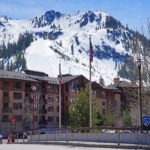
Thunderbolt Peak

Thunderbolt Peak is one of the most distinctive and technically demanding summits in California’s Sierra Nevada. Rising along the rugged Palisades crest, the mountain is famous for its exposed summit monolith, its place in the history of Sierra Nevada mountaineering, and the dramatic thunderstorm that gave the peak its name.
Although Thunderbolt Peak rises above 14,000 feet, its relatively low topographic prominence means that some geographic classifications treat it as a subsidiary summit of nearby North Palisade. Among climbers, however, Thunderbolt has long been recognized as one of California’s traditional fourteeners and as a major mountaineering objective in its own right.
🏔️ Overview
Thunderbolt Peak stands in the Palisades, a spectacular cluster of high peaks along the crest of California’s Sierra Nevada. The summit lies on the boundary between Fresno and Inyo counties, with Kings Canyon National Park to the west and the John Muir Wilderness and Inyo National Forest to the east.
Thunderbolt is immediately northwest of Starlight Peak and North Palisade. Together with Polemonium Peak and Mount Sill, these mountains form one of the most rugged concentrations of fourteeners in California.
Unlike many high Sierra peaks that can be reached primarily by hiking and scrambling, Thunderbolt normally requires genuine technical rock-climbing skills. Its famous summit block is a rounded granite monolith requiring exposed fifth-class climbing to stand on the mountain’s true highest point.
⚡ Fast Facts
| Fact | Details |
|---|---|
| Continent | North America |
| Country | United States |
| State | California |
| Counties | Fresno and Inyo |
| Mountain Range | Sierra Nevada |
| Group | Palisades |
| Parent Peak | North Palisade |
| Elevation | About 14,003 ft (4,268 m) according to current Peakbagger data; commonly listed as 14,009 ft (4,270 m) |
| Prominence | About 275 ft (84 m) |
| Isolation | About 0.23 mi (0.37 km) |
| Nearest Higher Neighbor | Starlight Peak, southeast |
| Coordinates | Approximately 37.098° N, 118.518° W |
| First Ascent | August 13, 1931 |
| First-Ascent Party | Robert L. M. Underhill, Norman Clyde, Bestor Robinson, Francis Farquhar, Glen Dawson, Lewis Clark, and Jules Eichorn |
| Summit Difficulty | Technical rock climbing; summit block commonly rated around 5.8–5.9 |
📍 Location
Thunderbolt Peak rises on the main Sierra Nevada crest approximately west of the Owens Valley community of Big Pine.
The crest in this area forms both a county and land-management boundary. Terrain east of the crest lies primarily within the John Muir Wilderness of Inyo National Forest, while the western slopes descend into Kings Canyon National Park.
The mountain belongs to the Palisades, one of the most alpine-looking sections of the Sierra Nevada. Sharp ridges, steep couloirs, exposed rock towers, glacially carved basins, and several of California’s highest summits are concentrated within a relatively small area.
Thunderbolt Peak is the northernmost of the major 14,000-foot summits along the central Palisades crest.
📏 Elevation & Prominence
Thunderbolt Peak has traditionally been listed at 14,009 feet (4,270 meters). That remains the elevation commonly encountered in older maps, mountaineering literature, and peak lists.
Current Peakbagger data, however, gives a summit elevation of approximately 14,002.8 feet (4,268.1 meters).
The difference illustrates why elevations for sharp rocky summits can vary among topographic databases. Survey methods, elevation datums, map revisions, and newer digital terrain measurements can all produce slightly different figures.
Thunderbolt has only about 274.8 feet (83.8 meters) of prominence. Because many mountain-ranking systems require at least 300 feet of prominence for a summit to be considered an independent peak, Thunderbolt is sometimes classified as a subsidiary summit of North Palisade.
Its isolation is also extremely small—approximately 0.23 mile (0.37 kilometer). Peakbagger identifies Starlight Peak as Thunderbolt’s nearest higher neighbor.
Despite those modest topographic statistics, Thunderbolt is far from insignificant from a climbing perspective. Its technical difficulty and striking summit formation have given it an identity quite separate from its larger neighbors.
🪨 Geology
Like much of the High Sierra, Thunderbolt Peak consists predominantly of resistant granitic rock associated with the immense Sierra Nevada batholith.
The batholith formed when magma cooled slowly beneath the surface during the Mesozoic Era. Later uplift and erosion exposed the granitic rocks that now form much of the Sierra Nevada’s dramatic alpine landscape.
Glaciers played another major role in shaping the Palisades. Repeated periods of glaciation carved steep-walled valleys, cirques, ridges, and basins around the peaks.
The Palisade Glacier survives on the northeastern side of the Palisades and is one of the most significant remaining glaciers in the Sierra Nevada.
Thunderbolt itself is especially recognizable because of its jagged crest and summit monolith—a compact block of rock perched at the highest point of the mountain.
🌿 Flora & Fauna
Thunderbolt Peak rises well into the alpine zone, where environmental conditions are severe. Cold temperatures, powerful winds, a short growing season, intense solar radiation, and thin rocky soils limit vegetation near the summit.
Lower approaches may pass through conifer forests and subalpine vegetation before gradually giving way to sparse alpine plants among granite, talus, and scree.
High-elevation plants of the southern Sierra Nevada include hardy perennial herbs adapted to surviving between rocks and in protected pockets of soil.
Wildlife found in the surrounding high country can include:
- American pika
- Yellow-bellied marmot
- Alpine chipmunk
- Sierra Nevada bighorn sheep
- Gray-crowned rosy finch
- American pipit
- Clark’s nutcracker
Animals living at these elevations must cope with long winters, limited food supplies, and rapidly changing weather.
🧗 Hiking & Climbing Routes
Thunderbolt Peak is not a conventional hiking summit. Reaching the true summit requires mountaineering experience, route-finding ability, comfort with severe exposure, and technical rock-climbing skills.
Several approaches and climbing routes are possible.
Southwest Chute
The Southwest Chute is one of the better-known approaches from the western side of the crest.
Climbers commonly approach through South Lake, Bishop Pass, and Dusy Basin before traveling cross-country toward Thunderbolt Pass. From there, steep talus, scrambling, and climbing lead toward the summit ridge.
Much of the chute below the summit can involve scrambling rather than sustained technical climbing, but reaching the actual highest point requires overcoming Thunderbolt’s famous summit block.
North and East-Side Routes
Thunderbolt can also be approached from the east through the North Fork of Big Pine Creek drainage.
This approach provides access toward the Palisade Glacier and routes on the northeastern side of the mountain.
The terrain becomes increasingly serious beyond the maintained trail system, with glacier travel, steep couloirs, rockfall exposure, route finding, and technical climbing potentially involved depending on the route and conditions.
Underhill Couloir
The Underhill Couloir is historically significant and is associated with the mountain’s first ascent.
Conditions in High Sierra couloirs can change dramatically throughout the year. Snow and ice may provide relatively consolidated climbing during certain periods, while later-season conditions can leave loose rock and increased rockfall hazards.
The Summit Block
Thunderbolt’s summit monolith is the defining feature of the mountain.
Reaching the base of the block is not the same as reaching the true summit. The final climbing move is generally rated approximately 5.8 to 5.9, depending on the line and rating system.
The move is short but highly exposed and occurs above 14,000 feet, where reduced oxygen, cold temperatures, wind, fatigue, and rapidly changing weather can make even brief technical climbing significantly more demanding.
🏔️ Field Guide Tip: Thunderbolt Peak should be treated as a technical alpine climb rather than a difficult hike. Climbers should be experienced with exposed rock climbing, rappelling, route finding, and High Sierra weather. Conditions, permits, closures, snowpack, and access rules should always be checked immediately before a trip.
⚡ How Thunderbolt Peak Got Its Name
Thunderbolt Peak has one of the most memorable naming stories in the Sierra Nevada.
On August 13, 1931, a distinguished group of climbers attempted the mountain. The party included Robert L. M. Underhill, Norman Clyde, Bestor Robinson, Francis Farquhar, Glen Dawson, Lewis Clark, and Jules Eichorn.
The climb occurred during an important period in Sierra Nevada mountaineering. Underhill had traveled to California to introduce Sierra Club climbers to modern European rope-management and belaying techniques.
As members of the party reached the summit area, a thunderstorm developed.
Jules Eichorn had climbed the summit monolith and was descending when lightning passed extraordinarily close to him. Contemporary accounts describe the incident as a near strike.
The dramatic event inspired the name Thunderbolt Peak.
The storm also prevented every member of the party from climbing the summit monolith. Historical accounts indicate that Glen Dawson and Jules Eichorn are the members known with certainty to have reached the top of the monolith during the first ascent.
The climb became an important chapter in the development of technical mountaineering in California.
🌤️ Best Time to Climb
For most modern climbers, the primary Thunderbolt Peak season extends through the warmer months of the High Sierra, roughly from June through September, although actual conditions vary greatly from year to year.
Early season can provide significant snow coverage in the couloirs and on approaches. That may improve some routes but can also introduce avalanche, ice, and glacier hazards.
Later in summer, approaches are typically drier, but loose rock can become a greater concern as snow disappears.
Afternoon thunderstorms are another major hazard throughout the Sierra summer.
Thunderbolt Peak’s own naming history demonstrates how dangerous lightning can be on an exposed alpine summit. Climbers generally try to complete exposed summit climbing well before afternoon convection begins.
Snowstorms and freezing temperatures are possible even during summer.
🧭 Permits & Access
Two of the principal approaches begin from the eastern Sierra.
The North Fork of Big Pine Creek Trail provides access toward Big Pine Lakes and the Palisade Glacier, while the South Lake/Bishop Pass approach provides access to Dusy Basin and the western side of the Palisades.
Inyo National Forest requires wilderness permits for overnight wilderness trips.
The John Muir Wilderness uses entry quotas during the primary season, currently running from May 1 through November 1 on affected trailheads. Permit rules and quotas can change, so climbers should verify current Forest Service and Recreation.gov information before departure.
Day-use requirements depend on the specific trailhead and route.
🧭 Nearby Mountains & Attractions
Thunderbolt Peak is surrounded by some of the finest alpine terrain in California.
Starlight Peak
Immediately southeast of Thunderbolt is Starlight Peak, another technical fourteener famous for its distinctive summit block.
North Palisade
Beyond Starlight rises North Palisade, the dominant mountain of the group and one of the highest peaks in California.
Mount Sill
Mount Sill stands southeast of North Palisade and is another major fourteener overlooking the Palisade Glacier region.
Palisade Glacier
The Palisade Glacier occupies a spectacular basin northeast of the crest. The surrounding scenery includes towering granite walls, alpine lakes, moraines, and several 14,000-foot peaks.
Dusy Basin
West of the crest, Dusy Basin provides expansive views of the Palisades and contains numerous alpine lakes beneath the high peaks.
💡 Fun Facts
Thunderbolt Was the Last California Fourteener to Be First Climbed
Thunderbolt Peak remained unclimbed until 1931, making it the last of California’s traditional 14,000-foot summits to receive a documented first ascent.
Its technical summit block played a major role in delaying that ascent.
The Mountain Was Named During Its First Ascent
Unlike mountains whose names commemorate politicians, explorers, or geographic features, Thunderbolt received its name directly from an event that occurred during its first ascent.
The near lightning strike experienced by Jules Eichorn provided the inspiration.
Its Prominence Is Less Than 300 Feet
Thunderbolt’s prominence of about 275 feet places it below the 300-foot threshold frequently used to distinguish independent summits.
For that reason, some modern peak lists consider it a subsidiary summit of North Palisade rather than a completely independent mountain.
Its True Summit Requires Rock Climbing
Many California fourteeners can be climbed without fifth-class rock climbing by their easiest routes.
Thunderbolt is different. Standing on its actual highest point requires climbing the exposed summit monolith.
❓ Frequently Asked Questions
How high is Thunderbolt Peak?
Peakbagger currently lists Thunderbolt Peak at approximately 14,002.8 feet (4,268.1 meters).
The mountain is still commonly listed at 14,009 feet (4,270 meters) in other references.
Where is Thunderbolt Peak?
Thunderbolt Peak is in the Palisades of California’s Sierra Nevada, on the boundary between Fresno and Inyo counties.
It stands along the crest between the John Muir Wilderness/Inyo National Forest on the east and Kings Canyon National Park on the west.
Is Thunderbolt Peak a California fourteener?
Yes, Thunderbolt Peak rises above 14,000 feet and has traditionally been included on lists of California fourteeners.
However, because it has less than 300 feet of topographic prominence, some modern classification systems treat it as a subsidiary summit of North Palisade.
Is Thunderbolt Peak difficult to climb?
Yes.
Thunderbolt is one of the most technically difficult of California’s traditional fourteeners. Reaching the true summit requires technical rock climbing on a highly exposed summit block commonly rated approximately 5.8–5.9.
What is Thunderbolt Peak’s prominence?
Peakbagger lists approximately 274.8 feet (83.8 meters) of prominence.
What is Thunderbolt Peak’s isolation?
Its topographic isolation is only about 0.23 mile (0.37 kilometer).
What is Thunderbolt Peak’s nearest higher neighbor?
Peakbagger identifies Starlight Peak, immediately southeast of Thunderbolt, as its nearest higher neighbor.
Who first climbed Thunderbolt Peak?
The first ascent took place on August 13, 1931, by a party including Robert L. M. Underhill, Norman Clyde, Bestor Robinson, Francis Farquhar, Glen Dawson, Lewis Clark, and Jules Eichorn.
Historical accounts indicate that Dawson and Eichorn are known to have climbed the final summit monolith during that ascent.
Why is it called Thunderbolt Peak?
The mountain was named after an intense thunderstorm encountered during its first ascent.
Lightning passed extremely close to climber Jules Eichorn while he was descending the summit monolith, inspiring the name Thunderbolt Peak.
Can you hike to the summit of Thunderbolt Peak?
Not by ordinary hiking.
Approach trails can take visitors into the surrounding wilderness, but reaching Thunderbolt’s true summit requires scrambling and technical climbing. It is an objective for experienced mountaineers rather than conventional hikers.
🔗 Related Articles
- North Palisade
- Starlight Peak
- Mount Sill
- North Palisade via Bishop Pass Trail
- Sierra Nevada Mountains
📚 Sources
- Peakbagger — Thunderbolt Peak
- U.S. Forest Service — John Muir Wilderness
- U.S. Forest Service — Wilderness Permits
- U.S. Forest Service — Big Pine Creek North Fork Trail
- National Park Service — Sierra Nevada Geodiversity Atlas
- National Park Service — Alpine Environment, Sequoia & Kings Canyon
- SummitPost — Thunderbolt Peak