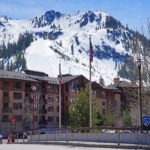
Toro Peak

🏔️ Overview
Toro Peak rises above Southern California’s Colorado Desert as the highest mountain in the Santa Rosa Mountains. Located in Riverside County, its summit reaches approximately 8,718 feet, making it one of the most prominent peaks in the state and an unmistakable landmark above the Coachella Valley, Anza-Borrego Desert, and Salton Sea region.
The mountain belongs to the broader Peninsular Ranges, which extend south through California and into Mexico’s Baja California Peninsula. Its elevation creates a remarkable ecological contrast: desert vegetation occupies the lower slopes, while pine forests and other high-elevation plant communities survive along the cooler upper ridges.
Toro Peak also has deep cultural significance for the Santa Rosa Band of Cahuilla Indians. The mountain’s highest summit lies within the Santa Rosa Indian Reservation, and public access is restricted unless permission has been granted by the tribe. A lower western summit within San Bernardino National Forest provides an alternative destination for hikers who wish to explore the mountain without crossing onto restricted land.
⚡ Fast Facts
| Fact | Details |
|---|---|
| Continent | North America |
| Country | United States |
| State/Province | California |
| County/Region | Riverside County |
| Range | Santa Rosa Mountains, part of the Peninsular Ranges |
| Parent Peak | San Jacinto Peak |
| Elevation | Approximately 8,718 feet / 2,657 meters |
| Prominence | Approximately 4,002 feet / 1,220 meters |
| Isolation | Approximately 20.71 miles / 33.33 kilometers |
| Nearest Higher Neighbor (NHN) | Red Tahquitz |
| Coordinates | Approximately 33.52358° N, 116.42580° W |
| Highest Point Of | Santa Rosa Mountains and Santa Rosa Indian Reservation |
| Publicly Accessible Alternative | Toro Peak West, approximately 8,316–8,322 feet |
| Main Access Road | Santa Rosa Mountain Road / Forest Road 7S02 |
| Nearby Protected Lands | San Bernardino National Forest and Santa Rosa and San Jacinto Mountains National Monument |
| Summit Access | Restricted tribal land; advance permission required if access is available |
📍 Location
Toro Peak is located in southern Riverside County, California, within the rugged Santa Rosa Mountains. The range rises between the Coachella Valley and the desert landscapes associated with Anza-Borrego Desert State Park.
The mountain stands south of Palm Springs and west of the Salton Sea. Nearby communities include Palm Desert, Mountain Center, Anza, and Idyllwild, although the summit area feels considerably more remote than these destinations might suggest.
California State Route 74, also known as the Palms to Pines Scenic Byway, provides access to the northern side of the mountain. Santa Rosa Mountain Road branches south from the highway approximately five miles east of its junction with State Route 371.
Land ownership around Toro Peak is divided among several jurisdictions. Portions of the surrounding high country lie within San Bernardino National Forest and the Santa Rosa and San Jacinto Mountains National Monument, while the highest summit belongs to the Santa Rosa Indian Reservation.
This distinction is essential when planning a visit. A road or trail passing through public land does not automatically provide permission to enter neighboring tribal property.
📏 Elevation & Prominence
Peakbagger’s lidar-based measurement places Toro Peak at approximately 8,717.6 feet, usually rounded to 8,718 feet, or about 2,657 meters.
Older references commonly list the mountain at 8,716 or 8,717 feet. These small differences reflect variations among survey methods, topographic maps, elevation models, and rounding conventions rather than any meaningful change in the mountain itself.
Toro Peak has approximately 4,002 feet of topographic prominence, making it one of California’s most geographically independent summits. Older references sometimes give a prominence of approximately 3,996 feet.
Topographic prominence measures how far a mountain rises above the lowest connecting saddle leading toward higher terrain. Toro Peak’s key saddle lies around 4,716 feet, creating a substantial separation between the Santa Rosa high country and the higher San Jacinto Mountains to the northwest.
Its nearest higher neighbor is Red Tahquitz, approximately 20.7 miles away. Its broader topographic parent is San Jacinto Peak.
The mountain’s western summit should not be confused with the true high point. The Sierra Club’s Hundred Peaks Section lists Toro Peak West at approximately 8,316 feet, while newer Peakbagger data places the same summit closer to 8,322 feet.
The western summit is lower, but its location on national forest land makes it the more practical and responsible objective when the main summit is closed to public access.
🪨 Geology
Toro Peak belongs to the Peninsular Ranges, a long mountain province shaped by ancient intrusive rocks, regional faulting, tectonic uplift, and erosion.
Much of the surrounding mountain system is associated with the Peninsular Ranges batholith, an enormous complex of igneous rocks that formed when magma cooled beneath the Earth’s surface. Over millions of years, uplift and erosion exposed these deeply formed rocks, creating the granite outcrops, boulder-strewn ridges, and rugged slopes characteristic of the region.
The Santa Rosa Mountains also have a particularly complicated relationship with the southern San Andreas and San Jacinto fault systems. Geological research indicates that the range experienced multiple phases of faulting and uplift as the Pacific–North American plate boundary evolved.
One phase of mountain exhumation began roughly eight million years ago. Later fault activity, particularly during the past several million years, helped raise and tilt portions of the range while neighboring desert basins developed below.
These processes created the dramatic contrast between Toro Peak’s forested highlands and the comparatively low Coachella Valley and Salton Trough.
Although the mountain contains igneous rocks, Toro Peak is not a volcano. Its present form reflects tectonic uplift and erosion rather than recent volcanic eruptions.
🌿 Flora & Fauna
Toro Peak functions as a Southern California “sky island,” an elevated habitat surrounded by much hotter and drier terrain. As elevation increases, desert vegetation gives way to chaparral, woodland, and isolated mountain forest.
Lower slopes and nearby desert areas support drought-adapted plants such as creosote bush, desert agave, yucca, cactus, and California juniper. At intermediate elevations, pinyon pine, manzanita, ceanothus, and chaparral become more common.
The higher elevations around Toro Peak and Santa Rosa Mountain support mixed conifer communities that may include Jeffrey pine, ponderosa pine, white fir, incense cedar, sugar pine, and limber pine.
Limber pine is particularly notable because its presence reflects cooler mountain conditions that differ sharply from the surrounding desert environment. The Santa Rosa Mountains also support several regionally uncommon plants, including rock draba, Ziegler’s aster, shaggy-haired alumroot, and Davidson’s stonecrop.
Wildlife in the broader mountain and desert landscape includes mule deer, coyotes, bobcats, mountain lions, rabbits, lizards, and numerous bird species. Steller’s jays, mountain chickadees, woodpeckers, hawks, and other forest or raptor species may be encountered depending on elevation and season.
The surrounding Santa Rosa Mountains are also important habitat for Peninsular bighorn sheep, an endangered population adapted to the steep desert-facing slopes of the Peninsular Ranges. These animals are more closely associated with rugged desert mountainsides than with the highest forested summit.
Water is limited across much of the upper mountain. Visitors should never assume that a spring is flowing, accessible, or safe to drink.

🪶 Cahuilla Heritage & Tribal Land
Toro Peak lies within the ancestral homeland of the Mountain Cahuilla people.
The Santa Rosa Band of Cahuilla Indians identifies Toro Peak, Coyote Canyon, Garner Valley, and the surrounding Santa Rosa Mountains as places traditionally occupied by its ancestral clans. Seasonal movement between desert canyons and cooler mountain elevations was an important part of life in this landscape.
According to the tribe, families traditionally used lower desert areas during winter and moved toward the cooler elevations of Toro Peak and nearby mountain settlements during the hottest months.
Today, the highest summit remains part of the Santa Rosa Indian Reservation. Communications facilities on the mountain are associated with tribal land and regional public-safety infrastructure.
Visitors should respect reservation boundaries, locked gates, posted signs, and tribal authority. Access to the highest summit should be attempted only if the Santa Rosa Band of Cahuilla Indians has provided advance authorization and any required permits.
The fact that older trip reports describe people continuing beyond a gate does not establish a legal public right of access.
🥾 Hiking & Climbing Routes
Santa Rosa Mountain Road Approach
The principal approach begins from State Route 74 at Forest Road 7S02, also called Santa Rosa Mountain Road or the Santa Rosa Mountain Truck Trail.
The road travels into the Santa Rosa high country and passes through increasingly remote terrain. It is rough, rocky, and potentially difficult after storms, with high clearance and four-wheel drive strongly recommended.
Approximately 11.5 miles from the highway, a road junction provides access to the area used for the western summit hike. Road conditions, closures, and permitted vehicle access should always be confirmed before departure.
A low-clearance passenger vehicle may be unsuitable even if portions of the road initially appear manageable.
Toro Peak West: Public-Land Hiking Route
Toro Peak West is the recommended hiking objective when access to the true summit is restricted.
The Sierra Club’s Hundred Peaks Section describes a route beginning near a junction at approximately 7,800 feet. From the parking area, hikers approach a nearby gate, then leave the road and ascend a forested gully while remaining on national forest land.
The route reaches a saddle before turning west toward the lower summit, where the Hundred Peaks Section register is located.
Approximate route statistics include:
- Distance: Approximately 1 mile round trip.
- Elevation gain: Approximately 500 feet.
- Difficulty: Generally easy to moderate in favorable conditions.
- Terrain: Forested slopes, loose ground, and off-trail navigation.
- Summit elevation: Approximately 8,316–8,322 feet.
Although the hike itself is relatively short, the drive to its starting point can be time-consuming and demanding.
True Summit Access
Toro Peak’s true summit stands southeast of Toro Peak West and contains communications facilities.
The highest point is located on the Santa Rosa Indian Reservation. Public access is restricted, and hikers should not cross the reservation boundary or continue beyond a locked gate without prior permission from the tribe.
Access arrangements, if available, may involve an advance permit, fees, or additional conditions. These requirements can change, so visitors should contact the Santa Rosa Band of Cahuilla Indians directly before making plans.
Hiking From State Route 74
If Forest Road 7S02 is closed to vehicles, the approach becomes substantially longer.
Reaching the western summit area from the highway can require more than 20 miles of round-trip travel along the road, with significant elevation gain and limited access to water. Such an outing is appropriate only for experienced, well-prepared hikers who have confirmed that pedestrian travel is allowed.
A road closure caused by wildfire, public-safety concerns, storm damage, or an official area closure may prohibit more than vehicle access. Never assume that a closed gate automatically permits hiking beyond it.
🏔️ Field Guide Tip: Plan for Toro Peak West unless you have received advance authorization to enter the reservation. Carry offline maps showing property boundaries, and remember that an open gate does not automatically mean tribal land is open to the public.
Because cellular reception can be unreliable, bring the Ten Essentials for hiking and consider carrying a satellite communicator.
🌤️ Best Time to Visit
The most practical season for exploring Toro Peak’s upper elevations is generally late spring through early autumn, when snow and ice are less likely to block the mountain road.
Late spring often brings comfortable temperatures, seasonal wildflowers, and greener vegetation. However, shaded sections of road may remain muddy or icy after a snowy winter.
Summer offers comparatively cooler conditions in the high country than in Palm Desert, Palm Springs, or Borrego Springs. Nevertheless, exposed road sections can become hot, afternoon thunderstorms occasionally develop, and wildfire restrictions may affect access.
Early autumn can provide excellent visibility and more comfortable daytime temperatures. Fire danger may remain significant, and road closures are possible even when the weather appears favorable.
Winter presents the greatest challenges. Snow, ice, freezing temperatures, and storm damage can make Forest Road 7S02 hazardous or impassable. A road that is technically open may still be unsuitable for ordinary vehicles.
Before visiting, check current forest alerts, fire restrictions, weather forecasts, road conditions, and any tribal access requirements.
⛺ Camping Near Toro Peak
The Santa Rosa Mountain area contains designated yellow-post campsites managed by San Bernardino National Forest.
These remote sites are scattered along the high ridges and offer a quieter alternative to developed campgrounds. The Forest Service identifies 14 sites in the area, generally positioned between approximately 7,300 and 8,000 feet.
Amenities are limited. Some sites have picnic tables and fire rings, but visitors should not expect reliable drinking water, trash collection, or full campground facilities.
Campsites are generally first-come, first-served, and campers must pack out all trash. A California campfire permit may be required for fires or certain stoves, but a permit does not override active fire restrictions or emergency closures.
Road access can be rough, and high-clearance four-wheel-drive vehicles are recommended.
🧭 Nearby Mountains & Attractions

Santa Rosa Mountain
Santa Rosa Mountain is a neighboring high summit northwest of Toro Peak. Although it shares its name with the surrounding range, it is lower than Toro Peak and is not the range high point.
Its forested ridges, remote campsites, and views toward the surrounding desert make it a worthwhile addition to a visit when access conditions allow.
Red Tahquitz
Red Tahquitz lies northwest of Toro Peak in the San Jacinto Mountains and serves as its nearest higher neighbor.
The mountain belongs to the rugged high country near Idyllwild and forms part of a cluster of summits associated with Tahquitz Valley and the Desert Divide.
Grey Tahquitz
Grey Tahquitz rises near Red Tahquitz and contributes to the same high-elevation landscape above Idyllwild.
Its granite terrain and forested surroundings provide a useful comparison with the isolated mountain habitats found around Toro Peak.
Tahquitz Peak
Tahquitz Peak is known for its historic fire lookout, expansive views, and hiking routes near Idyllwild.
It is a more established hiking destination than Toro Peak’s restricted main summit, although seasonal conditions and permit requirements still require advance planning.
San Jacinto Peak
San Jacinto Peak rises northwest of Toro Peak and forms the highest summit in Riverside County.
Its mountain trails, high-elevation forests, and dramatic relief above Palm Springs make it one of Southern California’s best-known peaks.
San Gorgonio Mountain
San Gorgonio Mountain stands farther north across San Gorgonio Pass. It is the highest mountain in Southern California and a prominent landmark visible from many regional summits.
Anza-Borrego Desert State Park
Anza-Borrego Desert State Park protects a vast landscape of desert valleys, badlands, palm oases, and rugged mountains south of Toro Peak.
From the Borrego Springs area, the Santa Rosa Mountains form a dramatic northern skyline. The park is especially popular during winter and spring, when desert temperatures are more comfortable.
Santa Rosa and San Jacinto Mountains National Monument
The surrounding national monument protects a varied landscape of desert slopes, palm oases, mountain ridges, wildlife habitat, and culturally significant lands.
Its visitor center near Palm Desert provides information about hiking opportunities, seasonal conditions, and responsible recreation throughout the broader region.
💡 Fun Facts
- Toro Peak is the highest mountain in the Santa Rosa Mountains.
- Its lidar-refined elevation is approximately 8,718 feet.
- Older maps and references commonly list its height as 8,716 or 8,717 feet.
- The mountain has approximately 4,002 feet of topographic prominence.
- Toro Peak is among California’s most prominent summits.
- Its nearest higher neighbor is Red Tahquitz, more than 20 miles to the northwest.
- The true summit is also the highest point of the Santa Rosa Indian Reservation.
- Toro Peak West is approximately 400 feet lower than the main summit but offers a public-land alternative for hikers.
- The mountain’s high-elevation forest rises above surrounding desert landscapes, creating a sky-island environment.
- Communications equipment on the true summit supports regional infrastructure and public-safety operations.
- The Santa Rosa Band of Cahuilla Indians identifies Toro Peak as part of its ancestral homeland.
- The summit area can experience snow and freezing temperatures while communities in the Coachella Valley remain comparatively warm.
❓ Frequently Asked Questions
How high is Toro Peak?
Toro Peak reaches approximately 8,718 feet, or 2,657 meters, above sea level. Older sources commonly list the summit at 8,716 or 8,717 feet.
Where is Toro Peak located?
Toro Peak is located in Riverside County, California, within the Santa Rosa Mountains. It stands south of Palm Springs and west of the Salton Sea.
Is Toro Peak the highest mountain in the Santa Rosa Mountains?
Yes. Toro Peak is the highest summit in the Santa Rosa Mountains.
Can you hike to the top of Toro Peak?
The true summit is located on the Santa Rosa Indian Reservation, and public access is restricted. Visitors should attempt to reach it only after receiving permission from the Santa Rosa Band of Cahuilla Indians.
What is Toro Peak West?
Toro Peak West is a lower summit located on national forest land. It is generally listed between approximately 8,316 and 8,322 feet, depending on the source, and provides an alternative hiking destination when the main summit is inaccessible.
Do you need four-wheel drive to reach Toro Peak?
The Forest Service recommends high clearance and four-wheel drive for the rough mountain road serving the Santa Rosa high country. Vehicle requirements depend on current road conditions, weather, and recent maintenance.
What is Toro Peak’s nearest higher neighbor?
Toro Peak’s nearest higher neighbor is Red Tahquitz, approximately 20.7 miles to the northwest.
What is Toro Peak’s prominence?
Toro Peak has approximately 4,002 feet, or 1,220 meters, of topographic prominence. Older references may list approximately 3,996 feet.
Is Toro Peak part of San Bernardino National Forest?
Parts of the surrounding mountain lie within San Bernardino National Forest, but the highest summit itself is located on the Santa Rosa Indian Reservation.
Is camping available near Toro Peak?
Yes. Designated yellow-post campsites are available in the Santa Rosa Mountain area on national forest land. Facilities are limited, and visitors should confirm current fire restrictions, road conditions, and camping requirements.
Does Toro Peak receive snow?
Yes. The mountain’s elevation is high enough for winter snow, ice, and freezing temperatures. These conditions can make the access road hazardous or impassable.
Are dogs allowed near Toro Peak?
Dog regulations depend on the specific jurisdiction. Dogs may be allowed under leash requirements at certain national forest campsites, while many national monument trails restrict dogs to protect wildlife. Tribal land is subject to separate rules, and permission should never be assumed.
🔗 Related Articles
- Red Tahquitz
- Grey Tahquitz
- Tahquitz Peak
- Cienaga Peak
- San Jacinto Peak
- San Gorgonio Mountain
- Santiago Peak
- The Ten Essentials for Hiking
- Satellite Communicators: How to Stay Connected Beyond Cell Service
- Best Hiking Backpacks
📚 Sources
- Peakbagger — Toro Peak
- Peakbagger — Toro Peak West
- PeakVisor — Toro Peak
- Sierra Club Hundred Peaks Section — Toro Peak
- Santa Rosa Band of Cahuilla Indians — Cultural Heritage
- U.S. Forest Service — Santa Rosa Yellow Post Sites
- U.S. Forest Service — Santa Rosa and San Jacinto Mountains National Monument
- Bureau of Land Management — Santa Rosa and San Jacinto Mountains National Monument
- U.S. Geological Survey — Preliminary Geologic Map of the Southern Santa Rosa Mountains
- Mason and Colleagues — Two-Phase Exhumation of the Santa Rosa Mountains