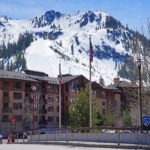
Torreys Peak

🏔️ Overview
Torreys Peak is one of Colorado’s best-known fourteeners, rising along the Continental Divide in the central Front Range of the Rocky Mountains. Its sharply defined summit, steep eastern face, and close relationship with neighboring Grays Peak make it one of the most recognizable mountain destinations near Denver.
Although Torreys is often climbed with Grays Peak, it is a distinct and impressive mountain in its own right. The standard South Slopes route provides a relatively straightforward trail ascent, while Kelso Ridge offers one of the Front Range’s classic exposed scrambles. Steep snow lines such as Dead Dog Couloir and Emperor Couloir add even more serious mountaineering options during suitable spring conditions.
Torreys Peak stands directly on the boundary between Clear Creek and Summit counties. The summit also divides two major watersheds: water flowing east eventually enters the South Platte River system, while western drainage reaches the Colorado River through tributaries of the Blue River.
⚡ Fast Facts
| Fact | Details |
|---|---|
| Continent | North America |
| Country | United States |
| State/Province | Colorado |
| County/Region | Clear Creek County and Summit County |
| Mountain Range | Front Range, Rocky Mountains |
| Parent Peak | Grays Peak |
| Elevation | 14,272 feet / 4,350 meters |
| Prominence | 549 feet / 167 meters |
| Isolation | 0.68 miles / 1.1 kilometers |
| Nearest Higher Neighbor (NHN) | Grays Peak, south-southeast |
| Coordinates | 39.642753° N, 105.821223° W |
| First Recorded Ascent | 1861 by Charles C. Parry |
| Standard Route | South Slopes from Stevens Gulch |
| Standard Difficulty | Class 1 hike |
Older USGS topographic maps list Torreys Peak at 14,267 feet. Modern measurements place the summit at approximately 14,271.9 feet, which is commonly rounded to 14,272 feet.
📍 Location
Torreys Peak is located approximately 40 miles west of Denver, near the historic communities of Georgetown and Silver Plume. Its position close to Interstate 70 makes it one of Colorado’s more accessible fourteeners, although the final approach to the upper trailhead can be considerably more difficult than its proximity to the highway suggests.
The summit sits on the Continental Divide and forms part of the boundary between two national forests. Its eastern slopes lie within Arapaho and Roosevelt National Forests, while the western side descends into White River National Forest.
Most hikers begin at the Grays Peak Trailhead in Stevens Gulch. The trailhead is reached by following Stevens Gulch Road south from the Bakerville exit on Interstate 70. This unpaved road is rough, narrow, and deeply rutted in places. High-clearance vehicles are generally recommended, and winter or early-season visitors may need to park near the highway and walk the road.
The mountain’s closeness to Denver contributes to heavy summer use. Weekends with favorable weather can bring crowded parking areas and substantial traffic along the main trail.
📏 Elevation & Prominence
Torreys Peak reaches approximately 14,272 feet above sea level, placing it among the highest mountains in both Colorado and the wider Rocky Mountain system.
Despite its great elevation, Torreys has only 549 feet of topographic prominence. This comparatively modest prominence reflects its close connection to Grays Peak. The two summits are separated by a saddle at approximately 13,723 feet, allowing hikers to travel between them without descending below treeline or returning to the main basin.
Grays Peak is Torreys Peak’s parent mountain and nearest higher neighbor. It lies only about 0.68 miles to the south-southeast and rises slightly higher. Because of this close relationship, the two mountains are often discussed—and climbed—as a pair.
Torreys Peak remains visually dramatic despite its limited prominence. Its northeastern ridges and steep east-facing couloirs rise sharply above Stevens Gulch, producing a far more rugged profile than its prominence measurement alone might suggest.
🪨 Geology
Torreys Peak is built primarily from the ancient crystalline rocks that form the core of Colorado’s Front Range. Geological studies in the Grays Peak quadrangle identify metamorphic and igneous rocks that preserve evidence of tectonic events dating roughly 1.8 to 1.6 billion years into the Precambrian.
These old rocks were later uplifted during the Laramide orogeny, the mountain-building episode responsible for much of the modern Rocky Mountains. Beginning approximately 70 million years ago, deep compressional forces raised large blocks of continental crust and created the foundations of the Front Range.
More recent glaciers and repeated freeze-thaw cycles shaped the mountain’s present appearance. Ice flowing through the surrounding valleys excavated broad basins and steepened the slopes above Stevens Gulch. Frost continues to split exposed rock along the summit ridges, producing talus, scree, and the loose blocks encountered on more difficult routes.
Torreys Peak’s sharp profile contrasts with the somewhat broader slopes of Grays Peak. Its northeast side contains several deeply cut couloirs, including Dead Dog, Emperor, and the Tuning Fork, which hold snow well into spring and sometimes early summer.
To learn more about the forces responsible for landscapes like Torreys Peak, explore A Geological History of the Rocky Mountains and The Alpine Glaciers of the Rocky Mountains.
🌿 Flora & Fauna
The majority of the standard route travels through alpine tundra above treeline. Vegetation is low-growing and specially adapted to fierce winds, intense sunlight, short summers, and freezing temperatures that can occur during any month of the year.
Common alpine plants in the central Front Range include:
- Moss campion
- Alpine forget-me-not
- Sky pilot
- Old-man-of-the-mountain
- Alpine avens
- Mountain gentian
- Dwarf clover and sedges
Wildflowers typically bloom during the brief period between snowmelt and the first hard freezes of late summer or early autumn. Their growing season may last only a few weeks in exposed locations.
American pikas and yellow-bellied marmots inhabit rocky areas around the trail and summit ridges. White-tailed ptarmigan may be seen among the tundra and talus, while mountain goats occasionally travel through the Grays–Torreys area. Elk, mule deer, coyotes, and smaller forest animals occupy lower elevations around Stevens Gulch.
Alpine tundra is exceptionally vulnerable to trampling. Plants that require decades to establish can be damaged by a single season of concentrated foot traffic.
🏔️ Field Guide Tip: Remain on established trails and durable rock whenever possible. Avoid walking across tundra to pass other hikers or create shortcuts, particularly near switchbacks.
🥾 Hiking & Climbing Routes
South Slopes
The South Slopes route is the standard way to climb Torreys Peak. It begins at the Grays Peak Trailhead and initially follows the same well-established path used for Grays Peak.
The trail climbs steadily through Stevens Gulch before reaching a junction high in the basin. Hikers heading directly to Torreys turn toward the saddle between the two mountains and ascend the southern side of Torreys Peak.
Approximate route statistics include:
- Round-trip distance: 7.75 miles
- Elevation gain: 3,000 feet
- Difficulty: Class 1
- Exposure: Low
The maintained trail and relatively uncomplicated navigation make this one of the more approachable fourteener routes in Colorado. Nevertheless, the elevation, rapidly changing weather, and long period spent above treeline make it a serious mountain hike.
Grays and Torreys Combination
Many hikers climb both summits during the same outing. The usual circuit ascends Grays Peak first, descends to the Grays–Torreys saddle, and then climbs the connecting ridge to Torreys Peak.
The combined route covers approximately 8.25 miles and gains about 3,600 feet. Although technically classified as a Class 1 hike under dry summer conditions, the additional descent and ascent between the peaks make it considerably more tiring than climbing either summit alone.
Hikers can descend from Torreys through the saddle and reconnect with the main trail rather than returning over Grays.
Kelso Ridge
Kelso Ridge is the mountain’s classic scrambling route. It follows the rugged northeast ridge between Torreys Peak and Kelso Mountain.
- Round-trip distance: Approximately 6.75 miles
- Elevation gain: Approximately 3,100 feet
- Difficulty: Class 3
- Exposure: High
The route includes steep scrambling, loose rock, route-finding challenges, and an exposed knife-edge section. A prominent white-rock formation near the upper ridge is one of its best-known landmarks.
Kelso Ridge should not be treated as a minor variation of the standard trail. It is appropriate only for climbers comfortable with exposed Class 3 terrain and the consequences of a fall.
Snow and Couloir Routes
Torreys Peak contains several established snow climbs:
- Dead Dog Couloir
- Emperor Couloir
- Tuning Fork
- Northwest Face
These routes involve steep snow, avalanche hazards, potential rockfall, and rapidly changing conditions. They generally require an ice axe, crampons, helmet, avalanche education, and experience evaluating mountain snowpacks.
Winter approaches also present avalanche danger below Kelso Mountain, where slides can cross or threaten sections of the summer trail.

🌤️ Best Time to Visit
For most hikers, the best time to climb Torreys Peak is from July through September, when the standard trail is more likely to be free of continuous snow.
The upper trailhead area may remain snowy until late June or even July in heavy snow years. Stevens Gulch Road is not normally plowed, so early- and late-season access may require beginning near Interstate 70 and adding several miles to the hike.
Summer hikers should begin well before sunrise. Torreys Peak is almost entirely exposed above treeline, leaving few safe options if thunderstorms develop. Lightning, hail, strong winds, and sudden temperature drops can occur even when the morning begins with clear skies.
September can bring cooler temperatures, fewer wildflowers, and somewhat lighter crowds. It can also bring early snowstorms and icy trail conditions.
Winter and spring ascents require mountaineering skills, avalanche awareness, winter navigation, and equipment suited to severe alpine weather.
🧭 Nearby Mountains & Attractions
Grays Peak
Grays Peak is Torreys Peak’s closest neighbor, parent mountain, and nearest higher summit. The connecting saddle makes the two peaks one of Colorado’s most popular double-fourteener outings.
Kelso Mountain
Kelso Mountain rises northeast of Torreys and forms the lower end of Kelso Ridge. Although considerably lower than Torreys, it creates much of the dramatic terrain visible from the Stevens Gulch approach.
Loveland Pass
Loveland Pass crosses the Continental Divide north of Torreys Peak. Roadside access provides expansive views of the surrounding Front Range and several hiking routes to high ridgelines.
Georgetown and Silver Plume
The historic mining towns of Georgetown and Silver Plume contain preserved nineteenth-century architecture, restaurants, museums, and access to the Georgetown Loop Railroad. They are convenient bases for exploring the Grays–Torreys area.
Mount Bierstadt and Mount Blue Sky
Mount Bierstadt and Mount Blue Sky rise southeast of Torreys Peak. Both are prominent Front Range fourteeners visible from several high points in the region.
Longs Peak
On exceptionally clear days, hikers may be able to identify Longs Peak far to the north. Its distinctive summit profile marks one of the most famous mountains in Colorado.
💡 Fun Facts
- Torreys Peak and Grays Peak are separated by less than one mile.
- Botanist Charles C. Parry made the first recorded ascent in 1861.
- Parry named the mountain for John Torrey, one of the most influential American botanists of the nineteenth century.
- John Torrey did not see the mountain bearing his name until 1872.
- Torreys Peak lies on both a county boundary and the Continental Divide.
- Its eastern and western slopes drain toward different sides of the continent.
- The name is officially written Torreys Peak, without an apostrophe.
- The mountain’s modern measured elevation is several feet higher than the figure printed on older USGS maps.
- Kelso Ridge is considered one of the classic introductory Class 3 ridge scrambles among Colorado’s fourteeners.
- The summit provides broad views across the Front Range, Gore Range, Tenmile Range, and central Colorado high country.
❓ Frequently Asked Questions
How high is Torreys Peak?
Torreys Peak has a modern measured elevation of approximately 14,272 feet, or 4,350 meters. Older maps commonly show an elevation of 14,267 feet.
Is Torreys Peak difficult to hike?
The standard South Slopes route is a Class 1 hike with a defined trail, but it still requires about 3,000 feet of elevation gain and prolonged travel above treeline. Altitude, weather, and physical endurance are greater concerns than technical climbing on the standard route.
Can beginners climb Torreys Peak?
Well-prepared hikers with suitable fitness and experience at altitude may find the standard route manageable. It should not be considered an effortless beginner hike, and Kelso Ridge is not appropriate for inexperienced climbers.
Can Grays and Torreys be climbed together?
Yes. The two mountains are commonly combined in an approximately 8.25-mile route with about 3,600 feet of total elevation gain.
What is Torreys Peak’s nearest higher neighbor?
Its nearest higher neighbor is Grays Peak, approximately 0.68 miles to the south-southeast.
Do I need a four-wheel-drive vehicle?
Four-wheel drive may not always be essential under dry conditions, but a high-clearance vehicle is strongly recommended for Stevens Gulch Road. Conditions can change after storms, runoff, or road damage.
Are dogs allowed on the trail?
Dogs are generally permitted under applicable national forest regulations, but they should remain under control. Leashing helps protect wildlife, fragile tundra, other hikers, and the dogs themselves on steep or crowded terrain.
Is Torreys Peak dangerous in winter?
Yes. Winter and spring conditions introduce avalanche terrain, deep snow, severe wind, difficult navigation, and extreme cold. Snow climbs should be attempted only with suitable training, equipment, and current avalanche information.
🔗 Related Articles
- Grays Peak
- Front Range
- The Rocky Mountains
- Highest Peaks in Colorado
- Mount Bierstadt
- Mount Blue Sky
- Longs Peak
- Mountains in the United States
🔗 Related Hiking and Safety Guides
📚 Sources
- Peakbagger — Torreys Peak (Peakbagger)
- 14ers.com — Torreys Peak Routes and Route Statistics (14ers.com)
- U.S. Forest Service — Grays Peak Trailhead (US Forest Service)
- U.S. Geological Survey — Elevations of Named Summits Over 14,000 Feet (USGS)
- U.S. Geological Survey — Historic Trail Maps of Eastern Colorado (USGS Publications)
- Geological Society of America — Geology of the Grays Peak Quadrangle (GSA Confex)
- U.S. Forest Service — Trail Improvements on Colorado’s Fourteeners (US Forest Service)