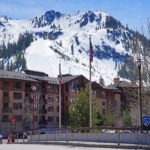
🏔️ Overview
The White Mountains are a spectacular high-desert mountain range rising along the eastern side of California’s Owens Valley and extending northward toward the Nevada border. Although they stand less than 20 miles east of parts of the Sierra Nevada, the White Mountains have a dramatically different character. Instead of deeply glaciated granite valleys and dense forests, much of the range consists of broad, arid plateaus, exposed ridges, sparse alpine vegetation, and rugged desert slopes.
The range is part of the Basin and Range Province and contains some of the highest desert terrain in North America. Its highest summit, White Mountain Peak, rises above 14,000 feet and is one of California’s highest mountains.
The White Mountains are perhaps even more famous for their ancient Great Basin bristlecone pines. Trees in the Ancient Bristlecone Pine Forest have survived for thousands of years in harsh, windswept environments where cold temperatures, poor soils, limited moisture, and short growing seasons make life extremely difficult.
Other highlights include Nevada’s highest point, Boundary Peak; the approximately 231,000-acre White Mountains Wilderness; extraordinary views across Owens Valley toward the Sierra Nevada; and the high-altitude scientific facilities of the University of California’s White Mountain Research Center.
⚡ Fast Facts
| Fact | Details |
|---|---|
| Continent | North America |
| Country | United States |
| States | California and Nevada |
| Major California Counties | Inyo and Mono counties |
| Physiographic Region | Basin and Range Province / Great Basin |
| Highest Summit | White Mountain Peak |
| Traditional Elevation of Highest Summit | 14,252 ft / 4,344 m |
| LiDAR-Refined Elevation | About 14,244.8 ft / 4,341.8 m |
| Nevada State High Point | Boundary Peak |
| Boundary Peak Elevation | About 13,140 ft / 4,005 m |
| Major Protected Area | White Mountains Wilderness |
| Wilderness Size | Approximately 231,000 acres |
| Famous Trees | Great Basin bristlecone pine |
| Major National Forest | Inyo National Forest |
| Neighboring Range | Sierra Nevada |
| Major Valley to the West | Owens Valley |
| Climate | High-desert, subalpine and alpine |
| Major Recreation | Hiking, peak bagging, wildlife viewing, stargazing and bristlecone-pine viewing |
📍 Location and Geography
The White Mountains rise immediately east of the upper Owens Valley in eastern California. Across the valley to the west stands the much more famous Sierra Nevada, creating one of the most dramatic mountain-to-mountain landscapes in the western United States.
The range stretches northward from the vicinity of Westgard Pass and Deep Springs Valley toward the California–Nevada border. The Inyo Mountains continue southward beyond Westgard Pass, while Fish Lake Valley lies east of much of the northern White Mountains.
The White Mountains belong to the Great Basin portion of the Basin and Range Province. This region is characterized by a succession of mountain ranges separated by arid valleys formed largely through crustal extension and faulting.
The range rises extraordinarily high above its desert surroundings. The U.S. Forest Service describes the White Mountains as one of the largest and highest desert mountain ranges in North America, with elevations exceeding 14,000 feet.
Across Owens Valley, visitors can look toward some of the greatest summits of the Sierra Nevada, including Mount Whitney farther south.
⛰️ Highest and Most Notable Peaks
Several summits in the White Mountains exceed 13,000 feet.
| Mountain | Approximate Elevation | Significance |
|---|---|---|
| White Mountain Peak | 14,244.8 ft LiDAR / traditionally 14,252 ft | Highest summit in the White Mountains |
| Mount Dubois | About 13,563 ft | One of the range’s highest independent summits |
| Montgomery Peak | About 13,436 ft | High summit near the California–Nevada border |
| Boundary Peak | About 13,140 ft | Highest point in Nevada |
| Mount Barcroft | About 13,042 ft | Near the White Mountain Research Center’s Barcroft Station |
White Mountain Peak
White Mountain Peak is the dominant summit of the range.
For many years it has commonly been listed at 14,252 feet (4,344 meters). Modern LiDAR-derived data used by Peakbagger places the natural summit closer to 14,244.8 feet (4,341.8 meters).
The discrepancy reflects differences in surveying methods, vertical datums, mapping and modern elevation datasets. For historical continuity, many government, recreational and reference sources still use the traditional 14,252-foot figure.
Either measurement places White Mountain Peak among California’s highest mountains.
It also has approximately 7,195 feet of topographic prominence and roughly 67.4 miles of isolation, making it an exceptionally independent summit.
Boundary Peak
At the northern end of the range, Boundary Peak rises to approximately 13,140 feet and is the highest natural point in Nevada.
Interestingly, nearby Montgomery Peak is higher but lies on the California side of the state line. Boundary Peak itself has relatively modest prominence compared with Montgomery Peak, but its position just inside Nevada gives it considerable geographic importance.
The Forest Service identifies Trail Canyon and Queen Canyon as the principal approaches to Boundary Peak.

🪨 Geology
The White Mountains are geologically complex.
They occupy part of the Basin and Range Province, where extension of Earth’s crust has created numerous uplifted mountain blocks separated by down-dropped valleys.
The rocks exposed in the White Mountains represent an exceptionally long span of geological history. Sedimentary sequences include limestone, dolomite, quartzite and related rocks, while substantial parts of the mountains also contain granitic and metamorphic rocks.
U.S. Geological Survey research has identified more than 500 square miles of dominantly granitic outcrop in the White Mountains area. Several periods of intrusive igneous activity are represented, including plutons dating from the Mesozoic Era.
The range is also crossed by significant fault systems. The White Mountain Fault along portions of the range front is part of the tectonic story responsible for the tremendous relief between the mountains and adjacent valleys.
Unlike the overwhelmingly granitic Sierra Nevada across Owens Valley, the White Mountains therefore expose a particularly diverse mixture of sedimentary, metamorphic and igneous rocks.
🌲 Ancient Bristlecone Pines
The most celebrated living organisms of the White Mountains are the Great Basin bristlecone pines (Pinus longaeva).
These extraordinary trees are among the longest-lived individual, non-clonal organisms known on Earth. Living trees in the Ancient Bristlecone Pine Forest exceed 4,000 years in age, while scientifically studied specimens from the region have demonstrated that the species can survive for approximately five millennia.
Many bristlecones grow on pale dolomite-derived soils.
These soils are alkaline, rocky, nutrient-poor and high in calcium and magnesium. Such difficult conditions limit competition from many other plants. Bristlecone pines grow extremely slowly under these stresses, producing unusually dense wood that can persist for centuries even after parts of a tree die.
Their twisted trunks and sculpted branches reflect thousands of years of exposure to wind, snow, drought and cold.
Schulman Grove
Schulman Grove is the primary developed visitor area within the Ancient Bristlecone Pine Forest.
Several trails begin near the visitor center, including:
- Discovery Trail — approximately 1 mile
- Methuselah Trail — approximately 4.5 miles
- Bristlecone Cabin Trail — approximately 3.5 miles
The famous Methuselah tree grows along the Methuselah Trail, although its exact identity is deliberately not marked for protection.
Patriarch Grove
Farther north and higher in the mountains is Patriarch Grove.
The grove lies at roughly 11,000 feet and contains the Patriarch Tree, recognized as the largest known Great Basin bristlecone pine by volume.
The landscape here becomes particularly stark, with pale rock, sparse vegetation and twisted trees standing against an almost treeless alpine plateau.
Access involves an unpaved mountain road, and conditions can be considerably rougher than those around Schulman Grove.

🌿 Flora and Fauna
Despite the dry climate, the White Mountains support exceptional biological diversity.
The Forest Service reports more than 1,000 species and varieties of plants within the White Mountains.
Vegetation changes dramatically with elevation.
Lower and middle elevations contain communities of sagebrush, pinyon pine, juniper and other drought-adapted vegetation.
Higher elevations support limber pine and Great Basin bristlecone pine. Near and above treeline, forests give way to alpine fellfields and extremely low-growing plants adapted to wind, freezing temperatures, strong ultraviolet radiation and limited moisture.
Wildlife found in the region includes:
- Desert bighorn sheep
- Mule deer
- Pronghorn
- Small alpine and desert mammals
- Raptors and other mountain birds
- Clark’s nutcrackers and other birds associated with high-elevation pine habitats
Desert bighorn sheep are of particular scientific interest. Researchers have studied their use of the high White Mountains and their movements through this unusually dry alpine environment.
🌤️ Climate
The White Mountains lie in the rain shadow of the Sierra Nevada.
Moist Pacific air loses much of its precipitation while crossing the Sierra, leaving the White Mountains considerably drier than one might expect for mountains reaching more than 14,000 feet.
The result is an unusual combination of extreme elevation and desert-like dryness.
At higher elevations, temperatures can remain cold even during summer. Strong winds, intense sunshine, freezing nights and sudden storms are possible.
The University of California’s Barcroft Station, at approximately 12,470 feet, sits above treeline in an alpine environment where severe winds and very low temperatures can occur.
Snow can make high roads and trails inaccessible for substantial portions of the year.
🥾 Hiking and Exploring the White Mountains
The White Mountains provide excellent opportunities for hiking and backcountry exploration, but their broad slopes should not be mistaken for easy terrain.
Elevation is the most important hazard.
Many popular destinations lie between 10,000 and 14,000 feet, where oxygen levels are substantially lower than at sea level. Visitors arriving directly from low elevations can develop symptoms of acute mountain sickness.
Water is another major consideration. Despite the high elevations, the White Mountains are exceptionally dry. Natural water sources are limited or absent along many routes.
White Mountain Peak Route
The standard route to White Mountain Peak follows a research and service road through the high country.
Compared with many California fourteeners, the route is technically straightforward when dry. However, its length, exposure and extreme altitude still make it a serious high-mountain undertaking.
The trail begins above 11,000 feet and remains at very high altitude for hours.
Boundary Peak
Boundary Peak is a more rugged objective.
Forest Service guidance specifically notes that hikers should possess route-finding and cross-country navigation skills. The Trail Canyon and Queen Canyon approaches both involve significant elevation gain and remote terrain.
Ancient Bristlecone Pine Forest Trails
Visitors who are not interested in climbing major summits can still experience the White Mountains through the trails at Schulman and Patriarch groves.
These routes provide one of the most accessible opportunities to explore high-elevation White Mountains scenery while learning about bristlecone ecology.
🏔️ Field Guide Tip: Do not judge a White Mountains hike solely by its elevation gain. Starting a hike above 10,000 or 11,000 feet dramatically increases the physical demands. Acclimatize when possible, carry more water than you expect to need, protect yourself from intense ultraviolet exposure and carry the Ten Essentials for Hiking.

🏞️ White Mountains Wilderness
A large portion of the range is protected as the White Mountains Wilderness.
Congress designated the wilderness in 2009 as part of the Omnibus Public Lands Management Act.
The protected area encompasses approximately 231,000 acres.
Almost 207,000 acres are managed by Inyo National Forest, while roughly 24,000 acres are administered by the Bureau of Land Management.
The wilderness preserves vast tracts of high desert, subalpine forest, alpine plateaus, canyons and wildlife habitat.
One of its most significant waterways is Cottonwood Creek, a National Wild and Scenic River flowing from the high White Mountains toward the desert below. The Forest Service describes it as the only stream in the Great Basin protected as a Wild and Scenic River from its alpine source all the way to its desert terminus.
🔭 White Mountain Research Center
The White Mountains also have exceptional scientific importance.
The University of California’s White Mountain Research Center provides researchers with access to one of North America’s greatest natural high-altitude laboratories.
Facilities are distributed across a remarkable elevational gradient.
Major stations include:
- Owens Valley Station — about 4,108 feet
- Crooked Creek Station — about 10,150 feet
- Barcroft Station — about 12,470 feet
- Summit Station — about 14,246 feet
Scientists have used these facilities to investigate subjects including high-altitude physiology, hypoxia, astronomy, atmospheric science, climate change, alpine ecology and bighorn sheep conservation.
The extremely dry air, high elevation and relative lack of light pollution make the mountains especially valuable for atmospheric and astronomical observations.
🌤️ Best Time to Visit
Summer through early fall generally provides the most reliable access to the highest portions of the White Mountains.
Late June through September is usually the most practical season for major high-elevation hiking, although snowpack and road conditions vary considerably from year to year.
Schulman Grove is typically accessible during the warmer part of the year, while the higher Patriarch Grove road may remain inaccessible longer because of snow or road conditions.
Visitors should always check current Forest Service road, weather and fire information before traveling into the high country.
Thunderstorms, strong winds and freezing temperatures remain possible even in summer.
🧭 Nearby Mountains and Attractions
Sierra Nevada
The Sierra Nevada rises directly across Owens Valley.
The contrast is striking. The Sierra contains steep granite walls, numerous glacial basins and some of California’s most famous alpine scenery, while the White Mountains present a broader, drier and more open high-desert landscape.
Mount Whitney
Farther south is Mount Whitney, the highest mountain in the contiguous United States.
Whitney and White Mountain Peak occupy opposite sides of the greater Owens Valley region and together illustrate the extraordinary elevation of eastern California.
Inyo Mountains
The Inyo Mountains continue south of the White Mountains beyond the Westgard Pass area.
One of their major summits is Waucoba Mountain, which provides another excellent example of the rugged desert ranges bordering Owens Valley.
Owens Valley
Owens Valley lies between the Sierra Nevada and the White–Inyo mountain system.
The enormous vertical relief between the valley floor and surrounding peaks makes this one of the most dramatic topographic corridors in the United States.
Ancient Bristlecone Pine Forest
For many visitors, the Ancient Bristlecone Pine Forest is the most important destination in the White Mountains. It combines extraordinary natural history, accessible trails and expansive views toward the Sierra Nevada.

💡 Fun Facts
- The White Mountains contain a summit exceeding 14,000 feet despite being an extremely dry desert range.
- White Mountain Peak is one of California’s highest mountains.
- Modern LiDAR measurements indicate that White Mountain Peak may be several feet lower than its traditional 14,252-foot mapped elevation.
- Boundary Peak is Nevada’s highest natural point.
- Nearby Montgomery Peak is actually higher than Boundary Peak but stands in California.
- Great Basin bristlecone pines in the White Mountains can live for thousands of years.
- The exact identity of the famous Methuselah tree is not publicly marked.
- Patriarch Grove contains the largest known Great Basin bristlecone pine.
- More than 1,000 plant species and varieties have been documented in the White Mountains.
- The White Mountains Wilderness protects approximately 231,000 acres.
- Scientists have conducted high-altitude research in the White Mountains for more than six decades.
- The range sits in the rain shadow of the Sierra Nevada, producing exceptionally dry conditions at remarkably high elevations.
- The White Mountains provide one of the clearest examples of the dramatic fault-block mountain landscapes characteristic of the Basin and Range Province.
❓ Frequently Asked Questions
Where are the White Mountains?
The White Mountains are in eastern California and extreme western Nevada. They rise east of Owens Valley and the Sierra Nevada and form part of the Basin and Range Province.
What is the highest mountain in the White Mountains?
White Mountain Peak is the highest summit.
Traditional maps and references commonly give its elevation as 14,252 feet, while modern LiDAR-derived data used by Peakbagger places the natural summit at approximately 14,244.8 feet.
Are the White Mountains part of the Sierra Nevada?
No.
The White Mountains and Sierra Nevada are separate mountain ranges. Owens Valley separates them, and they have distinctly different geology, climate and landscapes.
Are the White Mountains part of the Great Basin?
Yes. The White Mountains are a major high desert range within the Great Basin portion of the Basin and Range Province.
What is special about the White Mountains?
They combine extraordinary elevation, desert conditions, ancient bristlecone pine forests, significant wilderness areas, major geological exposures and internationally important high-altitude research facilities.
Are the oldest trees in the world in the White Mountains?
The White Mountains contain some of the oldest known living individual trees on Earth.
Great Basin bristlecone pines in the Ancient Bristlecone Pine Forest can live for more than 4,000 years, and specimens of the species have reached ages approaching or exceeding 5,000 years.
What is the highest point in Nevada?
Boundary Peak, in the northern White Mountains, is Nevada’s highest natural point at approximately 13,140 feet.
Can you hike White Mountain Peak?
Yes. The standard approach follows a service road and is technically easier than many California fourteeners when snow-free.
However, the route remains strenuous because of its high starting elevation, substantial distance, exposure, limited water and extended time above 12,000 feet.
Is there water in the White Mountains?
Water is scarce.
Visitors should never assume that springs or streams will provide reliable drinking water. Forest Service recreation sites in the high White Mountains frequently have no potable water.
When is the best time to visit?
Summer and early fall usually provide the best access, particularly from late June through September. Snow, storms, wildfire restrictions and road conditions can change this considerably, so current conditions should always be checked before traveling.
🔗 Related Articles
- White Mountain Peak
- Sierra Nevada
- Mount Whitney
- Waucoba Mountain
- Mountain Ranges in the U.S.
- The World’s Top 100 Mountain Ranges
- The Ten Essentials for Hiking
📚 Sources
- U.S. Forest Service — White Mountains — Overview of the range, recreation and Great Basin setting.
- U.S. Forest Service — White Mountains Wilderness — Wilderness acreage, flora, wildlife and Cottonwood Creek information.
- U.S. Forest Service — Ancient Bristlecone Pine Forest — Bristlecone pine ecology, Schulman Grove, Patriarch Grove and visitor information.
- U.S. Forest Service — Schulman Grove — Trail distances, elevations and visitor information.
- U.S. Forest Service — Patriarch Grove Trailhead — Patriarch Grove elevation, road access and visitor guidance.
- U.S. Forest Service — Boundary Peak Trailhead — Nevada high-point status, routes and hiking guidance.
- UC Nature — White Mountain Research Center — Research stations, elevations, climate and scientific programs.
- U.S. Geological Survey — Geologic Map of the White Mountain Peak Quadrangle — Geological mapping of the high White Mountains.
- U.S. Geological Survey — Granitic Rocks of the White Mountains Area, California–Nevada — Granitic geology and radiometric ages.
- U.S. Forest Service — Great Basin Bristlecone Pine — Bristlecone habitat, dolomite soils and ecology.
- Peakbagger — White Mountain Peak — LiDAR-refined elevation, prominence and isolation data.