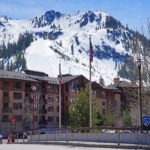
Cerro Mercedario

🏔️ Overview
Cerro Mercedario is one of the great high mountains of the Argentine Andes. Rising to approximately 6,717 meters (22,037 feet) according to Peakbagger, it is the highest summit of the Cordillera de la Ramada, a group of enormous peaks in western San Juan Province near Argentina’s border with Chile.
Mercedario stands in the high, dry Andes roughly 75 kilometers north of Aconcagua, the highest mountain in South America. Although considerably less famous than its southern neighbor, Mercedario is an exceptionally significant mountain in its own right. Its approximately 3,356 meters (11,010 feet) of topographic prominence make it one of the world’s ultra-prominent peaks.
The mountain is also remarkably isolated. Its nearest higher terrain is on Aconcagua, approximately 75 kilometers to the south, making Aconcagua both its topographic parent and nearest higher neighbor.
Mercedario has a long mountaineering history, archaeological connections with the Inca period, substantial glaciers, and an assortment of routes ranging from relatively straightforward high-altitude expeditions to serious technical climbs.
It is one of the defining summits of the central Argentina–Chile Andes and one of Argentina’s most important 6,000-meter mountains.
⚡ Fast Facts
| Fact | Details |
|---|---|
| Continent | South America |
| Country | Argentina |
| State/Province | San Juan Province |
| County/Region | Calingasta Department |
| Mountain Range | Andes |
| Subrange | Cordillera de la Ramada |
| Parent Peak | Aconcagua |
| Elevation | Approximately 6,717 m / 22,037 ft |
| Prominence | Approximately 3,356 m / 11,010 ft |
| Isolation | Approximately 75.1 km / 46.7 mi |
| Nearest Higher Neighbor (NHN) | Aconcagua |
| Coordinates | Approximately 31.979°S, 70.113°W |
| Peak Type | Non-volcanic Andean mountain massif |
| First Recorded Ascent | January 18, 1934 |
| First Ascensionists | Adam Karpiński and Wiktor Ostrowski |
| Prominence Classification | Ultra-prominent peak |
| Common Climbing Season | December through February |
📍 Location
Cerro Mercedario rises in Calingasta Department in western San Juan Province, Argentina, close to the international border with Chile.
It forms the highest point of the Cordillera de la Ramada, a compact but spectacular group of high Andean summits. Other major mountains in the massif include Cerro Ramada, La Mesa, Alma Negra, and Pico Polaco.
The mountain stands north of Aconcagua and west of the inhabited valleys surrounding Barreal and Calingasta. Barreal is one of the principal communities used as a gateway to the high mountains of this part of San Juan.
Mercedario belongs to the dry central portion of the Andes, where high peaks rise abruptly above deeply incised valleys and arid mountain terrain.
The region should not be confused with the volcanic landscapes farther north around Monte Pissis, Ojos del Salado, and the Puna. Mercedario lies farther south in a geologically different part of the Andean system.
For a broader look at the mountain chain, see our Map of the Andes Mountain Range.
📏 Elevation & Prominence
The exact elevation of Cerro Mercedario has been reported differently for many years.
Older and still widely used sources frequently give an elevation of 6,770 meters (22,211 feet). Other references use approximately 6,720 meters (22,050 feet).
Peakbagger currently lists the summit at approximately 6,717 meters (22,037 feet), while satellite-derived estimates generally support a height closer to 6,700–6,720 meters than to the traditional 6,770-meter figure.
For this guide, 6,717 meters is used for the Fast Facts because it corresponds closely with modern topographic data.
Regardless of the exact summit figure, Mercedario is unquestionably one of the highest mountains in South America.
Its topographic prominence is approximately 3,356 meters (11,010 feet). That far exceeds the 1,500-meter threshold required for classification as an ultra-prominent peak.
Peakbagger places Mercedario among the world’s 100 most prominent mountains.
Its topographic isolation is approximately 75.1 kilometers (46.7 miles).
The higher mountain that ends that isolation is Aconcagua, which makes Aconcagua the nearest higher neighbor of Mercedario.
Is Cerro Mercedario the eighth-highest mountain in the Andes?
Mercedario is frequently described as the eighth-highest major mountain in the Andes and South America, particularly when modern elevation estimates and independent summits are used.
Some sources have historically ranked it higher, partly because the older 6,770-meter elevation was accepted and partly because mountain-ranking methods differ.
For that reason, its measured elevation and prominence are more useful geographical statistics than an absolute ranking.
🪨 Geology
Cerro Mercedario is not a volcano.
It belongs to the structurally complex high Andes of San Juan, where enormous mountains developed through compression, folding, faulting, uplift, erosion, and igneous intrusion associated with the continuing convergence of the Nazca and South American tectonic plates.
Geological research in the Cerro Mercedario–Los Pelambres region has documented major fault systems and rocks ranging from older Permian–Triassic units through Mesozoic sedimentary and volcanic sequences to younger Cenozoic volcanic formations and intrusive bodies.
The wider La Ramada region is particularly important to geologists because it records multiple stages of Andean deformation.
Compression progressively shortened and thickened the continental crust. Large thrust faults and folds displaced rock units over one another while uplift raised the landscape to extraordinary elevations.
Later erosion, glaciers, freeze-thaw weathering, and the movement of rivers and debris helped sculpt the steep valleys and high ridges seen today.
Unlike mountains such as Monte Pissis, Mercedario did not develop as a giant volcanic edifice. Its height is instead fundamentally associated with tectonic uplift and deformation of the Andes.
Glaciers remain an important part of the massif. Ice occurs particularly on protected high slopes and in valleys surrounding Mercedario and neighboring summits.
🌿 Flora & Fauna
The extreme elevation and aridity of the Mercedario region severely limit vegetation.
The highest slopes are essentially alpine desert, consisting largely of exposed rock, scree, snow, and ice. Conditions become more biologically productive in lower valleys and sheltered areas.
Vegetation in these lower high-Andean environments typically consists of drought- and cold-tolerant grasses, low shrubs, cushion plants, and other species capable of surviving intense sunlight, persistent wind, freezing temperatures, and limited moisture.
Wildlife of the wider high Andes of San Juan includes several of South America’s best-known mountain animals.
Guanacos can inhabit valleys and open mountain slopes, while Andean condors use rising air currents to travel enormous distances over the mountains.
Foxes, rodents, and a variety of high-altitude birds also occur in suitable environments.
Above the highest vegetated zones, however, biological activity becomes increasingly sparse. At elevations approaching the summit of Mercedario, cold, wind, lack of oxygen, and limited soil make permanent plant life extremely difficult.
🥾 Hiking & Climbing Routes
Cerro Mercedario is a serious expedition mountain.
Its normal route is not considered highly technical under favorable conditions, but describing Mercedario as an “easy” mountain would be misleading. Climbers must cope with extreme altitude, enormous elevation gain, remote terrain, freezing temperatures, strong winds, changing snow conditions, and limited opportunities for assistance.
Normal Route / Inca Route
The best-known ascent is generally called the Normal Route or Ruta Normal de los Incas.
It approaches the mountain through the high valleys and climbs toward its northwestern side. Andeshandbook describes it as a lengthy expedition requiring multiple camps and substantial acclimatization.
Technical climbing difficulties can be modest when conditions are favorable, but the route reaches well above 6,000 meters.
At these elevations, altitude itself becomes the principal obstacle.
Acclimatization should therefore be treated as an essential part of the climb rather than merely preparation for it.
South Face
The south side of Mercedario presents a dramatically different challenge.
A Japanese expedition completed the first successful ascent of the south side in 1968. Routes here encounter much more serious alpine terrain and are objectives for experienced technical mountaineers rather than ordinary high-altitude trekkers.
East Side and Caballito Glacier
Routes have also been established on Mercedario’s eastern side, including approaches associated with the Caballito Glacier.
Depending on conditions, these can involve substantial glacier travel and steeper climbing.
Southwest Ridge
The southwest ridge ranks among Mercedario’s major technical mountaineering challenges.
A team from Gorizia completed a successful ascent of the ridge in 1983 after earlier attempts had demonstrated the difficulty of this side of the mountain.
🏔️ Field Guide Tip: Do not judge Cerro Mercedario solely by the technical grade of its normal route. A climb above 6,700 meters places the human body in an extremely low-oxygen environment. Acclimatization, conservative weather decisions, navigation skills, proper equipment, and high-altitude experience are critical.
Anyone planning an ascent should verify current access requirements, route conditions, regulations, and rescue arrangements with local authorities or qualified mountain professionals before entering the area.
📜 First Ascent & Mountaineering History
The first generally accepted recorded ascent of Cerro Mercedario took place on January 18, 1934.
Polish mountaineers Adam Karpiński and Wiktor Ostrowski reached the summit as members of an important Polish expedition to the Andes led by Konstanty Jodko-Narkiewicz.
The expedition carried out extensive exploration throughout the Cordillera de la Ramada and made first ascents of several major peaks in the region.
It became one of the landmark early expeditions in the history of Andean mountaineering.
Mercedario later attracted teams seeking more difficult lines.
Important developments included:
- 1968 — a Japanese team made the first ascent of the south side.
- 1971 — an Austrian expedition established a route on the north side.
- 1972 — Italian climbers ascending the normal route reported archaeological remains near the upper mountain.
- 1975 — an Italian expedition climbed the eastern side.
- 1983 — climbers from Gorizia completed the demanding southwest ridge.
These ascents transformed Mercedario from a remote high summit into an important arena for technical Andean climbing.
🏺 Inca History
Mercedario also has an intriguing pre-European human history.
The high Andes held profound ceremonial significance for the Inca Empire. Numerous mountains throughout Argentina, Chile, Peru, and Bolivia contain archaeological evidence of Inca activity, including trails, platforms, shelters, offerings, and ceremonial sites.
Archaeological remains have been reported high on Mercedario, including discoveries made by climbers in the twentieth century.
These findings indicate that people reached remarkable elevations here long before modern mountaineers arrived.
Exactly how high Inca travelers climbed on Mercedario and the precise purpose of every archaeological feature remain subjects requiring careful archaeological interpretation.
It is therefore safer to say that there is evidence of Inca activity high on the mountain rather than assuming that a documented pre-Columbian summit ascent occurred.
🌤️ Best Time to Visit
The principal mountaineering season on Cerro Mercedario is during the Southern Hemisphere summer, particularly from approximately December through February.
During these months:
- Temperatures are generally less severe than during winter.
- Days are longer.
- Access to high valleys is normally more practical.
- The likelihood of deep winter snow is reduced.
That does not mean conditions are mild.
Mercedario remains exposed to powerful winds, sudden storms, subfreezing temperatures, intense ultraviolet radiation, and major temperature swings even during summer.
Climbers should also expect conditions to vary significantly between years.
Because approaches are remote and expeditions often last well over a week, a flexible schedule can be extremely valuable.
🧭 Nearby Mountains & Attractions
Aconcagua
Aconcagua lies approximately 75 kilometers south of Mercedario.
At 6,960.8 meters, it is the highest mountain in South America, the Western Hemisphere, and the Southern Hemisphere.
Aconcagua is also Mercedario’s nearest higher neighbor and topographic parent.
Cerro Ramada
Cerro Ramada is another major summit of the Cordillera de la Ramada.
It rises above 6,000 meters and forms part of the dramatic high-mountain skyline surrounding Mercedario.
La Mesa
La Mesa is another 6,000-meter peak in the massif and is notable for its extensive high-altitude glaciation.
Alma Negra
Alma Negra forms part of the same group of exceptionally high summits. It was among the mountains explored by the Polish expedition of 1934.
Pico Polaco
Pico Polaco is another summit associated with the Cordillera de la Ramada and takes its name from the Polish mountaineering history of the region.
Barreal
The small community of Barreal is one of the main tourism and mountaineering gateways to western San Juan.
The surrounding Calingasta Valley also offers remarkable views of the Andes.
💡 Fun Facts
- Cerro Mercedario is the highest mountain in San Juan Province.
- It is the highest summit of the Cordillera de la Ramada.
- Peakbagger lists it at approximately 6,717 meters.
- The traditional elevation of 6,770 meters is still widely quoted.
- Its prominence is approximately 3,356 meters.
- Mercedario qualifies as an ultra-prominent mountain.
- It ranks among the world’s 100 most prominent peaks.
- Its topographic isolation is approximately 75 kilometers.
- Its nearest higher neighbor is Aconcagua.
- Mercedario is often described as the eighth-highest major mountain in the Andes.
- The first recorded ascent took place in 1934.
- Polish mountaineers played a major role in the early exploration of the entire Cordillera de la Ramada.
- Evidence of Inca activity has been found high on the mountain.
- Mercedario is not a volcano.
- Glaciers remain on several sides of the mountain and surrounding massif.
❓ Frequently Asked Questions
How high is Cerro Mercedario?
Peakbagger lists Cerro Mercedario at approximately 6,717 meters (22,037 feet).
Other widely used figures include approximately 6,720 meters and the traditional 6,770-meter elevation. Modern topographic data generally favor a figure closer to 6,700–6,720 meters.
Where is Cerro Mercedario?
Cerro Mercedario is located in Calingasta Department, San Juan Province, Argentina, in the Andes near the Chilean border.
What mountain range is Cerro Mercedario in?
It is the highest summit of the Cordillera de la Ramada, which forms part of the Andes.
What is Cerro Mercedario’s prominence?
Its topographic prominence is approximately 3,356 meters (11,010 feet).
What is Cerro Mercedario’s isolation?
Its topographic isolation is approximately 75.1 kilometers (46.7 miles).
What is Cerro Mercedario’s nearest higher neighbor?
The nearest higher neighbor is Aconcagua, approximately 75 kilometers to the south.
Is Cerro Mercedario a volcano?
No. Cerro Mercedario is not a volcanic cone. Its geology reflects the complex folding, faulting, intrusion, uplift, and erosion associated with Andean mountain building.
Who first climbed Cerro Mercedario?
The first generally recognized recorded ascent was completed on January 18, 1934, by Polish mountaineers Adam Karpiński and Wiktor Ostrowski.
Is Cerro Mercedario difficult to climb?
The normal route is not among the most technically difficult routes on a 6,000-meter Andean peak, but the mountain remains an extremely serious high-altitude expedition.
Altitude, weather, remoteness, cold, navigation, snow conditions, and the length of the climb can all present significant hazards.
What is the best time to climb Cerro Mercedario?
The main climbing season is generally December through February, during the Argentine summer.
🔗 Related Articles
- Aconcagua
- Monte Pissis: Height, Location, Geology and Climbing Guide
- Map of the Andes Mountain Range: Countries, Peaks and Geography
- Mountains in South America: The Ultimate Guide to the Andes and Beyond
- The Central Andes
📚 Sources
- Peakbagger — World Top 100 by Prominence
- Peakbagger — Ultras of the Central Chile–Argentina Andes
- Encyclopaedia Wikipedia — Mercedario
- Andeshandbook — Cerro Mercedario
- Andeshandbook — Ruta Normal o de los Incas
- Government of Argentina — Ascender al emblemático Cerro Mercedario
- San Juan Turismo — Cerro Mercedario and the Six Thousand
- SummitPost — Mercedario
- Mpodozis et al. — Geocronología U/Pb y Tectónica de la Región de Los Pelambres–Cerro Mercedario