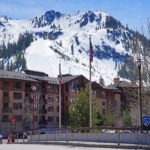
Agassiz Peak

Rising above Flagstaff in northern Arizona, Agassiz Peak is the second-highest mountain in the state and one of the principal summits of the San Francisco Peaks. Its steep volcanic slopes climb to more than 12,350 feet, reaching an alpine environment found almost nowhere else in Arizona.
Agassiz Peak is especially distinctive because its upper slopes protect exceptionally fragile alpine tundra and the threatened San Francisco Peaks ragwort. Unlike neighboring Humphreys Peak, Agassiz is generally closed to ordinary warm-season summit hiking. The mountain can legally be climbed only under appropriate snow-covered winter conditions, when a continuous protective snowpack prevents hikers from damaging the tundra.
⚡ Fast Facts
| Fact | Details |
|---|---|
| Country | United States |
| State | Arizona |
| County | Coconino County |
| Mountain Range | San Francisco Peaks |
| Elevation | 12,359 feet / 3,767 meters |
| Prominence | 578 feet / 176 meters |
| Isolation | 1.16 miles / 1.87 kilometers |
| Nearest Higher Neighbor (NHN) | Humphreys Peak |
| Coordinates | 35.32598° N, 111.67770° W |
| Land Management | Coconino National Forest |
| Protected Area | Kachina Peaks Wilderness |
| State Ranking | Second-highest summit in Arizona |
Agassiz Peak’s Nearest Higher Neighbor is Humphreys Peak, Arizona’s highest mountain, roughly 1.16 miles to the north. The two summits are separated by a high saddle along the crest of the San Francisco Peaks.
🏔️ Arizona’s Second-Highest Mountain
At approximately 12,359 feet, Agassiz Peak ranks behind only Humphreys Peak among Arizona summits. The mountain towers more than a vertical mile above nearby Flagstaff and forms one of the most recognizable profiles on the city’s northern skyline.
Its position can be deceptive. From many locations in Flagstaff, Agassiz stands directly in front of Humphreys Peak, making Agassiz appear to be the highest summit in the range.
The neighboring high summits include Humphreys Peak to the north and Fremont Peak to the southeast. Farther around the great volcanic amphitheater lies Doyle Peak.
Together, these mountains form the spectacular high crest of the San Francisco Peaks.
🌋 Born From a Giant Volcano
Agassiz Peak is part of the San Francisco volcanic complex, one of the dominant geological landmarks of the Colorado Plateau.
The modern peaks are remnants of a much larger ancient stratovolcano. Volcanic activity built the mountain over millions of years through repeated eruptions of lava, ash, and other volcanic material. Subsequent erosion—and episodes of glaciation during colder periods—sculpted the original volcanic mass into the individual summits and deep basins visible today.
Agassiz Peak now forms part of the rim surrounding the Inner Basin, a dramatic amphitheater on the eastern side of the San Francisco Peaks.
The steep slopes, rocky ridgelines, talus fields, and exposed volcanic material of the upper mountain provide a striking contrast to the broad ponderosa pine forests surrounding Flagstaff.
❄️ A Rare Alpine World in Arizona
Few landscapes in Arizona resemble the upper slopes of Agassiz Peak.
At high elevations, forests of spruce and fir gradually become shorter and more scattered until trees disappear altogether. Above timberline lies a small alpine tundra ecosystem exposed to fierce winds, heavy winter snowfall, intense ultraviolet radiation, and a remarkably short growing season.
The San Francisco Peaks contain Arizona’s only true alpine tundra, making the environment surrounding Agassiz and Humphreys exceptionally important from a conservation standpoint.
Plants growing here must survive conditions more commonly associated with mountains far to the north.
🌼 The San Francisco Peaks Ragwort
The most important conservation story on Agassiz Peak involves the San Francisco Peaks ragwort (Packera franciscana), historically also called the San Francisco Peaks groundsel.
This small flowering plant exists naturally only in the alpine environment of the San Francisco Peaks, making it one of Arizona’s most geographically restricted plants.
Its habitat includes loose volcanic cinder and talus slopes near and above timberline. Because individual plants and their habitat can be damaged by trampling and displaced rocks, protecting the tundra from off-trail foot traffic is critical to the species’ survival.
Federal critical-habitat protections specifically identify portions of Agassiz Peak and Humphreys Peak as essential habitat and note the importance of preventing disturbance from hikers.
🚫 Why Agassiz Peak Is Closed to Summer Hiking
Agassiz Peak differs dramatically from many other major Arizona summits because hikers cannot simply climb it during the normal summer hiking season.
The fragile alpine tundra on Agassiz was closed to off-trail travel in the 1980s, and hiking access to the upper peak was restricted to protect the San Francisco Peaks ragwort and its habitat. The Forest Service developed other trails in the area—including the route toward Humphreys Peak—to concentrate recreation away from especially sensitive habitat.
That means hikers should not leave established trails and climb Agassiz Peak during snow-free conditions.
The restriction is not simply intended to make the peak more difficult to access. Alpine plants grow extremely slowly, and repeated footsteps or shifting talus can damage habitat that may take many years to recover.
🎿 Winter Access to Agassiz Peak
Agassiz Peak becomes a very different mountain once deep snow covers its upper slopes.
A summit ascent may be permitted when there is sufficient continuous snow cover to protect the underlying alpine tundra. This effectively makes Agassiz one of Arizona’s unusual winter-only mountaineering summits.
Winter travel at more than 12,000 feet should not be confused with an ordinary Arizona hike. Conditions can include:
- Deep or wind-drifted snow
- Ice
- High winds
- Whiteout conditions
- Severe cold
- Avalanche terrain
- Rapidly changing weather
Anyone considering a winter ascent should verify current Forest Service regulations and snow conditions before leaving home.
🥾 The Humphreys Trail and Agassiz Saddle
Although the summit itself is restricted during snow-free seasons, hikers can experience the dramatic landscape beside Agassiz Peak from the Humphreys Trail.
The trail begins near Arizona Snowbowl and climbs through forests of aspen, spruce, and fir before approaching timberline. Eventually it reaches the high saddle between Agassiz Peak and Humphreys Peak.
From the saddle, the enormous rocky mass of Agassiz dominates the southern view.
Rather than turning toward Agassiz, summer hikers following the legal route continue north toward Humphreys Peak.
This makes the saddle one of the best places to appreciate Agassiz Peak without entering its protected alpine habitat.
🌲 Life Below Timberline
The ecological transition across the San Francisco Peaks is one of the mountain range’s defining characteristics.
At lower elevations, extensive ponderosa pine forests surround the mountain. As elevation increases, these give way to cooler mixed-conifer communities containing Douglas-fir, quaking aspen, spruce, and fir.
The highest forests contain Engelmann spruce and corkbark fir, vegetation much more characteristic of high Rocky Mountain environments than the deserts commonly associated with Arizona. A federally designated San Francisco Peaks Research Natural Area protects representative high-elevation spruce-fir forest in the region.
Eventually the forest thins near timberline and gives way to the exposed alpine environment.

🦌 Wildlife Around Agassiz Peak
The wide range of elevations surrounding Agassiz supports an equally wide range of wildlife.
Mule deer and elk move through the forested slopes, while coyotes and smaller mammals occupy habitats throughout the mountain. Black bears may occur in the surrounding forests, though encounters are uncommon.
High-elevation birds must cope with short summers and severe winter weather. Clark’s nutcrackers, ravens, raptors, and other mountain birds can sometimes be seen around the upper forests and ridgelines.
Even small organisms play important ecological roles in this harsh environment, where growing seasons are brief and resources limited.
🏞️ Kachina Peaks Wilderness
Much of Agassiz Peak lies within the Kachina Peaks Wilderness, which protects the highest portions of the San Francisco Peaks.
The wilderness encompasses a landscape ranging from dense high-elevation forests to exposed tundra and volcanic ridgelines. It surrounds Arizona’s highest mountains and preserves one of the state’s most unusual ecosystems.
Congress designated the Kachina Peaks Wilderness in 1984, protecting nearly 19,000 acres of the San Francisco Peaks.
The area’s significance, however, extends far beyond conventional ideas of wilderness recreation.
🪶 A Sacred Mountain Landscape
The San Francisco Peaks are sacred to numerous Indigenous nations of the Southwest.
The mountains have longstanding cultural and religious significance for peoples including the Hopi, Diné (Navajo), Havasupai, Hualapai, Zuni, Apache, Yavapai, and others. The Forest Service has recognized the San Francisco Peaks as a traditional cultural property, reflecting cultural traditions extending back centuries.
Visitors should therefore understand Agassiz Peak not simply as a recreational summit or geological feature, but as part of a living cultural landscape.
Respecting trail closures and protected areas helps safeguard ecological resources while also demonstrating respect for the broader significance of the Peaks.
🧭 Agassiz Peak and Humphreys Peak
Agassiz and Humphreys are closely connected geographically but provide very different experiences for hikers.
Humphreys Peak rises to approximately 12,637 feet and is Arizona’s state high point. A maintained trail provides legal summer access to its summit.
Agassiz Peak, although only a few hundred feet lower, has much more restrictive access because of its sensitive alpine habitat.
This creates an unusual situation in which Arizona’s highest mountain is generally easier and more straightforward to climb legally than its second-highest mountain.
For most visitors seeking a high-elevation summer hike in the San Francisco Peaks, Humphreys Peak is therefore the appropriate destination.
🌄 Views From the High Country
The high ridge around Agassiz provides enormous views across northern Arizona.
To the south lies Flagstaff, surrounded by one of the largest contiguous ponderosa pine forests in North America. Beyond are volcanic hills and open expanses of the Colorado Plateau.
The Inner Basin drops dramatically east of the crest, while Fremont Peak and Doyle Peak continue the broken volcanic skyline.
On exceptionally clear days, the immense scale of northern Arizona becomes apparent, with distant plateaus and desert landscapes stretching toward the horizon.
📏 One of the Southernmost 12,000-Foot Mountains
Agassiz Peak occupies an unusually southerly position for such a high mountain.
At roughly 35.3 degrees north latitude, its elevation above 12,000 feet makes it one of the southernmost mountains of that height in the contiguous United States.
Its combination of high elevation and southern latitude helps explain why the tiny alpine ecosystem of the San Francisco Peaks is so geographically isolated.
The tundra exists almost like a biological island in the sky, separated by hundreds of miles from many comparable alpine environments.
⭐ Why Agassiz Peak Is Special
Agassiz Peak is much more than Arizona’s second-highest summit.
It is part of an ancient volcanic mountain, a centerpiece of the San Francisco Peaks, a neighbor of Arizona’s highest point, and a sanctuary for one of the rarest alpine ecosystems in the Southwest.
Its restrictions also make the mountain a valuable reminder that reaching every summit is not always the most important goal. On Agassiz Peak, protecting the fragile tundra and respecting the cultural significance of the landscape take precedence over ordinary peakbagging.
Visitors can still experience the mountain from established routes, particularly along the Humphreys Trail and the high saddle beneath its summit.
Seen from Flagstaff, from neighboring Humphreys Peak, or from the forests below, Agassiz Peak remains one of the great landmarks of northern Arizona.

🔗 Related Articles
📚 Sources
- Peakbagger — Agassiz Peak, Arizona
- U.S. Forest Service — San Francisco Peaks Research Natural Area
- U.S. Forest Service — Final Environmental Impact Statement for Integrated Treatment of Noxious or Invasive Weeds
- National Park Service — Montane Forests of the Southwest
- Cornell Law School, Legal Information Institute — 50 CFR §17.96: Critical Habitat