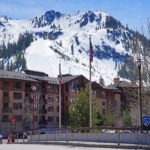
The Alaska-Yukon Ranges encompass an enormous collection of mountain systems across Alaska and northwestern Canada. Rather than describing one continuous, formally recognized mountain range, the name is most useful as a broad geographic and mountaineering classification covering many of the great ranges of far northwestern North America.
Within this immense region are the Alaska Range, Saint Elias Mountains, Brooks Range, Mackenzie Mountains, Aleutian Ranges, and numerous smaller ranges and highlands. Together, they contain North America’s highest mountains, enormous icefields and glaciers, active volcanoes, major fault systems, and some of the continent’s most remote wilderness.
The highest summit in the grouping is the 20,310-foot (6,190.5-meter) mountain in the Alaska Range currently designated Mount McKinley by the U.S. federal government and also widely known by its Koyukon Athabascan name, Denali. Canada’s highest mountain, Mount Logan, also belongs to the broader Alaska-Yukon mountain region.
🏔️ Overview
The Alaska-Yukon Ranges occupy the far northwestern corner of the North American Cordillera, extending across much of Alaska and Yukon and reaching into neighboring parts of northwestern Canada.
Unlike the Alaska Range, which is a distinct mountain chain with recognizable geographic boundaries, the term “Alaska-Yukon Ranges” serves primarily as an umbrella classification. Peakbagger, for example, uses it to organize several large and geographically distinct mountain systems.
Its major divisions include the Alaska Range, Brooks Range, Saint Elias Mountains, Mackenzie Mountains, Aleutian Ranges, Alaska Intermountain Ranges, Yukon Intermountain Ranges, and mountains of south-central Alaska.
The landscapes represented by this grouping vary enormously. They include ice-covered summits above 5,000 meters, volcanic arcs, broad interior highlands, coastal ranges, alpine tundra, boreal forests, deeply glaciated valleys, and Arctic mountains extending north toward the Beaufort Sea.
⚡ Fast Facts
| Feature | Details |
|---|---|
| Continent | North America |
| Countries | United States and Canada |
| Primary Regions | Alaska, Yukon, and adjoining parts of northwestern Canada |
| Mountain System | North American Cordillera |
| Classification | Broad regional grouping of multiple mountain ranges |
| Highest Point | Mount McKinley (Denali) |
| Highest Elevation | 20,310 feet / 6,190.5 meters |
| Major Ranges | Alaska Range, Saint Elias Mountains, Brooks Range, Mackenzie Mountains, Aleutian Ranges |
| Major Canadian Peak | Mount Logan |
| Major U.S. Peak | Mount McKinley (Denali) |
| Characteristic Landscapes | Glaciers, icefields, alpine tundra, boreal forest, volcanic mountains, high plateaus |
| Major Tectonic Features | Denali Fault and active Pacific–North American plate boundary systems |
📍 Location
The Alaska-Yukon mountain region occupies a vast portion of northwestern North America.
In Alaska, its constituent ranges stretch from the Aleutian and Alaska Peninsula region through south-central Alaska and the Alaska Range and northward into the Brooks Range. To the east, mountain systems continue across the international boundary into Yukon and farther into the Canadian Northwest Territories.
The Alaska Range forms one of the region’s most prominent arcs, extending for roughly 600 miles across Alaska. The Brooks Range forms the mountainous backbone of northern Alaska and continues eastward toward Yukon through ranges such as the British Mountains and Richardson Mountains.
Farther south, the Saint Elias Mountains straddle Alaska and Yukon and contain an extraordinary concentration of high, heavily glaciated summits.
Eastern Yukon transitions into the Mackenzie Mountains, another extensive cordilleran system extending into the Northwest Territories.
Because the Alaska-Yukon Ranges encompass several physically distinct systems, there is no single universally accepted boundary defining the entire grouping.
📏 Highest Mountains
The Alaska-Yukon region contains nearly all of the highest mountains in North America.
Its highest summit is Mount McKinley, also widely known as Denali, which rises to 20,310 feet (6,190.5 meters) in the central Alaska Range. It is the highest mountain in North America.
Across the international border, Mount Logan rises to 5,959 meters (19,551 feet) in the Saint Elias Mountains of Yukon. It is Canada’s highest mountain and the second-highest summit on the continent.
Other major high peaks include:
| Mountain | Elevation | Range |
|---|---|---|
| Mount McKinley (Denali) | 20,310 ft / 6,190.5 m | Alaska Range |
| Mount Logan | 19,551 ft / 5,959 m | Saint Elias Mountains |
| Mount Saint Elias | 18,008 ft / 5,489 m | Saint Elias Mountains |
| Mount Foraker | 17,400 ft / 5,304 m | Alaska Range |
| Mount Lucania | about 17,190 ft / 5,240 m | Saint Elias Mountains |
| King Peak | 16,971 ft / 5,173 m | Saint Elias Mountains |
| Mount Steele | 16,644 ft / 5,073 m | Saint Elias Mountains |
The concentration of enormous peaks in the Alaska and Saint Elias ranges makes the southern portion of the Alaska-Yukon mountain region particularly dramatic.

🗻 Major Mountain Ranges
Several major ranges fall within the broad Alaska-Yukon grouping.
Alaska Range
The Alaska Range forms a great arc across south-central Alaska. Approximately 600 miles long, it contains Mount McKinley, Mount Foraker, Mount Hunter, Mount Hayes, and many other substantial peaks.
Glaciers occupy many of its highest valleys, and the range remains tectonically active along major fault systems.
Saint Elias Mountains
The Saint Elias Mountains occupy southeastern Alaska, southwestern Yukon, and a small portion of northwestern British Columbia.
They contain Mount Logan, Mount Saint Elias, Mount Lucania, King Peak, Mount Steele, Mount Wood, Mount Vancouver, and numerous other exceptionally high mountains.
Much of the range is covered by immense icefields and glaciers. Kluane National Park and Reserve protects a large Canadian portion of the Saint Elias Mountains.
Brooks Range
The Brooks Range extends across northern Alaska toward Yukon and separates much of Alaska’s Arctic coastal plain from the interior.
Although its mountains are substantially lower than those of the Alaska and Saint Elias ranges, their far-northern location creates an intensely Arctic environment dominated by tundra, permafrost, long winters, and a short growing season.
Mount Isto, at approximately 8,975 feet (2,736 meters), is recognized as the highest summit of the Brooks Range.
Mackenzie Mountains
The Mackenzie Mountains lie primarily in Yukon and the Northwest Territories. They form one of the great northern extensions of Canada’s Cordilleran mountain country.
Keele Peak, reaching approximately 2,952 meters (9,685 feet), is the highest mountain in the Mackenzie Mountains.
South-Central Alaska Mountains
Several mountain systems surrounding the Gulf of Alaska and Cook Inlet are included in broad Alaska-Yukon classifications.
Among them are the Chugach Mountains, Kenai Mountains, Talkeetna Mountains, and Wrangell Mountains.
The Wrangell Mountains are especially notable because they contain a large volcanic field, including Mount Wrangell. The Chugach and Kenai mountains, meanwhile, are heavily shaped by glacial erosion and Pacific maritime weather.
Aleutian Ranges
The mountains extending southwest along the Alaska Peninsula and Aleutian Islands represent another dramatically different part of the region.
Here, subduction of the Pacific Plate beneath the North American Plate has produced an active volcanic arc. Numerous volcanoes rise from islands or directly above the Alaska Peninsula, making volcanism one of the defining geological processes of this part of Alaska.
🪨 Geology
There is no single geological origin that explains every mountain classified within the Alaska-Yukon Ranges. The region contains numerous crustal blocks, faults, volcanic arcs, sedimentary formations, metamorphic rocks, and intrusive bodies assembled during hundreds of millions of years of tectonic activity.
Much of southern Alaska developed as pieces of crust known as terranes collided with and became attached to the North American continent. The compression associated with these collisions thickened and uplifted the crust, contributing to the formation of several enormous mountain systems.
The Alaska Range remains strongly influenced by the Denali Fault, a major fault system extending for thousands of kilometers through Alaska and into Canada. Earthquake activity demonstrates that tectonic deformation continues today.
The geology changes again toward the Pacific margin. Subduction along southern Alaska produces earthquakes and volcanic activity, particularly in the Alaska Peninsula and Aleutian region.
The Wrangell Mountains also contain an extensive volcanic field produced by tectonic processes along the Pacific margin.
Farther north and east, ranges such as the Brooks and Mackenzie mountains have different geological histories involving ancient continental margins, sedimentary rocks, folding, faulting, and later uplift.
The result is an exceptionally geologically diverse mountain region rather than a single uniform chain.
🧊 Glaciers and Icefields
Ice is one of the defining features of the higher Alaska-Yukon mountains.
The Saint Elias Mountains contain some of the most extensive non-polar icefields on Earth. Within Kluane National Park and Reserve alone, enormous glaciers flow between mountains that include Mount Logan, Mount Saint Elias, Mount Lucania, King Peak, and Mount Steele.
The Alaska Range is also heavily glaciated. Large valley glaciers descend from the high mountains surrounding Mount McKinley and Mount Foraker.
Glaciers have played an enormous role in shaping the landscape throughout the region. Moving ice has carved U-shaped valleys, cirques, sharp arêtes, horns, and steep mountain walls while transporting enormous quantities of sediment into surrounding lowlands.
Past glaciations were even more extensive, covering large portions of the landscape during colder periods of the Pleistocene.
🌿 Flora & Fauna
Because the Alaska-Yukon Ranges encompass such a vast geographic area and enormous elevation range, they contain many different ecosystems.
Lower elevations in the interior commonly support boreal forest, particularly stands of white spruce and black spruce accompanied by aspens, poplars, willows, and shrubs.
Forest gradually gives way to subalpine vegetation and then alpine tundra as elevation increases. At still higher elevations, permanent snow, glaciers, exposed rock, and ice prevent most plant growth.
Northern portions of the region have extensive tundra and permafrost.
Wildlife varies geographically but can include:
- Dall sheep
- Caribou
- Moose
- Grizzly bears
- Black bears
- Gray wolves
- Mountain goats
- Arctic ground squirrels
- Wolverines
- Golden eagles
- Ptarmigan
Kluane National Park and Reserve supports particularly important populations of Dall sheep and grizzly bears, while caribou are among the defining large mammals of northern Alaska and Yukon.
🥾 Hiking & Climbing
Outdoor recreation within the Alaska-Yukon Ranges ranges from accessible day hikes to some of the most serious expedition mountaineering in North America.
Denali National Park and Preserve provides access to the central Alaska Range, although much of the mountain country away from developed areas is true wilderness.
The Saint Elias Mountains present even greater logistical challenges. Many high peaks can be reached practically only by aircraft, and mountaineering expeditions may spend weeks traveling across glaciers and remote icefields.
Kluane National Park and Reserve is one of the principal gateways to the Canadian Saint Elias Mountains. Mount Logan and other major summits require expedition-scale preparation, glacier travel skills, crevasse rescue knowledge, and the ability to operate in exceptionally remote conditions.
Elsewhere, visitors can explore trails through parts of the Brooks, Chugach, Talkeetna, Wrangell, Mackenzie, and Yukon ranges without attempting technical summits.
Conditions vary dramatically between individual ranges, so route research and local information are essential.
🏔️ Field Guide Tip: The Alaska-Yukon Ranges cover an enormous region, so never treat conditions in one range as representative of another. Coastal mountains, Arctic ranges, interior uplands, and high glaciated peaks can have completely different weather, access requirements, and hazards.

🌤️ Best Time to Visit
For general hiking and sightseeing, June through August offers the longest daylight hours and generally the mildest temperatures across much of Alaska and Yukon.
Conditions remain highly dependent on latitude and elevation. Snow may persist throughout summer on high passes, while storms can bring freezing conditions to alpine terrain during any month.
September can offer colorful autumn landscapes and fewer insects, but rapidly shortening days and early snowfall become increasing concerns.
Winter provides opportunities for skiing, snowshoeing, dog sledding, and viewing the aurora in some areas, but extreme cold and limited daylight make travel much more demanding.
High-altitude mountaineering has its own seasonal considerations. Climbers attempting major glaciated peaks such as Mount McKinley or Mount Logan must choose expedition windows based on snowpack, glacier conditions, temperatures, aviation access, and the characteristics of their specific route.
🧭 Parks and Protected Areas
Some of North America’s greatest protected landscapes lie within the broader Alaska-Yukon mountain region.
Denali National Park and Preserve protects more than six million acres surrounding the central Alaska Range and North America’s highest mountain.
Wrangell–St. Elias National Park and Preserve encompasses an enormous section of southeastern Alaska containing mountains, volcanoes, glaciers, and extensive wilderness.
Across the border, Kluane National Park and Reserve protects much of Canada’s spectacular Saint Elias mountain and icefield country, including Mount Logan.
Other protected landscapes preserve portions of the Brooks Range, coastal Alaska, the Alaska Peninsula, Yukon, and the Mackenzie mountain region.
Together, these areas protect ecosystems ranging from temperate coastal environments to boreal forest, alpine tundra, glaciers, and Arctic wilderness.
💡 Fun Facts
- The Alaska-Yukon Ranges are better understood as a collection of mountain systems than as one individual mountain range.
- The region contains the two highest mountains in North America: Mount McKinley (Denali) and Mount Logan.
- Mount Logan is both the highest mountain in Canada and one of the largest mountain massifs on Earth.
- The Alaska Range stretches for roughly 600 miles across Alaska.
- Some portions of the Saint Elias Mountains contain extraordinarily extensive non-polar icefields.
- The Brooks Range lies largely north of the Arctic Circle.
- The region contains both heavily glaciated mountains and active volcanic systems.
- The Denali Fault extends for more than 3,000 kilometers (1,900 miles) through Alaska and into Yukon.
- Glaciers continue to reshape many of these mountains through erosion and sediment transport.
- The region forms part of the much larger North American Cordillera, the great system of mountains extending along western North America.
❓ Frequently Asked Questions
Are the Alaska-Yukon Ranges one mountain range?
Not in the same sense as the Alaska Range, Brooks Range, or Saint Elias Mountains. “Alaska-Yukon Ranges” is primarily a broad geographic and peak-classification term used to group numerous mountain systems in Alaska and northwestern Canada.
What is the highest mountain in the Alaska-Yukon Ranges?
The highest summit is Mount McKinley, also widely known as Denali, at 20,310 feet (6,190.5 meters). It is also the highest mountain in North America.
Is Mount Logan part of the Alaska-Yukon Ranges?
Yes. Mount Logan belongs to the Saint Elias Mountains, which fall within the broader Alaska-Yukon grouping. At 5,959 meters (19,551 feet), Mount Logan is Canada’s highest mountain.
Is the Alaska Range the same as the Alaska-Yukon Ranges?
No. The Alaska Range is one specific mountain range. The Alaska-Yukon Ranges are a much broader classification containing the Alaska Range as well as numerous other mountain systems.
Are the Brooks Range and Alaska Range connected?
Both belong to the greater North American Cordillera and may be grouped within the Alaska-Yukon Ranges, but they are distinct mountain systems separated by extensive areas of interior Alaska.
Are there volcanoes in the Alaska-Yukon Ranges?
Yes. Volcanism is particularly important in the Aleutian Range and Alaska Peninsula, where Pacific Plate subduction has created an active volcanic arc. The Wrangell Mountains also contain an important volcanic field.
Are the Alaska-Yukon Ranges still rising?
Parts of the region remain tectonically active. Active faults, earthquakes, crustal deformation, and continued uplift affect several ranges, particularly in southern Alaska.
🔗 Related Articles
Learn more about the mountain systems and peaks that make up this vast northern region:
- Alaska Range
- Mount Logan
- Chugach Mountains
- Mount Vancouver
- Pacific Coast Ranges
- Mountain Ranges in the U.S.
- The World’s Top 100 Mountain Ranges
📚 Sources
- Peakbagger — Alaska-Yukon Ranges
- National Park Service — The Alaska Range and Mount McKinley: Geology and Orogeny
- National Park Service — Mountain Building in the Alaska Range
- National Park Service — Geology of Wrangell–St. Elias National Park and Preserve
- National Park Service — Convergent Plate Boundaries: Accreted Terranes
- Parks Canada — Mountaineering in Kluane National Park and Reserve
- Parks Canada — Nature and Science in Kluane National Park and Reserve
- Government of Yukon — Ecoregions of the Yukon Territory
- U.S. Department of the Interior — Restoration of the Mount McKinley Name