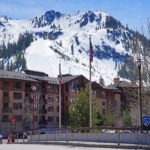
Bearpen Mountain

🏔️ Overview
Bearpen Mountain is a broad, forested summit in the northwestern Catskill Mountains of New York. Rising to approximately 3,588 feet (1,094 meters), it is one of the Catskill High Peaks recognized by the Catskill 3500 Club and the highest mountain whose principal summit lies in Greene County.
Unlike many better-known Catskill peaks, Bearpen Mountain stands outside the official boundary of Catskill Park. Most of the mountain is protected within the 2,848-acre Bearpen Mountain State Forest, which extends across portions of Greene and Delaware Counties. The state forest is managed for recreation, wildlife habitat, watershed protection, and sustainable forestry.
Bearpen is unusual for a Catskill High Peak because hikers generally follow old woods roads and snowmobile routes rather than a marked hiking trail. Its broad summit area contains several clearings and viewpoints, along with rusting machinery and other remains from a short-lived ski center once known as the Princeton Ski Bowl.
⚡ Fast Facts
| Fact | Details |
|---|---|
| Continent | North America |
| Country | United States |
| State | New York |
| County/Region | Greene County; northwest subpeak extends into Delaware County |
| Mountain Range | Catskill Mountains, Bearpen Range |
| Parent Peak | West Kill Mountain |
| Elevation | 3,587.6 feet (1,093.5 meters) |
| Prominence | 1,687.2 feet (514.3 meters) |
| Isolation | Approximately 9.06 miles (14.58 kilometers) |
| Nearest Higher Neighbor | North Dome |
| Coordinates | 42.26659° N, 74.47458° W |
| Protected Area | Bearpen Mountain State Forest |
| USGS Topographic Map | Prattsville Quadrangle |
| Typical Route Type | Old woods roads and snowmobile trails |
| Hiking Difficulty | Moderate, with navigation required |
Elevation figures for Bearpen Mountain have varied historically because older maps identified different points on its broad summit ridge. Modern LiDAR-based measurements place the principal Greene County summit at approximately 3,587.6 feet. Some maps and hiking sources continue to round the elevation to 3,600 feet or list slightly higher estimates.
📍 Location
Bearpen Mountain lies in the northwestern Catskills near the communities of Prattsville, Roxbury, Lexington, and Halcott. The principal summit is in Greene County, close to the Delaware County line.
The mountain is flanked by Roundtop to the north and Vly Mountain to the southeast. Bearpen and Vly are the two Catskill High Peaks situated outside the official Catskill Park boundary but protected within Bearpen Mountain State Forest.
A subsidiary point northwest of the main summit reaches approximately 3,523 feet and forms the highest natural point in Delaware County. This subpeak has very little prominence of its own and is considered part of the greater Bearpen Mountain massif.
Water from different sides of Bearpen Mountain eventually enters two major Atlantic drainage systems. Streams on the northeastern slopes flow toward Schoharie Creek, the Mohawk River, and the Hudson River. Water from the western and southern slopes drains toward branches of the Delaware River.
📏 Elevation & Prominence
Bearpen Mountain’s LiDAR-measured elevation is approximately 3,587.6 feet, although the Catskill 3500 Club commonly lists it simply as 3,587 feet. This comfortably qualifies the mountain for inclusion among the Catskill High Peaks.
Its prominence of approximately 1,687 feet is especially notable. Bearpen is not among the tallest Catskill summits, but its relatively low connecting saddle gives it greater topographic independence than many higher mountains in the region.
The mountain’s isolation is approximately 9.06 miles using modern topographic data. Other databases calculate distances of roughly 11 miles depending on the summit coordinates and methodology used. Rusk Mountain, east-southeast of Bearpen, is generally identified as its nearest higher neighbor, while West Kill Mountain is listed as its line parent.
The wide, relatively level summit ridge has also contributed to historical confusion. Some older maps placed the Bearpen Mountain name near the northwestern county high point rather than at the higher summit farther southeast.
🪨 Geology
Bearpen Mountain belongs to the Catskill section of the Appalachian Plateaus. Although the Catskills are usually described as mountains, they are geologically a deeply dissected plateau rather than a folded mountain range.
The mountain is composed primarily of sedimentary rocks deposited during the Devonian Period. Sand, mud, gravel, and other sediments were carried westward from ancient highlands and deposited across a vast river-and-delta system. Over time, these sediments hardened into layers of sandstone, shale, siltstone, and conglomerate.
Regional uplift raised the plateau, after which streams carved deep valleys into the rock. This erosion produced the steep slopes, flat-topped ridges, and elevated plateaus characteristic of the Catskills today. Later glaciation reshaped valleys, deposited boulders and till, and influenced the modern soils and drainage patterns.
Bearpen’s rounded profile and broad summit reflect the relatively horizontal sedimentary layers beneath the mountain. Harder beds of sandstone resist erosion more effectively than softer shale layers, helping form benches and steeper sections along the slopes.
🌿 Flora & Fauna
Bearpen Mountain is covered largely by northern hardwood forest. Sugar maple, American beech, yellow birch, red maple, black cherry, and northern red oak are common across the mountain’s lower and middle elevations.
Cooler upper slopes may also support stands of mountain ash, paper birch, eastern hemlock, red spruce, and balsam fir. Ferns, mosses, hobblebush, striped maple, and woodland wildflowers occupy the shaded forest floor.
Wildlife found in the surrounding state forest may include:
- American black bears
- White-tailed deer
- Bobcats
- Fishers
- Coyotes
- Porcupines
- Ruffed grouse
- Wild turkeys
- Barred owls
- Pileated woodpeckers
- Several species of warblers and thrushes
The northern hardwood and hemlock forests of the Catskills provide valuable habitat for birds such as hermit thrushes, winter wrens, black-throated blue warblers, Blackburnian warblers, and golden-crowned kinglets.
Visitors should remember that Bearpen Mountain State Forest is open to hunting during regulated seasons. Wearing blaze orange or another highly visible color is strongly recommended during autumn hunting periods.
🥾 Hiking & Climbing Routes
There is no officially designated hiking trail to the summit of Bearpen Mountain. Instead, hikers use public forest roads, old logging tracks, skid roads, and designated snowmobile routes. The absence of conventional hiking markers means visitors should carry a reliable map and know how to navigate.
Heisinger Road Route
The Heisinger Road approach is the most straightforward route described by the New York State Department of Environmental Conservation.
Parking is available along Heisinger Road near a steel gate, but visitors must avoid blocking the private driveway at the end of the road. From the gate, the route follows an old woods road upward through the state forest.
The approximate hiking distance is around 2.7 miles each way, with more than 1,700 feet of elevation gain. The climb is steady rather than technically difficult, although mud, loose rock, snow, ice, and confusing intersections can increase the challenge.
The official access coordinates are approximately 42.283542° N, 74.462056° W.
Ski Run Road Route
A longer route begins near Ski Run Road. Hikers follow an old forest road toward the ridge before continuing across North Bearpen Mountain and toward the main summit.
Depending on the exact starting point and route selected, the round trip can be approximately seven miles. This approach has more gradual sections but includes numerous road junctions where navigation may be confusing.
Bearpen and Vly Mountain Combination
Experienced hikers sometimes combine Bearpen Mountain with nearby Vly Mountain. The two summits are separated by a broad col and linked by snowmobile tracks, old roads, and informal paths.
Vly Mountain requires more off-trail navigation and has a summit canister but few views. Bearpen has no canister, although its old ski clearings provide much better scenery.
Summit and Viewpoints
The true summit is wooded and relatively subtle. A small cairn has sometimes marked the highest ground, but hikers should not depend on the cairn remaining in place.
The finest views are found in nearby clearings and along the tops of the former ski runs. These openings can provide views across the northern Catskills, Schoharie Reservoir, the Batavia Kill valley, and distant ridges.
🏔️ Field Guide Tip: Download an offline map before beginning the hike. Bearpen’s network of old roads can look deceptively straightforward, but several intersections are unmarked and winter snowmobile tracks may lead away from the summit.
🎿 Princeton Ski Bowl History
Bearpen Mountain was once considered a promising location for a major Catskill ski center. During the 1950s, a ski area called the Princeton Ski Bowl was developed on the mountain’s snowy northeastern slopes.
The operation used an unusual “upside-down” layout. Skiers traveled by rough road to facilities near the top and then descended the ski runs before returning upward on rope tows and other surface lifts.
The mountain’s elevation, northeastern exposure, and reputation for heavy snowfall made it attractive to developers. Plans envisioned a much larger destination, but land disputes, access problems, financial difficulties, and other complications prevented the project from reaching its full potential.
The ski center operated only briefly before closing. Today, visitors may still encounter pieces of old machinery, vehicle parts, overgrown ski cuts, and other remnants hidden around the summit. These artifacts give Bearpen Mountain an atmosphere unlike that of any other Catskill High Peak.
🌤️ Best Time to Visit
Bearpen Mountain can be visited throughout the year, although each season presents different conditions.
Spring
Late spring brings fresh foliage and flowing streams, but the old roads may be extremely muddy. Snow and ice can linger at higher elevations after lower valleys have thawed.
Summer
Summer offers long daylight hours and a dense green forest. Tall vegetation can obscure minor paths and viewpoints, while mosquitoes, ticks, and other insects may be active.
Autumn
September through mid-October is generally the best period for hiking. Cooler temperatures, reduced insect activity, and colorful hardwood foliage make this an especially scenic season.
Winter
Bearpen is a popular destination for snowshoeing, cross-country skiing, and backcountry skiing. Winter travel requires appropriate traction, insulated clothing, navigational equipment, and awareness of snowmobile traffic.
The state forest is open year-round and does not charge an entrance fee. Conditions can change quickly, so hikers should check current weather and Catskills backcountry information before departing.
🧭 Nearby Mountains & Attractions
Vly Mountain
Vly Mountain rises southeast of Bearpen and is another Catskill 3500 Club summit. It is usually reached by an informal path and is often combined with Bearpen in a single outing.
Roundtop
Roundtop lies north of Bearpen along the same broad ridge. Old forest roads provide possible access, although navigation is required.
Schoharie Reservoir
The Schoharie Reservoir lies northeast of the mountain and can be seen from some of Bearpen’s summit clearings. It forms an important part of New York City’s water-supply system.
Prattsville
The historic community of Prattsville is located north of Bearpen Mountain beside Schoharie Creek. The town provides convenient access to the northern approaches.
Plattekill Mountain
Plattekill Mountain, an operating ski area near Roxbury, lies southwest of Bearpen and offers downhill skiing and seasonal recreation.
West Kill Mountain
West Kill Mountain is a higher Catskill peak east of Bearpen. It is crossed by the Devil’s Path and is known for the view from Buck Ridge Lookout.
💡 Fun Facts
- Bearpen Mountain is one of only two Catskill High Peaks located outside the official Catskill Park boundary.
- Its northwestern subpeak is the highest natural point in Delaware County.
- The mountain has substantially more prominence than many taller Catskill summits.
- Bearpen’s hiking routes follow old roads and snowmobile tracks rather than a designated foot trail.
- The former Princeton Ski Bowl used an unusual summit-access or “upside-down” design.
- Old ski machinery and vehicle remains can still be found near the upper mountain.
- Bearpen is particularly popular among winter hikers, snowshoers, and backcountry skiers.
- The mountain’s broad summit caused confusion on older topographic maps.
- Bearpen Mountain State Forest was assembled largely through state land acquisitions made between the 1930s and 1950s.
- The state forest is managed separately from the “forever wild” Forest Preserve lands inside Catskill Park.
❓ Frequently Asked Questions
How high is Bearpen Mountain?
Modern LiDAR data places the summit at approximately 3,587.6 feet, or 1,093.5 meters. Many maps and hiking guides round the elevation to 3,600 feet.
Is Bearpen Mountain one of the Catskill 3500 peaks?
Yes. Bearpen Mountain is included on the Catskill 3500 Club’s official list of publicly accessible Catskill High Peaks.
Is there a marked trail to the summit?
No. The New York State Department of Environmental Conservation states that Bearpen Mountain State Forest has no designated hiking trails. Hikers generally use Ski Run Road, snowmobile trails, and old woods roads.
Where is the main summit located?
The principal summit is in Greene County, New York. A lower northwestern subpeak crosses into Delaware County and forms that county’s highest point.
How difficult is the hike?
The most common routes are moderately strenuous. There are no major rock scrambles, but hikers must contend with sustained climbing, rough roads, mud, snow, and unmarked junctions.
Does Bearpen Mountain have summit views?
The exact summit is partly wooded, but nearby clearings and former ski slopes provide several excellent viewpoints.
Can Bearpen and Vly Mountain be climbed together?
Yes. Experienced hikers frequently combine the two mountains, although the route to Vly involves informal paths and requires stronger navigation skills.
Are dogs permitted?
Dogs are generally allowed on New York State Forest lands. They should remain under control, and owners should follow all current DEC regulations.
Is camping allowed?
Primitive camping is permitted within Bearpen Mountain State Forest, but campsites must generally be at least 150 feet from roads, trails, and bodies of water. Longer stays and large groups may require a permit.
Is Bearpen Mountain inside Catskill Park?
No. Bearpen lies just outside the Catskill Park boundary, although much of the mountain is publicly owned and protected as Bearpen Mountain State Forest.
🔗 Related Articles
- Catskill Mountains
- Vly Mountain
- West Kill Mountain
- Mountains in New York
- What Is Mountain Prominence?
- Mountain Elevation vs. Prominence
- The Ten Essentials for Hiking
- What to Do If You Get Lost Hiking
📚 Sources
- Bearpen Mountain State Forest — New York State Department of Environmental Conservation
- Bearpen Mountain — Peakbagger
- Bearpen Mountain Northwest Peak — Peakbagger
- Catskill High Peaks — Catskill 3500 Club
- Bearpen Mountain — Lists of John
- Catskill Backcountry Information — New York State Department of Environmental Conservation
- Appalachian Plateaus Province — National Park Service
- Bearpen Mountain: The Original Beast of the East — NYSkiBlog