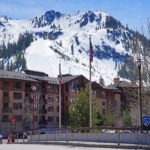
Celestial Peak | Tiandu Feng | Capital of Heaven Peak | 天都峰天

🏔️ Overview
Celestial Peak, more commonly called Tiandu Peak or Tiandu Feng, is one of the three celebrated principal summits of Huangshan in eastern China. Rising above a maze of granite towers, forested ravines, and cloud-filled valleys, it is widely regarded as the most dramatic and physically demanding of Huangshan’s famous peaks.
The Chinese name Tiandu Feng (天都峰) is most literally translated as “Heavenly Capital Peak” or “Capital of Heaven Peak.” “Celestial Peak” is a shorter English variation commonly used in travel writing. The name reflects the summit’s seemingly inaccessible position above the clouds, where its granite crest appears to belong more to the sky than to the surrounding landscape.
Unlike many high mountains, Celestial Peak is not known for glaciers, wilderness expeditions, or technical mountaineering. Its challenge comes from extremely steep stone stairways, narrow ridges, polished granite, chains, and prolonged exposure above precipitous slopes. The famous Carp’s Back ridge near the summit is one of the most recognizable and intimidating sections of trail in Huangshan.
Celestial Peak lies within the UNESCO-listed Mount Huangshan landscape, an area celebrated for its contorted pine trees, strangely shaped rocks, granite pinnacles, hot springs, and seas of cloud. The wider mountain has also influenced centuries of Chinese painting, poetry, and ideas about the ideal mountain landscape.
⚡ Fast Facts
| Fact | Details |
|---|---|
| Continent | Asia |
| Country | China |
| State/Province | Anhui Province |
| County/Region | Huangshan District, Huangshan City |
| Mountain Range | Huangshan Mountain Range |
| Parent Peak | Lotus Peak |
| Elevation | Approximately 1,829 m / 6,001 ft |
| Prominence | Approximately 264 m / 866 ft |
| Isolation | Approximately 0.97 km / 0.60 mi |
| Nearest Higher Neighbor | Lotus Peak, about 1 km northwest |
| Coordinates | Approximately 30.1213° N, 118.1740° E |
| Chinese Name | 天都峰 |
| Other Names | Tiandu Peak, Tiandu Feng, Heavenly Capital Peak, Celestial Capital Peak |
| Protected Area | Huangshan National Scenic Area |
| UNESCO Status | Part of the Mount Huangshan World Heritage Site and Huangshan UNESCO Global Geopark |
Elevation figures vary among mapping sources. Most descriptions of Celestial Peak give an elevation of 1,829 meters, while Peakbagger lists approximately 1,810 meters. Prominence and isolation estimates also differ slightly depending on the elevation model used.
📍 Location
Celestial Peak is located in the southeastern part of the Huangshan scenic area in Anhui Province, eastern China. It stands near the heavily visited Yuping scenic zone, east of Lotus Peak and close to the routes connecting Ciguang Pavilion, Banshan Temple, Yuping Tower, and the famous Guest-Greeting Pine.
The mountain is part of Huangshan City, although the urban center and the scenic mountain area are separate destinations. Most visitors reach the mountain through Tangkou, the main gateway settlement near Huangshan’s southern entrance.
From the entrance, shuttle buses carry visitors to trailheads and cableway stations. The Yuping Cableway, which runs between Ciguang Pavilion and the upper Yuping area, provides the most convenient approach to the side of the mountain nearest Celestial Peak.
Huangshan can be reached from major eastern Chinese cities such as Shanghai, Hangzhou, Hefei, and Nanjing. Huangshan North Railway Station is connected to China’s high-speed rail system, with onward buses and taxis serving Tangkou and the scenic area.
📏 Elevation & Prominence
Celestial Peak reaches approximately 1,829 meters (6,001 feet) above sea level. It is traditionally grouped with Lotus Peak and Bright Summit as one of Huangshan’s three principal peaks.
Lotus Peak, at 1,864 meters, is Huangshan’s highest summit. Bright Summit reaches approximately 1,860 meters. Celestial Peak is lower than both, but its sharp form and steep approaches often make it appear more imposing.
PeakVisor estimates Celestial Peak’s topographic prominence at approximately 264 meters (866 feet). Its isolation is about 967 meters, measured toward higher ground associated with Lotus Peak. Peakbagger uses a lower elevation model and calculates approximately 230 meters of prominence and 1.11 kilometers of isolation.
These differences do not change the mountain’s practical character. Celestial Peak rises as a distinct granite summit separated from nearby higher terrain by a substantial saddle, making it one of the more topographically independent peaks in the central Huangshan group.

🪨 Geology
Celestial Peak is composed primarily of the granite that defines the Huangshan landscape. The foundations of these mountains began forming during the Late Jurassic, approximately 140 million years ago, when molten rock intruded into the Earth’s crust and slowly crystallized underground.
Tectonic uplift later raised the granitic mass. As overlying rock was gradually removed by erosion, the granite became exposed at the surface. Intersecting fractures and joints allowed water, frost, temperature changes, and chemical weathering to break the rock into towers, domes, columns, narrow crests, and isolated boulders.
Celestial Peak’s steep faces reflect the way erosion exploited these natural weaknesses in the granite. Some blocks remained relatively resistant, while adjoining rock was stripped away, leaving the sharp summit ridge and precipitous slopes visible today.
Older descriptions of Huangshan frequently credit Quaternary glaciers with shaping much of the modern landscape. Evidence for extensive glaciation remains debated among geologists, however. UNESCO’s Global Geopark description recognizes the possible influence of ancient ice while noting that the extent of Huangshan’s glacial history is still an active geological question.
The peak’s pale granite contrasts sharply with the dark green Huangshan pines growing from cracks and ledges. Cloud, mist, rain, and changing sunlight continually alter its appearance, helping make the mountain resemble the shifting landscapes depicted in traditional Chinese ink paintings.
🌿 Flora & Fauna
Vegetation around Celestial Peak changes rapidly with elevation and exposure. Forests cover the sheltered lower slopes, while the upper ridges support smaller, wind-shaped trees and plants capable of surviving in shallow soil.
The best-known species is the Huangshan pine, a regional form of Chinese red pine adapted to the mountain’s granite terrain. Its roots penetrate fractures in the rock, allowing trees to grow on ledges that appear almost barren. Strong winds, ice, limited soil, and uneven sunlight produce the twisted trunks and flattened crowns characteristic of Huangshan scenery.
Broadleaf and mixed forests occupy lower elevations. Higher on the mountain, vegetation becomes increasingly scattered as exposed granite, wind, and colder conditions restrict plant growth.
The wider Mount Huangshan protected area supports hundreds of vertebrate species. Recorded animals include Tibetan macaques, muntjac, wild boar, squirrels, pheasants, reptiles, amphibians, and numerous forest birds. The World Heritage property also provides habitat for nationally protected and threatened species, although wildlife is less commonly seen along the busiest summit paths.
Visitors should never feed macaques or other animals. Feeding can encourage aggressive behavior, alter natural diets, and draw wildlife into crowded visitor areas.
🥾 Hiking & Climbing Routes
Reaching Celestial Peak is a strenuous mountain hike rather than a technical rock climb. The maintained route includes carved stone steps, railings, chains, and constructed platforms, but the extraordinary steepness and exposure require confidence, balance, and sustained physical effort.
Yuping and Old Trailhead Route
The most convenient approach begins in the Yuping scenic area, which can be reached by riding the Yuping Cableway from Ciguang Pavilion. From the upper station, hikers continue toward Yuping Tower, the Guest-Greeting Pine, and the old Tiandu Peak trailhead.
This approach reduces the amount of climbing from the valley but does not eliminate the hardest portion of the ascent. The summit path contains steep stairways where many visitors use both hands and feet. Chains and railings provide support, especially where the steps cross exposed slabs.
Ciguang Pavilion and Banshan Temple Route
A longer approach begins near Ciguang Pavilion and climbs through the front-mountain landscape toward Banshan Temple and the newer Tiandu trailhead.
This option involves considerably more total elevation gain and thousands of stone steps before the summit climb begins. It is best suited to well-conditioned hikers who have allowed enough time for both the ascent and descent.
Carp’s Back Ridge
The most famous feature of the climb is Carp’s Back, known in Chinese as Jiyu Bei. This narrow granite ridge lies close to the summit and is protected by chains or railings.
The ridge is not technically difficult under good conditions, but the drops, wind, crowds, and polished stone can make it psychologically challenging. Mist may conceal the exposure, while clear weather reveals the surrounding cliffs and valleys in full.
Summit Area
The summit is comparatively confined and may become crowded. On clear days, it provides views toward Lotus Peak, Bright Summit, Yuping Peak, and the surrounding granite pinnacles. Clouds can arrive quickly, sometimes transforming an open panorama into near-total mist within minutes.
Access Restrictions
Celestial Peak is periodically closed for winter maintenance, dangerous weather, trail repairs, and ecological recovery. Huangshan has also used rotating multiyear closures to reduce pressure on its most heavily visited summits.
For the 2026 season, Tiandu Peak reopened on April 7 after its winter maintenance period. Entry required an advance online reservation. Previous official notices have also imposed a fair-weather daily limit of approximately 3,000 visitors.
Opening dates, reservation procedures, and daily limits can change. Travelers should consult the official Huangshan Scenic Area platform shortly before visiting.
🏔️ Field Guide Tip: Wear shoes with excellent traction and bring lightweight gloves for gripping chains. Avoid the summit route during rain, thunderstorms, ice, high winds, or very poor visibility. The granite steps become extremely slippery when wet.

🌤️ Best Time to Visit
The most favorable periods for hiking Celestial Peak are generally April through May and September through November. These seasons often provide comfortable temperatures, colorful vegetation, and better hiking conditions than the hottest and wettest part of summer.
Spring brings fresh foliage, mountain flowers, mist, and frequent cloud formations. Conditions can remain cool, especially early in the day, and rain may make the stone trails slippery.
Summer is warm, humid, and busy. Moist air produces some of Huangshan’s most dramatic seas of cloud, but it also brings heavy rain, thunderstorms, reduced visibility, and crowded trails.
Autumn is often considered the best overall season. Cooler air and lower humidity may improve visibility, while changing leaves add color to the forested slopes. National holidays and weekends can still be extremely crowded.
Winter transforms Huangshan with snow, frost, and ice-covered pines. Celestial Peak’s summit trail, however, is normally closed during the winter maintenance season. Other parts of Huangshan may remain accessible depending on weather and park operations.
🧭 Nearby Mountains & Attractions
Lotus Peak
Lotus Peak is Huangshan’s highest summit at 1,864 meters. Its granite pinnacles resemble the petals of a lotus flower when viewed from certain directions. The peak lies roughly one kilometer northwest of Celestial Peak.
Bright Summit
Bright Summit, also called Guangming Ding, is one of Huangshan’s highest and most accessible major viewpoints. Its broad upper area is popular for watching sunrise, sunset, and cloud formations.
Yuping Tower and Guest-Greeting Pine
Yuping Tower occupies one of the most famous scenic locations in Huangshan. Nearby stands the Guest-Greeting Pine, whose outstretched branches have become an internationally recognized symbol of the mountains.
Xihai Grand Canyon
The Xihai Grand Canyon, or West Sea Grand Canyon, contains steep staircases, cliffside paths, deep ravines, and densely packed granite towers. Exploring it requires additional time and energy and should not be combined casually with a demanding Celestial Peak ascent.
Huangshan Hot Springs
Natural hot springs emerge near the southern foot of the mountain. They have attracted visitors for centuries and provide a relaxing contrast to Huangshan’s long stairway climbs.
Hongcun and Xidi
The historic villages of Hongcun and Xidi lie southwest of Huangshan. Both are known for traditional Huizhou architecture, narrow lanes, ancestral halls, ponds, and carefully planned water systems.

💡 Fun Facts
- The correct Chinese characters for Celestial Peak are 天都峰.
- “Heavenly Capital Peak” is a more literal translation than “Celestial Peak.”
- Celestial Peak is considered the steepest and most intimidating of Huangshan’s three traditionally celebrated principal summits.
- Its famous Carp’s Back section follows a narrow granite crest close to the summit.
- The peak’s elevation is commonly given as 1,829 meters, although some topographic databases list approximately 1,810 meters.
- Huangshan’s granite formations began developing from magma that crystallized underground roughly 140 million years ago.
- The mountain often appears to rise from a “sea of clouds,” one of Huangshan’s celebrated natural wonders.
- Celestial Peak has been periodically closed to allow trail maintenance and environmental recovery.
- Huangshan was inscribed as a UNESCO World Heritage Site in 1990.
- The wider mountain landscape has influenced generations of Chinese poets and landscape painters.
❓ Frequently Asked Questions
How high is Celestial Peak?
Celestial Peak is commonly listed at 1,829 meters (6,001 feet) above sea level. Peakbagger uses a different elevation model and lists approximately 1,810 meters.
Is Celestial Peak the highest mountain in Huangshan?
No. Lotus Peak is Huangshan’s highest summit at 1,864 meters. Bright Summit reaches approximately 1,860 meters. Celestial Peak is traditionally included with them as one of Huangshan’s three principal peaks.
Is Celestial Peak the same as Tiandu Peak?
Yes. Celestial Peak, Tiandu Peak, Tiandu Feng, Heavenly Capital Peak, and Celestial Capital Peak are English or romanized names for 天都峰.
Is the climb dangerous?
The maintained trail has steps, chains, and railings, but it remains extremely steep and exposed. Wet stone, ice, wind, thunderstorms, crowds, fatigue, and fear of heights can create serious hazards.
Is technical climbing equipment required?
No ropes or technical climbing equipment are normally required when the official trail is open. Sturdy footwear, gloves, weather protection, water, and good physical conditioning are strongly recommended.
How long does it take to climb Celestial Peak?
The summit portion commonly requires several hours for the round trip, depending on the chosen trailhead, crowds, fitness, and weather. Approaching entirely on foot from Ciguang Pavilion makes the outing significantly longer than using the Yuping Cableway.
Is there a cable car to the summit?
No cable car reaches Celestial Peak’s summit. The Yuping Cableway provides access to the nearby upper Yuping area, but visitors must complete the summit route on foot.
Is Celestial Peak always open?
No. It may close during winter, severe weather, maintenance work, or ecological restoration periods. Advance reservations may also be required when it is open.
Can children climb Celestial Peak?
Older children with strong hiking experience may be capable of completing the route under close supervision. The steep stairs, narrow ridges, long drops, and heavy crowds make it unsuitable for many young children.
What is the nearest higher mountain?
The nearest higher neighbor is Lotus Peak, located approximately one kilometer northwest of Celestial Peak.

🔗 Related Articles
- Huangshan Mountain Range
- Lotus Peak (Huangshan)
- Bright Peak (Huangshan)
- Mountains in China
- Sacred Mountains of China
- Mount Qiyun
📚 Sources
- Mount Huangshan — UNESCO World Heritage Centre (UNESCO World Heritage Centre)
- Huangshan UNESCO Global Geopark — UNESCO (UNESCO)
- Mount Tiandu Peak Reopens to Public Today — Huangshan Municipal Government (Huangshan Government)
- Tiandu Peak Concludes Winter Closure, Reopens to Visitors — Huangshan Municipal Government (Huangshan Government)
- Celestial Capital Peak — PeakVisor (PeakVisor App)
- Tiāndū Fēng — Peakbagger (Peakbagger)
- Huangshan — Encyclopaedia Overview (en.wikipedia.org)