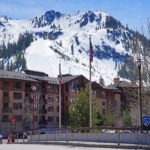
Eiger

🏔️ Overview

The Eiger rises above Grindelwald and the Lauterbrunnen Valley in Switzerland’s Bernese Oberland. Reaching 3,967 meters, or 13,015 feet, it is lower than many celebrated Alpine summits, yet few mountains have achieved such an imposing reputation.
Its fame comes primarily from the immense north face, a dark wall of limestone, snow, and ice measuring approximately 1,600 to 1,800 meters from base to summit. The face has witnessed extraordinary achievements, failed expeditions, dramatic rescues, and some of the most widely reported tragedies in mountaineering history.
The Eiger forms the eastern end of the famous Eiger–Mönch–Jungfrau skyline. Together, these peaks create one of the most recognizable views in the Swiss Alps.
Although the Eiger is commonly associated with the German word for “ogre,” the true origin of its name remains uncertain. The earliest known written form, mons Egere, appeared in a document dating from 1252.
The mountain’s summit was first reached in 1858 by Irish climber Charles Barrington and Swiss guides Christian Almer and Peter Bohren. The north face remained unclimbed for another 80 years, finally yielding to a German-Austrian team in 1938.
Today, the Eiger continues to attract elite climbers, hikers, photographers, railway passengers, and travelers who simply want to stand beneath one of the world’s most storied mountain walls.

⚡ Fast Facts
| Feature | Details |
|---|---|
| Continent | Europe |
| Country | Switzerland |
| Canton | Bern |
| Region | Interlaken-Oberhasli |
| Municipalities | Grindelwald and Lauterbrunnen |
| Mountain Range | Bernese Alps, part of the Swiss Alps |
| Parent Peak | Mönch |
| Elevation | 3,967 m / 13,015 ft |
| Prominence | Approximately 361 m / 1,184 ft |
| Isolation | Approximately 2.1 km / 1.3 mi |
| Nearest Higher Neighbor | Mönch, south-southwest |
| Coordinates | Approximately 46.5775° N, 8.0053° E |
| Rock Type | Predominantly limestone |
| First Ascent | August 11, 1858 |
| First Ascensionists | Charles Barrington, Christian Almer, and Peter Bohren |
| Normal Route | West Flank |
| North Face First Ascent | July 24, 1938 |
| Protected Area | Swiss Alps Jungfrau-Aletsch UNESCO World Heritage Site |
| Fun Fact | The Eiger is famous despite falling just below the Alps’ 4,000-meter threshold |

📍 Location
The Eiger is located entirely within the canton of Bern in central Switzerland. Its summit stands on the boundary between the municipalities of Grindelwald and Lauterbrunnen.
Grindelwald lies beneath the mountain’s northern and northeastern slopes. The village is one of the principal gateways to the Jungfrau region and provides access to hiking trails, ski areas, mountain railways, and views of the Eiger’s enormous north face.
The Lauterbrunnen Valley lies west of the mountain. Wengen, Kleine Scheidegg, and the surrounding slopes provide additional viewpoints toward the Eiger, Mönch, and Jungfrau.
Unlike the Mönch and Jungfrau, the Eiger does not stand directly on the Bern–Valais cantonal boundary or the principal Alpine watershed. Instead, it projects northward from the main chain as a tremendous limestone buttress connected to the Mönch across the Eigerjoch.
Water from every side of the Eiger eventually enters the Lütschine river system. Drainage from the Grindelwald side flows toward the Schwarze Lütschine, while water from the Lauterbrunnen side reaches the Weisse Lütschine. The two branches meet at Zweilütschinen before continuing toward Lake Brienz.
The mountain also occupies the northern edge of the Swiss Alps Jungfrau-Aletsch UNESCO World Heritage Site. This protected landscape includes high peaks, extensive glaciers, alpine habitats, and some of the most important geological features in the Alps.

📏 Elevation & Prominence
The Eiger reaches an officially recognized elevation of 3,967 meters, or 13,015 feet.
Some maps and databases round the summit to 3,970 meters. The difference results from rounding and the use of different mapping or elevation datasets. For consistency, 3,967 meters is the figure most commonly used by Swiss authorities and the Swiss Alpine Club.
The mountain has approximately 361 meters, or 1,184 feet, of topographic prominence. Its key saddle is the Nördliches Eigerjoch, which connects the Eiger to higher ground leading toward the Mönch.
This prominence is relatively modest compared with the mountain’s dramatic appearance. The Eiger is attached to the much higher Bernese Alpine crest by elevated ridges, reducing its statistical independence.
Its topographic isolation is approximately 2.1 kilometers, or 1.3 miles. The nearest higher mountain is the 4,000-meter Mönch, located to the south-southwest.
The Eiger demonstrates why elevation and prominence do not always reflect a mountain’s visual power. Although it is not an especially independent summit by topographic measurements, its north side rises roughly 3,000 vertical meters above the populated valleys below.

🪨 Geology
The Eiger is composed primarily of limestone deposited in ancient marine environments. Layers of sediment accumulated beneath prehistoric seas before being compressed, folded, fractured, and lifted during the creation of the Alps.
The wider Jungfrau-Aletsch region contains a complex meeting of ancient crystalline rock and younger sedimentary formations. As the African tectonic plate moved northward against Europe, enormous sheets of rock were thrust over one another.
The Eiger forms a massive sedimentary buttress projecting from the crystalline foundation associated with the Mönch. Its exposed limestone layers are especially visible across the north face, where horizontal bands and fractured ledges create the mountain’s distinctive architecture.
Limestone contributes to the Eiger’s climbing character. Some areas provide solid holds, while others contain loose, weathered, or brittle rock. Water entering cracks can freeze, expand, and gradually weaken the face.
Repeated freezing and thawing, glacial erosion, permafrost degradation, and gravity continue to reshape the mountain. Rockfall is therefore one of the major objective hazards on many Eiger routes.
In 2006, approximately 700,000 cubic meters of rock collapsed from the mountain’s east side. The failure had been anticipated because a widening fracture had been observed beforehand. The rock fell into an uninhabited area without causing injuries.
Glaciers also helped sculpt the Eiger. The Eiger Glacier lies southwest of the summit, while the Ischmeer occupies the eastern side and forms part of the Lower Grindelwald Glacier system.

🌿 Flora & Fauna
The summit and upper faces of the Eiger are too cold, steep, and unstable to support substantial vegetation. Lower elevations, however, contain alpine meadows, rocky grasslands, forests, streams, and glacial forelands.
Around Grindelwald, Kleine Scheidegg, Alpiglen, and Eigergletscher, summer meadows can produce displays of gentians, alpine asters, bellflowers, saxifrages, and other cold-adapted plants.
Vegetation becomes increasingly sparse with elevation. Cushion plants and lichens survive in protected cracks where they are sheltered from wind and retain small amounts of moisture and soil.
The surrounding Bernese Alps support wildlife such as:
- Alpine ibex
- Chamois
- Marmots
- Mountain hares
- Red deer
- Golden eagles
- Alpine choughs
- Bearded vultures
Marmots are most likely to be seen in open meadows during summer, while chamois and ibex favor steep, rocky terrain. Alpine choughs frequently appear near high viewpoints, railway stations, and mountain huts.
Retreating glaciers create new ground that is gradually colonized by plants. Lichens and small pioneer species appear first, followed by grasses, wildflowers, shrubs, and eventually more complex alpine communities.
🏔️ Field Guide Tip: The Eiger Trail offers a far safer way to experience the scale of the north face than attempting a climbing route. Even on maintained trails, carry warm and waterproof layers because weather can change quickly beneath the mountain.

🥾 Hiking & Climbing Routes
The Eiger offers everything from accessible mountain walks to some of the most demanding alpine climbing in Europe. Reaching the true summit always requires technical mountaineering experience.
West Flank
The West Flank is generally considered the normal route. It follows a complex mixture of rock, scree, snow, and ice from the Eigergletscher area toward the summit.
Although historically described as the easiest way up the mountain, it is not an ordinary hiking route. Climbers face route-finding difficulties, exposed scrambling, rockfall, changing snow conditions, and a long descent.
The first ascent in 1858 followed the western side of the mountain. Charles Barrington and guides Christian Almer and Peter Bohren reached the summit after beginning near Wengernalp.
Mittellegi Ridge
The Mittellegi Ridge forms the Eiger’s long and exceptionally scenic northeastern crest. It is one of the classic ridge climbs of the Alps.
The route combines exposed rock climbing, snow, ice, narrow ridges, and sections equipped with fixed ropes. Most parties use the Mittellegi Hut, which stands dramatically on the ridge at approximately 3,355 meters.
Japanese climber Yuko Maki and Swiss guides Fritz Amatter, Samuel Brawand, and Fritz Steuri completed the first ascent of the ridge in 1921.
Despite the presence of fixed ropes, the Mittellegi Ridge remains a serious alpine undertaking. Climbers must move efficiently and be prepared for extreme exposure and rapidly changing conditions.

North Face and the Heckmair Route
The Eiger’s north face is one of the legendary great walls of the Alps. The classic line is the 1938 Heckmair Route, named after first-ascent climber Andreas Heckmair.
Heckmair, Ludwig Vörg, Heinrich Harrer, and Fritz Kasparek completed the first ascent of the face on July 24, 1938. Their route passed landmarks that have become part of mountaineering history, including:
- The Difficult Crack
- Hinterstoisser Traverse
- First and Second Icefields
- Death Bivouac
- The Ramp
- Traverse of the Gods
- The White Spider
- Exit Cracks
The route involves sustained mixed climbing on rock, snow, and ice. Storms, avalanches, falling ice, rockfall, cold, route-finding problems, and limited retreat options make it exceptionally serious.
Modern equipment has improved, but the wall itself has not become safe. Changing ice conditions and thawing permafrost can make the face increasingly unstable during warm periods.
Lauper Route
The Lauper Route climbs the northeast face between the Mittellegi Ridge and the main north face. It was first completed in 1932 by Hans Lauper, Alfred Zürcher, Alexander Graven, and Josef Knubel.
It is less famous than the Heckmair Route but remains a major and difficult alpine climb requiring strong mixed-climbing skills.

Eiger Trail
The Eiger Trail is the best-known hiking route beneath the mountain. It runs between Eigergletscher station and Alpiglen, passing directly below the north face.
Hikers receive exceptional views of the wall and may occasionally see climbers moving across it. Interpretive signs explain parts of the mountain’s climbing history and identify famous features on the face.
The route involves mountain terrain and elevation changes but does not require technical climbing equipment under normal summer conditions.
Eiger-Rotstock Via Ferrata
The Eiger-Rotstock via ferrata provides a more adventurous alternative without continuing to the main summit.
Metal ladders, steps, and cables lead climbers toward the 2,662-meter Rotstock, a smaller summit on the western side of the Eiger. Proper via ferrata equipment, mountain experience, and suitable weather are still essential.
Eiger-Ostegg Via Ferrata
A separate via ferrata provides access toward the remote Ostegg Hut. This route is considerably more demanding than an ordinary hiking trail and includes exposed, technically difficult sections.
It does not reach the summit of the Eiger, but it allows experienced visitors to explore the mountain’s northeastern terrain.

🌤️ Best Time to Visit
The best time to experience the Eiger depends on the activity.
Hiking
July through September generally provides the most reliable conditions for the Eiger Trail and other high-level walks. Snow can linger into early summer, while fresh snowfall may return during autumn.
June and October can also be rewarding, but trail conditions are more variable. Railway schedules, trail closures, and weather forecasts should be checked before departure.
West Flank and Mittellegi Ridge
Summer is the principal season for the West Flank and Mittellegi Ridge. Climbers normally seek a period with stable weather, limited fresh snow, manageable winds, and favorable rock conditions.
Warm temperatures can increase rockfall, while recent snow can make exposed ridges slow and dangerous. Conditions matter more than the calendar.
North Face
The north face has increasingly become a cold-season objective. Winter ice can bind otherwise loose rock and create more continuous mixed-climbing conditions.
However, winter also brings severe cold, short days, avalanches, storms, and complex snow conditions. The north face should be attempted only by highly experienced alpinists capable of evaluating current conditions.
Scenic Visits
Grindelwald, Kleine Scheidegg, and Jungfraujoch can be visited throughout much of the year. Summer provides green meadows and hiking opportunities, while winter creates dramatic snow-covered views of the Eiger.

🧭 Nearby Mountains & Attractions
Mönch
The Mönch rises immediately southwest of the Eiger and is its nearest higher neighbor and parent peak.
At more than 4,100 meters, it forms the central summit of the Eiger–Mönch–Jungfrau trio.
Jungfrau
The Jungfrau stands southwest of the Mönch and is the highest member of the famous three-peak skyline.
Its glaciated slopes rise above Lauterbrunnen and the upper Aletsch Glacier system.
Grosses Fiescherhorn
The Grosses Fiescherhorn rises southeast of the Eiger. Its broad northern wall and surrounding glaciers contribute to the spectacular landscape visible from the Grindelwald region.
Schreckhorn
The Schreckhorn stands east of the Eiger and is one of the most technically demanding major summits in the Bernese Alps.
Its sharp rock pyramid is frequently seen from hiking areas above Grindelwald.
Finsteraarhorn
The Finsteraarhorn is the highest mountain in the Bernese Alps.
Although higher than the Eiger, it occupies a more remote, glacier-surrounded position and is less visible from the populated northern valleys.
Grindelwald
Grindelwald sits directly beneath the Eiger’s north face. It serves as the principal base for hiking, climbing, skiing, sightseeing, and railway excursions around the mountain.
Kleine Scheidegg
Kleine Scheidegg is a mountain pass and railway junction between the Eiger and Lauberhorn. It provides one of the classic views of the Eiger, Mönch, and Jungfrau.
The pass also became closely connected with Eiger climbing history because expeditions on the north face could be observed from below.
Jungfraujoch
Jungfraujoch lies between the Mönch and Jungfrau. The Jungfrau Railway reaches the high saddle through tunnels driven into the Eiger and Mönch.
The station provides access to glacier views, the Sphinx observatory, exhibitions, and the upper Aletsch region.
Eiger Glacier
The Eiger Glacier descends along the mountain’s southwestern side. Eigergletscher station provides access to trails, ski slopes, climbing approaches, and transportation toward Jungfraujoch.

💡 Fun Facts
- The Eiger is slightly below the 4,000-meter elevation used to define the Alps’ celebrated “four-thousanders.”
- Its north face rises approximately 1,600 to 1,800 meters.
- The summit is located entirely within the canton of Bern.
- The mountain’s earliest recorded name was mons Egere in 1252.
- “Ogre” is a popular translation of Eiger, but the historical origin of the name is uncertain.
- The Eiger, Mönch, and Jungfrau are often described symbolically as the Ogre, Monk, and Maiden.
- The summit was first reached in 1858.
- The Mittellegi Ridge was first climbed in 1921.
- The north face was first climbed in 1938.
- The White Spider is named for snow-filled cracks radiating across the upper north face.
- The Jungfrau Railway travels for several kilometers through the interior of the Eiger.
- Openings in the railway tunnel have played roles in several climbing rescues and escapes.
- Spectators once followed north-face expeditions through telescopes from Kleine Scheidegg.
- The mountain appears in numerous books, documentaries, and films, including The White Spider, The Beckoning Silence, and The Eiger Sanction.
- Despite its modest prominence, the Eiger is one of the most visually imposing mountains in Europe.

❓ Frequently Asked Questions
How high is the Eiger?
The Eiger reaches 3,967 meters, or 13,015 feet, above sea level. Some sources round its elevation to 3,970 meters.
Where is the Eiger located?
The Eiger is located in the Bernese Alps of Switzerland. It rises above Grindelwald and the Lauterbrunnen Valley in the canton of Bern.
What is the Eiger’s nearest higher neighbor?
The nearest higher neighbor is the Mönch, approximately two kilometers to the south-southwest.
What is the Eiger’s parent peak?
The Eiger’s topographic parent is the Mönch.
Is the Eiger a 4,000-meter mountain?
No. At 3,967 meters, the Eiger falls approximately 33 meters short of the 4,000-meter threshold.
Why is the Eiger famous?
The Eiger is famous primarily for its enormous north face, its dramatic climbing history, its position above Grindelwald, and its association with the Mönch and Jungfrau.
What does Eiger mean?
Eiger is commonly translated as “ogre,” particularly when the mountain is grouped with the Mönch, or “monk,” and Jungfrau, or “maiden.” The actual etymology remains uncertain.
Who first climbed the Eiger?
Charles Barrington, Christian Almer, and Peter Bohren completed the first recorded ascent on August 11, 1858.

Who first climbed the Eiger north face?
Andreas Heckmair, Ludwig Vörg, Heinrich Harrer, and Fritz Kasparek completed the first ascent of the north face on July 24, 1938.
Can beginners climb the Eiger?
No. Every summit route requires technical alpine climbing skills. Even the normal West Flank involves exposed and hazardous terrain.
Can you hike near the Eiger without climbing it?
Yes. The Eiger Trail passes beneath the north face and is one of the best ways for hikers to experience the mountain.
Does a train travel through the Eiger?
Yes. The Jungfrau Railway passes through tunnels inside the Eiger and Mönch on its way to Jungfraujoch.
Is the Eiger inside a UNESCO World Heritage Site?
The Eiger forms part of the Swiss Alps Jungfrau-Aletsch UNESCO World Heritage landscape, which protects the surrounding mountains, glaciers, geological formations, and ecosystems.
What type of rock forms the Eiger?
The mountain is composed predominantly of limestone, although the wider region contains both younger sedimentary rocks and much older crystalline formations.
When is the best time to see the Eiger?
Summer is ideal for hiking and green alpine scenery, while winter provides dramatic snow-covered views. Visibility ultimately depends on cloud cover and local weather.

🔗 Related Articles
📚 Sources
- Peakbagger — Eiger
- Swiss Alpine Club — Eiger
- Swiss Alpine Club — Mittellegi Hut
- UNESCO — Swiss Alps Jungfrau-Aletsch
- Jungfrau Railways — Eiger Trail
- Wikipedia — Eiger