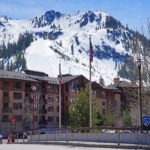
Grand View Peak

Grand View Peak
Grand View Peak is a 9,641-foot summit in the Pinaleño Mountains of southeastern Arizona, rising within Coronado National Forest southwest of Safford. Although it is overshadowed by nearby giants such as Mount Graham, Hawk Peak, and Webb Peak, Grand View Peak offers something increasingly uncommon: a quiet, lightly traveled summit where navigation and route-finding are part of the experience.
The mountain consists of two closely spaced high points. The southern summit is the true high point at approximately 9,641 feet, while the northern summit reaches roughly 9,618 feet. An old trail once reached the mountain, but much of it has disappeared beneath decades of forest growth. Today, reaching Grand View Peak generally involves following traces of the abandoned route and traveling cross-country from the Swift Trail area.
⚡ Fast Facts
| Feature | Details |
|---|---|
| Country | United States |
| State | Arizona |
| County | Graham County |
| Mountain Range | Pinaleño Mountains |
| Elevation | 9,640.6 feet / 2,938.4 meters |
| Prominence | 365.9 feet / 111.5 meters |
| Isolation | 0.66 mile / 1.07 kilometers |
| Nearest Higher Neighbor (NHN) | Webb Peak |
| Key Col | Approximately 9,275 feet / 2,827 meters |
| Coordinates | 32.71711° N, 109.94373° W |
| USGS Topographic Map | Webb Peak |
| Land Management | Coronado National Forest |
| Major Access | Swift Trail / State Route 366 |
| Typical Route | Abandoned trail and cross-country ridge |
| Summit Character | Twin forested summits with rocky viewpoints |
| Best Season | Late spring through fall |
Modern LiDAR measurements place Grand View Peak at 9,640.6 feet, with approximately 366 feet of prominence and 0.66 mile of isolation. Its Nearest Higher Neighbor is Webb Peak.
🏔️ Sixth-Highest Major Peak in the Pinaleños
Grand View Peak ranks as the sixth-highest major summit in the Pinaleño Mountains.
The higher major peaks are:
- Mount Graham — 10,709 feet
- Hawk Peak — 10,619 feet
- Plain View Peak — 10,370 feet
- Webb Peak — 10,033 feet
- Heliograph Peak — 10,024 feet
- Grand View Peak — 9,641 feet
That ranking makes Grand View Peak an important part of the high Pinaleño crest even though it receives relatively little recreational attention.
The mountain sits immediately west of Webb Peak, with both summits rising above the forested upper reaches of Mount Graham.
🧭 Nearest Higher Neighbor: Webb Peak
Grand View Peak’s Nearest Higher Neighbor is Webb Peak, located less than a mile to the southeast.
Webb Peak rises to approximately 10,033 feet, about 392 feet higher than Grand View Peak.
The saddle connecting the two mountain areas drops to approximately 9,275 feet, giving Grand View Peak roughly 366 feet of clean prominence.
This creates a useful topographic sequence among the high Pinaleño summits:
Grand View Peak → Webb Peak → Hawk Peak → Mount Graham
Each mountain ultimately connects toward the enormous Mount Graham massif, which dominates the entire range.
👀 How Grand View Peak Got Its Name
The name Grand View Peak is particularly appropriate.
Historical hiking accounts indicate that early residents of the Gila Valley named the mountain for the impressive views available from its rounded high country.
Forest growth has reduced some of the completely open panoramas that early visitors may have experienced, but rocky openings and cliff edges still provide spectacular perspectives over the surrounding mountains and valleys.
Unlike some Arizona peaks whose names refer to people, mining claims, or distinctive rock formations, Grand View Peak describes exactly what attracted visitors to the mountain: the view.
⛰️ Two Summits
Grand View Peak has two distinct summit areas.
The southern summit is the true high point, reaching approximately 9,641 feet.
The northern summit reaches approximately 9,618 feet.
The difference is small enough that older topographic information can create confusion about which point is highest. The Forest Service’s Mount Graham visitor map, for example, labels Grand View Peak at 9,618 feet, while newer LiDAR measurements identify the southern summit as the higher point at approximately 9,641 feet.
For hikers, both summits are worth exploring.
Each offers somewhat different perspectives over the Pinaleño Mountains.
🥾 Hiking Grand View Peak
Grand View Peak is not reached by a maintained modern hiking trail.
An older trail once climbed to the southern summit, but the forest has largely reclaimed it. In places, hikers may still find old blazes cut into trees, but they are widely scattered and should not be relied upon for navigation.
A commonly used approach begins along Swift Trail—State Route 366 / Forest Road 803—near Chesley Flat.
From there, hikers travel toward the mountain using forested ridges, traces of the abandoned trail, and open granite areas.
The route is not technically difficult by mountaineering standards, but it requires more navigation than nearby maintained routes such as the trail to Webb Peak.
🧭 An Off-Trail Mountain
Grand View Peak is an excellent destination for hikers who enjoy navigation.
The old trail has become increasingly faint as vegetation has reclaimed the corridor. Fallen trees, forest growth, fire effects, and erosion can further obscure the route.
That means visitors should be comfortable traveling without a continuously visible path.
Useful navigation tools include:
- Offline GPS mapping
- USGS topographic map
- Compass
- Waypoints for the road and vehicle
- Extra battery power
- A clear understanding of the surrounding ridges
The mountain is close to Swift Trail geographically, but dense forest can make orientation surprisingly difficult.
🪨 Granite Ridges and Boulder Fields
As hikers approach the upper mountain, granite becomes increasingly prominent.
Large boulders and rocky outcrops interrupt the forest, creating natural openings with views across the surrounding terrain.
These granite areas are among the highlights of the hike.
The rock also creates small route-finding challenges. Rather than following a single obvious trail, hikers may need to weave around boulders, trees, and short rocky steps while choosing the easiest line toward the summit.
The terrain is generally much gentler than the exposed scrambling found on peaks such as Browns Peak at Four Peaks, but careful footing is still important.
🌄 The Southern Summit
The southern summit is Grand View Peak’s true high point.
At approximately 9,641 feet, it offers views toward nearby Webb Peak and across the mountains toward the Fort Grant area.
Rocky openings near the summit provide better views than the wooded high point itself.
This is common among heavily forested Arizona sky-island summits.
The precise highest point may be surrounded by trees, while a rocky ledge only a short distance away provides the panorama that makes the climb worthwhile.
🌄 The Northern Summit
The northern summit reaches approximately 9,618 feet.
Although slightly lower, it offers its own dramatic viewpoints.
A short rocky approach toward the edge of the summit area provides perspectives over Nuttall Canyon and the deep terrain falling away from the high Pinaleño ridge.
Hikers exploring both summits should remain cautious around cliff edges and loose rock.
The additional effort of visiting the northern high point can be worthwhile for those who want to experience the mountain beyond simply tagging its highest elevation.
🌲 A Madrean Sky Island
Grand View Peak belongs to the Madrean Sky Islands, the isolated mountain ranges scattered across southeastern Arizona, southwestern New Mexico, and northern Mexico.
These ranges rise dramatically above desert and grassland basins.
The Pinaleño Mountains provide one of the most impressive examples because they climb from hot desert near the Gila Valley to forests above 10,000 feet.
Grand View Peak sits near the upper end of that transition.
Its elevation of more than 9,600 feet allows forests typical of much cooler environments to survive only a short horizontal distance from some of Arizona’s hottest landscapes.
🌲 Forests Around Grand View Peak
The upper mountain is heavily forested.
Depending on slope, elevation, fire history, and moisture, trees in the Grand View Peak area can include:
- Ponderosa pine
- Douglas-fir
- White fir
- Quaking aspen
- Gambel oak
- Other high-elevation conifers
The forest is part of what makes the mountain attractive, but it also explains why the former summit trail has become difficult to follow.
In contrast with barren alpine peaks, Grand View Peak feels enclosed and wooded until hikers emerge onto one of its rocky openings.
🔥 The Nuttall Fire
The modern landscape around Grand View Peak has also been influenced by wildfire.
The 2004 Nuttall Fire burned portions of the upper Pinaleño Mountains, including country near Grand View Peak.
Some areas along the ridge approach were affected, although surviving forest remained substantial along portions of the route.
Later fires elsewhere in the range, especially the 2017 Frye Fire, further demonstrated how vulnerable the isolated high-elevation forests of Mount Graham can be.
Visitors should remain alert for standing dead trees, particularly during windy conditions.
The Forest Service warns that burned trees can present hazards throughout fire-affected areas of the Mount Graham high country.
🍂 Aspen and Autumn Color
Aspen adds another dimension to the Grand View Peak landscape.
Groves scattered across the upper Pinaleños can turn brilliant yellow during early autumn, creating striking contrast with dark evergreen forest and pale granite.
Fall color usually develops much earlier at these elevations than it does in Arizona’s desert communities.
Late September into October can be especially attractive, although exact timing varies from year to year.
Cold fronts and early snowstorms can also arrive surprisingly quickly above 9,000 feet.
🌄 Views Toward Webb Peak
Webb Peak is one of the most prominent nearby landmarks.
At approximately 10,033 feet, Webb rises almost 400 feet higher than Grand View Peak and forms the next step upward toward Hawk Peak and Mount Graham.
Webb Peak’s fire lookout may also be visible from favorable openings.
The relationship between the two mountains makes them natural companions for anyone studying or exploring the highest summits of the Pinaleños.
Webb has an official Forest Service trail, while Grand View provides the quieter and more navigationally demanding experience.
🏔️ Views Toward Mount Graham
Farther east rises Mount Graham, the 10,709-foot monarch of the Pinaleño Mountains.
Mount Graham is more than 1,000 feet higher than Grand View Peak and possesses over 6,000 feet of prominence.
Nearby Hawk Peak and Plain View Peak form part of the same high summit complex.
Together, these peaks create one of the highest mountain landscapes in southern Arizona.
From Grand View Peak, their forested ridges emphasize just how extensive the upper Pinaleños really are.
🚗 Swift Trail Parkway
The key to accessing Grand View Peak is Arizona State Route 366, better known as the Swift Trail Parkway.
The road climbs from near the desert floor southwest of Safford into the high Pinaleño Mountains.
Traveling the Swift Trail is an experience in itself.
Visitors pass from warm desert and grassland through oak woodland, ponderosa pine forest, and eventually into cool high-country environments.
The Mount Graham recreation corridor includes campgrounds, picnic areas, overlooks, trailheads, and access to numerous mountain destinations.
Grand View Peak lies near the upper section of this remarkable scenic road.
🥾 Chesley Flat
Chesley Flat provides an important reference point for reaching Grand View Peak.
The summit can be approached from the vicinity of the flat, with hikers traveling west or northwest toward the mountain depending on their chosen route.
Older accounts suggest that approaching from the east near Chesley Flat can provide relatively straightforward access, while following the old ridge route produces better views.
Because there is no maintained summit trail, exact route choice should depend on current forest conditions, navigation ability, and any closures affecting the area.
🦌 Wildlife
The Pinaleño Mountains support an impressive collection of wildlife because of their enormous elevation range.
Animals that may occur within the broader high country include:
- Black bears
- Mule deer
- Coues white-tailed deer
- Mountain lions
- Coyotes
- Bobcats
- Wild turkeys
- Numerous mountain birds
The upper Pinaleños are also famous for the endangered Mount Graham red squirrel.
The most sensitive squirrel habitat is concentrated around other portions of the high mountain, including Mount Graham, Hawk Peak, Webb Peak, and Heliograph Peak.
Visitors should never disturb wildlife, middens, nests, or other habitat features.
🌩️ Monsoon Weather
Summer thunderstorms are one of the greatest hazards on Grand View Peak.
The Pinaleño Mountains frequently generate thunderstorms during Arizona’s monsoon season.
A clear morning can quickly turn into an afternoon of:
- Lightning
- Heavy rain
- Hail
- Strong winds
- Falling branches
- Rapid temperature drops
Older hiking descriptions of Grand View Peak specifically recommend early starts during monsoon season.
Because the route is partly cross-country, poor visibility during a storm can also make navigation considerably more difficult.
❄️ Winter Snow
At more than 9,600 feet, Grand View Peak receives regular winter snow.
Conditions can include deep snow, ice, freezing temperatures, and strong winds.
Swift Trail’s upper reaches can also be affected by seasonal closures and temporary weather restrictions.
Snow may persist well into spring on shaded slopes.
For most hikers, Grand View Peak is better suited to the warmer months when roads are open and the forest is largely snow-free.
🌤️ Best Time to Visit
Late spring through fall generally provides the best opportunity to explore Grand View Peak.
Late spring can offer cool temperatures, although patches of snow may remain.
Summer provides pleasant high-elevation temperatures but brings frequent monsoon thunderstorms.
Early fall may be the most attractive period, with cooler weather, clearer skies, and changing aspen leaves.
By late fall, freezing temperatures and snow become increasingly likely.
Because mountain weather varies considerably from year to year, current conditions should always take priority over seasonal averages.
🎒 Preparing for Grand View Peak
The hike is relatively close to a mountain road, but its abandoned route makes preparation important.
Useful equipment includes:
- Sturdy hiking shoes or boots
- Offline navigation
- Paper topographic map
- Compass
- Plenty of water
- Food and snacks
- Sun protection
- Warm layer
- Rain jacket
- First-aid kit
- Headlamp
- Emergency communication device
Long pants can also be helpful when traveling through overgrown sections of forest.
Hikers should mark the location of their vehicle before leaving Swift Trail.
🏔️ Grand View Peak vs. Webb Peak
Grand View Peak and Webb Peak offer two very different versions of a Pinaleño summit hike.
Webb Peak has a maintained Forest Service trail leading approximately 1.6 miles to its historic fire lookout.
Grand View Peak has no comparable maintained route.
Webb is higher and easier to navigate.
Grand View is lower but considerably quieter, with an abandoned trail, cross-country travel, twin summits, granite outcrops, and a stronger sense of exploration.
For hikers comfortable with navigation, that difference is part of Grand View Peak’s appeal.
🌟 Why Grand View Peak Is Worth Exploring
Grand View Peak is easy to overlook on a map crowded with impressive mountains.
Mount Graham towers above it. Hawk Peak and Plain View Peak are higher. Webb Peak and Heliograph Peak have maintained routes and historic fire lookouts.
Grand View Peak offers something different.
Its 9,641-foot summit is reached through forest, scattered remnants of an abandoned trail, granite outcrops, and route-finding. Its twin high points provide views over deep canyons, surrounding ridges, and the enormous high-country landscape of the Pinaleño Mountains.
It is not the tallest or most famous summit in the range.
But for hikers who enjoy quiet mountains, old trails, and finding their own way to the top, Grand View Peak may be one of the Pinaleños’ most rewarding lesser-known destinations.
🔗 Related Articles
📚 Sources
- Peakbagger — Grand View Peak
- Peakbagger — Pinaleño Mountains
- U.S. Forest Service — Mount Graham Visitor Guide
- HikeArizona — Grand View Peak