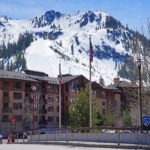
Webb Peak

Webb Peak is a 10,033-foot summit in the Pinaleño Mountains of southeastern Arizona, rising high above the desert valleys surrounding Safford. Located in Graham County within Coronado National Forest, the mountain combines an accessible high-country hike, expansive views, important wildlife habitat, a landscape dramatically altered by wildfire, and one of Arizona’s historic fire lookout towers.
Modern LiDAR measurements place Webb Peak at 10,032.8 feet, making it the fourth-highest major summit in the Pinaleño Mountains after Mount Graham, Hawk Peak, and Plain View Peak. Unlike the restricted summit area around Hawk Peak and Mount Graham, Webb Peak is served by an official Forest Service trail, making it one of the best ways for visitors to experience the highest elevations of the range.
⚡ Fast Facts
| Feature | Details |
|---|---|
| Country | United States |
| State | Arizona |
| County | Graham County |
| Mountain Range | Pinaleño Mountains |
| Elevation | 10,032.8 feet / 3,058 meters |
| Prominence | 555 feet / 169 meters |
| Isolation | 1.35 miles / 2.17 kilometers |
| Nearest Higher Neighbor (NHN) | Hawk Peak |
| Key Col | Approximately 9,478 feet / 2,889 meters |
| Coordinates | 32.71147° N, 109.92275° W |
| USGS Topographic Map | Webb Peak |
| Land Management | Coronado National Forest |
| Main Trail | Webb Peak Trail #345 |
| Trail Distance | Approximately 1.6 miles one way |
| Historic Feature | Webb Peak Lookout Tower |
| Best Season | Late spring through fall |
Current LiDAR data gives Webb Peak an elevation of 10,032.8 feet, 555 feet of clean prominence, and 1.35 miles of isolation. Its Nearest Higher Neighbor is Hawk Peak to the east-southeast.
🏔️ A 10,000-Foot Arizona Sky Island
Webb Peak belongs to the rugged high country of the Pinaleño Mountains, one of southeastern Arizona’s great Madrean Sky Island ranges.
These mountains rise thousands of feet above the surrounding valleys, producing an extraordinary transition from hot desert environments to cool forests in a relatively short horizontal distance.
At the lower elevations around Safford, summers can be intensely hot. Near Webb Peak’s summit, conditions resemble a completely different region, with ponderosa pine, Douglas-fir, aspen, and other mountain vegetation.
This vertical transformation is one of the defining features of the Pinaleño Mountains and helps explain their extraordinary biological diversity.
📏 Fourth-Highest Major Peak in the Pinaleños
Webb Peak ranks fourth among the major summits of the Pinaleño Mountains using current LiDAR elevations.
The range’s highest major peaks are:
- Mount Graham — 10,709 feet
- Hawk Peak — 10,619 feet
- Plain View Peak — 10,370 feet
- Webb Peak — 10,033 feet
- Heliograph Peak — 10,024 feet
- Grand View Peak — 9,641 feet
Webb Peak therefore edges out Heliograph Peak by only about eight feet.
Its 555 feet of prominence is also substantially greater than the prominence of several higher summits clustered around Mount Graham.
🧭 Nearest Higher Neighbor: Hawk Peak
Webb Peak’s Nearest Higher Neighbor is Hawk Peak, approximately 1.35 miles to the east-southeast.
Hawk Peak reaches about 10,619 feet, placing it nearly 600 feet higher than Webb Peak.
The saddle connecting Webb Peak with higher terrain lies near 9,478 feet. This gives Webb approximately 555 feet of topographic prominence.
That may seem modest compared with the enormous 6,000-plus feet of prominence possessed by Mount Graham, but it makes Webb Peak a considerably more distinct summit than several of the subsidiary peaks immediately surrounding Mount Graham.
Its isolation also gives it a clearly recognizable position along the western portion of the high Pinaleño crest.
🥾 Webb Peak Trail #345
Webb Peak is reached by Webb Peak Trail #345, an official Coronado National Forest route beginning near Columbine Corrals Campground.
The Forest Service currently lists the trail at approximately 1.6 miles one way and describes it as an easy high-country hike.
The trail climbs through aspen forest and portions of the landscape burned during the Frye Fire before reaching the historic lookout atop Webb Peak.
The relatively short distance makes Webb Peak one of the most approachable 10,000-foot summits in southeastern Arizona.
That description should not be confused with a flat walk, however. The route starts around 9,500 feet, so visitors arriving directly from lower elevations may notice the effects of altitude.
🌲 Starting at Columbine Corrals
The usual hike begins from the Columbine Corrals area along the upper Swift Trail corridor.
This location already sits at high elevation, allowing hikers to reach Webb Peak without climbing thousands of vertical feet from the desert below.
From the trailhead, Webb Peak Trail #345 travels through forest before gradually climbing toward the summit ridge.
Older sources sometimes give different trail mileages because routes, trail mapping, road connections, and measuring methods have varied. Current Forest Service visitor information lists the official trail at about 1.6 miles one way.
The most useful planning approach is to follow current Forest Service trail maps rather than relying entirely on old trip reports.
🌳 Hiking Through Aspen and Fire-Swept Forest
One of the most interesting aspects of the Webb Peak hike is the changing forest.
Portions of the route pass through stands of aspen, while other sections reveal extensive evidence of wildfire.
The Forest Service specifically notes that Webb Peak Trail climbs through both aspen forest and the Frye Fire burn scar.
As a result, hikers move through a landscape that is actively changing.
Some areas contain mature surviving trees. Others contain standing snags, fallen logs, open slopes, young aspens, shrubs, grasses, and regenerating conifers.
The contrast provides an unusually clear look at how high-elevation southwestern forests respond following severe wildfire.
🔥 The 2017 Frye Fire
The Frye Fire profoundly altered Webb Peak and much of the surrounding Pinaleño high country.
The fire began in June 2017 and eventually burned tens of thousands of acres in the range.
High-elevation forests around Mount Graham, Hawk Peak, Webb Peak, and surrounding ridges were affected to varying degrees.
Today, the Forest Service continues to warn visitors about hazards associated with burned landscapes, particularly dead trees that may fall without warning. Its current upper-mountain trail guide specifically includes a burned-area warning for recreation in fire-affected areas.
Windy conditions can make standing dead trees particularly hazardous.
🌱 An Aspen Comeback
One of the most visible responses to wildfire around Webb Peak has been the growth of aspen.
Unlike many conifers, quaking aspen can reproduce aggressively from established underground root systems after fire removes competing trees.
A burned slope that initially appears devastated can therefore become filled with young aspen stems within only a few growing seasons.
These developing groves provide beautiful green foliage in summer and may turn brilliant gold during autumn.
The regeneration also illustrates how dramatically a mountain landscape can change over a relatively short period.
Future Webb Peak visitors may see a forest composition quite different from that experienced by hikers before the 2017 fire.
🔥 Webb Peak Lookout Tower
The summit’s most recognizable landmark is the Webb Peak Lookout Tower.
The steel tower was erected in 1933, during the era when fire lookouts became an essential part of wildfire detection across the national forests of the American Southwest.
Historical documentation identifies the Webb Peak structure as an Aermotor MC-40 steel lookout tower associated with Civilian Conservation Corps-era development.
Its commanding location allowed observers to scan enormous sections of the Pinaleño Mountains and surrounding valleys for smoke.
The tower remains standing today.
🏛️ A National Register Historic Site
Webb Peak Lookout Tower is not simply an old recreational landmark.
It was listed on the National Register of Historic Places on January 28, 1988, as part of a group of historic national-forest fire lookouts in Arizona and New Mexico.
The nomination recognizes the tower’s connection with conservation, government forest management, and the development of wildfire detection systems in the Southwest.
The National Register documentation gives 1933 as the lookout’s significant construction date and associates it with the Civilian Conservation Corps.
Other historic Arizona lookouts in the same thematic group include the lookout on Heliograph Peak.
🔭 Why Webb Peak Made a Good Fire Lookout
A successful lookout location needs more than elevation.
It also requires clear visibility across a large landscape.
Webb Peak’s position west of the highest Mount Graham ridge provides sweeping views over both the surrounding mountains and broad valleys thousands of feet below.
With more than 500 feet of prominence, the summit stands sufficiently above neighboring terrain to provide excellent sightlines.
Before satellites, aircraft surveillance, automated cameras, and modern communications became widespread, a trained observer stationed on Webb Peak could detect smoke from a distant fire and quickly communicate its location to Forest Service personnel.
That early warning could make an enormous difference in how quickly crews reached a new wildfire.
🌄 Views From Webb Peak
Views are one of the principal rewards of the hike.
The Forest Service specifically highlights excellent views of Mount Graham and the surrounding valleys from the summit.
To the east, the upper Pinaleño ridge rises toward Hawk Peak and Mount Graham.
Nearby Plain View Peak forms another part of the high summit complex.
To the southeast, Heliograph Peak provides another recognizable high point with its own historic lookout.
Lower mountains and desert basins extend far beyond the range, emphasizing the classic sky-island geography of southeastern Arizona.
🐿️ Mount Graham Red Squirrel Habitat
Webb Peak also has major conservation importance.
The mountain contains federally designated critical habitat for the endangered Mount Graham red squirrel.
When critical habitat was formally designated in 1990, three principal areas were identified in the Pinaleño Mountains:
- Hawk Peak–Mount Graham
- Heliograph Peak
- Webb Peak
These areas were selected because of their importance to the survival and recovery of the squirrel.
The Webb Peak area is therefore part of a landscape with ecological significance far beyond ordinary recreation.
🐿️ A Rare Sky-Island Squirrel
The Mount Graham red squirrel is an isolated high-elevation squirrel population found only in the Pinaleño Mountains.
Its ancestors became separated from other red squirrel populations as Southwestern climates became warmer and drier following cooler periods of the Pleistocene.
The remaining squirrels survived in the cool conifer forests of the highest Pinaleños.
They depend heavily on conifer seeds and create characteristic storage sites known as middens, where cones and other food materials accumulate.
Wildfire, drought, insect damage, forest change, and habitat fragmentation have all affected the squirrel’s environment.
Visitors should never disturb middens or approach wildlife closely.
🌲 Critical Habitat vs. the Refugium
Webb Peak’s management situation is different from that of nearby Hawk Peak and Mount Graham.
The highest Mount Graham–Hawk Peak area contains the specially restricted Mount Graham Red Squirrel Refugium, where ordinary public recreational entry is limited.
Webb Peak, by contrast, is served by an official public Forest Service trail.
That means hikers can legally experience a high-elevation area important to red squirrel conservation while following the established Webb Peak Trail.
Visitors should still stay on authorized routes, respect any temporary closures, and minimize disturbance to wildlife and habitat.
🏝️ A Madrean Sky Island
Webb Peak belongs to the broader Madrean Sky Islands region of southeastern Arizona and northern Mexico.
Sky islands are isolated mountain ranges surrounded by lower, warmer environments.
For plants and animals adapted to cool forests, the desert valleys between mountains can function much like water separating biological islands.
This isolation helps explain the remarkable biodiversity and unique populations found in ranges such as the Pinaleños.
Traveling up Swift Trail demonstrates the concept especially well.
A visitor can begin among desert vegetation and eventually arrive in cool forest above 10,000 feet—all within the same mountain range.
🌲 Forest Communities
The upper Webb Peak area supports, or historically supported, a mixture of high-elevation forest species.
Depending on fire history and slope, hikers may encounter:
- Quaking aspen
- Douglas-fir
- White fir
- Ponderosa pine
- Spruce
- Gambel oak
- Mountain grasses
- Shrubs and wildflowers
Forest composition is not static.
Wildfire, drought, insects, temperature, precipitation, and natural regeneration continuously alter which species dominate different portions of the mountain.
The Frye Fire accelerated that process dramatically around Webb Peak.
🦌 Wildlife
The forests and meadows of the Pinaleño Mountains support a diverse wildlife community.
Larger mammals may include:
- Black bears
- Mule deer
- Coues white-tailed deer
- Coyotes
- Bobcats
- Mountain lions
Numerous birds occupy the forests, ridges, and open burn areas.
The sharp change in habitat between the desert base and the upper mountain makes the Pinaleños especially valuable for wildlife.
Visitors should store food responsibly, keep a safe distance from animals, and avoid leaving trash or food scraps behind.
🍂 Autumn on Webb Peak
Early autumn can be one of the most attractive times to hike Webb Peak.
Aspen groves along and near the trail may turn shades of bright yellow and gold, providing a striking contrast with surviving conifers and the pale trunks of fire-killed trees.
Temperatures are generally cooler than during summer, and monsoon thunderstorm activity often begins to decline.
Fall conditions at 10,000 feet can change rapidly, however.
Freezing nights and early snowstorms are possible, especially later in the season.
🌩️ Summer Monsoon Weather
Summer brings warm daytime conditions to the high country, but it also brings Arizona’s monsoon.
Thunderstorms can develop rapidly over the Pinaleño Mountains, sometimes transforming a clear morning into a stormy afternoon.
Potential hazards include:
- Lightning
- Heavy rain
- Hail
- Strong winds
- Falling burned trees
- Rapid temperature drops
Lightning is an especially serious concern near the summit and lookout.
Starting early provides hikers with more time to finish before typical afternoon storm development.
❄️ Winter Conditions
Webb Peak rises above 10,000 feet and regularly experiences snow.
Winter storms can bring deep snow, ice, strong winds, and temperatures far below freezing.
Upper portions of the Swift Trail corridor are subject to seasonal and weather-related road restrictions, so winter access should never be assumed.
Snow may also linger well into spring in shaded areas.
For most recreational hikers, late spring through early fall offers the most practical access.
🚗 Reaching the High Country
Webb Peak is accessed from the Mount Graham high country via Arizona State Route 366, better known as the Swift Trail Parkway.
The road climbs dramatically from the desert near Safford into the forests of the Pinaleño Mountains.
The journey itself is part of the experience.
Visitors pass through dramatic changes in elevation, temperature, vegetation, and scenery before reaching the upper mountain.
The Webb Peak trail begins near the Columbine Corrals area.
Because upper roads can be affected by snow, wildfire, storms, maintenance, or temporary closures, current Coronado National Forest information should always be checked before traveling.
🏕️ Recreation Around Webb Peak
The upper Pinaleños contain numerous opportunities for combining a Webb Peak hike with a longer mountain visit.
Nearby recreation areas include campgrounds, picnic sites, lakes, scenic overlooks, and additional hiking trails.
Heliograph Peak provides another excellent 10,000-foot summit hike with a historic fire lookout.
Grand View Peak lies immediately west of Webb Peak and offers another interesting objective within the same high-country complex.
Farther along the mountain roads, visitors can explore additional portions of the Mount Graham landscape.
🏔️ Webb Peak and Grand View Peak
Grand View Peak is one of Webb Peak’s closest neighboring summits.
Grand View rises to approximately 9,641 feet and has Webb Peak as its Nearest Higher Neighbor.
The relationship creates a clear topographic hierarchy:
Grand View Peak → Webb Peak → Hawk Peak → Mount Graham
This chain illustrates how individual peaks within a mountain range connect progressively toward the dominant summit.
Webb Peak occupies an especially interesting position because it remains a distinct mountain while also forming part of the much larger Mount Graham massif.
🏔️ Webb Peak vs. Heliograph Peak
Webb Peak and Heliograph Peak are natural comparisons.
Both rise slightly above 10,000 feet.
Both contain historic fire lookout structures.
Both lie within the same Pinaleño sky-island environment.
And both provide publicly accessible ways to experience the high mountains without entering the restricted Mount Graham summit refugium.
Webb Peak is slightly higher, while Heliograph Peak is associated with an especially fascinating history of military heliograph communication in the late 19th century.
Visiting both provides an excellent introduction to the Pinaleño Mountains.
🎒 Preparing for the Hike
Webb Peak Trail is comparatively short, but hikers should still prepare for a high-elevation mountain environment.
Useful equipment includes:
- Plenty of drinking water
- Sturdy hiking footwear
- Offline map or GPS
- Sun protection
- Rain jacket during monsoon season
- Warm layer
- First-aid supplies
- Snacks
- Headlamp
- Trekking poles if desired
Burned trees deserve special attention.
Avoid lingering beneath unstable snags, particularly during windy weather.
The combination of elevation and rapid weather changes means carrying an extra layer is worthwhile even on warm summer days.
🏔️ Why Webb Peak Is Worth Hiking
Webb Peak offers an unusually rich experience for a relatively short summit hike.
The mountain rises above 10,000 feet, provides expansive views across southeastern Arizona, contains critical habitat for the Mount Graham red squirrel, and supports a historic 1933 fire lookout listed on the National Register of Historic Places.
Its trail also passes directly through a landscape transformed by the 2017 Frye Fire, providing visitors with a firsthand look at wildfire disturbance and forest recovery.
Most importantly, Webb Peak is one of the most practical ways to experience the lofty core of the Pinaleño Mountains.
Nearby Mount Graham and Hawk Peak rise higher but contain access restrictions associated with sensitive red squirrel habitat. Webb Peak allows hikers to stand above 10,000 feet on an official public trail while still experiencing the ecology, history, and spectacular geography that make this mountain range extraordinary.
🔗 Related Articles
📚 Sources
- Peakbagger — Webb Peak
- U.S. Geological Survey — Webb Peak Topographic Map
- National Park Service — Webb Peak Lookout Tower National Register Documentation
- U.S. Fish & Wildlife Service — Mount Graham Red Squirrel
- U.S. Fish & Wildlife Service — Mount Graham Red Squirrel Critical Habitat
- Forest Fire Lookout Association — Arizona Lookouts