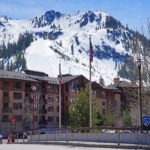
Killington Peak

🏔️ Overview
Killington Peak is one of the defining mountains of central Vermont. Rising to approximately 4,229 feet (1,289 meters) according to modern lidar-based elevation data, it is the second-highest mountain in Vermont, surpassed only by Mount Mansfield.
The mountain stands in Rutland County within the Coolidge Range, a section of Vermont’s Green Mountains. Killington is particularly notable because it combines several different identities: it is a major hiking destination, one of Vermont’s five recognized 4,000-foot peaks, a landmark along the Long Trail/Appalachian Trail corridor, and the centerpiece of Killington Resort.
Unlike many high New England summits, Killington Peak is surrounded by both relatively wild mountain forest and heavily developed ski terrain. The true summit, however, sits above much of the resort infrastructure and is reached by a short but steep hiking trail.
Killington is also an exceptionally prominent mountain. With more than 3,300 feet of topographic prominence, it rises far above the surrounding landscape and ranks among the most prominent peaks in New England.
⚡ Fast Facts
| Fact | Details |
|---|---|
| Continent | North America |
| Country | United States |
| State | Vermont |
| County/Region | Rutland County |
| Mountain Range | Coolidge Range, Green Mountains |
| Parent Peak | Sugarloaf Mountain, Maine |
| Elevation | 4,229.4 ft (1,289 m), lidar/NAVD88 |
| Prominence | 3,309 ft (1,009 m) |
| Isolation | 56.27 mi (90.56 km) |
| Nearest Higher Neighbor (NHN) | Mount Moosilauke – South Summit, New Hampshire |
| Coordinates | Approximately 43.6048° N, 72.8202° W |
| Notable Distinction | Second-highest mountain in Vermont and highest point in Rutland County |
Killington’s substantial prominence is a good example of why mountain prominence can reveal more about a mountain’s physical dominance than elevation alone.
📍 Location
Killington Peak lies in south-central Vermont, east of the city of Rutland and within the town of Killington. It forms the highest point of the Coolidge Range, one of the subdivisions of the larger Green Mountains.
The peak occupies an important position along Vermont’s north-south mountain spine. Pico Peak lies immediately to the north, while the Green Mountains continue toward some of Vermont’s other major summits farther north.
The Long Trail and Appalachian Trail share the same route through this part of Vermont. Contrary to a common description of the trails crossing the actual summit, the main Long Trail/Appalachian Trail corridor passes below Killington Peak. Hikers reach the true summit by following a steep spur trail from near Cooper Lodge.
North of Killington, at Maine Junction, the two famous trails separate. The Long Trail continues north through Vermont toward Canada, while the Appalachian Trail turns east toward New Hampshire.
📏 Elevation & Prominence
Killington Peak is commonly listed at several slightly different elevations.
Modern lidar data reported by Peakbagger places the summit at 4,229.4 feet (1,289 meters) using the NAVD88 vertical datum. Older and recreational sources frequently give elevations of 4,235 feet or 4,241 feet. Killington Resort currently advertises the summit as 4,241 feet.
For consistency, the lidar-based 4,229.4-foot figure is used in this guide.
Killington has approximately 3,309 feet (1,009 meters) of clean topographic prominence. That makes it considerably more prominent than many mountains of similar elevation.
Its true isolation is approximately 56.27 miles (90.56 kilometers). According to Peakbagger’s current database, the nearest higher terrain is at Mount Moosilauke’s South Summit in New Hampshire.
Killington’s line parent for prominence purposes is Sugarloaf Mountain in Maine. This may seem surprising because Sugarloaf is far away, but parent peaks are determined by topographic relationships rather than simple geographic proximity.
🪨 Geology
Killington Peak forms part of the geologically complex Green Mountains, whose rocks record several major episodes in the formation of eastern North America.
The Green Mountains were influenced by multiple ancient mountain-building events, including the Grenville, Taconic, and Acadian orogenies. These events compressed, folded, heated, and metamorphosed rocks over hundreds of millions of years.
Metamorphic rocks are widespread throughout the Green Mountains, and minerals such as garnet and biotite developed under the intense temperatures and pressures associated with these tectonic events.
Much later, glaciers reshaped the landscape during the Pleistocene. Ice flowing across Vermont rounded ridges, scoured bedrock, moved enormous quantities of sediment, and deposited glacial till across lower slopes and valleys.
USGS geologists have produced detailed bedrock mapping of the Killington Peak quadrangle and neighboring areas, reflecting the geological complexity beneath the mountain.
🌿 Flora & Fauna
Killington Peak rises through several forest environments typical of Vermont’s Green Mountains.
At lower and middle elevations, the forests contain northern hardwood species such as sugar maple, American beech, and yellow birch. With increasing elevation and exposure, the forest becomes increasingly dominated by conifers, particularly red spruce and balsam fir.
Near the highest elevations, harsh weather produces shorter and more weather-beaten vegetation. Heavy snowfall, strong winds, freezing temperatures, and a comparatively short growing season make the upper mountain much less hospitable than the valleys below.
The larger Green Mountain region supports wildlife including white-tailed deer, moose, black bears, foxes, snowshoe hares, squirrels, and numerous woodland bird species.
Human development has substantially altered portions of Killington’s eastern slopes because of ski trails, lifts, roads, and resort facilities, while other sides of the mountain retain a much more forested character.
🥾 Hiking & Climbing Routes
Killington Peak can be reached by several hiking routes, although the Bucklin Trail is one of the most popular approaches.
Bucklin Trail
The Green Mountain Club describes the Bucklin Trail route as approximately:
- 7.4 miles round trip
- 2,480 feet of elevation gain
- Moderate to challenging overall
The Bucklin Trail begins from Wheelerville Road and initially follows relatively moderate terrain before climbing more steadily toward the ridge.
Hikers eventually reach the Long Trail/Appalachian Trail and follow it south toward Cooper Lodge, a backcountry shelter situated at roughly 3,900 feet.
From Cooper Lodge, the Killington Spur branches toward the summit.
Although only about 0.25 mile long, this final section is considerably steeper than most of the approach. Rocks, roots, wet surfaces, snow, and ice can make the climb significantly more difficult depending on conditions.
Long Trail and Sherburne Pass Route
A much longer option incorporates sections of the Long Trail and Sherburne Pass Trail.
The Green Mountain Club describes a roughly 15-mile loop with approximately 3,860 feet of elevation gain. This route can also be combined with nearby Pico Peak for hikers seeking a considerably longer day in the mountains.
Resort Access
Killington Resort occupies much of the mountain’s developed eastern side. Gondola service can bring visitors close to the summit when operating, although seasonal schedules and access conditions vary.
Visitors arriving by lift still need to distinguish between the developed resort summit area and the actual highest point of Killington Peak.
🏔️ Field Guide Tip: The final spur from Cooper Lodge is disproportionately difficult compared with its short distance. Save energy for this section, and expect steep, rocky terrain that becomes substantially more challenging when wet or icy.
🌤️ Best Time to Visit
For hiking, summer through early fall generally provides the most favorable conditions on Killington Peak.
June through September typically offers the longest daylight and the lowest likelihood of significant snow accumulation, although mountain weather can change quickly at any time.
Late September and early October can provide spectacular autumn scenery as Vermont’s forests change color, but temperatures near the summit may already be much colder than in surrounding valleys.
Spring presents a different problem: mud season. The Appalachian Trail Conservancy encourages hikers to avoid high-elevation Vermont trails during the spring thaw, particularly from April through around Memorial Day, because saturated trails are easily damaged.
Killington can also be climbed during winter, but the mountain becomes a significantly more serious undertaking. Snow, ice, short daylight, severe cold, and the extremely steep summit spur require winter hiking experience and appropriate equipment.
🧭 Nearby Mountains & Attractions
Several notable mountains and outdoor destinations surround Killington Peak.
Pico Peak rises immediately north of Killington and can be incorporated into longer hiking routes through the area.
Deer Leap is a lower but popular hiking destination near Sherburne Pass. Its rocky overlook provides broad views across the surrounding mountains.
Thundering Falls, located along the Appalachian Trail near Killington, provides a much shorter hiking experience centered on one of the region’s scenic waterfalls.
Killington Resort occupies the mountain’s eastern slopes and offers skiing and snowboarding in winter along with seasonal warm-weather recreation.
The Appalachian Trail and Long Trail also provide numerous opportunities for longer backpacking trips through the surrounding Green Mountains.
💡 Fun Facts
- Killington Peak is the second-highest mountain in Vermont, behind Mount Mansfield.
- It is Vermont’s southernmost recognized 4,000-footer.
- Killington is the highest point in Rutland County.
- The mountain has more than 3,300 feet of prominence, making it one of New England’s more topographically significant peaks.
- Its nearest higher terrain is more than 56 miles away in New Hampshire.
- Killington Resort has made the mountain one of the best-known skiing destinations in the eastern United States.
- The Long Trail and Appalachian Trail travel together near Killington but do not pass directly over the true summit.
- Hikers must use a roughly quarter-mile spur trail from near Cooper Lodge to reach the highest point.
- Different sources continue to list Killington at 4,229, 4,235, or 4,241 feet. Modern lidar measurements support an elevation of approximately 4,229.4 feet.
❓ Frequently Asked Questions
How high is Killington Peak?
Modern lidar-based measurements place Killington Peak at approximately 4,229.4 feet (1,289 meters) above sea level. Some hiking guides and Killington Resort use older figures of 4,235 or 4,241 feet.
Is Killington Peak the highest mountain in Vermont?
No. Killington is Vermont’s second-highest mountain. Mount Mansfield is the highest.
Is Killington Peak a Vermont 4,000-footer?
Yes. Killington is one of Vermont’s five well-known mountains exceeding 4,000 feet.
Does the Appalachian Trail cross the summit of Killington Peak?
No. The Appalachian Trail and Long Trail share a corridor below the summit. The true summit is reached by a separate spur trail near Cooper Lodge.
What is the easiest hiking route to Killington Peak?
The Bucklin Trail is the most commonly recommended hiking approach. The standard trip is approximately 7.4 miles round trip with about 2,480 feet of elevation gain.
Is the final climb difficult?
It can be. The final quarter-mile spur is short but extremely steep. Wet rocks, mud, snow, or ice can make it considerably harder.
Can you reach Killington Peak without hiking the entire mountain?
When Killington Resort’s gondola is operating, visitors can ride to the upper mountain and walk toward the summit area. Access and operating schedules vary seasonally.
What is Killington Peak’s prominence?
Peakbagger currently calculates approximately 3,309 feet (1,009 meters) of clean prominence. To understand why that number matters, see What Is Mountain Prominence?.
What is the nearest higher mountain to Killington Peak?
Peakbagger identifies Mount Moosilauke – South Summit in New Hampshire as Killington Peak’s nearest higher neighbor.
🔗 Related Articles
- Mount Mansfield
- Pico Peak
- What Is Mountain Prominence?
- Mountain Elevation vs. Prominence
- What Is a Parent Peak?
📚 Sources
- Peakbagger – Killington Peak
- Green Mountain Club – How to Hike the VT5
- Appalachian Trail Conservancy – Vermont
- U.S. Geological Survey – Preliminary Bedrock Geologic Map of the Plymouth Quadrangle and Eastern Portion of the Killington Peak Quadrangle
- Green Mountain Club – Vermont’s Geology on the Southern Long Trail
- Killington Resort – Mountain Stats
- Wikipedia – Killington Peak