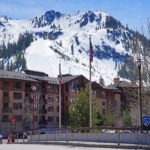
Maroon Peak

Rising above Maroon Lake near Aspen, Maroon Peak is the higher of Colorado’s famous Maroon Bells and one of the most distinctive fourteeners in the Rocky Mountains. Modern LiDAR measurements place its summit at approximately 14,163 feet (4,317 meters), making it one of the highest mountains in Colorado’s rugged Elk Mountains.
Together with neighboring North Maroon Peak, Maroon Peak forms the paired reddish summits reflected in countless photographs from Maroon Lake. The mountain’s striking color comes from iron-rich sedimentary rocks of the Maroon Formation, deposited roughly 300 million years ago from material eroded off the Ancestral Rocky Mountains.
Those rocks are beautiful—but notoriously unstable.
Maroon Peak’s standard South Ridge route is rated Class 3, covering about 12 miles round trip with approximately 4,800 feet of elevation gain. The route involves steep loose slopes, sustained scrambling, significant exposure, complicated route-finding, and substantial rockfall danger.
The mountain is therefore far more serious than its postcard appearance suggests.
Its Nearest Higher Neighbor and line parent is Castle Peak, the highest summit in the Elk Mountains, roughly eight miles away.
⚡ Fast Facts
| Feature | Details |
|---|---|
| Country | United States |
| State | Colorado |
| Counties | Pitkin and Gunnison |
| Mountain Range | Elk Mountains |
| Greater Range | Rocky Mountains |
| Protected Area | Maroon Bells-Snowmass Wilderness |
| National Forest | White River National Forest |
| Elevation | 14,163.4 ft / 4,317 m |
| Traditional Elevation | 14,156 ft / 4,315 m |
| Prominence | 2,328 ft / 710 m |
| Isolation | 8.03 mi / 12.93 km |
| Nearest Higher Neighbor (NHN) | Castle Peak |
| Line Parent | Castle Peak |
| Key Col | East Maroon Pass, approx. 11,835 ft |
| Coordinates | 39.07084° N, 106.98900° W |
| Mountain Type | Uplifted sedimentary mountain |
| Primary Formation | Maroon Formation |
| Volcanic? | No |
| First Recorded Ascent | August 28, 1908 |
| First Ascender | Percy Hagerman |
| Standard Route | South Ridge |
| Standard Route Difficulty | Class 3 |
| Approx. Round Trip | 12 miles |
| Approx. Elevation Gain | 4,800 ft |
| Notable Distinction | Higher summit of the Maroon Bells |
🗺️ Where Is Maroon Peak?
Maroon Peak rises approximately 10 miles southwest of Aspen, Colorado, within the Maroon Bells-Snowmass Wilderness.
The summit stands on the boundary between Pitkin and Gunnison counties.
Immediately north is North Maroon Peak, approximately 141 feet lower.
Together they dominate the upper Maroon Creek Valley.
Other major mountains nearby include:
Maroon Lake lies northeast of the mountain at roughly 9,580 feet and provides the classic view of the Bells.
From the lake:
Maroon Peak is the summit on the left.
North Maroon Peak is the summit on the right.
🔔 Maroon Peak or South Maroon Peak?
The mountain is officially named Maroon Peak.
However, climbers frequently call it South Maroon Peak to distinguish it from North Maroon.
Both names therefore appear in:
- Climbing reports
- Guidebooks
- Online databases
- Trail discussions
The official geographic name remains simply:
Maroon Peak
The term Maroon Bells refers collectively to Maroon Peak and North Maroon Peak.
📏 Elevation of Maroon Peak
Older maps commonly give Maroon Peak an elevation of:
14,156 feet.
Modern LiDAR-refined measurements place the summit at:
14,163.4 feet / 4,317 meters.
That makes Maroon Peak approximately seven feet higher than its traditional published elevation.
Small changes like this have occurred on numerous Colorado fourteeners as modern elevation technology has replaced older contour-based surveys.
Current 14ers.com rankings place Maroon Peak around 24th among Colorado’s ranked fourteeners.
Exact rankings can vary slightly depending on the dataset and summit criteria used.
🧭 Nearest Higher Neighbor: Castle Peak
Maroon Peak’s Nearest Higher Neighbor is Castle Peak.
Castle Peak reaches approximately 14,274 feet and is the highest summit in the Elk Mountains.
Higher terrain first appears roughly:
8.03 miles / 12.93 kilometers
east-southeast of Maroon Peak.
Castle Peak is also Maroon Peak’s line parent.
The relationship is much less direct than that between Maroon Peak and North Maroon.
North Maroon lies only about 0.37 mile away and is clearly a subsidiary summit of the Maroon massif.
Maroon Peak, by contrast, rises substantially above its connecting saddles and qualifies as an independent major mountain.
📐 Prominence
Maroon Peak has approximately:
2,328 feet / 710 meters of topographic prominence.
Its key saddle is East Maroon Pass, around 11,835 feet.
This means a climber descending from Maroon Peak toward any higher summit must lose more than 2,300 vertical feet before climbing again.
Compare that with North Maroon Peak, whose modern prominence is only about 330 feet.
This explains why Maroon Peak is considered the dominant mountain of the Bells even though the two appear visually similar from Maroon Lake.

⛰️ The Elk Mountains
Maroon Peak belongs to the Elk Mountains, one of Colorado’s most rugged mountain ranges.
The range contains six major 14,000-foot summits:
The Elk Mountains have a reputation for unusually difficult fourteeners.
Several combine:
- Loose sedimentary rock
- Complicated route-finding
- Steep scrambling
- Significant exposure
- Long approaches
- Rockfall
- Snow and ice hazards
Maroon Peak fits that pattern perfectly.
Although its standard route is technically only Class 3, the mountain’s loose rock and navigation challenges make it substantially more serious than many other Class 3 fourteeners.
🪨 Geology of Maroon Peak
Maroon Peak is not volcanic.
Its striking red layers are composed primarily of sedimentary rocks belonging to the Maroon Formation.
The formation is made largely of:
- Sandstone
- Siltstone
- Conglomerate
- Arkosic sandstone
- Mudstone
- Lesser limestone and related sedimentary units
These sediments accumulated roughly 300 million years ago, primarily during the Pennsylvanian and Early Permian periods.
At that time, the modern Rocky Mountains did not exist.
Instead, an older mountain system—the Ancestral Rocky Mountains—was rising across the region.
🏔️ The Ancestral Rocky Mountains
The Ancestral Rockies developed hundreds of millions of years before today’s Rocky Mountains.
One of their major uplifts, the Uncompahgre highland, stood southwest of the basin in which the Maroon Formation accumulated.
Streams eroded the ancient mountains.
They carried enormous quantities of:
- Sand
- Gravel
- Mud
- Rock fragments
into surrounding lowlands.
These sediments accumulated on:
- River channels
- Floodplains
- Alluvial environments
Over time they were buried, compacted, cemented, and transformed into sedimentary rock.
Some portions of the Maroon Formation eventually reached several thousand meters in thickness.
🔴 Why Is Maroon Peak Red?
The mountain’s color comes largely from iron oxidation.
Sediment eroded from the ancient mountains contained iron-bearing minerals.
When those minerals reacted with oxygen, they formed iron oxides.
The process is chemically similar to rusting.
As a result, the rock developed distinctive shades of:
- Maroon
- Burgundy
- Brick red
- Rust
- Brown
- Gray-red
Different layers contain different amounts of iron, sand, mud, and gravel, producing the striped and layered appearance visible across the Bells.
The rock color eventually inspired the name Maroon Peak.
🏔️ Raising the Modern Rockies
The Maroon Formation remained buried long after its sediments were deposited.
Then, tens of millions of years later, major tectonic forces began building the modern Rocky Mountains.
During the Laramide Orogeny, beginning roughly 70 million years ago, western North America experienced intense crustal compression.
Rock layers were:
- Lifted
- Folded
- Faulted
- Tilted
- Fractured
The sedimentary layers of the Elk Mountains were raised thousands of feet above their original depositional environment.
Subsequent erosion removed overlying material and gradually exposed the red rock visible today.
Maroon Peak therefore contains rock eroded from one ancient mountain system and subsequently uplifted into another.
⚠️ Why Is Maroon Peak So Loose?
Maroon Peak is famous—or infamous—for the unstable nature of its rock.
The sedimentary layers are:
- Thinly bedded in places
- Intensely fractured
- Weathered
- Tilted
- Easily broken
Freeze-thaw cycles further weaken them.
Water enters cracks.
When temperatures fall, the water freezes and expands.
Repeated cycles gradually pry rock apart.
Gravity then pulls loose material downslope.
The result is terrain covered with:
- Talus
- Scree
- Loose blocks
- Gravel
- Unstable ledges
Climbers should test almost every handhold and foothold before trusting it.
☠️ The “Deadly Bells”
A historic Forest Service warning near Maroon Lake helped popularize the nickname:
The Deadly Bells.
The name reflects genuine hazards.
Accidents and fatalities have occurred throughout the Maroon Bells massif.
The danger comes from several factors working together:
- Loose rock
- Rockfall
- Difficult route-finding
- Steep gullies
- Exposed scrambling
- Afternoon thunderstorms
- Snow and ice
- High altitude
- Long climbing days
Maroon Peak can look surprisingly approachable from the valley.
Once above the maintained trails, the mountain becomes much more complex.
🧊 Glacial Sculpture
The Maroon Bells owe much of their modern shape to glaciers.
During the Pleistocene ice ages, large glaciers occupied the valleys surrounding the massif.
Moving ice eroded the landscape by:
- Grinding bedrock
- Plucking fractured rock
- Deepening valleys
- Widening basins
- Cutting cirques
- Sharpening ridges
The Maroon Creek Valley developed the broad U-shaped profile characteristic of glacial erosion.
Glaciers also carved back into Maroon Peak from different directions, helping produce its steep triangular form.
🏔️ Horns and Arêtes
Glacial erosion can create some of the most dramatic mountain shapes.
When glaciers erode toward one another from opposite sides of a ridge, they create a narrow sharp ridge called an arête.
When several cirques erode backward into the same mountain, they can leave a pointed summit known as a horn.
USGS descriptions specifically identify Maroon Peak as an example of a summit sharpened through this type of glacial erosion.
The famous triangular profile is therefore not simply a product of tectonic uplift.
Ice played an enormous role in sculpting the final mountain.

🏆 First Recorded Ascent
The first recorded ascent of Maroon Peak was made by Percy Hagerman on August 28, 1908.
Hagerman was one of the important early explorers of Colorado’s Elk Mountains.
Just three days earlier, he and Harold Clark had completed the first recorded ascent of North Maroon Peak.
Hagerman then returned for the higher southern summit.
Modern climbing records credit him alone with Maroon Peak’s first ascent.
The achievement occurred long before today’s:
- Maintained approach trails
- GPS navigation
- Detailed route descriptions
- Modern climbing helmets
- Lightweight equipment
- Accurate weather forecasts
Exploring a route through the mountain’s complicated loose terrain was itself a significant mountaineering challenge.
🥾 Climbing Maroon Peak
The standard route is the South Ridge.
Current climbing guides rate it:
Class 3
with approximately:
- 12 miles round trip
- 4,800 feet of elevation gain
- High exposure
- High rockfall potential
- Extreme route-finding difficulty
- Extreme commitment
The statistics make an important point.
Maroon Peak is technically easier than the Class 4 standard routes on North Maroon and Pyramid Peak.
That does not mean it is easy.
Route-finding and unstable terrain make Maroon Peak one of Colorado’s more complicated Class 3 summits.
🥾 Approach from Maroon Lake
The climb begins at the Maroon Lake Trailhead, around 9,590 feet.
The first portion follows a maintained trail toward Crater Lake.
This approach passes through:
- Aspen forest
- Meadows
- Glacial terrain
- Mountain streams
- Excellent views of the Bells
Near Crater Lake, climbers leave the easier tourist trail environment and begin ascending toward Maroon Peak.
The route eventually turns onto the mountain’s broad eastern slopes.
From there, the real climbing begins.
📈 The East Slopes
One of the most physically demanding sections is the long climb up Maroon Peak’s eastern slopes toward the South Ridge.
The route gains roughly 2,800 feet across steep, loose terrain.
This section can involve:
- Dirt
- Scree
- Loose rock
- Small cliff bands
- Faint paths
Progress can be frustratingly slow.
The slope also creates considerable rockfall potential when multiple climbers are above one another.
Eventually the route reaches the South Ridge near approximately 13,250 feet.
🧗 The South Ridge
Reaching the ridge does not mean the difficult part is over.
The upper mountain contains complicated terrain with:
- Ledges
- Gullies
- Towers
- Notches
- Loose blocks
- Multiple apparent route choices
Cairns may help, but they should never replace independent route-finding.
Some cairns lead toward poor lines.
Others disappear.
Snow or rockfall can alter recognizable features.
The final ridge requires sustained attention almost all the way to the summit.
🧭 Route-Finding
Current route guides classify Maroon Peak’s route-finding difficulty as extreme.
That is unusual for a standard Colorado fourteener route.
The mountain contains many terrain features that can tempt climbers away from the safest line.
Common problems include:
- Dropping too low
- Traversing unstable ledges
- Entering the wrong gully
- Following misleading cairns
- Losing the route during descent
Navigation becomes even more difficult in:
- Fog
- Rain
- Snow
- Darkness
Climbers should study the route in detail before starting.
The descent deserves just as much attention as the ascent.
⚠️ Rockfall
Rockfall is one of Maroon Peak’s greatest hazards.
Loose rock covers much of the route.
A climber can accidentally dislodge debris even while moving carefully.
Important precautions include:
- Wear a helmet.
- Test holds before weighting them.
- Avoid traveling directly below another group.
- Communicate when entering loose gullies.
- Never throw rocks.
- Shout a warning immediately if a rock falls.
Large groups can magnify the danger dramatically.
Patience is often safer than trying to pass another party in unstable terrain.
🌩️ Afternoon Thunderstorms
Like most Colorado fourteeners, Maroon Peak experiences frequent summer thunderstorms.
Lightning risk becomes particularly serious above treeline.
The summit and South Ridge provide little shelter.
Storms may bring:
- Lightning
- Rain
- Hail
- Wind
- Rapid temperature drops
- Wet slippery rock
- Reduced visibility
An early start is essential.
A climber still working through complicated upper-ridge terrain when storms arrive can face a difficult retreat.
❄️ Snow and Ice
Snow significantly changes the mountain.
Steep gullies and ledges that are manageable when dry can become technical when covered by:
- Hard snow
- Ice
- Ver-glas
- Fresh snowfall
Spring climbing may require:
- Crampons
- Ice axe
- Self-arrest skills
- Avalanche assessment
- Snow-climbing experience
Early autumn storms can also coat the mountain unexpectedly.
Never assume a September route will be dry simply because the valley below is snow-free.
🧊 The Bell Cord Couloir
The Bell Cord Couloir is the dramatic snow-filled line separating Maroon Peak from North Maroon Peak.
From Maroon Lake, it appears almost like a direct staircase between the two summits.
It has historically been used as a snow-climbing route.
Current guide ratings place the Bell Cord around Class 4 with steep snow, involving roughly eight miles round trip and approximately 4,556 feet of elevation gain.
The route should be attempted only under appropriate stable snow conditions.
As snow melts, the couloir becomes increasingly dangerous because rockfall funnels directly down the narrow chute.
A line that may be reasonable during stable spring snow can become extremely hazardous later in the season.
🏔️ The Bells Traverse
Experienced climbers sometimes connect Maroon Peak and North Maroon Peak using the ridge between them.
This is known as the Bells Traverse.
It is far more serious than either standard route.
Current route ratings place the traverse around:
Class 5
with:
- Extreme exposure
- High rockfall danger
- Extreme route-finding
- Extreme commitment
The ridge contains numerous towers, steep steps, loose rock, and complicated route choices.
Climbers sometimes underestimate the traverse because the summits are less than half a mile apart.
Horizontal distance means very little here.
The ridge between them is genuine technical alpine terrain.

↔️ North-to-South or South-to-North?
The Bells Traverse can be completed in either direction.
Different climbers prefer different approaches based on:
- Technical strengths
- Route familiarity
- Conditions
- Desired climbing versus downclimbing
Neither direction makes the traverse easy.
Anyone attempting it should already be comfortable on exposed Class 4 and low-Class-5 mountain terrain.
This is not an appropriate first introduction to technical scrambling.
🚫 Maroon Peak Is Not a Beginner Fourteener
The Class 3 rating can be misleading.
Colorado has many Class 3 routes, but they are not equally difficult.
Maroon Peak adds several complications:
- Extremely loose rock
- Sustained route-finding
- Long distance
- Significant elevation gain
- Exposure
- Rockfall
- Complicated descent
A climber who has only completed straightforward Class 1 or Class 2 fourteeners should build experience on easier scrambling routes first.
Skills useful on Maroon Peak include:
- Reading mountain terrain
- Confident Class 3 scrambling
- Route-finding without relying solely on GPS
- Weather judgment
- Rockfall awareness
- Efficient movement at altitude
🎫 Maroon Bells Access
Maroon Peak’s standard route begins within the extremely popular Maroon Bells Scenic Area.
Access to Maroon Lake is managed through a seasonal reservation system.
For the 2026 season, private-vehicle access and shuttle operations are regulated during the main visitor period.
Climbers planning an early summit start should pay particular attention to parking arrangements.
Ordinary sightseeing shuttle times may begin far too late for a safe fourteener itinerary.
Current reservations should always be checked before the trip because dates, fees, and operating procedures can change.
🚗 Early Trailhead Access
Very early starts are normal for Maroon Peak.
Current Maroon Bells parking arrangements include options intended for visitors who need to reach the trailhead before normal shuttle operations begin.
For 2026, parking reservations are available during the seasonal road-access period, with early entry required for certain reservation types.
Private drop-offs before 8 a.m. are also currently permitted under specific conditions.
Do not rely on an old trip report for transportation planning.
Confirm the current rules before leaving Aspen.
🚌 Shuttle Access
Most ordinary visitors reach Maroon Lake using the shuttle from the Maroon Bells Welcome Center at Aspen Highlands.
The shuttle is excellent for:
- Sightseeing
- Short hikes
- Day visitors
It is usually less convenient for climbers planning Maroon Peak because a summit attempt often begins hours before normal tourist activity.
Transportation must also work for the return trip if your climbing day runs long.
🏕️ Overnight Permits
Overnight camping within designated portions of the Maroon Bells-Snowmass Wilderness requires a wilderness permit.
This is separate from:
- Parking reservations
- Shuttle reservations
- Day hiking
The Crater Lake Zone is one of the regulated camping areas most relevant to the Maroon Bells.
Permit holders must camp in their reserved zone or designated campsite where required.
Bear-resistant food storage is mandatory.
These rules help protect one of Colorado’s most heavily visited wilderness landscapes.
🐻 Bear-Resistant Food Storage
The wilderness is black bear habitat.
Overnight visitors are currently required to store:
- Food
- Trash
- Toiletries
- Other scented items
in an approved bear-resistant container.
Improper food storage creates risks for both people and bears.
Animals that repeatedly obtain human food may become aggressive or need to be removed.
Good food storage is therefore an important part of wilderness conservation, not merely a bureaucratic rule.
📅 Best Time to Climb Maroon Peak

For climbers seeking relatively dry conditions, the normal season is approximately:
July through September.
Conditions vary by year.
🌨️ June
Snow can remain extensive.
Steep snow travel may require specialized equipment and experience.
☀️ July
Routes generally begin drying.
Wildflowers emerge throughout the lower valley.
Afternoon thunderstorms become frequent.
🌼 August
August often provides some of the most consistently dry scrambling conditions.
Thunderstorms remain an important hazard.
🍂 September
September can produce:
- Cool mornings
- Clear skies
- Golden aspen
- Fewer summer storms
But daylight shortens rapidly and early-season snowfall becomes increasingly possible.
❄️ Winter
Winter transforms Maroon Peak into a serious alpine and avalanche objective.
The summer route description should not be applied directly to winter conditions.
🌿 Flora and Fauna
Although Maroon Peak’s summit consists mainly of loose rock, the surrounding wilderness contains a remarkable sequence of Rocky Mountain ecosystems.
A climb from Maroon Lake to the summit passes through or above:
- Aspen forest
- Mountain meadows
- Spruce-fir forest
- Willow communities
- Alpine tundra
- Talus
- Bare rock
The Maroon Bells-Snowmass Wilderness protects extensive habitat for both common and specialized high-country wildlife.
🌳 Quaking Aspen
The quaking aspen surrounding Maroon Lake are among the best-known forests in Colorado.
Their leaves turn brilliant yellow and gold in autumn, producing the famous seasonal contrast with the red Maroon Bells.
Aspen can reproduce through underground root systems.
As a result, what looks like a forest of individual trees may actually include large genetically connected clones.
Aspen provide habitat and food for numerous animals.
Their open groves also support rich understory vegetation and wildflowers.
🌲 Spruce and Fir
Higher and cooler slopes support subalpine forest dominated by trees such as:
- Engelmann spruce
- Subalpine fir
These forests tolerate:
- Long snowy winters
- Short summers
- Cold temperatures
As elevation increases, trees become smaller and more wind-shaped.
Eventually they reach treeline, beyond which conditions are too harsh for upright forest.
🌼 Wildflower Meadows
Summer turns the lower wilderness into one of Colorado’s great wildflower landscapes.
Species can include:
- Colorado blue columbine
- Lupine
- Paintbrush
- Asters
- Cinquefoil
- Alpine sunflower
- Mountain avens
Flower timing depends heavily on annual snowpack and elevation.
A meadow that is still snow-covered in early summer may be filled with flowers several weeks later.
These plants have extremely short growing seasons.
Visitors should avoid creating shortcuts through meadow vegetation.
🌱 Alpine Tundra
Above treeline, vegetation becomes low and compact.
Plants must survive:
- Strong wind
- Freezing nights
- Snow
- Thin soils
- Intense ultraviolet radiation
- Short growing seasons
Many alpine plants grow only a few centimeters tall.
Their small size keeps them close to the warmer ground and reduces wind exposure.
Near Maroon Peak’s summit, even tundra gives way to unstable scree and bare sedimentary rock.
🐏 Bighorn Sheep
Bighorn sheep occupy high rocky terrain within the greater wilderness.
Their specialized hooves allow them to move confidently across steep slopes.
Cliffs provide refuge from predators.
Bighorn sheep should be observed from a distance.
Approaching wildlife can interfere with:
- Feeding
- Resting
- Seasonal movement
- Reproduction
🐿️ American Pika
The American pika is one of the characteristic animals of Colorado’s alpine talus.
These small relatives of rabbits live among broken rocks.
Pikas do not hibernate.
Instead, they spend summer collecting grasses and wildflowers and drying them in hay piles for winter food.
Their sharp calls frequently reveal their presence long before hikers see them.
Pikas are strongly associated with cool high-elevation environments.
🐦 White-Tailed Ptarmigan
The white-tailed ptarmigan is one of North America’s most specialized alpine birds.
It lives above or near treeline throughout the year.
Its plumage changes seasonally:
- Mottled brown and gray during summer
- Nearly white in winter
This camouflage helps the bird disappear against both rocky tundra and snow.
White-tailed ptarmigan are among the species specifically associated with high habitat in the Maroon Bells-Snowmass Wilderness.
🐻 Black Bears
Black bears inhabit forested portions of the wilderness.
They feed on:
- Berries
- Vegetation
- Nuts
- Insects
- Other natural foods
Problems arise when bears learn to associate people with food.
This is why secure storage of food and scented items is so important for overnight visitors.
Never feed a bear or intentionally approach one for photographs.
🦌 Elk and Mule Deer
Elk and mule deer use forest, meadow, and transitional habitats throughout the region.
Elk move seasonally between higher summer ranges and lower winter habitat.
Autumn visitors may hear the calls of bull elk during the rut.
Mule deer commonly browse forest edges and open slopes.
Neither species generally spends much time in the barren terrain near Maroon Peak’s summit.
🫎 Moose
Moose can occur in wet valleys and willow-rich habitats around the Colorado high country.
Visitors should give them substantial room.
A cow protecting a calf can become aggressive.
Bull moose can also be unpredictable during the autumn rut.
If a moose changes its behavior because of your presence, you are too close.
🦫 Beavers and Wetland Wildlife
Streams and wetland areas lower in the Maroon Creek drainage provide habitat for beavers and other aquatic or semi-aquatic species.
Beaver activity can create ponds and wetlands that benefit:
- Waterfowl
- Amphibians
- Insects
- Willow communities
- Other wildlife
These low-elevation ecosystems form an important ecological contrast with the barren summit more than 4,500 vertical feet above.

🏞️ Maroon Bells-Snowmass Wilderness
Maroon Peak lies inside the Maroon Bells-Snowmass Wilderness, one of Colorado’s original federally designated wilderness areas.
It became part of the National Wilderness Preservation System in 1964.
The protected landscape covers roughly 184,000 acres and contains about 173 miles of trails.
Major features include:
- Maroon Bells
- Snowmass Mountain
- Capitol Peak
- Four Pass Loop
- Snowmass Lake
- Conundrum Valley
- Extensive alpine basins
- Glacial valleys
- Aspen forests
Motorized and mechanized recreation is prohibited within designated wilderness.
The goal is to preserve the region’s undeveloped character and opportunities for primitive recreation.
📸 Maroon Lake
Most visitors experience Maroon Peak from Maroon Lake rather than from its summit.
The lake sits beneath the northeast side of the Bells.
Calm water can reflect:
- Maroon Peak
- North Maroon Peak
- Aspen forest
- Surrounding ridges
The combination has produced one of the most recognizable landscape views in Colorado.
Early morning often provides better conditions for reflections because winds may be lighter.
Autumn adds brilliant yellow aspen.
The scene looks peaceful.
The mountain above is anything but.
🌊 Crater Lake
A relatively short trail continues from Maroon Lake to Crater Lake.
The route passes through aspen groves before approaching the Bells more closely.
Crater Lake provides another exceptional perspective of Maroon Peak and North Maroon.
It also marks the area where summit climbers begin leaving conventional hiking terrain behind.
Overnight camping in the Crater Lake Zone is regulated through the Maroon Bells-Snowmass Wilderness permit system.
⛰️ Nearby Mountains
North Maroon Peak
North Maroon reaches approximately 14,022 feet immediately north of Maroon Peak.
Together they form the Maroon Bells.
Modern LiDAR measurements indicate North Maroon now exceeds the traditional 300-foot prominence threshold used for ranking Colorado fourteeners.
Castle Peak
Castle Peak reaches approximately 14,274 feet and is Maroon Peak’s Nearest Higher Neighbor and line parent.
It is also the highest mountain in the Elk Mountains.
Pyramid Peak
Pyramid Peak rises east of the Maroon Bells to approximately 14,029 feet using modern LiDAR data.
Its standard Northeast Ridge is rated Class 4.
Snowmass Mountain
Snowmass Mountain rises northwest of Maroon Peak and is another major Elk Mountains fourteener.
Its large eastern snowfield inspired the mountain’s name.
Capitol Peak
Capitol Peak is one of Colorado’s best-known technical scrambling fourteeners.
Its Northeast Ridge contains the famous Knife Edge and sustained exposed terrain.
📊 Maroon Peak vs. North Maroon Peak
| Feature | Maroon Peak | North Maroon Peak |
|---|---|---|
| Elevation | 14,163 ft | 14,022 ft |
| Prominence | 2,328 ft | ~330 ft |
| Isolation | 8.03 mi | 0.37 mi |
| NHN | Castle Peak | Maroon Peak |
| Line Parent | Castle Peak | Maroon Peak |
| Standard Route | South Ridge | Northeast Ridge |
| Difficulty | Class 3 | Class 4 |
| Round Trip | ~12 mi | ~9.25 mi |
| Elevation Gain | ~4,800 ft | ~4,600 ft |
| First Recorded Ascent | Aug. 28, 1908 | Aug. 25, 1908 |
Maroon Peak is clearly the more independent summit.
North Maroon is technically harder by its current standard-route rating.
Both require substantial scrambling experience.
📊 Maroon Peak vs. Castle Peak
| Feature | Maroon Peak | Castle Peak |
|---|---|---|
| Elevation | 14,163 ft | ~14,274 ft |
| Prominence | 2,328 ft | ~2,360 ft |
| Range | Elk Mountains | Elk Mountains |
| NHN Relationship | Castle is Maroon’s NHN | Higher terrain lies outside immediate Elk summit group |
| Standard Difficulty | Class 3 | Class 2 |
| Rock Quality | Very loose | Generally less notorious |
| Major Distinction | Higher Maroon Bell | Highest Elk Mountains peak |
Castle Peak is only about 110 feet higher than Maroon Peak.
Its standard route is significantly easier.
That illustrates why elevation alone tells almost nothing about climbing difficulty.
❓ Frequently Asked Questions
How high is Maroon Peak?
Modern LiDAR data places Maroon Peak at approximately 14,163.4 feet (4,317 meters).
Older maps commonly list 14,156 feet.
Is Maroon Peak the same as South Maroon Peak?
Yes.
“South Maroon Peak” is an informal climbing name used to distinguish it from North Maroon Peak.
The official geographic name is Maroon Peak.
Which of the Maroon Bells is higher?
Maroon Peak is higher.
It reaches about 14,163 feet compared with roughly 14,022 feet for North Maroon.
What is Maroon Peak’s Nearest Higher Neighbor?
Its NHN is Castle Peak.
What is Maroon Peak’s prominence?
Approximately 2,328 feet (710 meters).
Who first climbed Maroon Peak?
Percy Hagerman completed the first recorded ascent on August 28, 1908.
How difficult is Maroon Peak?
The standard South Ridge is rated Class 3.
However, the route has high exposure and rockfall potential along with extreme route-finding and commitment ratings.
How long is the climb?
The standard South Ridge is approximately 12 miles round trip with around 4,800 feet of elevation gain.
Is Maroon Peak suitable for beginner fourteener climbers?
No.
The loose rock, sustained scrambling, complicated navigation, and exposure make it an advanced fourteener objective.
Is Maroon Peak volcanic?
No.
It consists primarily of sedimentary rocks of the Maroon Formation.
Why is Maroon Peak red?
Iron-bearing minerals within the sediment oxidized, coloring the rock red and maroon.
What is the Bell Cord Couloir?
The Bell Cord is the steep couloir between Maroon Peak and North Maroon Peak.
It is a serious snow-climbing route under appropriate spring conditions and can become extremely dangerous as snow melts and rockfall increases.
Can you climb both Maroon Bells in one day?
Experienced climbers sometimes connect them via the Bells Traverse.
The traverse is Class 5 terrain with extreme exposure, loose rock, and serious route-finding.
It is an advanced alpine scrambling objective.
Do you need a permit to climb Maroon Peak?
Day climbing and overnight camping involve different rules.
The Maroon Lake trailhead is subject to seasonal access and parking controls.
Overnight camping within regulated wilderness zones requires a permit.
Always verify current Maroon Bells reservations before the trip.
When is the best time to climb Maroon Peak?
For relatively snow-free conditions, July through September is the usual season.
Actual conditions depend heavily on annual snowpack and weather.
Can you see Maroon Peak without hiking?
Yes.
The classic viewpoint at Maroon Lake is only a short walk from the developed arrival area.
⭐ Why Maroon Peak Is Special
Maroon Peak is a mountain of remarkable contrasts.
From Maroon Lake, it looks almost perfectly composed.
A red triangular summit rises above golden autumn aspen and reflects in calm water beside North Maroon Peak.
That view has become one of Colorado’s defining landscapes.
But climb higher and the mountain reveals a completely different personality.
The beautiful red rock is fractured and unstable.
The South Ridge requires careful scrambling through gullies, ledges, notches, and towers. Route-finding remains difficult almost to the summit. Rockfall is a constant concern.
The geology explains both qualities.
Around 300 million years ago, rivers carried sediment away from the Ancestral Rocky Mountains and deposited it across broad floodplains. Iron oxidized within those sediments, giving them their red color.
Millions of years later, tectonic forces lifted those layers into the modern Rocky Mountains.
Then glaciers carved around them, producing the sharp ridges, U-shaped valleys, and steep triangular summit visible today.
The human history is equally compelling.
Percy Hagerman completed the first recorded ascent in 1908, only three days after helping make the first recorded ascent of North Maroon.
More than a century later, both mountains remain serious objectives despite modern equipment, mapping, and detailed route information.
Below the summit, the wilderness changes again.
Aspen forests turn gold. Spruce and fir fill the valleys. Pika call from talus. Bighorn sheep and ptarmigan occupy high terrain. Black bears roam the forests below.
Maroon Peak is therefore much more than the left-hand mountain in a famous photograph.
It is a 14,163-foot fourteener, a geological record of two generations of Rocky Mountain building, a glacially sculpted horn, a serious Class 3 climb, and the dominant summit of one of America’s most recognizable mountain landscapes.
🔗 Related Articles
- North Maroon Peak
- Elk Mountains
- Castle Peak (Colorado)
- Pyramid Peak (Colorado)
- Snowmass Mountain
- Capitol Peak (Colorado)
- The 10 Highest Peaks in Colorado
- What Is Mountain Prominence?
- Types of Mountains: How the World’s Mountains Form
📚 Sources
- Peakbagger — Maroon Peak
- 14ers.com — Maroon Peak
- 14ers.com — Maroon Peak South Ridge
- 14ers.com — Maroon Bells and Pyramid Peak Routes
- Visit Maroon Bells — Reservations and Access
- Recreation.gov — Maroon Bells-Snowmass Wilderness Overnight Permits
- U.S. Geological Survey — Geology of the Aspen Quadrangle
- U.S. Geological Survey — Story of the Land Around Aspen
- U.S. Geological Survey — Maroon Formation
- U.S. Geological Survey — Geology of the Maroon Bells Area