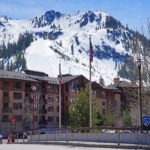
Mingus Mountain

Rising high above the Verde Valley in central Arizona, Mingus Mountain is one of the best-known summits in the Black Hills of Yavapai County. The mountain reaches approximately 7,822 feet (2,384 meters) and forms a dramatic forested backdrop above the historic mining town of Jerome.
Mingus Mountain sits within Prescott National Forest, where its high elevation creates an environment very different from the dry valleys below. Ponderosa pine forests, cool summer temperatures, scenic overlooks, campgrounds, hiking trails, and a small mountain lake make the area a popular escape from Arizona’s lower-elevation heat.
Although neighboring Woodchute Mountain is the higher and more prominent summit of the Black Hills, Mingus Mountain is considerably more developed and accessible. State Route 89A climbs across the range between Jerome and Prescott Valley, while Forest Service roads lead into the mountain’s recreation area and toward its summit.
⚡ Fast Facts
| Fact | Details |
|---|---|
| Country | United States |
| State | Arizona |
| County | Yavapai County |
| Mountain Range | Black Hills |
| Parent Range | Black Hills |
| Elevation | 7,822 ft / 2,384 m |
| Prominence | 795 ft / 242 m |
| Isolation | 4.69 mi / 7.54 km |
| Nearest Higher Neighbor (NHN) | Woodchute Mountain |
| Land Management | Prescott National Forest |
| Coordinates | 34.70123° N, 112.11761° W |
| USGS Quadrangle | Cottonwood |
| Nearest Communities | Jerome, Cottonwood, Clarkdale and Prescott Valley |
Modern lidar measurements place the summit at about 7,822 feet, with nearly 795 feet of topographic prominence. The mountain’s nearest higher terrain lies on Woodchute Mountain, roughly five miles to the northwest.
🏔️ Mingus Mountain and the Black Hills
Mingus Mountain belongs to Arizona’s Black Hills, a northwest-to-southeast trending mountain range separating the Verde Valley from the Prescott Valley region.
The Black Hills form part of Arizona’s rugged transition country between the Colorado Plateau to the north and northeast and the Basin and Range landscapes farther south and west.
Mingus Mountain occupies one of the most visually dramatic parts of the range. Its eastern slopes descend sharply toward Jerome and the Verde Valley, creating a substantial escarpment visible from Cottonwood, Clarkdale, and surrounding communities.
The highest summit in the range is Woodchute Mountain, which rises to about 7,840 feet just north of Mingus. Although the difference in elevation is small, Woodchute has substantially greater topographic prominence.
🌲 Prescott National Forest
Mingus Mountain lies within Prescott National Forest and is the centerpiece of the Mingus Mountain Recreation Area.
The recreation area occupies high terrain averaging roughly 7,200 feet in elevation. This height provides noticeably cooler temperatures than the Verde Valley during summer, when residents and visitors often head into the mountains to escape the heat.
Ponderosa pine forest dominates much of the higher country. Elsewhere, Gambel oak, pinyon pine, juniper, manzanita and other plants characteristic of central Arizona’s transition zone create a varied woodland landscape.
From overlooks around the mountain, visitors can see across the Verde Valley toward Sedona’s red-rock country, the Mogollon Rim and the distant San Francisco Peaks.
🚗 Driving Mingus Mountain
One of Mingus Mountain’s unusual advantages is its accessibility.
State Route 89A crosses the Black Hills between Prescott Valley and Jerome, climbing high onto Mingus Mountain before descending through a spectacular series of curves toward the Verde Valley.
Forest Road 104 branches from Highway 89A near the summit of the pass and provides access to much of the Mingus Mountain Recreation Area.
When dry, the main road toward the campground is generally suitable for ordinary passenger vehicles, although conditions on forest roads can change with weather, snow, erosion and seasonal maintenance.
The drive itself is part of the experience. Travelers approaching from Jerome climb rapidly from the Verde Valley through changing vegetation until ponderosa pine forest begins to replace the drier woodland below.

🥾 Hiking on Mingus Mountain
Mingus Mountain has an extensive network of Forest Service trails ranging from relatively short walks to demanding routes that descend steeply from the high country.
North Mingus Trail #105
North Mingus Trail #105 is approximately 4.25 miles long and is rated difficult. It begins near the campground and hang-glider area and provides excellent views toward Jerome, Cottonwood and the Verde Valley.
The trail can also be combined with other routes to create longer loops.
View Point Trail #106
View Point Trail #106 is approximately 1.9 miles long. Despite its comparatively short distance, the Forest Service rates the trail as difficult because of the terrain.
As its name suggests, the route provides extensive views toward Jerome, Cottonwood and the Verde Valley.
Coleman Trail #108
Coleman Trail #108 is approximately 1.8 miles long and descends from near the mountain’s radio facilities.
The route provides views across the Verde Valley toward the red-rock country around Sedona. Portions of the trail are steep and may be eroded, making careful footing important.
Gaddes Canyon Trail #110
Gaddes Canyon Trail #110 runs for approximately 2.6 miles and is rated moderate. It provides another way to explore the forested high country and reach overlooks above Gaddes Canyon.
The Forest Service also maintains additional trails throughout the recreation area, allowing hikers to combine routes into longer mountain adventures.
🌄 Views from Mingus Mountain
The views are among Mingus Mountain’s greatest attractions.
From its eastern rim, the ground drops dramatically toward Jerome and the Verde Valley. Cottonwood and Clarkdale spread across the valley floor below, while the landscape beyond rises toward the colorful cliffs and mesas surrounding Sedona.
On clear days, the San Francisco Peaks can be visible far to the north near Flagstaff.
The Mogollon Rim stretches across the distant eastern horizon, while Sycamore Canyon and other rugged sections of central Arizona fill the landscape between.
Looking north from the Mingus high country, Woodchute Mountain rises beyond Highway 89A.
The mountain’s combination of road access and high-elevation viewpoints means visitors do not necessarily need to complete a strenuous summit hike to experience impressive scenery.
🔥 Mingus Lookout Complex
One of the mountain’s most historically significant features is the Mingus Lookout Complex.
The existing steel fire lookout tower was erected in 1935. The structure is approximately 59 feet tall and carries a small lookout cab above its steel framework.
A cabin and shed dating from the same period form part of the historic complex.
The lookout represents an era when elevated observation towers played a crucial role in detecting wildfires across America’s national forests. From Mingus Mountain, observers had an extraordinary vantage point over the heavily forested highlands and surrounding valleys.
The Mingus Lookout Complex was added to the National Register of Historic Places in 1988 as part of a broader group of historic national forest fire lookouts in the Southwest.
⛏️ Jerome and Mining History
Mingus Mountain is inseparable from the history of Jerome, which clings dramatically to the mountain’s eastern slopes.
Jerome became one of Arizona’s great copper-mining communities after enormous ore deposits were developed in the late 19th and early 20th centuries. The area’s major operations included the United Verde and United Verde Extension mines.
Copper mining transformed the region, bringing thousands of residents, extensive infrastructure and industrial development to what had previously been remote mountain country.
The United Verde Extension mine closed in 1938, while the United Verde mine ceased operations in 1953. Jerome subsequently reinvented itself as a historic, artistic and tourism community.
The geology that produced Jerome’s mineral wealth is directly connected to the ancient rocks exposed throughout Mingus Mountain and the northern Black Hills.

🪨 Geology of Mingus Mountain
Mingus Mountain preserves evidence of an exceptionally long and complicated geological history.
Parts of the mountain contain ancient Precambrian volcanic rocks, including basalt and rhyolite associated with the Ash Creek Group. Some of these rocks formed more than a billion years ago and were later altered by metamorphism, deformation and mountain-building processes.
Much younger volcanic rocks also occur on the mountain. Basalt flows belonging to the Hickey Formation cap parts of the Mingus high country, creating resistant layers that helped preserve the mountain’s broad upper surface while erosion removed softer surrounding material.
Faulting has played another major role in shaping the landscape. The Verde fault zone follows the eastern base of the Black Hills near Jerome, helping create the steep difference in elevation between Mingus Mountain and the Verde Valley.
The result is a landscape in which ancient volcanic and metamorphic rocks, younger lava flows, erosion and faulting are all visible within a relatively small geographical area.
🏕️ Camping on Mingus Mountain
The Mingus Mountain Campground provides camping within the ponderosa pine forest near the top of the mountain.
Its high elevation makes it especially attractive during Arizona’s warmer months. The campground contains individual sites as well as access to nearby trails, picnic areas and scenic viewpoints.
Mingus Lake lies less than a mile from the campground, while Jerome, Clarkdale, Cottonwood and Prescott Valley are all within driving distance.
Because fire restrictions, campground operating periods and road conditions can change, visitors should check current Prescott National Forest information before traveling into the area.
🎣 Mingus Lake
Mingus Lake is a small mountain lake within the recreation area.
Although modest in size, it adds an unusual waterside destination to the otherwise forested and mountainous landscape. The lake is periodically stocked with rainbow trout, making it a popular local fishing spot.
Motorized boats are not permitted, preserving the lake’s quiet character.
For visitors spending a day or weekend on Mingus Mountain, the lake provides an easy complement to hiking, camping and sightseeing.
🪂 Hang Gliding and Paragliding
Mingus Mountain’s steep eastern escarpment and position above the Verde Valley have also made it well known among hang-gliding and paragliding enthusiasts.
A launch area is located near the mountain’s high country, close to the North Mingus Trail. From here, experienced pilots can take advantage of rising air currents above the slopes.
Even for visitors who never leave the ground, the launch area is notable for its broad views across the Verde Valley.
🌲 Plants and Wildlife
Mingus Mountain’s large elevation difference from the valleys below creates several distinct ecological communities.
Ponderosa pine dominates much of the high country, while Gambel oak contributes autumn color. Pinyon pine, juniper, manzanita and chaparral become increasingly common on warmer and drier slopes.
Wildlife in the wider Prescott National Forest can include elk, mule deer, black bears, coyotes, bobcats and mountain lions, along with numerous smaller mammals.
The mountain’s forests and open ridges also provide habitat for raptors and woodland birds.
Visitors may experience dramatically different conditions within a relatively short drive—from the semiarid Verde Valley to cool pine forest near 7,800 feet.
🍂 Best Time to Visit Mingus Mountain
Late spring through fall is generally the most popular period for visiting Mingus Mountain.
Summer is especially appealing because temperatures at higher elevations are much cooler than those in Phoenix and the lower Verde Valley.
July and August also coincide with Arizona’s summer monsoon season. Thunderstorms can develop rapidly, bringing lightning, strong winds and heavy rain to exposed mountain areas.
Autumn is one of the most attractive seasons. Gambel oak and other deciduous plants bring patches of yellow, orange and gold to the mountain’s forests.
Winter can transform Mingus Mountain completely. Snow is common at higher elevations, and State Route 89A can experience winter driving conditions. Forest roads may become muddy, icy or inaccessible following storms.
🧭 Woodchute Mountain: Mingus Mountain’s Nearest Higher Neighbor
Mingus Mountain’s Nearest Higher Neighbor is Woodchute Mountain, located to the north.
Woodchute reaches approximately 7,840 feet, making it the highest mountain in Arizona’s Black Hills.
Only a relatively small difference in elevation separates the two summits, but they have very different characters.
Mingus Mountain is crossed by roads and contains campgrounds, recreation facilities, communications equipment and a historic fire lookout. Woodchute Mountain, by contrast, lies largely within the Woodchute Wilderness, where motorized and mechanized travel is prohibited.
Together, the two mountains form the highest portion of the Black Hills above Jerome and the Verde Valley.

🏔️ Nearby Mountains
Woodchute Mountain
Woodchute Mountain rises immediately north of Mingus Mountain and is the highest summit in the Black Hills. Its wilderness setting provides a quieter alternative to the more developed Mingus high country.
Mount Davis
Mount Davis rises southwest of Mingus Mountain in the Bradshaw Mountains. It is one of the major high points surrounding the Prescott area.
Mount Union
Mount Union is the highest summit in the Bradshaw Mountains and one of the most prominent mountains of central Arizona.
Granite Mountain
Granite Mountain rises near Prescott and is known for its massive granite formations, rugged cliffs and surrounding wilderness landscape.
🌎 A High-Country Escape Above the Verde Valley
Mingus Mountain occupies a special place in central Arizona.
At just over 7,800 feet, it rises high enough to support cool ponderosa pine forests while standing directly above the much warmer Verde Valley. Within a short distance, visitors can travel from historic Jerome through steep mountain terrain to campgrounds, hiking trails, scenic overlooks and a small alpine-like lake.
The mountain also combines natural and cultural history in unusual ways. Ancient volcanic rocks record more than a billion years of geological change, Jerome’s mines recall Arizona’s copper boom, and the historic Mingus Lookout tells the story of early forest-fire detection.
Nearby Woodchute Mountain may technically be higher, but Mingus Mountain remains one of the defining landmarks of the Verde Valley—a forested summit where Arizona’s desert, mountain and mining-country landscapes come together.
🔗 Related Articles
📚 Sources
- Peakbagger — Mingus Mountain
- U.S. Forest Service — Prescott National Forest
- U.S. Forest Service — Woodchute Wilderness
- Recreation.gov — Mingus Mountain Campground and Group Site
- U.S. Geological Survey — Geology and Ore Deposits of the Jerome Area
- Arizona Highways — Mingus Mountain Back Roads