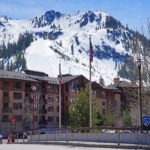
Mount Humphreys

Mount Humphreys is one of the most distinctive high peaks in California’s Sierra Nevada. Rising to 13,992 feet (4,265 meters), the sharply sculpted mountain stands along the Sierra Crest northwest of Bishop and directly on the boundary between Fresno and Inyo counties.
Although its summit falls only eight feet short of the 14,000-foot mark, Mount Humphreys is significantly more difficult to climb than many California fourteeners. There is no hiking route to the summit. Even the easiest established ascent involves Class 4 climbing, loose rock, route-finding, and considerable exposure.
Its combination of elevation, prominence, rugged architecture, and commanding position above Humphreys Basin has made Mount Humphreys one of the classic mountaineering objectives of the High Sierra.
🏔️ Overview
Mount Humphreys occupies a prominent section of the central Sierra Nevada near Bishop, California. Its jagged summit rises dramatically above Humphreys Basin on the west and the upper Bishop Creek country on the east.
At 13,992 feet, it is the highest California summit that does not reach the traditional 14,000-foot threshold. Its substantial 2,575-foot prominence also distinguishes it from many neighboring Sierra peaks.
Unlike mountains such as Mount Whitney, Mount Humphreys does not have a maintained hiking trail leading to its summit. Reaching the top requires technical scrambling or rock climbing, making the mountain primarily a destination for experienced climbers rather than ordinary hikers.
Mount Humphreys is also recognized as an Emblem Peak by the Sierra Club’s Sierra Peaks Section, reflecting both its prominence and its importance in Sierra mountaineering.
⚡ Fast Facts
| Fact | Details |
|---|---|
| Continent | North America |
| Country | United States |
| State/Province | California |
| County/Region | Fresno County and Inyo County |
| Mountain Range | Sierra Nevada |
| Parent Peak | Thunderbolt Peak |
| Elevation | 13,992 ft / 4,265 m |
| Prominence | 2,575 ft / 785 m |
| Isolation | 14.7 mi / 23.65 km |
| Nearest Higher Neighbor (NHN) | Thunderbolt Peak |
| Coordinates | 37.270548° N, 118.673003° W |
| Wilderness Area | John Muir Wilderness |
| USGS Topographic Map | Mount Tom |
| First Ascent | Edward C. Hutchinson and James S. Hutchinson, 1904 |
| Easiest Summit Route | Class 4 climbing |
📍 Location
Mount Humphreys stands on the Fresno–Inyo county line along the crest of the Sierra Nevada. Its summit also marks a boundary between lands administered by the Inyo National Forest to the east and Sierra National Forest to the west.
The mountain lies within the John Muir Wilderness, an extensive protected landscape encompassing some of the highest and most remote terrain in the Sierra Nevada.
Bishop is the principal gateway community on the eastern side of the range. From the Bishop Creek area, hikers can approach the mountain through North Lake and the Piute Pass Trail.
The trail crosses Piute Pass at roughly 11,400 feet before entering Humphreys Basin, a broad high-elevation landscape dotted with alpine lakes beneath Mount Humphreys.
📏 Elevation & Prominence
Modern LiDAR-refined data reported by Peakbagger places the summit of Mount Humphreys at:
13,992 feet (4,264.8 meters)
Older maps and climbing references frequently list an elevation of approximately 13,986 feet, explaining why both figures can still be encountered in guidebooks and online sources.
Using the newer measurement, Mount Humphreys stands only eight feet below 14,000 feet.
Its prominence is approximately:
2,575 feet (785 meters)
Its topographic isolation is approximately:
14.7 miles (23.65 kilometers)
Peakbagger identifies Thunderbolt Peak, southeast of Mount Humphreys in the Palisades, as both its line parent and Nearest Higher Neighbor.
Thunderbolt Peak is part of the same spectacular group of summits that includes North Palisade.
🪨 Geology
Mount Humphreys lies within the geologically complex central Sierra Nevada.
Much of the Sierra consists of intrusive igneous rock associated with the enormous Sierra Nevada batholith, which formed when magma cooled deep beneath an ancient volcanic arc during the Mesozoic Era.
The area surrounding Mount Humphreys is particularly interesting because granitic intrusive rocks occur alongside older metamorphic rocks. Geological studies of the John Muir Wilderness describe metamorphic formations and intrusive bodies throughout this section of the range.
Later uplift brought these deeply formed rocks toward the surface, while erosion stripped away overlying material.
Glaciers then played an enormous role in shaping the modern landscape.
During repeated Ice Age glaciations, moving ice excavated basins, sharpened ridges, widened valleys, and left behind the bare rock, cirques, moraine deposits, and numerous alpine lakes visible around Humphreys Basin today.
Mount Humphreys’ serrated skyline is a particularly striking example of this glacially modified High Sierra terrain.
🌿 Flora & Fauna
The approach to Mount Humphreys passes through several distinct elevation zones.
Near North Lake, hikers travel through forests containing lodgepole pine and quaking aspen. During the summer growing season, wildflowers such as paintbrush, columbine, and penstemon can appear along the Piute Pass approach.
Vegetation becomes progressively thinner with elevation.
Beyond Piute Pass, Humphreys Basin consists largely of open alpine terrain, exposed granite, talus, meadows, and numerous small lakes. Conditions around the upper mountain are too severe for substantial tree growth.
Yellow-bellied marmots are among the most noticeable mammals along the high-country trails. Other animals adapted to the broader Sierra alpine environment inhabit the rocky slopes, meadows, and forests surrounding the mountain.
Visitors should remember that even apparently barren alpine environments are fragile. Plants growing at these elevations may have extremely short growing seasons and can take years to recover from disturbance.

🥾 Hiking & Climbing Routes
Mount Humphreys should not be confused with a conventional hiking summit.
There is no easy route to the top.
The easiest recognized summit route is generally rated Class 4, meaning climbers encounter exposed scrambling where a fall could have serious consequences. Depending on experience and conditions, climbers may use ropes and other technical equipment.
Piute Pass and Humphreys Basin Approach
The most established approach begins near North Lake west of Bishop.
The Piute Pass Trail climbs through the Bishop Creek drainage before crossing Piute Pass and descending into Humphreys Basin.
The trail itself is a popular backpacking route and provides spectacular views of the High Sierra even for visitors who have no intention of climbing Mount Humphreys.
From Humphreys Basin, climbers leave established trails and approach the mountain’s western side.
West-Side Routes
The easiest climbing terrain is generally found on the western side of the mountain.
Even here, climbers must negotiate extensive talus, loose rock, steep gullies, exposed ledges, and Class 4 terrain before reaching the small summit area.
Route-finding is important, since wandering away from the established line can quickly place climbers on substantially harder terrain.
East Arête
The East Arête is one of the mountain’s best-known technical climbing routes.
It follows the dramatic ridge leading toward the summit and involves exposed fifth-class rock climbing. This is a serious alpine climb requiring appropriate technical ability, equipment, and judgment.
Mount Humphreys also offers snow, ice, and mixed climbing possibilities under suitable seasonal conditions.
🏔️ Field Guide Tip: Mount Humphreys is a mountaineering objective, not simply a strenuous hike. Climbers should be comfortable with exposed scrambling, route-finding, loose rock, rapidly changing mountain weather, and technical climbing before attempting the summit.
🌤️ Best Time to Visit
For hiking into Humphreys Basin, the most practical season is generally summer through early fall, after most winter snow has melted from the approach trails.
For climbers seeking mostly dry rock conditions, July through September is often the most favorable period, although snow can remain on shaded slopes and gullies well into summer after heavy winters.
High Sierra weather can change rapidly at any time.
Afternoon thunderstorms are possible during summer, and exposed ridges are particularly dangerous during lightning. Early starts are therefore common among experienced Sierra climbers.
Winter and spring transform Mount Humphreys into a substantially more serious alpine objective involving snow, ice, avalanche hazards, and winter navigation.
Visitors planning an overnight trip through the Inyo National Forest portion of the John Muir Wilderness should also check current wilderness permit requirements before leaving.
🧭 Nearby Mountains & Attractions
North Palisade
Located southeast of Mount Humphreys, North Palisade rises to more than 14,000 feet and anchors one of the most spectacular mountaineering areas in California.
Mount Williamson
Farther south, Mount Williamson is California’s second-highest mountain and another major Eastern Sierra mountaineering objective.
Humphreys Basin
Visitors do not have to climb Mount Humphreys to appreciate the area. Humphreys Basin itself is a scenic destination filled with lakes, open granite terrain, alpine meadows, and expansive views of the Sierra Crest.
Piute Pass
Piute Pass provides access between the eastern Sierra and the high country west of the crest. It is also an important gateway to Humphreys Basin and longer backpacking routes through the John Muir Wilderness.
💡 Fun Facts
- Mount Humphreys reaches 13,992 feet, making it the highest California mountain that remains below 14,000 feet.
- Its summit has more than 2,500 feet of topographic prominence.
- Thunderbolt Peak is its nearest higher neighbor.
- The mountain was named for Andrew A. Humphreys, a U.S. Army officer and engineer who served as Chief of Engineers.
- Joseph N. LeConte and Clarence Cory made an unsuccessful summit attempt in 1898.
- Brothers Edward C. Hutchinson and James S. Hutchinson completed the first recorded ascent in 1904.
- Mount Humphreys is designated as an Emblem Peak by the Sierra Club’s Sierra Peaks Section.
- Unlike many high Sierra peaks, there is no nontechnical hiking route to its summit.
- Its older widely published elevation of 13,986 feet has been superseded in some modern databases by a LiDAR-refined elevation of 13,992 feet.

❓ Frequently Asked Questions
How tall is Mount Humphreys?
Mount Humphreys has a modern LiDAR-refined elevation of 13,992 feet (4,265 meters). Some older maps and climbing references list the mountain at approximately 13,986 feet.
Where is Mount Humphreys?
Mount Humphreys is in the Sierra Nevada of California, on the boundary between Fresno and Inyo counties and within the John Muir Wilderness.
Is Mount Humphreys a fourteener?
No. At 13,992 feet, Mount Humphreys falls just eight feet short of 14,000 feet.
Can you hike to the top of Mount Humphreys?
Not by an ordinary hiking route. The easiest recognized summit route involves approximately Class 4 climbing, substantial exposure, and loose rock.
What is the nearest higher mountain to Mount Humphreys?
According to Peakbagger’s topographic data, the Nearest Higher Neighbor is Thunderbolt Peak, located southeast of Mount Humphreys.
What is Mount Humphreys’ prominence?
Peakbagger calculates its clean prominence at approximately 2,575 feet (785 meters).
Who first climbed Mount Humphreys?
The first recorded ascent was made by Edward C. Hutchinson and James S. Hutchinson in 1904.
Do you need a permit to visit Humphreys Basin?
The U.S. Forest Service currently requires a wilderness permit for overnight trips entering the John Muir Wilderness from Inyo National Forest. Day use of the Piute Pass Trail does not normally require a wilderness permit, but visitors should always verify current regulations before their trip.
🔗 Related Articles
📚 Sources
- Peakbagger — Mount Humphreys
- U.S. Geological Survey — Geographic Names Information System: Mount Humphreys
- U.S. Forest Service — Piute Pass Trail, North Lake
- U.S. Forest Service — Inyo National Forest Wilderness Permits
- U.S. Geological Survey — Mineral Resource Potential of the John Muir Wilderness
- SummitPost — Mount Humphreys
- Wikipedia — Mount Humphreys