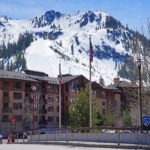
Mount Lee

Mount Lee is not one of California’s tallest mountains, but few peaks in the state are associated with a more recognizable landmark. Rising above Los Angeles in the Hollywood Hills, Mount Lee is the mountain on which the world-famous Hollywood Sign stands.
Located within Griffith Park at the eastern end of the Santa Monica Mountains, Mount Lee combines Southern California scenery, hiking opportunities, Hollywood history, and an important connection to the early development of television broadcasting. Its proximity to the heart of Los Angeles also makes it one of the most accessible mountain destinations in Southern California.
🏔️ Overview
Mount Lee is a prominent landmark in the Hollywood Hills, a section of the eastern Santa Monica Mountains in Los Angeles, California. The mountain rises immediately north of Hollywood and south of the San Fernando Valley.
Its defining feature is the Hollywood Sign, which stretches across the mountain’s southern slope. Originally constructed in 1923 as an advertisement for the Hollywoodland residential development, the sign eventually became an international symbol of Los Angeles and the American entertainment industry.
Mount Lee also has an important place in broadcasting history. A television transmission facility was established near its summit in the late 1930s by the Don Lee broadcasting organization. The mountain takes its name from businessman and broadcasting pioneer Don Lee.
Today, the mountain remains part of Griffith Park, while communications facilities continue to occupy its summit area.
⚡ Fast Facts
| Fact | Details |
|---|---|
| Continent | North America |
| Country | United States |
| State | California |
| County/Region | Los Angeles County |
| City | Los Angeles |
| Mountain Range | Santa Monica Mountains |
| Subrange/Area | Hollywood Hills |
| Parent Peak | Sandstone Peak |
| Elevation | About 1,703 ft (519 m); some sources list 1,708 ft (521 m) |
| Prominence | About 57 ft (17 m) |
| Isolation | About 0.2 mi (0.4 km) |
| Nearest Higher Neighbor (NHN) | Cahuenga Peak |
| USGS Topographic Map | Burbank |
| Protected Area | Griffith Park |
| Best Known For | Hollywood Sign |
Mount Lee has relatively little topographic prominence because it forms part of a larger ridge rather than standing as a highly independent mountain. Nearby Cahuenga Peak rises higher along the same general ridgeline.
📍 Location
Mount Lee is located in Los Angeles, California, within Griffith Park and the Hollywood Hills section of the Santa Monica Mountains.
The mountain stands between the Los Angeles Basin to the south and the San Fernando Valley to the north. Despite its location within one of the largest metropolitan areas in the United States, the surrounding hills preserve extensive areas of chaparral, coastal sage scrub, canyons, ridges, and other natural terrain.
Griffith Park covers more than 4,000 acres and contains an extensive network of hiking trails, fire roads, recreational facilities, and natural areas.
Immediately west of Mount Lee are Cahuenga Peak and Burbank Peak, while Mount Hollywood lies farther east within Griffith Park.
On clear days, the higher trails around Mount Lee provide broad views over Hollywood, downtown Los Angeles, the San Fernando Valley, and distant mountain ranges.

📏 Elevation & Prominence
Mount Lee reaches approximately 1,700 feet above sea level.
Elevation figures vary slightly among sources. Peakbagger lists Mount Lee at approximately 1,703 feet (519 meters), while another commonly published figure is 1,708 feet (521 meters).
Its topographic prominence is only about 57 feet (17 meters). This low prominence reflects Mount Lee’s position along a ridgeline containing several nearby summits.
Its isolation is approximately 0.2 mile, with higher terrain found quickly to the west toward Cahuenga Peak.
Cahuenga Peak reaches approximately 1,820 feet and is higher than Mount Lee.
🪨 Geology
Mount Lee belongs to the Santa Monica Mountains, which form part of Southern California’s Transverse Ranges.
Unlike most of California’s major mountain systems, which generally trend north to south, the Transverse Ranges extend primarily from east to west.
The Santa Monica Mountains have a complicated geological history shaped by tectonic movement, faulting, uplift, erosion, sedimentation, and ancient volcanic activity. Rocks found throughout the range record changing marine and terrestrial environments over millions of years.
The landscape around Griffith Park includes rugged ridges and steep-sided canyons despite its relatively modest elevations.
Mount Lee’s summit has also been altered by human activity. Historical development proposals and the later construction of broadcasting and communications facilities changed the appearance of its upper slopes and summit area.
📺 Mount Lee and the Birth of Los Angeles Television
One of Mount Lee’s most interesting stories has little to do with the Hollywood Sign.
The mountain played an important role in the early history of television broadcasting in Los Angeles.
Businessman Don Lee became involved in experimental television through station W6XAO. In 1938, the Don Lee Network purchased approximately 20 acres behind the Hollywood Sign for the construction of a television facility.
Plans called for an advanced broadcast studio and transmission tower in the elevated location. The height of the mountain allowed television signals to reach a larger portion of Los Angeles and the San Fernando Valley.
The Mount Lee broadcasting facility was completed around 1939 and became an important early television site.
The mountain became associated with Don Lee and eventually took his name.
Television broadcasting later shifted to higher locations, particularly Mount Wilson in the nearby San Gabriel Mountains, but communications equipment remains a conspicuous feature of Mount Lee today.
🎬 The Hollywood Sign
Mount Lee is best known as the home of the Hollywood Sign.
The original sign was constructed in 1923 and spelled HOLLYWOODLAND. Rather than being intended as a permanent monument to the movie industry, it was created as an advertisement for a residential real-estate development in the hills above Hollywood.
The original sign consisted of 13 enormous letters, each approximately 43 feet tall.
Although intended to be temporary, the sign became increasingly associated with Hollywood itself.
The final four letters — “LAND” — were eventually removed, leaving the familiar HOLLYWOOD name.
By the 1970s, the original sign had deteriorated significantly. A fundraising campaign resulted in its complete reconstruction in 1978 using more durable materials.
Today, the Hollywood Sign is one of the most recognizable landmarks in the United States.
Visitors cannot legally walk directly up to or touch the letters. The immediate area is fenced and protected, but authorized trails and roads provide several viewpoints around and behind the sign.
🌿 Flora & Fauna

Despite being surrounded by the Los Angeles metropolitan area, Mount Lee and Griffith Park preserve important natural habitat.
The landscape includes vegetation characteristic of Southern California’s Mediterranean climate, particularly chaparral and coastal sage scrub.
Plants found throughout Griffith Park and the surrounding mountains include sages, toyon, sumac, California lilac, mountain mahogany, native oaks, and numerous seasonal wildflowers.
Wildlife also persists surprisingly close to the city.
Animals found within the broader Griffith Park ecosystem can include:
- Coyotes
- Bobcats
- Gray foxes
- Raccoons
- Skunks
- Rabbits
- Squirrels
- Lizards
- Snakes
- Hawks
- Owls
- Numerous songbirds
Rattlesnakes occur naturally in the area and are occasionally encountered by hikers, particularly during warmer weather.
Visitors should avoid approaching or feeding wildlife.
🥾 Hiking Mount Lee
Mount Lee is a popular hiking destination, although the fenced communications compound at the summit and the Hollywood Sign itself are not open to public entry.
Several trails and fire roads allow hikers to climb toward the mountain and reach viewpoints above and behind the Hollywood Sign.
Brush Canyon Trail
The Brush Canyon Trail is one of the most popular approaches to the Hollywood Sign.
Beginning from the Canyon Drive area of Griffith Park, the route gradually climbs through the hills before connecting with roads and trails leading toward Mount Lee.
Depending on the exact route and turnaround point, a round-trip hike to the area behind the Hollywood Sign can cover roughly six miles.
Much of the route is exposed to the sun, but the relatively gradual grades make it popular with visitors.
Mount Lee Drive
Mount Lee Drive winds around the upper portion of the mountain.
Several hiking routes ultimately connect with this paved road before reaching the ridge behind the Hollywood Sign.
The viewpoint from behind the sign offers an unusual perspective: hikers can look over the enormous letters toward Hollywood and the Los Angeles Basin far below.
The actual letters remain within a restricted area.
Cahuenga Peak and Burbank Peak
Hikers looking for a more challenging outing can continue west along the ridge toward Cahuenga Peak and Burbank Peak.
Cahuenga Peak is higher than Mount Lee and provides a more natural summit experience.
Farther west is Burbank Peak, which is famous for the solitary Wisdom Tree growing near its summit.
Combining the Mount Lee area with Cahuenga Peak and Burbank Peak can create a considerably more strenuous hike than simply visiting the Hollywood Sign viewpoint.
🏔️ Field Guide Tip: Do not underestimate Mount Lee because of its urban location and modest elevation. Much of the hiking terrain is exposed, and temperatures can become extremely hot. Carry plenty of water, use sun protection, and consider an early start during warm weather.
🌤️ Best Time to Visit
Mount Lee can be visited throughout much of the year, but fall through spring generally offers the most comfortable hiking conditions.
Winter can be particularly rewarding. Clear days following storms sometimes provide excellent long-distance visibility across Los Angeles and toward the surrounding mountains.
Spring can bring greener hillsides and seasonal wildflowers.
Summer is often hot and dry, and many routes have limited shade. Early morning hiking is strongly preferable during periods of high temperatures.
Wildfire danger can also affect access to Griffith Park and surrounding areas.
Because trails or roads may occasionally close because of fire danger, storms, maintenance, or other conditions, hikers should check current Griffith Park information before visiting.
🧭 Nearby Mountains & Attractions
Mount Lee sits within one of Southern California’s most interesting urban mountain landscapes.
Cahuenga Peak
Immediately west of Mount Lee, Cahuenga Peak reaches approximately 1,820 feet and rises higher than Mount Lee.
Its trails are generally rougher and less developed than the main routes to the Hollywood Sign.
Burbank Peak
Burbank Peak lies west of Cahuenga Peak and is particularly well known for the Wisdom Tree, a solitary pine that became a local landmark.
Mount Hollywood
Mount Hollywood is another popular Griffith Park hiking destination. Despite its name, the Hollywood Sign is not located on Mount Hollywood — it stands on Mount Lee.
Griffith Observatory
The famous Griffith Observatory stands southeast of Mount Lee on the slopes of Mount Hollywood.
Its hilltop setting provides excellent views toward both downtown Los Angeles and the Hollywood Sign.
San Gabriel Mountains
Beyond the Los Angeles Basin rise the much taller San Gabriel Mountains.
Notable nearby Southern California peaks include Mount Lukens, Verdugo Mountain, and Mount Wilson.

💡 Fun Facts
- Mount Lee is the mountain on which the Hollywood Sign stands.
- The sign originally read HOLLYWOODLAND.
- The original Hollywoodland sign was constructed in 1923.
- The sign began as an advertisement for a residential development rather than as a monument to the film industry.
- Mount Lee is named after broadcasting pioneer Don Lee.
- The mountain played an important role in the early history of television broadcasting in Los Angeles.
- Mount Lee is lower than neighboring Cahuenga Peak.
- The mountain forms part of the Santa Monica Mountains.
- The actual Hollywood Sign letters cannot legally be approached by the public.
- Communications facilities remain near the summit of Mount Lee.
- Mount Lee is one of the unusual examples of a mountain whose cultural significance greatly exceeds its topographic prominence.
❓ Frequently Asked Questions
How high is Mount Lee?
Mount Lee rises approximately 1,700 feet above sea level. Peakbagger lists an elevation of approximately 1,703 feet, while some other references give an elevation of 1,708 feet.
Where is Mount Lee?
Mount Lee is located in Griffith Park in Los Angeles, California, within the Hollywood Hills section of the Santa Monica Mountains.
Is the Hollywood Sign on Mount Lee?
Yes. The Hollywood Sign stands on the southern slope of Mount Lee.
Is the Hollywood Sign on Mount Hollywood?
No. Despite the similar name, the Hollywood Sign is located on Mount Lee, not Mount Hollywood.
Mount Hollywood is a separate peak farther east in Griffith Park.
Can you hike Mount Lee?
Yes. Several trails and roads in Griffith Park allow hikers to reach the upper slopes of Mount Lee and viewpoints behind the Hollywood Sign.
The fenced communications facilities at the summit are restricted.
Can you walk up to the Hollywood Sign?
Visitors can hike to designated viewpoints behind and around the Hollywood Sign, but they cannot legally walk directly up to or touch the letters.
The sign itself is within a restricted area protected by fencing and security systems.
Why is Mount Lee called Mount Lee?
The mountain is named for Don Lee, a Los Angeles businessman and broadcasting pioneer whose organization developed an early television transmission facility on the mountain.
What mountain range is Mount Lee in?
Mount Lee belongs to the Santa Monica Mountains, specifically the Hollywood Hills at the eastern end of the range.
What is the nearest higher mountain to Mount Lee?
The Nearest Higher Neighbor (NHN) is Cahuenga Peak, immediately west of Mount Lee.
Is Mount Lee the highest mountain in Griffith Park?
No. Cahuenga Peak, at approximately 1,820 feet, is higher than Mount Lee.
Is Mount Lee difficult to hike?
No technical climbing is required to reach the public viewpoints around Mount Lee. However, routes can involve several miles of hiking, sustained elevation gain, steep sections, sun exposure, and high temperatures.
🔗 Related Articles
📚 Sources
- Peakbagger — Santa Monica Mountains
- Hollywood Sign — History Timeline
- Hollywood Sign — Mt. Lee and the Birth of Television
- Hollywood Sign — A Sign Is Born
- Los Angeles Department of Recreation and Parks — Griffith Park Map
- National Park Service — Santa Monica Mountains Geologic Formations
- National Park Service — Santa Monica Mountains Geodiversity Atlas