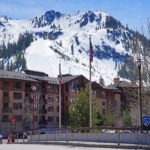
Mount Lyell

🏔️ Overview
Mount Lyell is the highest mountain in Yosemite National Park, rising to an officially recognized elevation of 13,114 feet (3,997 meters) in California’s central Sierra Nevada. The peak stands at the southeastern end of the Cathedral Range, deep within Yosemite’s high country near the boundary between Tuolumne and Madera counties.
Unlike many of Yosemite’s famous granite domes, Mount Lyell contains significant metamorphic rock. Its rugged summit rises above the remnants of the Lyell Glacier, an ice body that played an important role in early scientific studies of Sierra Nevada glaciation.
Mount Lyell is also a significant mountaineering objective. There is no maintained trail to the summit, and reaching the top normally involves a long wilderness approach followed by off-trail travel, steep snow or ice depending on the season, loose rock, and exposed scrambling.
⚡ Fast Facts
| Fact | Details |
|---|---|
| Continent | North America |
| Country | United States |
| State/Province | California |
| County/Region | Tuolumne and Madera counties |
| Mountain Range | Cathedral Range, Sierra Nevada |
| Parent Peak | Mount Ritter |
| Elevation | 13,114 ft (3,997 m), NPS/USGS figure |
| Prominence | 1,898 ft (578 m) |
| Isolation | 5.23 mi (8.42 km) |
| Nearest Higher Neighbor (NHN) | Mount Ritter |
| Coordinates | 37.739415° N, 119.271580° W |
| Protected Area | Yosemite National Park |
Peakbagger gives a slightly higher elevation of 13,118.5 feet (3,998.5 meters). The National Park Service and U.S. Geological Survey continue to use 13,114 feet, so that is the figure used as the primary elevation in this guide.
📍 Location
Mount Lyell lies in the southeastern portion of Yosemite National Park, approximately south of Tuolumne Meadows and west of the main eastern escarpment of the Sierra Nevada.
The mountain anchors the southeastern end of the Cathedral Range and is surrounded by some of Yosemite’s most remote high-country terrain. Mount Maclure stands immediately to the northwest, while Rodgers Peak lies southeast of Mount Lyell.
The mountain is also associated with several important drainage systems. Water from the Mount Lyell area contributes to the headwaters of the Tuolumne River, while nearby divides separate drainage toward the Merced River and the Mono Lake Basin.
Mount Lyell’s remote position makes it considerably more difficult to reach than nearby Mount Dana, Yosemite’s second-highest mountain.
📏 Elevation & Prominence
The National Park Service lists Mount Lyell at 13,114 feet (3,997 meters), making it the highest point anywhere within Yosemite National Park.
Peakbagger’s current database gives the summit an elevation of 13,118.5 feet (3,998.5 meters). Small differences such as this are common among mountain databases because elevations may be based on different surveys, topographic datasets, or vertical datums.
Peakbagger calculates Mount Lyell’s topographic prominence at 1,898 feet (578 meters) and its isolation at 5.23 miles (8.42 kilometers).
Its line parent and nearest higher major summit are associated with Mount Ritter, which rises slightly higher to the southeast.
Although Mount Lyell does not reach the 14,000-foot threshold of California peaks such as Mount Whitney, its position as Yosemite’s highest summit gives it exceptional geographic importance.
🪨 Geology
Mount Lyell occupies an interesting geological setting within a national park famous for granite.
Much of Yosemite consists of granitic rocks belonging to the enormous Sierra Nevada Batholith. These intrusive rocks formed when magma cooled beneath the surface during multiple episodes of Mesozoic subduction, with much of Yosemite’s granite forming roughly 105 to 85 million years ago.
However, not every Yosemite summit is granite. Older metamorphic rocks survive along portions of the park’s eastern and western margins. Federal descriptions of the upper Tuolumne watershed specifically identify slate at Mount Lyell as one of these metamorphic remnants.
These rocks represent fragments of older material that survived the emplacement of the Sierra Nevada’s great granitic intrusions.
Glaciation later played an enormous role in sculpting the region. During the Pleistocene, extensive glaciers occupied Yosemite’s high country, carving cirques, U-shaped valleys, polished bedrock, lakes, and sharp mountain ridges.
🧊 Lyell Glacier
The ice on Mount Lyell is one of the mountain’s most historically important features.
Lyell Glacier was once Yosemite National Park’s largest glacier. During the late 19th and early 20th centuries, the glacier occupied a substantially greater area beneath Mount Lyell than it does today.
The National Park Service has documented a dramatic decline in the glacier since measurements began in the 19th century. Yosemite’s modern glaciers have lost more than 90% of their volume since the 1870s.
Perhaps the most significant change is that the Lyell Glacier has stopped flowing. Measurements conducted by researchers found that stakes placed in the ice remained stationary over several years. Because movement is one of the defining characteristics of a glacier, the National Park Service notes that the remaining Lyell ice no longer formally meets the definition of an active glacier.
The retreat has also changed the nature of climbing Mount Lyell. Terrain that was once covered by ice has become exposed rock, creating different hazards and route conditions for modern climbers.
🌿 Flora & Fauna
The approach to Mount Lyell passes through several distinct Sierra Nevada ecological zones.
Lyell Canyon contains broad meadows, streams, lodgepole pine forests, and other subalpine habitats. As elevation increases, trees become smaller and more widely scattered before disappearing almost entirely in the alpine zone.
Near the summit, vegetation is limited by cold temperatures, intense sunlight, short growing seasons, wind, and extended snow cover. Plants that survive at these elevations tend to remain close to the ground and grow in protected spaces among rocks.
American pikas are among the best-known inhabitants of Yosemite’s alpine talus. These small relatives of rabbits live among rocky slopes and collect vegetation during the short summer growing season. Marmots and other high-elevation mammals also inhabit Yosemite’s alpine and subalpine country.
Visitors should avoid approaching or feeding wildlife and should protect fragile alpine vegetation by traveling on durable surfaces whenever possible.
🥾 Hiking & Climbing Routes
Mount Lyell is not a conventional hiking summit. There is no maintained trail all the way to the top, and the standard approach eventually becomes a mountaineering route.
The most common approach begins near Tuolumne Meadows and follows the John Muir Trail and Pacific Crest Trail through Lyell Canyon.
The first portion of Lyell Canyon is comparatively gentle. The National Park Service describes an 11.4-mile round-trip hike into the canyon with only about 300 feet of elevation gain, although anyone heading toward Mount Lyell continues far beyond this normal day-hiking route.
Farther south, the John Muir Trail begins climbing toward Donohue Pass. Climbers attempting Mount Lyell leave the maintained trail and travel cross-country toward the mountain.
Depending on the chosen line and current conditions, the upper mountain can involve:
- Steep snow or ice
- Loose talus and rock
- Exposed scrambling
- Route-finding
- Significant fall exposure
- Rapidly changing alpine weather
Historically, climbers often crossed portions of the Lyell Glacier. As the ice has retreated, more steep and unstable rock has been exposed.
Mount Lyell should therefore be considered a serious mountaineering objective rather than an ordinary Yosemite day hike.
🏔️ Field Guide Tip: Conditions on Mount Lyell can change dramatically from year to year. Never assume that a route description from an older guide accurately represents current snow, ice, or exposed rock conditions. Check Yosemite National Park wilderness conditions before attempting the mountain and carry the Ten Essentials.
🌤️ Best Time to Visit
For hiking in Lyell Canyon, the most accessible period is generally summer through early autumn, after Tioga Road and the Tuolumne Meadows area have become accessible.
A summit attempt is more complicated because there is no single ideal season.
Earlier in the summer, climbers may encounter extensive snow requiring appropriate snow and ice travel skills. Later in the season, snow coverage usually decreases, but retreating ice can expose loose and steep rock.
Afternoon thunderstorms are another important concern in the Sierra Nevada high country. Exposed ridges and summits provide little protection from lightning.
Snowstorms, freezing temperatures, high winds, and rapidly deteriorating weather are possible even during the normal summer climbing season.
Anyone planning an overnight trip must also follow Yosemite’s wilderness permit requirements. Wilderness permits are required year-round for overnight travel in Yosemite Wilderness, while normal day hikes do not require a wilderness permit.
🧭 Nearby Mountains & Attractions
Mount Maclure
Mount Maclure stands immediately northwest of Mount Lyell. The two peaks dominate the head of the Lyell Fork drainage and are associated with Yosemite’s remaining high-elevation ice.
Mount Dana
At 13,061 feet, Mount Dana is Yosemite National Park’s second-highest mountain. Unlike Mount Lyell, Mount Dana is accessible by a much shorter hiking route beginning near Tioga Pass, although its high elevation still makes it strenuous.
Lyell Canyon
Lyell Canyon provides the primary northern approach toward Mount Lyell. The John Muir Trail and Pacific Crest Trail share the route through the canyon, following the Lyell Fork of the Tuolumne River through meadows and forests.
Donohue Pass
Donohue Pass lies southeast of Mount Lyell along the John Muir Trail and Pacific Crest Trail. The pass marks an important crossing of the Sierra crest and is used by backpackers traveling between Yosemite National Park and the Ansel Adams Wilderness.
Tuolumne Meadows
Tuolumne Meadows is the principal access area for the Mount Lyell approach. Its high-elevation landscape of meadows, granite domes, rivers, and surrounding peaks makes it one of Yosemite’s most recognizable high-country destinations.
Travelers exploring this part of California may also enjoy the broader guide to Mountain Ranges in the U.S..
💡 Fun Facts
- Mount Lyell is the highest point in Yosemite National Park.
- The mountain is named for Sir Charles Lyell, one of the most influential geologists of the 19th century.
- The first recorded ascent was completed by John Boies Tileston on August 29, 1871.
- Mount Lyell stands at the southeastern end of Yosemite’s Cathedral Range.
- Lyell Glacier was historically the largest glacier in Yosemite National Park.
- Researchers have determined that the remaining Lyell ice no longer moves sufficiently to qualify as an active glacier.
- Mount Lyell and the surrounding high country form part of an important headwater region for the Tuolumne River.
- John Muir’s early observations of glaciers in the Yosemite region helped demonstrate the importance of glacial erosion in shaping the Sierra Nevada.
❓ Frequently Asked Questions
How high is Mount Lyell?
The National Park Service lists Mount Lyell at 13,114 feet (3,997 meters). Peakbagger gives a slightly different figure of 13,118.5 feet.
Is Mount Lyell the highest mountain in Yosemite?
Yes. Mount Lyell is the highest point in Yosemite National Park. Nearby Mount Dana is the park’s second-highest major summit.
Where is Mount Lyell?
Mount Lyell is in the central Sierra Nevada of California, at the southeastern end of the Cathedral Range within Yosemite National Park.
Is Mount Lyell a hike or a climb?
Reaching the summit is generally considered a mountaineering climb rather than a standard hike. The approach follows established trails through Lyell Canyon, but the summit route requires off-trail travel and can involve steep snow, loose rock, and exposed scrambling.
Is there a trail to the summit of Mount Lyell?
No maintained trail reaches the summit. Climbers normally use the John Muir Trail/Pacific Crest Trail through Lyell Canyon for the approach before leaving the trail for the mountain.
Does Mount Lyell still have a glacier?
Remnant ice of the Lyell Glacier remains beneath Mount Lyell, but the National Park Service has determined that the ice no longer moves downhill. Because flowing ice is a defining feature of glaciers, the Lyell ice no longer formally qualifies as an active glacier.
What is Mount Lyell’s prominence?
Peakbagger calculates Mount Lyell’s topographic prominence at approximately 1,898 feet (578 meters).
What is the nearest higher mountain to Mount Lyell?
Mount Ritter is the nearest higher major summit and Mount Lyell’s line parent. Mount Lyell has approximately 5.23 miles (8.42 kilometers) of topographic isolation.
Who first climbed Mount Lyell?
The first recorded ascent was made by John Boies Tileston on August 29, 1871.
Do you need a permit to climb Mount Lyell?
A wilderness permit is required for an overnight trip in Yosemite Wilderness. A wilderness permit is generally not required for an ordinary day trip, although park regulations and access conditions should always be checked before departure.
🔗 Related Articles
📚 Sources
- Peakbagger — Mount Lyell, California
- National Park Service — Geology of Yosemite National Park
- National Park Service — Lyell Glacier
- National Park Service — Climate Change: Glaciers
- National Park Service — Tuolumne Meadows Backpacking Trails
- National Park Service — Wilderness Permits
- U.S. Geological Survey — Geographic Names Information System: Mount Lyell
- U.S. Fish & Wildlife Service — Tuolumne River
- Wikipedia — Mount Lyell (California)