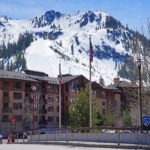
Mount Smolikas

🏔️ Overview
Mount Smolikas is one of the great mountains of Greece, rising to 2,637 meters (8,652 feet) in the rugged Northern Pindus. It is the highest mountain in the Pindus Mountains and the second-highest mountain in Greece, surpassed only by Mount Olympus.
Located in the Epirus region of northwestern Greece, Smolikas is considerably more remote than the country’s famous mythological summit. Its landscape combines deep forests, broad subalpine meadows, rocky ridges, winter snowfields, and one of Greece’s celebrated high-mountain “dragon lakes.”
Smolikas is also geologically distinctive. Much of the mountain consists of ophiolite, rock originating from ancient oceanic crust and the upper mantle that was thrust upward during the long tectonic development of the Pindus. These unusual rocks influence both the appearance of the mountain and the specialized plants growing on its metal-rich soils.
Despite its height, a summer ascent of Smolikas is generally a hiking and mountaineering objective rather than a technical rock climb. The mountain’s remoteness, substantial elevation gain, rapidly changing weather, and lingering snow can nevertheless make it a serious undertaking.
🏔️ Field Guide Tip: Smolikas is quieter and wilder than many of Greece’s better-known mountain destinations. Allow plenty of time, carry sufficient water, and do not assume Mediterranean weather at lower elevations means warm or calm conditions near the summit.
⚡ Fast Facts
| Fact | Details |
|---|---|
| Continent | Europe |
| Country | Greece |
| State/Province | Epirus |
| County/Region | Ioannina Regional Unit |
| Range | Pindus Mountains |
| Parent Peak | Mount Olympus |
| Elevation | 2,637 m / 8,652 ft |
| Prominence | 1,736 m / 5,696 ft |
| Isolation | 119.64 km / 74.34 mi |
| NHN | Olympus – Skolio |
| Coordinates | 40.088706° N, 20.924856° E |
| Highest Point Of | Pindus Mountains |
| National Rank | Second-highest mountain in Greece |
| Primary Rock Type | Ophiolite |
| Notable Feature | Drakolimni of Smolikas |
📍 Location
Mount Smolikas rises in northwestern Greece, within the regional unit of Ioannina in Epirus. It belongs to the Northern Pindus, a mountainous landscape of high ridges, forested valleys, rivers, traditional villages, and some of the wildest remaining terrain on the Greek mainland.
The mountain stands northeast of the town of Konitsa, an important gateway to the surrounding mountains. Villages around the massif include Palioselli, Pades, Armata, and Agia Paraskevi, while Samarina lies on the eastern side of the broader mountain area.
Several other major Pindus mountains surround Smolikas. Tymfi lies to the south, Grammos to the northwest, Vasilitsa to the southeast, and the Voio Mountains farther east.
Much of this landscape forms part of the broader protected environment of Northern Pindos National Park, an exceptionally important area for Greek mountain biodiversity.
📏 Elevation & Prominence
The summit of Mount Smolikas reaches 2,637 meters (8,652 feet) above sea level. This makes it the highest summit of the Pindus Mountains and places it second among the major mountains of Greece, behind the 2,918-meter Mytikas summit of Mount Olympus.
Smolikas is particularly impressive when measured by its topographic prominence of 1,736 meters (5,696 feet). Any mountain with more than 1,500 meters of prominence qualifies as an ultra-prominent peak, placing Smolikas among Europe’s relatively small collection of highly independent mountains.
Its topographic isolation is approximately 119.64 kilometers (74.34 miles). Peakbagger identifies Olympus–Skolio, east of Smolikas, as its nearest higher neighbor.
These measurements illustrate why Smolikas feels like such a dominant mountain. It is not simply one high point among closely packed summits; it rises with substantial independence above the surrounding Northern Pindus landscape.
🪨 Geology
One of the most fascinating aspects of Mount Smolikas is its geology.
While many mountains of Greece contain extensive limestone, Smolikas is dominated by ophiolitic rocks. Ophiolites are fragments of ancient oceanic crust and upper-mantle material that were eventually pushed onto continental crust by powerful tectonic forces.
The geological history of the region stretches back to the ancient Tethys Ocean, which once existed between large continental plates. As those plates moved and collided, rocks originating deep beneath the ocean were uplifted and incorporated into the developing Pindus mountain system.
This gives Smolikas a geological character noticeably different from nearby limestone-dominated mountains such as parts of Tymfi.
Ice also helped sculpt the high mountain landscape. During colder periods of the Pleistocene, glaciers occupied parts of the Northern Pindus. Glacial erosion helped create cirques, depressions, steep-sided valleys, and other landforms still visible around the higher elevations.
The combination of tectonic uplift, unusual bedrock, glacial erosion, running water, frost, and ongoing weathering has created the rugged Smolikas seen today.
🌿 Flora & Fauna
Mount Smolikas supports an impressive transition of ecosystems as elevation increases.
Lower and middle slopes contain extensive forests. Beech, black pine, fir, and Bosnian pine are among the characteristic trees found in the wider area. Particularly striking are the old Bosnian pines (Pinus heldreichii) found on sections of the mountain, some growing in rugged settings near the upper forest limit.
Higher up, the trees eventually give way to subalpine grasslands, exposed rock, low-growing vegetation, and plants capable of surviving long winters, strong winds, thin soils, and intense summer sunlight.
Smolikas’s ophiolitic geology has produced another unusual ecological feature: soils containing elevated concentrations of metals. Several plants have adapted to these demanding conditions. Species associated with the mountain include Smolikas alyssum (Alyssum smolicanum), Galium ophiolithicum, and Cerastium smolicanum.
The wider Northern Pindus is also one of Greece’s most important wildlife regions. Animals found within the protected landscape include brown bears, roe deer, wild boar, chamois, wolves, and numerous birds of prey.
One of Smolikas’s smallest residents is also among its most famous. Alpine newts inhabit the mountain’s high-elevation Dragon Lake. Traditionally, these newts were connected with stories of dragons living in the isolated mountain lakes of the Pindus.
Visitors should observe wildlife from a distance and avoid disturbing the fragile shorelines and waters of the alpine lakes.
🥾 Hiking & Climbing Routes
Mount Smolikas is accessible by several approaches, with routes beginning from villages around the massif. Palioselli is one of the best-known starting points for hikers approaching the mountain from the southwest.
Palioselli to the Smolikas Refuge
A common route climbs from Palioselli through the forest toward the mountain refuge. The lower trail provides a dramatic contrast with the terrain higher on the mountain, passing through shaded woodland before reaching increasingly open subalpine country.
The refuge can provide an intermediate objective for hikers and a useful base for longer trips into the high country.
Drakolimni of Smolikas
One of the mountain’s signature destinations is the Drakolimni of Smolikas, or Smolikas Dragon Lake.
The small alpine lake sits at roughly 2,200 meters and is surrounded by rolling high-country terrain beneath the summit ridges. The name drakolimni means “dragon lake,” and several alpine lakes of the Pindus are associated with traditional stories involving dragons.
The Northern Pindos National Park describes an approximately 17-kilometer route from Palioselli through the mountain refuge and Dragon Lake to Agia Paraskevi. It is rated as a difficult route and takes roughly eight hours under suitable conditions.
The main summit requires additional climbing beyond the lake.
Final Summit Ascent
From the Dragon Lake area, hikers continue toward the broad upper slopes of Smolikas before reaching the final summit ridge.
The route is not normally considered a technical rock climb during snow-free summer conditions, but it remains a substantial mountain ascent. Loose rock, strong winds, thunderstorms, fog, residual snow, and rapidly falling temperatures can all complicate the climb.
The summit rewards hikers with sweeping views across the Northern Pindus, including neighboring Tymfi, Grammos, Vasilitsa, and numerous lesser ridges. On exceptionally clear days, the extent of the surrounding Balkan mountain landscape becomes particularly apparent.
Other Approaches
Routes also reach the mountain from the vicinity of Pades and Samarina. Conditions, trail markings, road access, and route quality can change, so hikers should obtain current local information before choosing an approach.
Winter transforms Smolikas into a genuine mountaineering environment. Snow and ice can cover the upper mountain for months, requiring appropriate winter equipment, route-finding ability, and experience.
🌤️ Best Time to Visit
For most hikers, the best period for climbing Mount Smolikas is late June through September.
By midsummer, the main hiking routes are more likely to be free of extensive snow, daylight hours are long, and access from surrounding villages is generally easier. July and August are popular months, although exposed high elevations can still be surprisingly cold and windy.
May and early June can be beautiful, particularly in the forests and lower slopes, but substantial snow may remain higher on the mountain.
September and early October often bring cooler temperatures and excellent visibility, although the days become shorter and early-season snow is increasingly possible.
From late autumn through spring, Smolikas should be treated as a winter mountain. Deep snow, ice, avalanche terrain, severe cold, fog, and high winds can dramatically increase the difficulty.
Thunderstorms are another important concern in summer. An early start helps hikers avoid spending the most storm-prone afternoon hours on exposed ridges.
🧭 Nearby Mountains & Attractions
Mount Smolikas lies within one of Greece’s finest mountain regions, making it possible to combine the summit with several other destinations.
Drakolimni of Smolikas
The mountain’s own Dragon Lake is worth visiting even for hikers who do not continue to the summit. Its high-elevation setting, alpine vegetation, and reflections of the surrounding ridges make it one of the highlights of Smolikas.
Tymfi
South of Smolikas rises the spectacular Tymfi massif, whose highest summit, Gamila, reaches 2,497 meters. Tymfi is famous for cliffs, alpine landscapes, the Astraka Refuge, and its own Dragon Lake.
Konitsa
The historic town of Konitsa is a natural base for exploring the northern Pindus. The surrounding area includes traditional stone architecture, mountain scenery, and access to the Aoos River and gorge.
Aoos Gorge
The Aoos Gorge cuts through the dramatic terrain south of Smolikas and west of Tymfi. Hiking routes follow parts of the river valley through forests and beneath steep mountain slopes.
Vikos Gorge
Farther south, the celebrated Vikos Gorge forms one of the defining landscapes of the region. Together with the traditional stone villages of Zagori, it makes the wider Northern Pindus worth exploring well beyond a single summit climb.
Mount Grammos
Northwest of Smolikas, Mount Grammos rises along the Greek-Albanian border and provides another large, relatively remote mountain landscape filled with forests, alpine grasslands, and high ridges.
💡 Fun Facts
- At 2,637 meters, Mount Smolikas is the highest mountain in the entire Pindus range.
- It is Greece’s second-highest mountain, after Mount Olympus.
- Smolikas has 1,736 meters of prominence, qualifying it as an ultra-prominent peak.
- Its rocks include ophiolites originating from ancient oceanic crust and the upper mantle.
- The mountain’s unusual metal-rich soils support specialized plant communities.
- Smolikas has its own high-elevation Drakolimni, or Dragon Lake.
- Alpine newts living in Pindus mountain lakes are sometimes connected with the old dragon legends that gave the lakes their names.
- The mountain is part of the extraordinarily biodiverse Northern Pindus landscape, where large mammals such as brown bears still survive.
- Despite being Greece’s second-highest mountain, Smolikas receives considerably less international attention than Mount Olympus.
❓ FAQ
How high is Mount Smolikas?
Mount Smolikas reaches 2,637 meters (8,652 feet) above sea level.
Is Mount Smolikas the highest mountain in Greece?
No. Mount Smolikas is the second-highest mountain in Greece. Mount Olympus is the country’s highest mountain, reaching approximately 2,918 meters at Mytikas.
Is Mount Smolikas the highest mountain in the Pindus?
Yes. Smolikas is the highest summit of the Pindus Mountains.
Where is Mount Smolikas?
Mount Smolikas is located in Epirus in northwestern Greece, within the Ioannina Regional Unit and the Northern Pindus mountain region.
Can you hike to the summit of Mount Smolikas?
Yes. During suitable snow-free conditions, the summit can be reached by hiking and mountaineering routes from villages including Palioselli and other settlements around the massif. The ascent is long and strenuous, and winter conditions require substantially more technical experience and equipment.
What is the Smolikas Dragon Lake?
The Drakolimni of Smolikas is a small alpine lake at roughly 2,200 meters on the mountain. It is one of several high-elevation lakes in the Pindus known as “dragon lakes.”
Are there bears on Mount Smolikas?
Brown bears inhabit the wider Northern Pindus National Park. Encounters are uncommon for most visitors, but hikers should remember that Smolikas lies within genuine large-mammal habitat.
What kind of rock is Mount Smolikas made of?
Smolikas is particularly known for ophiolite, a collection of rocks associated with ancient oceanic crust and the upper mantle. This distinguishes it geologically from many nearby limestone mountains.
What is the best time to climb Mount Smolikas?
For most hikers, late June through September offers the best chance of relatively snow-free conditions. Snow can persist into early summer, while autumn and winter storms can return quickly at high elevation.
Can you swim in the Dragon Lake of Smolikas?
No. Swimming in the lakes of Northern Pindos National Park is prohibited. The Dragon Lakes contain sensitive high-altitude ecosystems that can be disturbed by human activity.
🔗 Related Articles
📚 Sources
- Peakbagger — Smólikas Óros
- Vikos-Aoos Geopark — Geological Heritage
- Vikos-Aoos Geopark — Biodiversity
- Northern Pindos National Park — Flora & Natural Habitats
- Northern Pindos National Park — Fauna
- Northern Pindos National Park — Trails & Paths
- Northern Pindos National Park — Swimming
- Visit Greece — Epirus