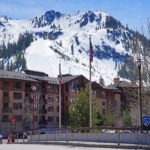
Mount Song | Sōngshān | 嵩山

🏔️ Overview

Mount Song, also known as Songshan or Sōngshān (嵩山), is a sacred mountain range in Henan Province, China. Rising beside the historic city of Dengfeng, it is revered as the Central Mountain among the Five Great Mountains of China.
Rather than being a single isolated summit, Mount Song is a complex collection of ridges, cliffs, valleys, temples, monasteries, and individual peaks. Its two best-known divisions are Taishi Mountain in the east and Shaoshi Mountain in the west.
The highest mapped summit in the wider range is Lian Tian Feng, which reaches 1,512 meters (4,961 feet). However, Junji Peak, at approximately 1,492 meters (4,895 feet), is frequently described as Mount Song’s traditional main peak because of its religious importance and its position within the Taishi Mountain scenic area.
Mount Song is internationally known for the Shaolin Temple, its connection with Chan Buddhism and Chinese martial arts, and its extraordinary geological record. The surrounding landscape preserves rocks from five major divisions of geological time and visible evidence of tectonic events extending across billions of years.
Several historic monuments around Dengfeng are included in the UNESCO World Heritage property Historic Monuments of Dengfeng in “The Centre of Heaven and Earth.” The mountain landscape is also protected within the Songshan UNESCO Global Geopark.
⚡ Fast Facts
| Fact | Details |
|---|---|
| Continent | Asia |
| Country | China |
| State/Province | Henan Province |
| County/Region | Dengfeng, administered by Zhengzhou |
| Mountain Range | Songshan Mountains, associated with the eastern Qinling mountain system |
| Parent Peak | Mount Everest under the island-parent convention |
| Highest Point | Lian Tian Feng |
| Elevation | 1,512 meters / 4,961 feet |
| Prominence | 1,210 meters / 3,970 feet |
| Isolation | 81.93 kilometers / 50.91 miles |
| Nearest Higher Neighbor (NHN) | Quanbao Shan |
| Key Col | Approximately 302 meters / 991 feet |
| Coordinates | 34.472416° N, 112.934647° E |
| Traditional Main Peak | Junji Peak, approximately 1,492 meters / 4,895 feet |
| Chinese Name | 嵩山 |
| Pinyin | Sōngshān |
| Sacred Designation | Central Mountain of the Five Great Mountains |
| Protected Status | Songshan UNESCO Global Geopark |
| Cultural Recognition | Historic Monuments of Dengfeng UNESCO World Heritage property |

📍 Location
Mount Song rises in north-central Henan Province between the major cities of Zhengzhou and Luoyang. Its most famous peaks, temples, trails, and historic sites surround Dengfeng, a county-level city administered by Zhengzhou.
The range stands near the southern edge of the Yellow River basin, where the broad plains of northern China meet the more rugged uplands to the south and west. Its proximity to ancient political centers helped Mount Song become an important site for imperial rituals, astronomy, religion, education, and pilgrimage.
The wider mountain landscape extends roughly east to west and is traditionally separated into two principal sections.
Taishi Mountain
Taishi Mountain forms the eastern portion of the sacred mountain complex. Its best-known summit is Junji Peak, which is commonly treated as the ceremonial main summit of Mount Song.
Important sites around Taishi Mountain include:
- Songyang Academy
- Zhongyue Temple
- Fawang Temple
- Songyue Temple Pagoda
- Junji Palace
- Several historic gates and religious monuments
Taishi Mountain is generally associated with Mount Song’s Taoist, Confucian, and imperial traditions.
Shaoshi Mountain
Shaoshi Mountain forms the rugged western section of the range. It contains Lian Tian Feng, Mount Song’s highest mapped summit, as well as some of the range’s most dramatic cliffs and ridges.
The famous Shaolin Temple stands beneath Shaoshi Mountain. The Sanhuangzhai area climbs through steep quartzite terrain above the temple complex, using stone stairways, cliffside paths, and constructed walkways.
A valley between the Taishi and Shaoshi sections contains much of modern Dengfeng and many of the historic buildings associated with Mount Song.

📏 Elevation & Prominence
The highest point in the Mount Song range is Lian Tian Feng, which reaches 1,512 meters above sea level. It lies within the Shaoshi Mountain section west of central Dengfeng.
Mount Song has a topographic prominence of 1,210 meters, or approximately 3,970 feet. Its key col lies at approximately 302 meters above sea level.
The mountain’s isolation is 81.93 kilometers, equivalent to approximately 50.91 miles. The nearest higher terrain is found on Quanbao Shan, southwest of Mount Song.
These measurements apply to Lian Tian Feng as the highest and most topographically prominent summit of the range. They should not be confused with figures for Junji Peak or for another point sometimes labeled Songshan on maps.
Lian Tian Feng and Junji Peak
Conflicting elevations for Mount Song often result from the difference between its geographical and cultural summits:
- Lian Tian Feng is the highest mapped point in the wider Songshan range.
- Junji Peak is the traditional principal summit of Taishi Mountain.
- Songshan may refer to the entire range, the sacred mountain complex, or a particular summit area.
Junji Peak reaches approximately 1,492 meters, making it about 20 meters lower than Lian Tian Feng. It remains the more familiar summit for many pilgrims and hikers following the traditional Taishi Mountain ascent.
Mount Song’s parent is sometimes listed as Mount Everest under an island-parent system. This does not mean Mount Song is part of the Himalayas. It reflects a topographic hierarchy that ultimately connects nearly all mountains on the Eurasian mainland to its highest summit.

🪨 Geology
Mount Song is one of China’s most important geological landscapes. Rock formations within the Songshan UNESCO Global Geopark preserve approximately 3.6 billion years of Earth history.
The geopark exposes rocks from five broad geological divisions:
- Archean
- Proterozoic
- Paleozoic
- Mesozoic
- Cenozoic
This unusually extensive record has led to Mount Song being described as a natural geological textbook or as displaying “five eras in one.”
Major Tectonic Events
Three important Precambrian tectonic events are named after places within the Mount Song region:
- Songyang Movement: approximately 2.5 billion years ago
- Zhongyue Movement: approximately 1.85 billion years ago
- Shaolin Movement: approximately 800 million years ago
These movements folded, tilted, metamorphosed, and uplifted older rocks. Later sediments were deposited across the eroded surfaces, creating angular unconformities that allow geologists to examine enormous gaps in geological time.
The Shaolin Movement is sometimes assigned a younger date in older summaries. Current UNESCO geopark information places it at approximately 0.8 billion years ago.
Quartzite Cliffs
Much of Shaoshi Mountain’s dramatic scenery is formed from resistant quartzite. Layers of this hard metamorphic rock have been tilted, folded, fractured, and exposed by erosion.
The resulting landscape includes:
- Steep pale cliffs
- Narrow ridges
- Deep ravines
- Rock pinnacles
- Vertical bedding planes
- Cliffside ledges
In places, the upturned rock layers resemble the pages of enormous stone books. These formations are especially visible along the Sanhuangzhai trails.
Mount Song is not a volcano. Its mountains were created through ancient tectonic activity, metamorphism, uplift, faulting, and erosion rather than by the accumulation of volcanic lava.

🌿 Flora & Fauna
Mount Song lies within a warm-temperate region near the transition between northern and central Chinese ecosystems. Changes in elevation, slope exposure, soil, moisture, and human land use have created a varied mosaic of forest, shrubland, rocky cliffs, cultivated valleys, and temple groves.
Research within Songshan Mountain National Forest Park has recorded hundreds of naturally occurring woody plant species. Temperate plant groups are especially well represented, although the mountain also contains species associated with warmer regions farther south.
Forests and Shrublands
Characteristic vegetation includes deciduous broadleaf forest, mixed woodland, pine stands, cliffside shrubs, and valley vegetation.
Common plant groups include:
- Oaks
- Maples
- Poplars
- Birches
- Hawthorns
- Smoke trees
- Persimmons
- Spireas
- Wild roses
- Pines and cypresses
Autumn brings some of the mountain’s most colorful scenery as maples, smoke trees, oaks, and other deciduous species turn red, orange, and gold.
Rocky upper slopes support smaller trees and shrubs adapted to thin soils, wind exposure, summer heat, and winter cold. Vegetation may be sparse where quartzite cliffs and vertical rock layers dominate the landscape.
Ancient Trees
Old trees form an important part of Mount Song’s cultural environment. Temple grounds and historic academies contain cypresses, ginkgoes, and other trees protected through generations of religious and institutional care.
Some are associated with legends, scholars, monks, or imperial visits. Their exact ages are not always known, but many have been treated as cultural monuments as well as living organisms.
Wildlife
Mount Song’s forests, ravines, cliffs, streams, and agricultural margins provide habitat for woodland birds, raptors, small mammals, amphibians, reptiles, and insects.
Wildlife is generally less visible along busy temple paths and scenic stairways. Quieter forest areas offer better habitat, although visitors should remain on designated routes and avoid disturbing vegetation or animals.

🥾 Hiking & Climbing Routes
Mount Song offers developed hiking routes rather than technical mountaineering climbs. Most trails consist of stone steps, paved paths, cliffside walkways, temple roads, and constructed viewing platforms.
The main difficulty comes from prolonged stair climbing, steep descents, heat, crowds, slippery surfaces, and the separation between the different scenic areas.
Junji Peak via Taishi Mountain
The traditional route to Junji Peak begins in the Taishi Mountain or Songyang Scenic Area, often near Songyang Academy.
The ascent follows a long series of stone stairways through wooded slopes and past religious landmarks. Depending on the chosen entrance and route, hikers may pass shrines, gates, caves, inscriptions, and Junji Palace before reaching the upper mountain.
The climb does not normally require technical equipment, but the sustained ascent can be demanding. The stairs may become slippery after rain, and summer heat can make the route much more strenuous.
Junji Peak is particularly rewarding for visitors interested in Mount Song’s ceremonial history. Although it is not the range’s highest point, it has long been treated as the traditional summit of the Central Sacred Mountain.
Sanhuangzhai Cliff Trail
Sanhuangzhai contains Mount Song’s most dramatic developed hiking terrain. The path crosses the steep quartzite slopes of Shaoshi Mountain through a combination of:
- Stone stairways
- Cliffside paths
- Constructed ledges
- Rail-protected traverses
- Ridge viewpoints
- Narrow ravines
The scenery is more rugged than that of the Junji Peak route. Tilted rock layers rise in walls and pinnacles above forested valleys, while sections of walkway are attached directly to the cliffs.
The trail involves repeated climbs and descents rather than a simple ascent to one summit. It can be tiring even for experienced hikers, particularly in hot or wet weather.
Sanhuangzhai may be approached from its separate entrance or combined with the Shaolin Temple area when connecting paths, shuttles, and cableways are operating. Visitors should verify current arrangements before planning a one-way traverse.
🏔️ Field Guide Tip: Mount Song’s stone steps can be harder on the knees than a natural mountain trail. Wear shoes with reliable grip, carry water, and allow extra time for the descent. Trekking poles can help on long stairways but may be inconvenient in crowded or narrow sections.
Shaolin Temple and Pagoda Forest
A less strenuous visit can focus on the lower Shaoshi Mountain attractions surrounding Shaolin Temple.
Walking routes connect:
- Shaolin Temple
- Pagoda Forest
- Martial arts performance areas
- Chuzu Temple
- Lower forest paths
- Access points for cableways and higher trails
The Pagoda Forest contains numerous masonry memorial structures built for generations of Shaolin monks and abbots. Some uphill extensions involve substantial stair climbing even though the main temple grounds are comparatively accessible.
Songyang Academy and Fawang Temple
The Taishi Mountain foothills contain shorter cultural walks connecting historic buildings, temples, pagodas, and forested slopes.
Songyang Academy can be combined with nearby sites before or after a Junji Peak ascent. Fawang Temple and the Songyue Temple Pagoda provide additional opportunities to experience Mount Song’s religious architecture without completing a full summit hike.
Safety Considerations
Mount Song is developed for tourism, but hikers should still prepare for mountain conditions.
Important hazards include:
- Slippery stone after rain
- Exposed cliffside paths
- Thunderstorms
- Summer heat and dehydration
- Snow or ice in winter
- Crowded stairways
- Temporary cableway or trail closures
Visitors should follow scenic-area instructions and avoid entering closed paths, climbing barriers, or leaving established routes near cliffs.

🌤️ Best Time to Visit
Mount Song can be visited throughout the year, but spring and autumn generally provide the best hiking conditions.
Spring
April and May typically bring mild temperatures, flowering plants, and fresh green forest. Mist and rain may obscure views, but clouds can also create atmospheric scenery among the cliffs.
Stone stairs become slippery during wet weather, and exposed ridge routes should be avoided during thunderstorms.
Summer
June through August can be hot, humid, and rainy. Much of the annual precipitation falls during summer, increasing the likelihood of wet steps, poor visibility, and temporary closures.
An early start can reduce exposure to afternoon heat and storms. Visitors should carry more water than they expect to need.
Autumn
September and October often provide the best balance of moderate temperatures, lower humidity, clear views, and colorful foliage.
Autumn is also a popular season, especially during national holidays and weekends. Starting early can help visitors avoid the largest crowds.
Winter
Winter is generally quieter. Leafless forests reveal more of the mountain’s rock structure, and occasional snow can transform the temples and ridges.
However, shaded stairs, cliff paths, and high ridges may become icy. Some trails, cableways, or visitor facilities may close because of snow, wind, or maintenance.
🏔️ Field Guide Tip: Mount Song includes several separately managed scenic areas. Check current entrance arrangements, shuttle schedules, cableway operations, and trail closures rather than assuming every route can be linked in a single day.
🧭 Nearby Mountains & Attractions
Shaolin Temple
Shaolin Temple stands beneath Shaoshi Mountain and is Mount Song’s most internationally recognized landmark.
The monastery was established in 495 CE during the Northern Wei dynasty. It developed into an important center of Chan Buddhism and became closely associated with Shaolin martial arts.
The historic complex includes temple halls, courtyards, monuments, trees, and nearby religious sites. Shaolin Temple forms part of the UNESCO-listed Historic Monuments of Dengfeng.
Pagoda Forest
The Pagoda Forest lies west of Shaolin Temple. It contains a large collection of brick and stone memorial pagodas associated with monks and abbots from different historical periods.
The structures vary in size, design, age, and decoration, reflecting changes in architecture and religious practice over many centuries.
Songyang Academy
Songyang Academy stands beneath Taishi Mountain. It became one of imperial China’s influential centers of Confucian study and scholarship.
Its grounds contain traditional courtyards, old trees, inscriptions, and historic buildings. The academy demonstrates how Mount Song became a meeting point for Buddhist, Taoist, Confucian, scientific, and imperial traditions.
Zhongyue Temple
Zhongyue Temple is a major Taoist complex dedicated to Mount Song as the Central Sacred Mountain.
Its ceremonial axis, gates, courtyards, and halls reflect centuries of rebuilding and imperial patronage. The temple is associated with rituals honoring the mountain and the spiritual authority of the center.
Songyue Temple Pagoda
The Songyue Temple Pagoda is one of China’s oldest surviving brick pagodas. Its distinctive twelve-sided structure and closely spaced eaves make it an important example of early Chinese Buddhist architecture.
Dengfeng Observatory
The historic observatory near Gaocheng was used for astronomical observations and calendar calculations.
Its location reflected the ancient belief that the Dengfeng area stood at the center of heaven and earth, where measurements of celestial movement could be made with particular accuracy.
Longmen Grottoes
The Longmen Grottoes lie near Luoyang, west of Mount Song. Thousands of Buddhist sculptures and inscriptions were carved into limestone cliffs along the Yi River.
Mount Song and Longmen can be combined on a longer cultural journey through Henan Province.
Luoyang
Luoyang is one of China’s great historic capitals and a useful western gateway to Mount Song. The city offers museums, temples, archaeological sites, and transportation connections to Dengfeng.
💡 Fun Facts
- The name Songshan is commonly translated as “Lofty Mountain.”
- Mount Song represents the center among the Five Great Mountains of China.
- The highest point is Lian Tian Feng, not the more frequently visited Junji Peak.
- Mount Song’s nearest higher neighbor is Quanbao Shan, approximately 81.93 kilometers away.
- The mountain has 1,210 meters of prominence despite reaching only 1,512 meters above sea level.
- Taishi Mountain and Shaoshi Mountain are the two principal divisions of the sacred mountain complex.
- Mount Song is traditionally said to contain 72 peaks. This is a culturally important number rather than the result of a modern topographic survey.
- The geological record around Mount Song extends back approximately 3.6 billion years.
- Three Precambrian tectonic events are named after Songyang, Zhongyue, and Shaolin.
- Shaolin Temple was established in 495 CE.
- Mount Song has connections with Buddhism, Taoism, Confucian education, imperial ritual, astronomy, and martial arts.
- The entire mountain is not a UNESCO World Heritage property. The designation applies to selected historic monuments around Dengfeng.

❓ Frequently Asked Questions
Is Mount Song the same as Songshan?
Yes. Songshan is the standard pinyin form of the Chinese name 嵩山. Mount Song, Song Shan, and Songshan generally refer to the same Henan mountain range and sacred landscape.
How high is Mount Song?
The highest mapped summit is Lian Tian Feng at 1,512 meters, or approximately 4,961 feet.
Junji Peak, the traditional principal summit of Taishi Mountain, reaches approximately 1,492 meters.
What is Mount Song’s prominence?
Mount Song has 1,210 meters, or approximately 3,970 feet, of topographic prominence.
What is Mount Song’s nearest higher neighbor?
Its Nearest Higher Neighbor is Quanbao Shan, located southwest of Mount Song.
What is Mount Song’s isolation?
Its true topographic isolation is approximately 81.93 kilometers, or 50.91 miles.
Is Shaolin Temple on Mount Song?
Yes. Shaolin Temple is located at the foot of Shaoshi Mountain, the western section of Mount Song.
Is Mount Song one of China’s Five Great Mountains?
Yes. It is the Central Mountain of the Five Great Mountains. The other four are Mount Tai, Mount Hua, Mount Heng in Shanxi, and Mount Heng in Hunan.
Is Mount Song a UNESCO World Heritage Site?
Selected monuments around Dengfeng are included in the UNESCO World Heritage property Historic Monuments of Dengfeng in “The Centre of Heaven and Earth.”
The wider geological landscape is recognized separately as the Songshan UNESCO Global Geopark.
Can Mount Song be hiked in one day?
Yes, an individual area such as Junji Peak, Sanhuangzhai, or Shaolin Temple can be explored during a day trip.
Trying to combine the major Taishi and Shaoshi routes in one day may be impractical because they have separate entrances and transportation arrangements.
Is Mount Song difficult to hike?
Difficulty varies. Temple walks are comparatively easy, while the Junji Peak ascent and Sanhuangzhai trail involve extensive stair climbing.
Sanhuangzhai also includes exposed cliffside sections that may be uncomfortable for people with a fear of heights.
Are there cable cars on Mount Song?
Cableways operate in parts of the Shaoshi Mountain and Shaolin scenic areas. They do not reach every summit, and schedules may change because of weather, maintenance, or seasonal conditions.
Is Mount Song a volcano?
No. Mount Song is an ancient tectonic and metamorphic mountain landscape. Its cliffs and ridges were created by crustal movements, uplift, folding, faulting, and erosion.

🔗 Related Articles
- Sacred Mountains of China
- Mountains in China
- Mount Tai
- Mount Hua
- Mount Heng (Hunan)
- Mount Wutai
- Mount Emei
- Mount Putuo
- Mount Qingcheng
- Mount Lu
- What Is Mountain Prominence?
- What Is a Parent Peak?
🔗 Related Hiking and Safety Guides
📚 Sources
- Song Shan – Peakbagger
- Historic Monuments of Dengfeng in “The Centre of Heaven and Earth” – UNESCO World Heritage Centre
- Songshan UNESCO Global Geopark – UNESCO
- Songshan Mountain and Shaolin Temple – People’s Government of Henan Province
- Shaolin Temple – People’s Government of Henan Province
- Flora of the Woody Plants in Songshan Mountain National Forest Park of Henan Province