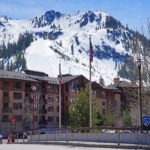
🏔️ Overview
Germany’s mountain landscapes range from the rugged limestone summits of the Bavarian Alps to the forested ridges, volcanic uplands, sandstone formations, and rounded highlands of the country’s Mittelgebirge, or central uplands.
The highest mountains rise along Germany’s southern border with Austria. Here, the Wetterstein Mountains, Allgäu Alps, Karwendel, and Berchtesgaden Alps contain steep rock faces, narrow ridges, glacial valleys, alpine meadows, and the country’s few remaining glaciers. Zugspitze, at 2,962 meters (9,718 feet), is Germany’s highest mountain.
Farther north, the terrain becomes lower but remains remarkably varied. The Black Forest, Harz, Bavarian Forest, Ore Mountains, Thuringian Forest, Rhön, Eifel, and other upland regions offer extensive hiking networks and some of Germany’s most recognizable natural landscapes.
Although Germany has no summits reaching 3,000 meters, its mountains are geographically diverse, culturally important, and accessible from many of the country’s major cities.
⚡ Fast Facts
| Fact | Details |
|---|---|
| Continent | Europe |
| Country | Germany |
| Highest Mountain | Zugspitze |
| Highest Elevation | 2,962 m (9,718 ft) |
| Highest Mountain Entirely in Germany | Watzmann-Mittelspitze |
| Highest Entirely German Elevation | 2,713 m (8,901 ft) |
| Highest Low-Mountain Summit | Feldberg |
| Highest Low-Mountain Elevation | 1,493 m (4,898 ft) |
| Main Mountain Systems | Alps and Central Uplands |
| Primary Alpine State | Bavaria |
| Major Alpine Ranges | Wetterstein, Allgäu Alps, Berchtesgaden Alps, Karwendel |
| Major Upland Ranges | Black Forest, Harz, Bavarian Forest, Ore Mountains, Thuringian Forest |
| Notable Protected Areas | Berchtesgaden, Bavarian Forest, Harz, Black Forest, Eifel, and Saxon Switzerland national parks |
🗺️ Mountain Geography of Germany
Germany’s mountains can be divided into two broad geographic regions.
The German Alps
The German Alps form a relatively narrow belt across the southern edge of Bavaria. They extend from the Allgäu region in the west to Berchtesgaden in the east and form the northernmost part of the Eastern Alps.
Many of Germany’s highest ridges follow the international boundary with Austria. Consequently, most of the country’s highest main summits are shared border mountains rather than peaks located entirely within Germany.
The German Alps include:
- The Allgäu Alps
- The Ammergau Alps
- The Wetterstein Mountains
- The Bavarian Prealps
- The Karwendel
- The Chiemgau Alps
- The Berchtesgaden Alps
The Wetterstein Mountains contain Zugspitze and several of Germany’s other highest elevations. The Berchtesgaden Alps contain the Watzmann, Hochkalter, and the dramatic limestone plateau known as the Steinernes Meer.
The Central Uplands
Germany’s central uplands are known collectively as the Mittelgebirge. These ranges are generally older, lower, and more rounded than the Alps, although some contain steep valleys, rocky cliffs, volcanic formations, and high plateaus.
The Mittelgebirge extend across much of central and southern Germany. Their summits generally range from approximately 500 to 1,500 meters, with Feldberg in the Black Forest forming their highest point.
Unlike the concentrated Alpine peaks of Bavaria, these uplands are distributed across numerous federal states.
🏆 Ten Highest Mountains in Germany
Mountain rankings can vary depending on whether subsidiary summits are counted as separate mountains. The following table uses main mountain summits with at least approximately 300 meters of topographic prominence, preventing closely connected subpeaks of the same massif from dominating the list.
| Rank | Mountain | Elevation | Mountain Range | Location |
|---|---|---|---|---|
| 1 | Zugspitze | 2,962 m (9,718 ft) | Wetterstein Mountains | Germany–Austria border |
| 2 | Hochwanner | 2,744 m (9,003 ft) | Wetterstein Mountains | Germany–Austria border |
| 3 | Watzmann-Mittelspitze | 2,713 m (8,901 ft) | Berchtesgaden Alps | Germany |
| 4 | Leutascher Dreitorspitze | 2,682 m (8,799 ft) | Wetterstein Mountains | Germany–Austria border |
| 5 | Hochkalter | 2,607 m (8,553 ft) | Berchtesgaden Alps | Germany |
| 6 | Biberkopf | 2,599 m (8,527 ft) | Allgäu Alps | Germany–Austria border |
| 7 | Großer Hundstod | 2,593 m (8,507 ft) | Berchtesgaden Alps | Germany–Austria border |
| 8 | Hochvogel | 2,592 m (8,504 ft) | Allgäu Alps | Germany–Austria border |
| 9 | Östliche Karwendelspitze | 2,538 m (8,327 ft) | Karwendel | Germany–Austria border |
| 10 | Hocheisspitze | 2,523 m (8,278 ft) | Berchtesgaden Alps | Germany–Austria border |
A Note About Germany’s Second-Highest Mountain
Some lists identify the 2,875-meter Schneefernerkopf as Germany’s second-highest summit. It is an independent Alpine summit under definitions requiring only about 30 meters of prominence, but it is also part of the larger Zugspitze massif.
When only the principal mountain of each major massif is counted, Hochwanner is considered Germany’s second-highest mountain.
Published elevations may also differ by one or two meters because of rounding, national vertical datums, and updated surveys.
⛰️ Major Mountain Ranges in Germany
Wetterstein Mountains
The Wetterstein Mountains rise along the border between Bavaria and Tyrol. The range contains Zugspitze, Hochwanner, Leutascher Dreitorspitze, Alpspitze, and numerous high ridges and subsidiary summits.
The range is characterized by pale limestone walls, high karst plateaus, deep valleys, and demanding climbing routes. Garmisch-Partenkirchen is the principal gateway to the German side.
Berchtesgaden Alps
Located in southeastern Bavaria, the Berchtesgaden Alps surround Königssee and much of Berchtesgaden National Park. Their best-known mountain is the Watzmann, whose three main summits rise above the surrounding valleys.
Other prominent mountains include Hochkalter, Großer Hundstod, Hocheisspitze, Hoher Göll, and Jenner. The region contains extensive limestone terrain, alpine pastures, mountain lakes, and some of Germany’s most dramatic scenery.
Allgäu Alps
The Allgäu Alps extend across southwestern Bavaria and neighboring Austria. German border summits include Biberkopf and Hochvogel, while the area around Oberstdorf provides access to numerous valleys and mountain trails.
The Allgäu landscape is known for steep grassy slopes, limestone ridges, waterfalls, wildflower meadows, and traditional alpine farms.
Karwendel
Most of the Karwendel lies in Austria, but its northernmost ridges reach Germany near Mittenwald. The Östliche Karwendelspitze is the highest summit on the German side.
The range contains large areas of relatively undeveloped limestone wilderness, with long valleys and rugged summits that often require substantial approaches.
Black Forest
The Black Forest, or Schwarzwald, occupies southwestern Germany in Baden-Württemberg. Its highest summit is the 1,493-meter Feldberg.
Although considerably lower than the Alps, the Black Forest has deeply cut valleys, glacial landforms, upland meadows, lakes, waterfalls, and extensive spruce, fir, and beech forests. Long-distance routes such as the Westweg cross the range.
Bavarian Forest
The Bavarian Forest extends along Germany’s border with Czechia. Its highest German summit is Großer Arber at approximately 1,456 meters.
The range is closely connected geographically to the Bohemian Forest and Šumava Mountains. Together, these uplands form one of Central Europe’s largest continuous forest regions.
Harz Mountains
The Harz is the highest mountain region in northern Germany. Its highest summit, the Brocken, reaches 1,141 meters.
The Brocken is famous for its mist, harsh summit climate, literary associations, and legends involving witches and supernatural gatherings. Hiking routes approach the summit from Schierke, Torfhaus, Ilsenburg, and other communities.
Ore Mountains
The Ore Mountains, or Erzgebirge, form part of the border between Saxony and Czechia. Fichtelberg, at approximately 1,215 meters, is the highest summit on the German side.
Mining shaped the region for centuries. Its historic mining landscapes are included in the transnational Erzgebirge/Krušnohoří UNESCO World Heritage Site.
Thuringian Forest
The Thuringian Forest is a long, narrow upland range in central Germany. Großer Beerberg, at approximately 983 meters, is its highest point.
The famous Rennsteig long-distance trail follows the crest of the range through forests, mountain communities, and historic borderlands.
Eifel
The Eifel is a volcanic upland region in western Germany. It contains extinct volcanic cones, lava formations, crater lakes known as maars, and the wooded slopes of Eifel National Park.
At approximately 747 meters, Hohe Acht is the region’s highest summit.
🪨 Geology
Germany’s mountains represent several different periods of European geological history.
The Alps are the country’s youngest major mountains. They formed as tectonic plates associated with Africa and the Adriatic region pushed northward against Europe. Sedimentary rocks that had accumulated in ancient seas were folded, faulted, and uplifted during the Alpine mountain-building period.
Much of the German Alpine landscape consists of Triassic limestone and dolomite. These rocks form the sheer walls, sharp ridges, pinnacles, caves, and karst plateaus seen around Zugspitze, Watzmann, and the Karwendel.
Germany’s central uplands are generally much older. Many were influenced by the Variscan mountain-building period hundreds of millions of years ago and were later uplifted, faulted, eroded, or reshaped.
Examples include:
- Black Forest: dominated by ancient granite, gneiss, and other crystalline rocks
- Harz: composed largely of Paleozoic rocks affected by Variscan folding
- Eifel: shaped by comparatively recent volcanic activity
- Elbe Sandstone Mountains: sculpted into cliffs, towers, and mesas by erosion
- Ore Mountains: rich in mineral deposits that supported centuries of mining
Ice Age glaciers also transformed the higher Alps and parts of the Black Forest, carving cirques and valleys and depositing moraines.
🌿 Flora & Fauna
Germany’s mountain vegetation changes with elevation, climate, geology, and land use.
Lower slopes commonly support mixed forests containing beech, fir, spruce, maple, and other deciduous trees. Conifers become more prominent at higher elevations, while mountain pine, dwarf shrubs, grasslands, and rocky alpine habitats appear near and above the natural tree line.
Alpine meadows may contain gentians, alpine roses, orchids, saxifrages, and other cold-adapted plants. Traditional seasonal grazing has also helped create species-rich mountain pastures.
Wildlife found in Germany’s mountain regions includes:
- Chamois
- Alpine marmots
- Red deer
- Roe deer
- Alpine ibex in selected areas
- Golden eagles
- Peregrine falcons
- Black grouse
- Capercaillie
- Foxes and mountain hares
Berchtesgaden National Park protects habitats ranging from lakes and forests to alpine pastures and high rocky terrain. Other mountain national parks protect ancient forests, peat bogs, volcanic landscapes, sandstone formations, and recovering wildlife populations.
🥾 Hiking & Climbing in Germany
Germany offers mountain routes ranging from gentle forest walks to serious Alpine climbs.
Zugspitze
Zugspitze can be reached by cable car, cogwheel railway, or several mountaineering routes. The Reintal route is often considered the least technically difficult hiking approach, but it remains long and strenuous.
The Höllental route involves exposed terrain, protected climbing sections, and travel near or across the Höllentalferner. Appropriate equipment, experience, and current route information are essential.
Watzmann
The Watzmann Traverse is one of Germany’s most famous mountaineering routes. It crosses the Hocheck, Mittelspitze, and Südspitze along an exposed ridge.
This is not a conventional hiking trail. It requires excellent fitness, sure-footedness, comfort with exposure, stable weather, and appropriate Alpine experience.
Feldberg
Feldberg provides a more approachable mountain experience. Trails cross forests, open upland terrain, and protected habitats around the highest point in the Black Forest.
A cable car can reduce the amount of climbing, making parts of the summit area accessible to a wider range of visitors.
Brocken
Several marked trails lead to the Brocken. Popular approaches include the Goetheweg from Torfhaus and the route through the Ilse Valley from Ilsenburg.
The Brocken Railway offers an alternative for visitors who do not wish to complete the ascent on foot.
Long-Distance Trails
Notable long-distance routes in Germany’s mountain regions include:
- Westweg in the Black Forest
- Rennsteig in the Thuringian Forest
- Harzer-Hexen-Stieg in the Harz
- Goldsteig in eastern Bavaria
- Malerweg in Saxon Switzerland
- Maximiliansweg through the Bavarian Alps
🏔️ Field Guide Tip: German Alpine summits may be below 3,000 meters, but they should not be underestimated. Steep limestone, sudden thunderstorms, lingering snow, rockfall, and exposed ridges can make routes much more serious than elevation alone suggests.
🌤️ Best Time to Visit
The best season depends on the region and activity.
German Alps
Late June through September is usually the most reliable period for high-elevation hiking. Snow may remain on shaded routes into summer, and new snowfall is possible at almost any time on the highest summits.
July and August generally provide the warmest weather but also bring crowds and frequent afternoon thunderstorms. Starting early is particularly important on exposed Alpine routes.
Central Uplands
The Black Forest, Harz, Eifel, Bavarian Forest, and other uplands are generally best for hiking from May through October.
Spring brings wildflowers and flowing waterfalls, while autumn offers colorful forests and cooler walking conditions. Fog, wind, and rain can occur throughout the year, especially on exposed summits such as the Brocken.
Winter
Winter sports are available in the Bavarian Alps, Black Forest, Harz, Ore Mountains, and several other upland regions.
High Alpine winter travel may involve avalanche terrain and should only be attempted with the necessary training, equipment, and local knowledge.
🧭 Notable Mountain Destinations
Garmisch-Partenkirchen
Garmisch-Partenkirchen is the principal base for Zugspitze, Alpspitze, the Wetterstein Mountains, and several Alpine valleys. Cable cars and mountain railways provide access to both sightseeing areas and higher trails.
Berchtesgaden and Königssee
Berchtesgaden provides access to the Watzmann, Jenner, Hochkalter, Königssee, and Germany’s only Alpine national park.
Oberstdorf
Oberstdorf is a major hiking and winter-sports destination in the Allgäu Alps. Trails extend into high valleys and toward numerous German-Austrian border summits.
Black Forest
The Black Forest combines mountain hiking with lakes, waterfalls, historic towns, and long-distance trails. Feldberg, Schauinsland, Belchen, and Hornisgrinde are among its best-known summits.
Harz
The Harz offers forest trails, granite formations, peat bogs, historic mining towns, and routes to the Brocken. Its relatively central location makes it one of Germany’s most accessible mountain regions.
Saxon Switzerland
Saxon Switzerland contains the German section of the Elbe Sandstone Mountains. Its scenery is dominated by rock towers, narrow gorges, forested mesas, and overlooks above the Elbe Valley.
💡 Fun Facts
- Germany’s ten highest main mountains are all located in Bavaria.
- Eight of the ten highest main summits stand on the border with Austria.
- The Watzmann is the highest mountain located entirely within Germany.
- Zugspitze can be approached from both Germany and Austria.
- The atmospheric phenomenon known as the Brocken spectre takes its name from the Brocken.
- The Black Forest is Germany’s highest non-Alpine mountain range.
- Germany’s Alpine glaciers are small remnants of much larger ice masses and are retreating rapidly.
- The Ore Mountains contain one of Europe’s most historically important mining landscapes.
- The German word Mittelgebirge refers to the numerous low and medium-height mountain regions between the northern plains and the Alps.
❓ Frequently Asked Questions
What is the highest mountain in Germany?
Zugspitze is Germany’s highest mountain at 2,962 meters (9,718 feet). It stands in the Wetterstein Mountains on the border between Germany and Austria.
What is the highest mountain entirely within Germany?
Watzmann-Mittelspitze is the highest summit located entirely within Germany. It reaches 2,713 meters (8,901 feet).
What is Germany’s second-highest mountain?
Hochwanner, at 2,744 meters, is generally considered Germany’s second-highest main mountain. Schneefernerkopf is higher but is often classified as a subsidiary summit within the Zugspitze massif.
Are the Alps in Germany?
Yes. The German Alps extend across the southern edge of Bavaria from the Allgäu region to Berchtesgaden.
Are there mountains in northern Germany?
Northern Germany is dominated by lowlands, but the Harz Mountains rise in the north-central part of the country. Brocken is the highest summit in northern Germany at 1,141 meters.
What is the highest mountain outside the German Alps?
Feldberg in the Black Forest is Germany’s highest non-Alpine mountain. It reaches 1,493 meters.
Which German mountain region is best for beginners?
The Black Forest, Harz, Bavarian Forest, Eifel, and lower sections of the Bavarian Alps offer many beginner-friendly trails. Difficulty still varies considerably, so hikers should check distance, elevation gain, terrain, and current conditions.
Can beginners climb Zugspitze?
Reaching the summit by cable car is straightforward, but climbing Zugspitze on foot is a major mountain undertaking. Even the least technical route is long and physically demanding, while other routes involve protected climbing, snow, ice, or exposed terrain.
🔗 Related Articles
- Mountains in Austria
- Mountains in France
- Mountains in Czechia
- Mountains by Country
- Mountain Ranges
- Highest Mountains
- How Are Mountains Formed?
- What Is a Mountain Range?
- Mountain Elevation vs. Prominence
- What Is Mountain Prominence?
🔗 Related Hiking and Safety Guides
- The Ten Essentials for Hiking
- What to Do If You Get Lost Hiking
- Hiking Boots
- Rain Gear
- Trekking Poles
- Hiking Maps
- First-Aid Kits
- Emergency Shelters
📚 Sources
- List of Highest Mountains of Germany (Wikipedia)
- The Zugspitze (Zugspitze)
- Germany’s Low Mountain Ranges (deutschland.de)
- Berchtesgaden National Park (National Park Berchtesgaden)
- Biodiversity Monitoring in Berchtesgaden National Park (National Park Berchtesgaden)
- Hiking in Germany (Germany Travel)
- Mount Brocken (Harzinfo)
- Mountain Feldberg (Feldberg Erlebnis)
- Geology of Feldberg (LGRBwissen)
- Erzgebirge/Krušnohoří Mining Region (whc.unesco.org)