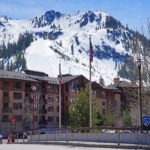
North Fork Mountain (Kile Knob Peak)

🏔️ Overview
North Fork Mountain is a long, narrow mountain ridge in eastern West Virginia, extending through Grant and Pendleton counties in the Appalachian Mountains. Running for about 34 miles from North Fork Gap southwest toward Dry Run Gap, the ridge is one of the most visually distinctive landforms in West Virginia’s Potomac Highlands.
Rather than having a single sharply defined summit, North Fork Mountain contains a series of knobs and high points. Its highest point is Kile Knob in Pendleton County. Older maps and references commonly give Kile Knob an elevation of 4,588 feet (1,398 meters), but newer LiDAR-based measurements used by Peakbagger place the summit at 4,597.2 feet (1,401.2 meters).
North Fork Mountain is especially notable for its long sandstone cliffs, dry ridgetop environment, unusual plant communities, and sweeping views toward Germany Valley and the Allegheny Front. The approximately 24-mile North Fork Mountain Trail follows much of the northern part of the ridge and is regarded as one of West Virginia’s outstanding long-distance ridge hikes.
Geologically, North Fork Mountain is part of the folded Appalachian landscape and represents the southeastern limb of the Wills Mountain Anticline. Resistant Silurian-age Tuscarora Sandstone forms many of its dramatic cliffs and rock outcrops.
For a broader look at the region, see the Appalachian Mountains and Allegheny Mountains.
⚡ Fast Facts
| Fact | Details |
|---|---|
| Continent | North America |
| Country | United States |
| State | West Virginia |
| County/Region | Grant and Pendleton counties |
| Mountain Range | Appalachian Mountains / Central Appalachian Ridges |
| Highest Point | Kile Knob |
| Parent Peak | Spruce Knob |
| Elevation | 4,597.2 ft / 1,401.2 m at Kile Knob, based on LiDAR; traditionally listed as 4,588 ft / 1,398 m |
| Prominence | 1,437 ft / 438 m at Kile Knob |
| Isolation | 5.66 mi / 9.11 km at Kile Knob |
| Nearest Higher Neighbor (NHN) | Spruce Knob, northwest of Kile Knob |
| Length | Approximately 34 miles / 55 km |
| Highest-Point Coordinates | 38.61652° N, 79.48249° W |
| Major Trail | North Fork Mountain Trail |
Because North Fork Mountain is an extended ridge rather than a single conventional summit, the elevation, prominence, isolation, parent peak, and nearest higher neighbor figures above refer specifically to Kile Knob, its highest point. See What Is Mountain Prominence? for more about how prominence differs from elevation.
📍 Location
North Fork Mountain lies in eastern West Virginia’s Potomac Highlands. It trends generally northeast to southwest for approximately 34 miles between North Fork Gap in Grant County and the vicinity of Dry Run Gap in southern Pendleton County.
The ridge runs roughly parallel to the North Fork of the South Branch of the Potomac River. From the west, its steep wall and long line of sandstone cliffs form a striking backdrop to North Fork Valley and Germany Valley.
Elevations generally increase toward the southern part of the mountain. Chimney Top, near the northern end, stands at roughly 3,100 feet, while Kile Knob and Panther Knob exceed 4,500 feet farther south.
U.S. Route 33 crosses North Fork Mountain between Franklin and the Seneca Rocks area, providing one of the most convenient road approaches to the high ridge.
📏 Elevation & Prominence
The highest point of North Fork Mountain is Kile Knob.
Modern LiDAR measurements reported by Peakbagger give Kile Knob an elevation of 4,597.2 feet (1,401.2 meters). This is slightly higher than the traditional figure of 4,588 feet that remains common in older publications and maps.
Peakbagger calculates Kile Knob’s clean topographic prominence at 1,437 feet (438 meters), with a key col of approximately 3,160 feet. Its isolation is approximately 5.66 miles (9.11 kilometers).
The nearest higher mountain in Peakbagger’s database is Spruce Knob, located to the northwest. Spruce Knob is also the highest point in West Virginia.
Other substantial high points on the North Fork Mountain ridge include Panther Knob, which reaches approximately 4,506 feet according to current LiDAR data, and Pike Knob, at approximately 4,303 feet.
The distinction between summit elevation and how independently a summit rises above surrounding terrain is explained further in Mountain Elevation vs. Prominence.
🪨 Geology
North Fork Mountain is an excellent example of the folded-and-eroded geology that characterizes West Virginia’s Ridge and Valley region.
The mountain represents the southeastern limb of the Wills Mountain Anticline, a major folded structure that continues northward beyond West Virginia. The anticline was produced as layers of sedimentary rock were compressed and folded during the long sequence of tectonic events that created the Appalachian Mountains.
A particularly important rock unit is the Tuscarora Sandstone, a resistant Silurian-age formation. Because it withstands erosion better than many of the surrounding shale and limestone formations, the Tuscarora forms prominent ridges, cliffs, and fins throughout this part of the Appalachians.
Along North Fork Mountain, southeast-dipping Tuscarora Sandstone forms a series of northwest-facing cliffs, some exceeding 100 feet in height. These cliffs account for many of the spectacular viewpoints along the mountain.
The same geological structure is closely connected with the remarkable landscape around Germany Valley and Seneca Rocks. On the western limb of the Wills Mountain Anticline, steeply tilted Tuscarora Sandstone forms the famous fins of Seneca Rocks and neighboring formations.
Over millions of years, weathering and erosion broke through the resistant sandstone crest of the anticline. Softer underlying formations were then more rapidly removed, helping create Germany Valley and exposing older limestone beneath the valley floor.
North Fork Mountain is therefore not simply an isolated ridge. It is part of a much larger folded geological structure whose erosion has created some of eastern West Virginia’s most recognizable landscapes. For more background, see How Are Mountains Formed?.
🌿 Flora & Fauna
North Fork Mountain has an unusually dry high-elevation environment compared with mountains a short distance to the west. Moist weather systems approaching from the west frequently lose much of their precipitation over the higher Allegheny Front, placing North Fork Mountain partly within a rain-shadow effect.
The dry, windy ridge and exposed sandstone create ecological conditions very different from the wetter red-spruce-dominated highlands around Spruce Knob.
Oak and pine forests cover much of the mountain. Some of its highest areas also protect exceptionally unusual plant communities.
Pike Knob contains natural red pine forest near the southern limit of the species’ native range, as well as high-elevation grass balds. Panther Knob supports rare dwarf pitch-pine woodland and old red-spruce forest. The Nature Conservancy also identifies high-quality yellow birch–mountain ash–mountain holly elfin woodland on North Fork Mountain.
Among the mountain’s botanical rarities are populations of variable sedge, white alumroot, Appalachian oak fern, and Allegheny onion. The combination of acidic rock outcrops, fire-influenced pine communities, high elevation, and dry climate helps support plants that are uncommon elsewhere in the Central Appalachians.
The wider North Fork Mountain conservation landscape also provides habitat for black bears, white-tailed deer, wild turkeys, bobcats, timber rattlesnakes, Allegheny woodrats, bats, and numerous forest birds.
The West Virginia Division of Natural Resources considers the broader North Fork Mountain–Thorn Creek landscape exceptionally important for biodiversity and identifies hundreds of species of conservation concern within the region.
🥾 Hiking & Climbing Routes
The best-known hiking route is the North Fork Mountain Trail, which follows approximately 23.5 to 24 miles of the northern ridge.
The trail is popular with backpackers, day hikers, and mountain bikers and is known for rocky terrain, exposed sandstone ledges, and repeated panoramic viewpoints. Portions run immediately behind high cliffs overlooking the North Fork Valley and the mountains farther west.
One important distinction is that the North Fork Mountain Trail does not lead to Kile Knob, the mountain’s highest point. The established long-distance trail extends northward from the U.S. 33 crossing, while Kile Knob and Panther Knob lie farther south.
Chimney Top is among the best-known destinations along the northern section of the trail. Its exposed rock formations provide expansive views along the ridge and across the surrounding valleys.
The U.S. Forest Service currently describes the North Fork Mountain Trail as nearly 23.5 miles long and characterizes the terrain as rugged, narrow, rocky, and technically demanding in places. The Landis and Hickory trails provide additional access to the ridge.
A particularly important consideration is water. The Forest Service advises that there is no dependable water along the ridgeline trail.
🏔️ Field Guide Tip: Carry enough water for the entire planned ridge hike rather than depending on springs. North Fork Mountain’s dry geology and exposed crest make water scarcity a defining part of hiking here. Also keep well back from unprotected cliff edges, especially when rock surfaces are wet, icy, or obscured by leaves.
Before a longer hike, review The Ten Essentials for Hiking and know what to do if you get lost hiking.
🌤️ Best Time to Visit
Spring and fall are generally the most comfortable seasons for hiking North Fork Mountain.
Spring brings mild temperatures, emerging foliage, and flowering mountain plants, although wet or cool weather can still occur. Autumn combines cooler hiking conditions with extensive fall color across the valleys and neighboring mountains.
Summer hiking is possible, but the exposed, unusually dry ridge can become hot, and carrying sufficient drinking water becomes especially important. Thunderstorms also make exposed cliff areas hazardous.
Winter can provide excellent long-distance views through leafless forests, but snow, ice, high winds, and icy sandstone ledges can substantially increase the difficulty of the trail.
Visitors should check current Forest Service conditions and weather forecasts before setting out.
🧭 Nearby Mountains & Attractions
North Fork Mountain lies within one of West Virginia’s richest concentrations of mountain scenery.
Seneca Rocks stands west of the ridge and is composed of steeply tilted Tuscarora Sandstone associated with the opposite side of the Wills Mountain Anticline. It is among the best-known rock-climbing destinations in the eastern United States.
Spruce Knob lies northwest of Kile Knob and reaches 4,863 feet, making it West Virginia’s highest point.
Smoke Hole Canyon, along the South Branch of the Potomac River, borders the northern North Fork Mountain area and combines dramatic gorge scenery with cliffs, caves, forests, and exceptional biological diversity.
Germany Valley lies west of the mountain and provides one of the clearest places to appreciate the folded geology responsible for North Fork Mountain and the nearby rock fins.
Monongahela National Forest protects extensive public lands throughout the surrounding mountains and offers hiking, camping, climbing, fishing, and other outdoor recreation.
💡 Fun Facts
North Fork Mountain is remarkable for how dramatically its ecology differs from nearby high mountains. Despite reaching more than 4,500 feet, parts of its crest support dry pine communities rather than the extensive red-spruce forests associated with wetter high elevations farther west.
Its highest point, Kile Knob, is almost 1,500 vertical feet topographically prominent, making it considerably more independent than many elongated Appalachian ridge summits.
The mountain’s distinctive northwest-facing sandstone escarpment can be followed for miles from roads in the North Fork Valley.
North Fork Mountain also contains the southernmost native red pine forests identified by The Nature Conservancy.
Chimney Top provides one of the mountain’s best-known panoramic viewpoints, while the much higher Kile Knob lies well south of the famous North Fork Mountain Trail.
❓ Frequently Asked Questions
How high is North Fork Mountain?
North Fork Mountain’s highest point is Kile Knob. Modern LiDAR-based data places Kile Knob at 4,597.2 feet (1,401.2 meters). The traditional elevation of 4,588 feet is still frequently cited.
What is the highest point on North Fork Mountain?
Kile Knob in Pendleton County is the highest point.
How long is North Fork Mountain?
The ridge extends approximately 34 miles through Grant and Pendleton counties.
How long is the North Fork Mountain Trail?
Current Forest Service information describes the trail as nearly 23.5 miles, while other references round its length to about 24 miles.
Does the North Fork Mountain Trail reach Kile Knob?
No. The well-known North Fork Mountain Trail follows the northern part of the ridge from the vicinity of U.S. Route 33 northward. Kile Knob is south of the highway crossing.
Is there water on the North Fork Mountain Trail?
Hikers should not count on water along the ridge. The U.S. Forest Service specifically advises that there is no water located along the trail, so adequate water should be carried from the start.
What type of rock forms North Fork Mountain?
The prominent cliffs and ridgecrest are primarily associated with resistant Tuscarora Sandstone, a Silurian-age sedimentary rock formation.
Why is North Fork Mountain so dry?
The ridge lies partly in a rain shadow created by higher terrain to the west. Its exposed sandstone crest, thin soils, wind, and relatively low precipitation contribute to unusually dry high-elevation habitats.
Is North Fork Mountain in Monongahela National Forest?
Significant portions of the mountain and its trail system are associated with Monongahela National Forest, while other areas are privately owned or protected through preserves and conservation easements.
🔗 Related Articles
Explore the broader Appalachian Mountains and Allegheny Mountains, or learn more about mountain measurements with What Is Mountain Prominence? and Mountain Elevation vs. Prominence. For geological background, see How Are Mountains Formed?.
For hiking preparation, see The Ten Essentials for Hiking and What to Do If You Get Lost Hiking.
📚 Sources
- Peakbagger — Kile Knob
- e-WV: The West Virginia Encyclopedia — North Fork Mountain
- U.S. Forest Service — Monongahela National Forest Recreation
- The Nature Conservancy — North Fork Mountain
- West Virginia Geological & Economic Survey — Geology Field Trip Guide
- West Virginia Division of Natural Resources — North Fork Mountain & Thorn Creek Conservation Focus Area Action Plan
- e-WV: The West Virginia Encyclopedia — Tuscarora Sandstone