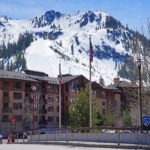
Just minutes from downtown Juneau, Perseverance Trail follows Gold Creek into a spectacular mountain valley filled with waterfalls, historic mining ruins, dense temperate rainforest, wildflowers, and towering alpine slopes.
The trail is one of Juneau’s best-known hikes, but its importance goes far beyond recreation. The route developed into what is generally recognized as Alaska’s first wagon road, providing access to the gold mines that helped transform a small mining camp into the city of Juneau.
Today, Perseverance Trail offers a relatively accessible introduction to the mountains of Southeast Alaska. It also serves as a gateway to more challenging routes leading toward Granite Creek Basin, Mount Juneau, Olds Mountain, Sheep Mountain, and the surrounding Boundary Ranges.
⚡ Quick Facts
| Fact | Details |
|---|---|
| Location | Juneau, Alaska |
| Mountain Range | Boundary Ranges, Coast Mountains |
| Trail Type | Out-and-back with connecting trails |
| Distance | About 3 miles one way |
| Typical Round Trip | About 6 miles |
| Elevation Gain | Approximately 1,000 feet |
| Difficulty | Easy to moderate in normal summer conditions |
| Trailhead | End of Basin Road near downtown Juneau |
| Primary Drainage | Gold Creek |
| Major Landmark | Ebner Falls |
| Historic Destination | Silverbow Basin and Perseverance Mine area |
| National Recreation Trail | Designated in 2005 |
| Best Season | Late spring through early fall |
| Winter Hazard | Significant avalanche danger |
| Activities | Hiking, walking, trail running and biking |
The exact distance hikers travel depends on their turnaround point and whether they add connecting trails. For the classic Perseverance outing, however, a good rule of thumb is approximately three miles each way with around 1,000 feet of elevation gain.
🗺️ Where Is Perseverance Trail?
Perseverance Trail begins remarkably close to downtown Juneau, Alaska.
From the city center, the trail is reached by following Gold Street toward Basin Road and continuing to the end of the road.
From there, Perseverance Trail heads into the Gold Creek drainage beneath the steep mountains rising immediately behind the city.
Juneau’s location makes this transition particularly dramatic. Within a relatively short distance, hikers can leave the streets of Alaska’s capital and find themselves surrounded by forest, rushing water, waterfalls, cliffs, and rugged mountain slopes.
The surrounding peaks belong to the Boundary Ranges, a subdivision of the much larger Coast Mountains extending through Southeast Alaska and western Canada.
🥾 What Is Perseverance Trail Like?
Perseverance Trail is considerably less difficult than many of the steep summit trails surrounding Juneau.
Much of the route follows an old mining road, which provides a relatively broad path and generally moderate grade.
The trail steadily climbs into Gold Creek Valley rather than heading directly up the steep mountainsides.
Along the way, hikers encounter:
- Dense coastal forest
- Gold Creek
- Ebner Falls
- Mountain views
- Historic mining ruins
- Wildflowers
- Berry-producing shrubs
- Rock outcrops
- Side trails leading deeper into the mountains
Although the basic trail is accessible to many hikers, portions are cut into steep slopes above Gold Creek.
Care is particularly important where the downhill side drops sharply away from the trail.
📜 The History of Perseverance Trail
The story of Perseverance Trail begins long before Juneau became a mining town.
Alaska Native people used the Gold Creek corridor for activities including hunting, fishing, and berry gathering.
Everything changed after the discovery of gold in 1880.
An Auke Tlingit leader named Kowee, also recorded as Kawa.ée, guided prospectors Joseph Juneau and Richard Harris into the Gold Creek drainage, where they discovered gold.
Prospectors quickly poured into Silverbow Basin and Last Chance Basin.
The growing mining activity created an immediate need for a practical transportation route between the mines and the settlement developing near Gastineau Channel.
🛤️ Alaska’s First Wagon Road
By 1882, prospectors had established a roughly two-mile horse trail leading toward mining claims along Gold Creek.
The Johnson Mill and Gold Mining Company improved the route in 1885. At the time, it was known as Johnson Road.
It eventually developed into the Perseverance Trail.
The route is regarded as the first wagon road constructed in Alaska during United States administration.
That makes Perseverance much more than a scenic recreational trail.
Modern hikers are following a transportation corridor that played an important role in the early development of Juneau and Alaska’s mining industry.
⛏️ Gold and the Birth of Juneau
The discovery of gold in Gold Creek Valley in 1880 triggered one of the most important mining rushes in Southeast Alaska.
Early prospectors concentrated on placer gold—the loose particles of gold deposited in creek gravels.
Claims soon spread through Silverbow Basin and Last Chance Basin.
As easily accessible placer deposits declined, miners began pursuing veins of gold-bearing rock underground.
The first stamp mill on Gold Creek was operating by 1882.
Over the following decades, small claims were consolidated into increasingly large industrial mining operations.
Eventually, the Juneau Gold Belt became one of Alaska’s great historic mining districts.

🏚️ The Perseverance Mine
One of the major operations in Silverbow Basin became known as the Perseverance Mine.
The mine eventually became associated with the Alaska Gastineau Mining Company, one of the dominant mining companies operating around Juneau during the early 20th century.
The industrial landscape of Silverbow Basin looked dramatically different from what hikers see today.
Mining facilities included buildings, tunnels, workshops, tramways, roads, power infrastructure, and other equipment needed to support a major hard-rock mining operation.
Ore from the Perseverance operation was ultimately transported for processing at the company’s large mill near Thane, south of downtown Juneau.
The Alaska Gastineau Mining Company ceased operations in the early 1920s.
Nature has since reclaimed much of the former mining landscape.
🪨 Mining Ruins Along the Trail
One of the most interesting aspects of Perseverance Trail is the opportunity to see traces of Juneau’s mining past.
Depending on exactly how far hikers travel and which connecting paths they explore, remnants may include:
- Building foundations
- Mine workings
- Old equipment
- Road structures
- Tailings
- Metal machinery
- Mill remnants
- Other artifacts from the mining era
These features effectively turn Gold Creek Valley into an outdoor historical landscape.
Old mine entrances should never be entered.
Abandoned mines can contain unstable ceilings, vertical shafts, rotten timbers, loose rock, poor air quality, standing water, and other hidden hazards.
Historic artifacts should also be left where they are found.
💦 Ebner Falls
Ebner Falls is one of the most recognizable natural attractions along Perseverance Trail.
The waterfall descends from the steep mountains bordering Gold Creek and provides one of the highlights of the lower portion of the hike.
Its appearance varies considerably with weather and season.
During periods of heavy rain or spring snowmelt, water can thunder down the mountainside. During drier weather, the falls may be less powerful but remain a beautiful feature of the landscape.
The surrounding scenery is classic Southeast Alaska: dark rock, thick forest, rushing water, steep mountains, and lingering snowfields higher on the slopes.
🌊 Gold Creek
Perseverance Trail follows Gold Creek, the waterway that gave rise to Juneau’s early mining industry.
Gold Creek drains the mountains above Juneau before flowing toward Gastineau Channel.
The creek helped expose and concentrate the placer gold that attracted prospectors to the area during the 1880s.
Today it is one of the trail’s defining natural features.
Hikers frequently hear the creek even when vegetation hides it from view.
After heavy rain or rapid snowmelt, Gold Creek can become a powerful torrent. Water levels and current strength can change quickly, making casual creek crossings dangerous.
Fortunately, hikers following the main Perseverance Trail normally have little reason to enter the water.
🌲 Flora Along Perseverance Trail
Perseverance Trail passes through the lush vegetation characteristic of Southeast Alaska’s coastal environment.
The lower route travels through temperate rainforest, where high annual precipitation supports dense forests and an exceptionally green understory.
Common plants in the broader Juneau area include:
- Sitka spruce
- Western hemlock
- Mountain hemlock
- Red alder
- Blueberry
- Salmonberry
- Devil’s club
- Ferns
- Mosses
- Lichens
As the trail gains elevation, the vegetation gradually transitions toward more open subalpine habitat.
Wildflowers add considerable color during the short Southeast Alaska summer.
Plants seen around Juneau’s mountain trails can include columbine, shooting stars, wild geraniums, and chocolate lilies.
Berry-producing shrubs also become abundant later in the season.
🐐 Wildlife Along the Trail
The proximity of Perseverance Trail to downtown Juneau does not mean wildlife is absent.
The Gold Creek drainage connects directly with extensive mountain habitat.
Animals that may be encountered in the surrounding landscape include:
- Black bears
- Mountain goats
- Hoary marmots
- Porcupines
- Sitka black-tailed deer
- Spruce grouse
- Ravens
- Warblers
- Bald eagles and other birds
Mountain goats are particularly well suited to the cliffs and steep ridges surrounding Juneau.
They are more likely to be seen high above the trail than directly on it.
Black bears are a more realistic encounter at lower elevations, particularly when berry-producing shrubs are fruiting.
Hikers should make their presence known where vegetation limits visibility and should never approach or feed bears or other wildlife.
🏔️ Mount Juneau Trail Junction
One of the most important branches from Perseverance is the Mount Juneau Trail.
The junction occurs roughly one mile along Perseverance.
From there, the character of the hike changes completely.
Mount Juneau Trail climbs more than 3,500 feet over roughly two miles, making it one of the steep and strenuous hikes around Juneau.
Sections may require hikers to use their hands, and wet conditions can make steep terrain particularly slippery.
Mount Juneau should therefore not be treated as a casual extension of Perseverance.
Perseverance itself is moderate.
Mount Juneau is a serious mountain hike.
🌿 Granite Creek Trail Junction
Approximately two miles along Perseverance Trail, hikers reach the junction for Granite Creek Trail.
Granite Creek heads away from Gold Creek and climbs toward a beautiful alpine basin.
The route is known for:
- Waterfalls
- Wildflowers
- Berry patches
- Alpine lakes
- Open mountain scenery
It also provides access toward the high country around Olds Mountain.
Hikers continuing onto Granite Creek should expect a significantly longer and more strenuous outing than the basic Perseverance hike.
Winter conditions are especially hazardous because the Granite Creek area is exposed to serious avalanche terrain.

🏔️ Gateway to Olds Mountain
Perseverance Trail is also important as one of the principal approaches toward Olds Mountain.
Hikers can follow Perseverance to Granite Creek Trail and climb toward Granite Creek Basin.
Beyond the maintained trails, experienced backcountry travelers can continue into increasingly rugged alpine terrain beneath Olds Mountain.
This transforms an easy-to-moderate historical hike into the beginning of a much more serious mountain adventure.
Anyone continuing beyond developed trails should be prepared for route-finding, steep slopes, snowfields, changing weather, and remote terrain.
🏔️ Mountains Around Perseverance Trail
The Gold Creek drainage lies beneath an impressive collection of mountains.
Nearby peaks and high points include:
- Mount Juneau
- Olds Mountain
- Sheep Mountain
- Roberts Peak
- Other peaks of the Boundary Ranges
The surrounding mountains form part of the Coast Mountains, an enormous mountain system stretching through Southeast Alaska and western British Columbia.
Perseverance Trail itself does not reach any of these major summits.
Instead, it acts as an unusually accessible gateway into the mountain landscape.
🧊 A Glacially Sculpted Landscape
Glaciers played a major role in creating the scenery surrounding Perseverance Trail.
During colder periods, much larger glaciers filled the valleys around modern Juneau.
Moving ice widened valleys, carved steep mountain walls, polished bedrock, and transported enormous quantities of sediment.
Although forests now cover much of the lower landscape, the shape of the terrain still reveals its glacial origins.
Farther inland, the mountains become progressively more glaciated as they approach the vast Juneau Icefield.
The contrast between rainforest near sea level and ice-covered mountains only a relatively short distance away is one of the defining characteristics of the Juneau region.
🌦️ Weather on Perseverance Trail
Juneau has a cool maritime climate and receives abundant precipitation.
Rain should be considered a normal part of hiking here rather than an unusual event.
Conditions can change rapidly, particularly as hikers move farther into the mountains.
Expect the possibility of:
- Rain
- Fog
- Low clouds
- Wet rocks
- Mud
- Cool temperatures
- Strong runoff after storms
- Lingering snow during spring
A waterproof jacket is useful even when the weather looks promising at the beginning of the hike.
Layers are also important because temperatures can feel significantly cooler farther into the valley.
❄️ Avalanche Danger
Perseverance Trail should not automatically be considered a safe winter hiking trail.
The mountains surrounding Gold Creek contain substantial avalanche terrain.
Avalanches can cross portions of the trail during winter and spring, and Basin Road-area trails can become extremely dangerous under unstable snow conditions.
Granite Creek is particularly vulnerable.
Avalanche danger may persist well into spring, even after conditions around downtown Juneau appear mild.
Anyone considering winter or early-season travel should consult current local avalanche and trail information before entering the drainage.
⚠️ Rockfall and Steep Terrain
Rockfall is another hazard along Perseverance Trail.
Parts of the historic road were constructed across steep mountain slopes, leaving sections where cliffs rise above the trail and terrain drops sharply below it.
Freeze-thaw cycles, heavy rain, snowmelt, and natural erosion can loosen rocks from surrounding slopes.
Rockslides have periodically caused trail closures.
Stay on the established trail and obey posted closures or warnings.
The downhill edge deserves particular caution, especially with children.
📅 Best Time to Hike Perseverance Trail
For most visitors, June through September provides the easiest conditions for hiking Perseverance Trail.
June
Snow may still linger in shaded terrain, while waterfalls are often powerful from spring runoff.
July
July typically brings long daylight hours, abundant greenery, wildflowers, and generally good trail access.
August
August remains an excellent hiking month, although rain is common and berries become increasingly abundant.
September
Autumn colors begin appearing in alpine and subalpine vegetation, but days become shorter and temperatures cooler.
Conditions vary substantially from year to year.
Always check current trail conditions before setting out, particularly early or late in the season.
🕰️ How Long Does Perseverance Trail Take?
Most hikers should allow approximately three to four hours for a comfortable out-and-back trip on the main trail.
Strong hikers may complete it more quickly.
Others may spend considerably longer stopping for photographs, waterfalls, historic ruins, wildlife, or side trails.
Adding Granite Creek or Mount Juneau dramatically changes the outing and should not be included when estimating the basic Perseverance hike.
🎒 What to Bring
Perseverance does not normally require specialized hiking equipment during good summer conditions, but basic backcountry supplies are still worthwhile.
Consider carrying:
- Waterproof jacket
- Warm insulating layer
- Sturdy hiking shoes
- Water
- Snacks
- Offline map or GPS
- Bear-awareness supplies
- Small first-aid kit
- Fully charged phone
Anyone continuing onto higher mountain routes should carry substantially more equipment.
👨👩👧 Is Perseverance Trail Family-Friendly?
In good summer conditions, Perseverance Trail can be an excellent choice for active families.
The historic roadbed makes it substantially easier than many of Juneau’s summit trails.
Families also do not need to hike the full route.
A shorter walk toward Ebner Falls can provide forest scenery, mountain views, waterfalls, and an introduction to Juneau’s mining history.
Parents should supervise children carefully around steep drop-offs, rushing water, mining ruins, and areas where rockfall is possible.

🏃 Trail Running and Biking
Perseverance Trail is also popular with local runners and cyclists.
Its comparatively broad historic roadbed and sustained but moderate grade make it well suited to trail running.
Mountain bikes are also used on the trail.
Cyclists should yield appropriately and slow down around blind corners, narrow sections, and busy areas.
Rain can make rocks and compacted surfaces slippery.
🏅 National Recreation Trail
Perseverance Trail was designated a National Recreation Trail in 2005.
The designation recognizes both its recreational value and its remarkable historical importance.
Few trails allow hikers to experience Southeast Alaska’s natural and industrial history so directly.
The route began as an Indigenous travel corridor, became a pathway for prospectors, developed into Alaska’s pioneering wagon road, supported major gold mines, and eventually evolved into one of Juneau’s favorite recreational trails.
🌄 Why Perseverance Trail Is Worth Hiking
Perseverance Trail manages to pack an extraordinary amount of Alaska into a relatively manageable hike.
Within a few miles, visitors can experience coastal rainforest, rushing mountain streams, waterfalls, wildflowers, wildlife habitat, mining ruins, and increasingly dramatic views of the surrounding peaks.
Its history makes the trail even more compelling.
The route helped provide access to the gold discoveries that transformed Juneau from wilderness into a mining settlement and eventually Alaska’s capital.
More than a century later, much of the industrial landscape has disappeared beneath forest and alpine vegetation.
Gold Creek continues to rush through the valley. Waterfalls pour from the mountainsides. Mountain goats still roam the surrounding ridges.
And hikers now follow the same corridor once traveled by prospectors, miners, horses, and wagons.
Combined with nearby destinations such as Olds Mountain, Sheep Mountain, and Roberts Peak, Perseverance Trail is one of the best introductions to both the natural beauty and fascinating history of Juneau’s mountains.
🔗 Related Articles
📚 Sources
- Alaska State Parks — Juneau Trail System
- Alaska State Parks — Juneau State Trail System Brochure
- Alaska Department of Natural Resources — Alaska Historic Roads Overview
- National Park Service — Jualpa Mining Camp National Register Documentation
- American Trails — Perseverance National Recreation Trail