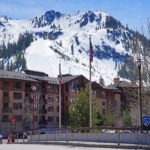
San Miguel Peak

San Miguel Peak is a rugged 13,756-foot summit in the San Juan Mountains of southwestern Colorado. Rising south of Telluride near Hope Lake and Lizard Head Pass, the mountain combines colorful alpine geology, sweeping high-country views, wildflower-filled approaches, and a challenging final ridge that places it firmly in the realm of experienced mountain hikers rather than casual trail walking.
Modern LiDAR measurements have refined San Miguel Peak’s elevation to approximately 13,756 feet, slightly higher than the 13,752-foot figure printed on older maps. The mountain also has more than 1,300 feet of prominence, making it a considerably more independent summit than many of Colorado’s subsidiary thirteeners.
The standard approach begins on Hope Lake Trail #410 before leaving the maintained trail for a cross-country climb toward the northeast ridge. The final section is commonly rated Class 2+ and involves loose rock, route-finding, short exposed sections, and the possibility of Class 3 moves when hikers stray from the easiest line.
⚡ Fast Facts
| Feature | Details |
|---|---|
| Country | United States |
| State | Colorado |
| Counties | Dolores and San Miguel counties |
| Mountain Range | San Juan Mountains |
| Elevation | 13,756.4 feet / 4,193 meters |
| Prominence | 1,314.6 feet / 401 meters |
| Isolation | 2.44 miles / 3.92 kilometers |
| Nearest Higher Neighbor (NHN) | Vermilion Peak |
| Key Col | Approximately 12,442 feet / 3,792 meters |
| Coordinates | 37.77918° N, 107.86495° W |
| USGS Topographic Map | Ophir |
| Land Management | San Juan National Forest / Grand Mesa, Uncompahgre and Gunnison National Forests |
| Principal Approach | Hope Lake Trail #410 and Northeast Ridge |
| Standard Route Difficulty | Class 2+ |
| Approximate Standard Outing | 7 miles round trip / 2,020 feet gain |
| Best Season | July through September |
🏔️ A Rugged Colorado Thirteener
San Miguel Peak belongs to the enormous concentration of high summits that makes southwestern Colorado’s San Juan Mountains so distinctive.
Unlike the broad grassy mountains found in some parts of Colorado, the San Juans are famous for steep volcanic ridges, deeply carved valleys, colorful cliffs, alpine lakes, and an extraordinary density of peaks above 13,000 feet.
San Miguel Peak fits that landscape perfectly.
The mountain rises above the Hope Lake area amid a cluster of impressive neighboring summits that includes Vermilion Peak, Fuller Peak, Beattie Peak, Golden Horn, Pilot Knob, Rolling Mountain, and Grizzly Peak.
Farther west, the famous Wilson group includes Mount Wilson and Gladstone Peak.
🧭 Nearest Higher Neighbor: Vermilion Peak
San Miguel Peak’s Nearest Higher Neighbor is Vermilion Peak, located roughly 2.4 miles to the northeast.
Vermilion rises to approximately 13,907 feet according to modern LiDAR measurements, making it about 150 feet higher than San Miguel Peak.
The saddle connecting San Miguel Peak to higher terrain drops to approximately 12,442 feet. That produces about 1,315 feet of topographic prominence.
This is substantial for a Colorado thirteener.
Many high summits within the Rockies rise only a few hundred feet above their connecting saddles. San Miguel Peak’s greater prominence gives it a stronger geographic identity despite being surrounded by even higher mountains.
📏 More Than 1,300 Feet of Prominence
San Miguel Peak’s prominence deserves particular attention.
At roughly 1,315 feet, the mountain comes surprisingly close to Colorado’s commonly used 1,000-foot prominence benchmark for major peaks and easily exceeds the 300-foot threshold frequently used to distinguish ranked Colorado summits.
Prominence measures how far a mountain rises above the lowest saddle connecting it to higher terrain.
In practical terms, San Miguel Peak is not simply a bump along a long ridge.
It stands as a meaningful mountain in its own right.
Its 2.44 miles of isolation reinforces that impression, with no higher terrain occurring until hikers reach toward the much larger Vermilion Peak massif.
🌄 The Hope Lake Setting
For most visitors, the journey toward San Miguel Peak begins with one of the most beautiful trail approaches in the Telluride region.
Hope Lake sits at approximately 11,900 feet in an alpine basin surrounded by dramatic high mountains.
Hope Lake Trail #410 begins in spruce-fir forest before climbing through rock slides, meadows, and increasingly open alpine terrain.
The Forest Service describes the trail as a favorite wildflower hike and one of the more popular trails around Telluride.
As hikers climb, openings provide views toward Trout Lake and the surrounding mountains.
Eventually the forest gives way to broad alpine meadows, and Hope Lake appears beneath the colorful high ridges.
🌼 Wildflowers Along Hope Lake Trail
Mid- to late summer can transform the Hope Lake basin into a spectacular wildflower landscape.
Depending on snowmelt and seasonal conditions, hikers may encounter:
- Colorado blue columbine
- Indian paintbrush
- Lupine
- Alpine sunflower
- Marsh marigold
- Mountain bluebells
- Elephant’s head
- Alpine asters
- Various cinquefoils
The exact timing changes from year to year.
Deep winter snow can delay the growing season well into July, while drier years may produce an earlier and shorter bloom.
The fragile tundra also recovers extremely slowly from trampling, so hikers should use established paths wherever possible while traveling through alpine meadows.
🥾 Hiking San Miguel Peak
There is no maintained trail all the way to San Miguel Peak’s summit.
Instead, hikers begin on the established Hope Lake Trail before leaving it near the lake and climbing cross-country toward the mountain.
A commonly used route follows broad slopes toward San Miguel’s northeast ridge.
The early off-trail portion consists mainly of alpine tundra, embedded rocks, rubble, and occasional snowfields.
Terrain gradually becomes rougher as elevation increases.
Around 13,100 feet, climbers gain the northeast ridge and follow increasingly rocky terrain toward what initially appears to be the summit.
It isn’t.
San Miguel Peak contains a false summit and a much more complicated final ridge beyond it.
🧗 The Northeast Ridge
The northeast ridge is the mountain’s standard route.
It is generally rated Class 2+, placing it near the upper end of ordinary scrambling terrain.
That rating deserves some context.
Much of the approach is straightforward hiking over tundra and rubble. The final ridge, however, contains:
- Large unstable-looking blocks
- Loose talus
- Short exposed sections
- Gaps in the ridge
- Route-finding choices
- Steep loose slopes
- Possible lingering snow
Poor route selection can easily lead hikers onto Class 3 terrain.
For that reason, San Miguel Peak is best suited to people already comfortable moving confidently over loose rock at high elevation.
⚠️ The False Summit
One of the route’s most memorable features is the false summit.
From below, this point can appear to be the top of San Miguel Peak.
Once hikers reach it, however, the true summit remains farther along a rugged crest.
The ridge beyond contains large blocks and several interruptions that force climbers to descend, traverse around obstacles, and regain elevation.
One particularly significant notch requires dropping roughly 100 feet from the crest before climbing back toward the true summit.
That loss of elevation can feel discouraging after already climbing above 13,000 feet, but it is also what makes the final ridge the most interesting part of the route.
🪨 Loose Rock and Route-Finding
Loose rock is one of the major hazards on San Miguel Peak.
The San Juan Mountains are notorious for fractured volcanic terrain, and San Miguel’s upper ridge contains abundant rubble and unstable blocks.
Hikers should test questionable holds before committing weight to them.
When traveling with a group, avoid climbing directly beneath another person whenever possible.
Even a relatively small dislodged rock can become dangerous after gaining speed on a steep slope.
Helmets are not universally carried on the standard route, but experienced hikers may reasonably choose to wear one, particularly when climbing in a group.
📍 Hope Lake Trailhead
The Hope Lake Trailhead sits at approximately 10,745 feet.
From Telluride, access generally involves State Highway 145, the Trout Lake road, and Forest Service Road 627.
The Forest Service recommends a high-clearance vehicle for the final two miles of the approach road.
Road conditions can change considerably because of rain, runoff, snow, maintenance, and erosion.
A road described as manageable one summer may be substantially rougher the following year.
Visitors should check current conditions before assuming that an ordinary passenger car can reach the trailhead.
🚗 Trout Lake and Lizard Head Pass
The San Miguel Peak approach lies in one of southwestern Colorado’s most scenic highway corridors.
Trout Lake sits below the mountains beside State Highway 145, while Lizard Head Pass lies a short distance to the south.
The distinctive summit of Lizard Head rises nearby, while the Wilson group dominates portions of the western skyline.
Drivers approaching from Telluride pass through a landscape of steep forested mountains, old mining country, waterfalls, alpine lakes, and historic settlements.
Even visitors who never attempt San Miguel Peak can enjoy extraordinary views simply by exploring this portion of the San Juan Mountains.
🗺️ San Miguel Roadless Area
San Miguel Peak is the high point of the San Miguel Colorado Roadless Area within San Juan National Forest.
Forest Service documentation describes the roadless area as covering roughly 64,000 acres of high-elevation terrain extending from around 9,600 feet to the summit of San Miguel Peak.
The landscape contains numerous peaks above 12,000 feet, multiple summits exceeding 13,000 feet, alpine lakes, glacial valleys, high tundra, cliffs, spruce-fir forests, and extensive roadless backcountry.
San Miguel was formally included among Colorado’s designated roadless areas.
That protected setting helps preserve the sense of remoteness that characterizes much of the mountain.
🧊 A Landscape Sculpted by Glaciers
Ancient glaciers played an enormous role in shaping the San Miguel Peak region.
During colder periods of the Pleistocene, mountain glaciers occupied valleys throughout the San Juan Mountains.
Their movement excavated broad U-shaped valleys, deepened alpine basins, sharpened ridges, and produced the dramatic cirques visible throughout the region today.
Hope Lake occupies precisely the kind of high basin associated with this glacial landscape.
The steep cliffs and rugged ridges surrounding San Miguel Peak reflect a combination of volcanic geology and repeated glacial erosion.
🌋 Geology of San Miguel Peak
San Miguel Peak lies within one of North America’s great volcanic landscapes.
Much of the San Juan Mountains consists of volcanic rocks produced during massive eruptive events roughly 20 to 35 million years ago.
The region experienced repeated eruptions, caldera formation, lava flows, ash deposition, intrusive activity, faulting, and later mineralization.
San Miguel Peak itself lies near an especially complex portion of the range where volcanic and intrusive rocks interact with older sedimentary units.
USGS mapping of the Ophir quadrangle documents steep contacts, faulting, volcanic deposits, intrusive rocks, glacial deposits, and extensive talus surrounding the mountain.
That geological complexity contributes to both the extraordinary colors and notoriously loose rock of the surrounding peaks.
🎨 Colorful Mountain Slopes
Color is one of the defining characteristics of this portion of the San Juans.
Ridges surrounding Hope Lake can display shades of:
- Red
- Orange
- Yellow
- Gray
- Brown
- Purple
Weathering and mineral alteration help produce these striking tones.
Nearby Vermilion Peak is especially famous for its red-orange appearance, while Golden Horn practically advertises its coloration in its name.
San Miguel Peak is somewhat less vividly colored than several neighbors, but its setting among these highly mineralized mountains makes the entire hike visually spectacular.
⛏️ Mining History
Mineral-rich geology attracted prospectors to the San Juan Mountains during the late 19th century.
Mining camps and towns appeared throughout the region as prospectors searched for gold, silver, lead, zinc, copper, and other metals.
Telluride, Ophir, Rico, and Silverton all became closely associated with this mining era.
Historic mines, prospect pits, roads, tramways, structures, and abandoned equipment remain scattered throughout the broader region.
Many abandoned mine workings are extremely dangerous.
Visitors should never enter old tunnels or shafts. Unstable rock, concealed vertical drops, contaminated water, poor air, and decaying timbers can make abandoned mines deadly even when an entrance appears harmless.
🌲 Spruce-Fir Forests
The lower Hope Lake approach passes through cool subalpine forest.
Spruce and fir dominate many of the wetter and higher forested slopes, while aspen occurs extensively at somewhat lower elevations and in disturbed areas.
The Forest Service identifies spruce-fir forest as an important vegetation type within the San Miguel roadless area.
These forests provide a dramatic transition between the lower mountain valleys and the open alpine environment above treeline.
By the time hikers approach San Miguel Peak itself, trees have disappeared entirely.
🌿 Life Above Treeline
Above roughly 11,500 to 12,000 feet, conditions become too severe for upright trees.
The landscape transitions into alpine tundra.
Plants growing here must survive:
- Strong winds
- Intense ultraviolet radiation
- Short growing seasons
- Freezing temperatures
- Thin soils
- Heavy winter snow
- Rapid temperature changes
Many alpine plants remain only a few inches tall.
Their low growth protects them from wind and helps retain warmth close to the ground.
Visitors should avoid stepping unnecessarily on alpine vegetation because damage may take decades to recover.
🐿️ Alpine Wildlife
San Miguel Peak’s high-country environment supports animals specially adapted to life in the mountains.
Pikas inhabit rocky talus fields, where their sharp calls frequently reveal their presence before hikers see them.
Yellow-bellied marmots occupy rocky slopes and alpine meadows.
Elk and mule deer are more commonly encountered at lower elevations.
Golden eagles and other raptors may occasionally be seen above the ridges.
The surrounding San Juan Mountains also provide habitat for black bears, mountain lions, Canada lynx, coyotes, and numerous smaller mammals, although most are unlikely to be encountered on the exposed summit ridge itself.
🌩️ Afternoon Thunderstorms
Summer thunderstorms are one of the greatest hazards on San Miguel Peak.
Colorado’s high mountains frequently experience storms during July and August, often developing during the afternoon.
Lightning is particularly dangerous because the final portion of the climb follows an exposed ridge far above treeline.
A storm that begins while hikers are near the summit can leave few safe options.
Early starts are therefore essential.
A common Colorado mountain strategy is to be descending from exposed terrain well before the typical afternoon storm cycle begins.
❄️ Snowfields
Snow can linger around San Miguel Peak well into summer.
The Hope Lake basin may retain snow surprisingly late after winters with a deep snowpack, and north-facing gullies can remain snow-filled after surrounding tundra has melted.
Early-season climbers may encounter firm snow requiring additional equipment and experience.
An ice axe—and sometimes traction—may be appropriate depending on conditions.
By late summer, much of the standard route is usually snow-free, although year-to-year variation can be substantial.
🍂 Best Time to Climb
July through September generally provides the most practical climbing season.
July
Wildflowers can be spectacular, but lingering snow remains possible.
August
Routes are usually more snow-free, although monsoon thunderstorms require very early starts.
September
Cooler temperatures, clearer skies, and reduced thunderstorm activity can create excellent climbing conditions.
Snowstorms are still possible at any time.
By October, winter conditions can return quickly to elevations above 13,000 feet.
🌄 Summit Views
The summit of San Miguel Peak provides tremendous views across the southwestern San Juans.
Vermilion Peak, Golden Horn, Pilot Knob, Fuller Peak, and Beattie Peak dominate the nearby skyline.
Grizzly Peak rises nearby, while farther west the spectacular Wilson group includes Mount Wilson and Gladstone Peak.
Below, the Hope Lake drainage descends toward Trout Lake.
On a clear day, the layered ridges of the San Juan Mountains seem to continue almost endlessly across southwestern Colorado.
🎒 What to Bring
A San Miguel Peak climb requires more preparation than the maintained Hope Lake hike.
Useful equipment includes:
- Sturdy hiking footwear
- Offline GPS navigation
- USGS topographic map
- Plenty of drinking water
- Water-treatment equipment if relying on natural sources
- Warm layers
- Waterproof shell
- Sun protection
- Gloves
- First-aid kit
- Headlamp
- Emergency food
- Trekking poles
- Emergency communication device
Depending on early-season snow conditions, an ice axe and traction may also be appropriate.
A climbing helmet is worth considering for groups traveling together on the loose summit ridge.
🫁 High-Altitude Considerations
The trailhead already sits above 10,700 feet, and the summit exceeds 13,700 feet.
Visitors arriving directly from low elevation may experience:
- Headache
- Shortness of breath
- Fatigue
- Nausea
- Reduced appetite
- Poor sleep
- Dizziness
These symptoms can indicate altitude illness.
Acclimatizing before the hike, staying hydrated, maintaining a reasonable pace, and recognizing when symptoms are worsening are important.
Severe symptoms require descending rather than attempting to push toward the summit.
🏔️ San Miguel Peak and Grizzly Peak
Nearby Grizzly Peak has San Miguel Peak as its Nearest Higher Neighbor.
That creates a direct topographic connection between the two mountains.
Grizzly Peak reaches approximately 13,738 feet, making it only around 18 feet lower than San Miguel.
San Miguel, in turn, connects upward toward Vermilion Peak.
These closely packed elevations demonstrate how remarkably high the surrounding San Juan landscape is.
🏔️ San Miguel Peak and Vermilion Peak
Vermilion Peak is the most important neighboring summit in San Miguel Peak’s topographic hierarchy.
It is higher, more prominent, and visually more colorful.
Yet the mountains are close enough that hikers approaching from Hope Lake experience them as part of the same enormous alpine complex.
Experienced climbers sometimes use the Hope Lake area to access multiple thirteeners, including Vermilion Peak, Golden Horn, Fuller Peak, Beattie Peak, and San Miguel Peak.
Combining peaks substantially increases mileage, elevation gain, route complexity, and exposure to afternoon weather.
🌟 Why San Miguel Peak Is Worth Climbing
San Miguel Peak offers a classic San Juan Mountains experience without the crowds associated with Colorado’s most famous fourteeners.
The route begins on a beautiful established trail through spruce-fir forest and wildflower meadows before reaching Hope Lake and leaving the trail for increasingly wild alpine terrain.
Above 13,000 feet, the character changes completely.
Loose rubble, a false summit, gaps in the ridge, route-finding, and moderate exposure turn the final climb into a genuine scrambling objective.
The mountain’s statistics are equally impressive: more than 13,750 feet of elevation, roughly 1,315 feet of prominence, and Vermilion Peak as its Nearest Higher Neighbor.
For experienced hikers comfortable with off-trail navigation and exposed high-country terrain, San Miguel Peak provides one of the quieter and more rewarding thirteener adventures in southwestern Colorado.
🔗 Related Articles
- San Juan Mountains
- Vermilion Peak
- Grizzly Peak (San Juan Mountains)
- Mount Wilson (Colorado)
- Gladstone Peak
📚 Sources
- Peakbagger — San Miguel Peak — LiDAR elevation, prominence, isolation, coordinates, NHN, county and land-management data.
- U.S. Forest Service — Hope Lake Trail #410 — official trail description, access, elevation, permitted uses, and trailhead directions.
- Climb13ers — San Miguel Peak Northeast Ridge — standard route mileage, elevation gain, Class 2+ rating, summit-ridge character, and Hope Lake approach.
- U.S. Forest Service — Colorado Roadless Area Profiles: San Miguel — roadless-area acreage, elevation range, vegetation, recreation, glacial landscape, and natural-resource information.
- U.S. Geological Survey — Geologic Map of the Ophir Quadrangle — geology and topography of San Miguel Peak and surrounding mountains.